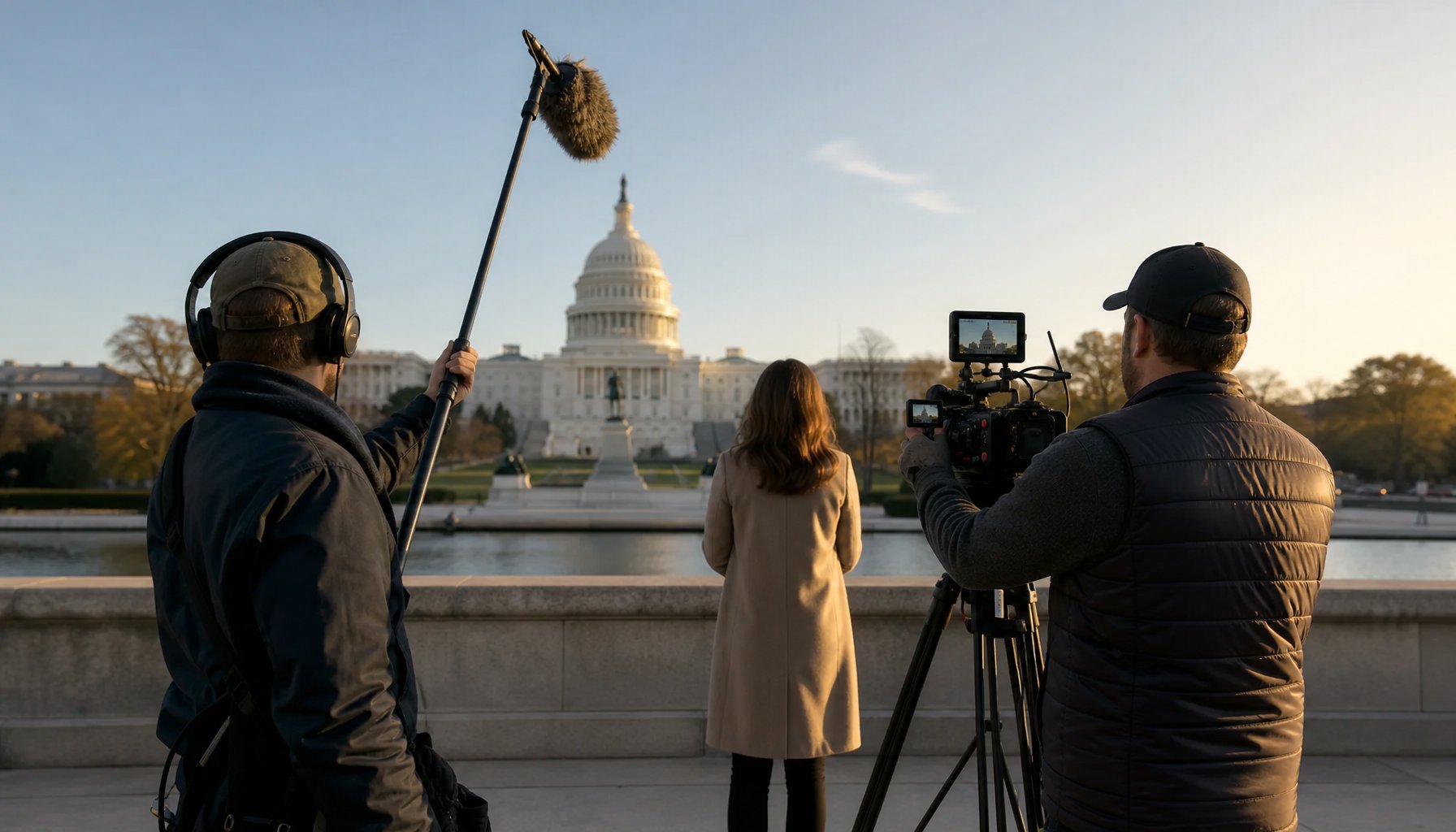
You have a vision for your next video project — a stunning location, cinematic lighting, and a polished final product that makes your audience stop scrolling. But the reality of traditional production often means ballooning budgets for location permits, unpredictable weather delays, and weeks of green screen compositing in post-production. What if there was a way to see your final environment in real time while you shoot? That is exactly what an LED wall studio for video production delivers. According to a 2026 report from Grand View Research, the global virtual production market is projected to surpass $4.7 billion by 2028, growing at over 18% annually — a clear signal that this technology is no longer experimental. It is the new standard.
This guide is an educational deep dive into how LED wall studios fundamentally transform every phase of the production workflow, from pre-production planning through final delivery. Whether you are a marketing director at a DC-area nonprofit, a federal communications team lead, or a brand manager exploring new content formats, understanding this technology will change the way you think about video.
What Exactly Is an LED Wall Studio for Video Production?
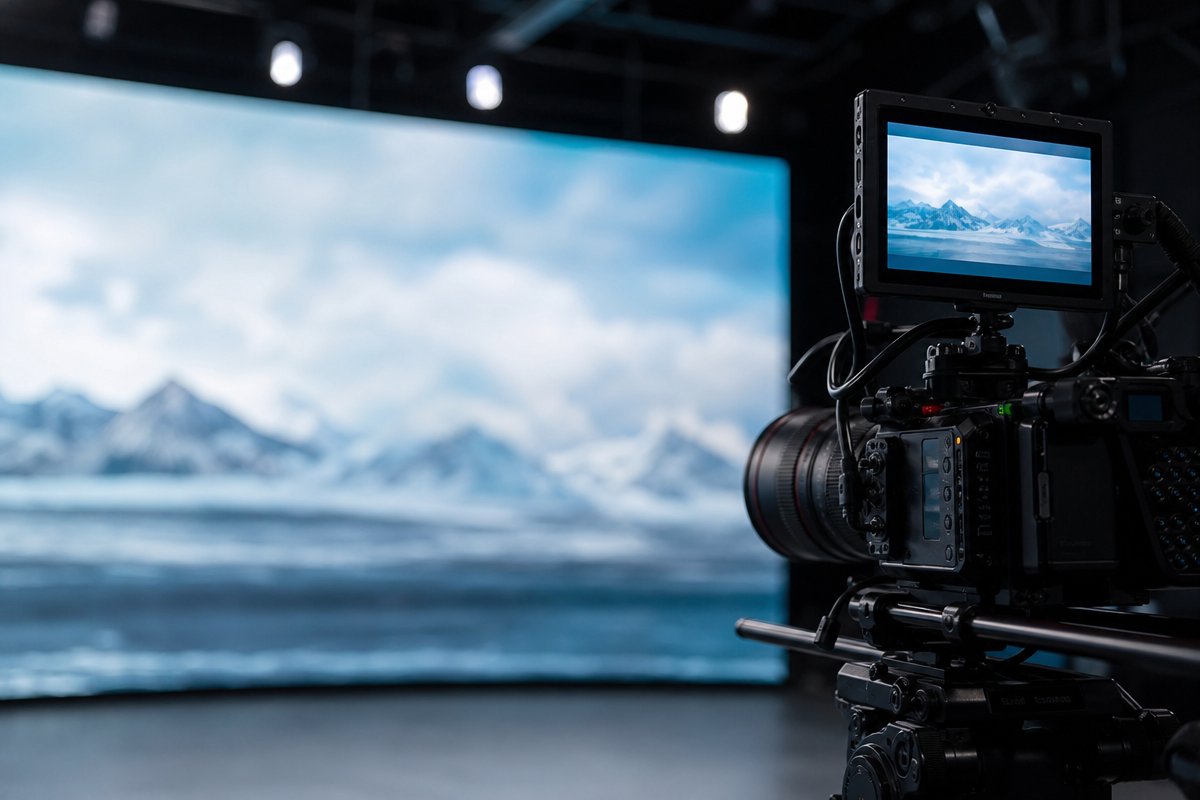
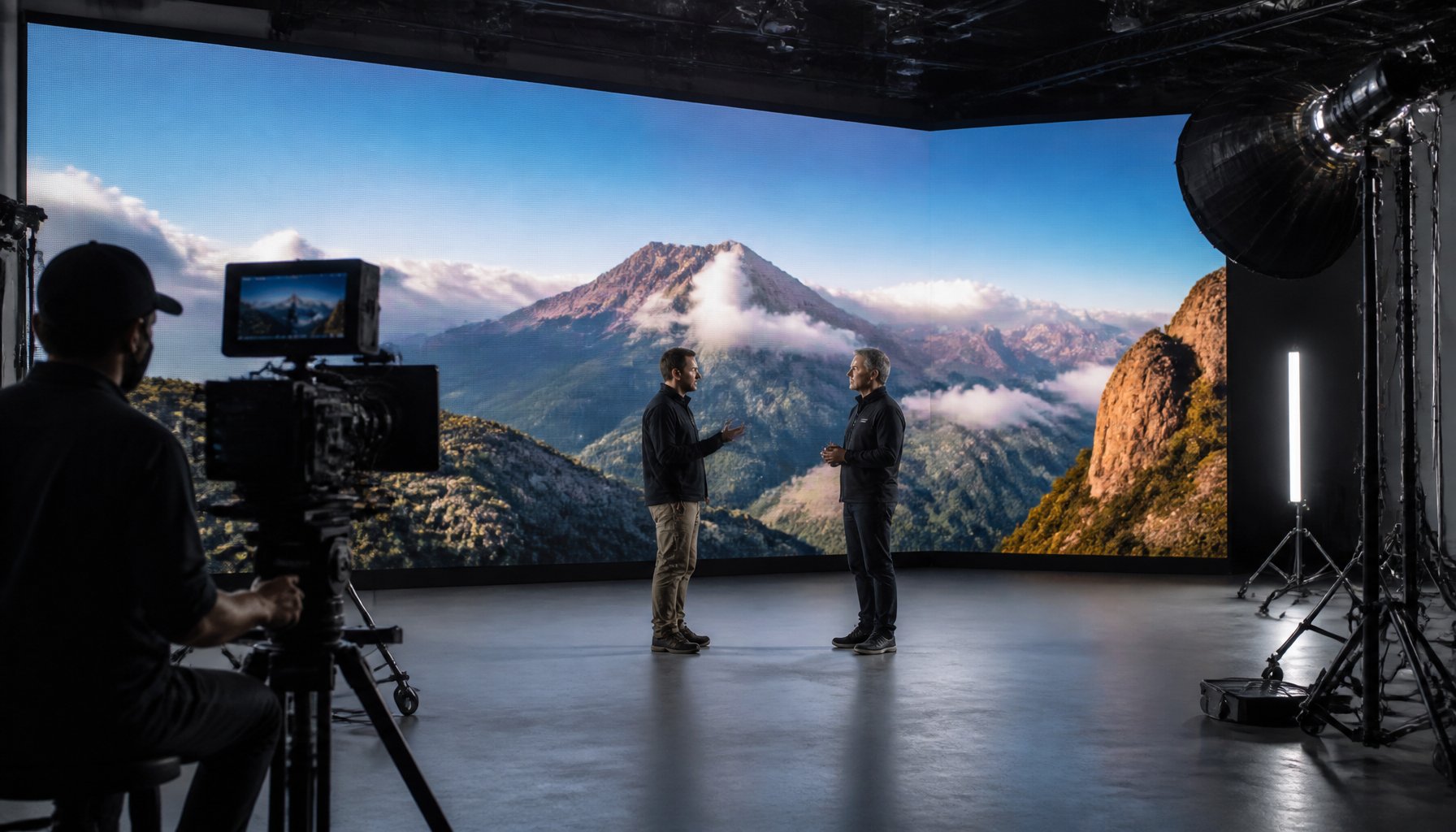
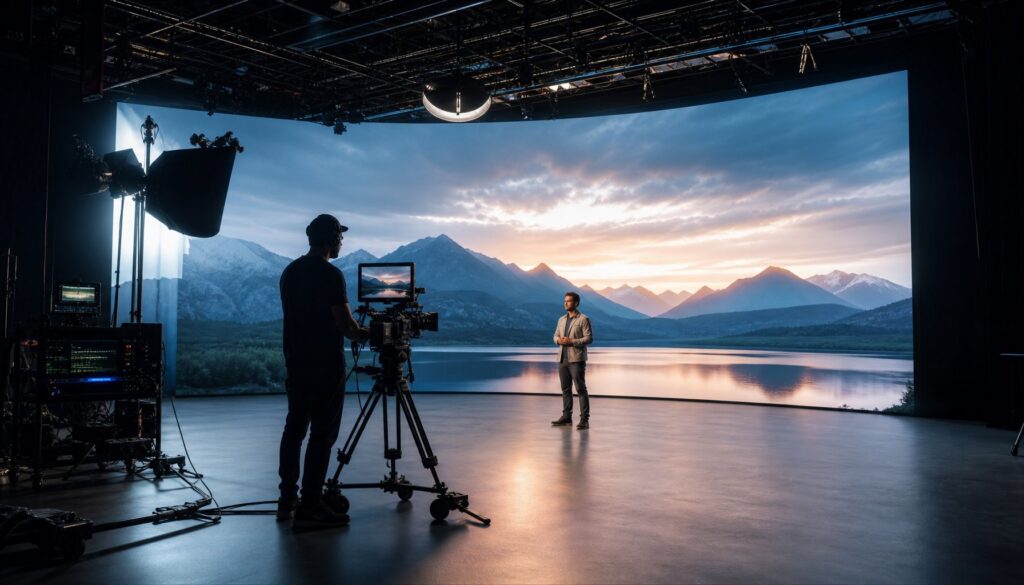
Before we explore the benefits, let us clarify what we are talking about. An LED wall studio — sometimes called a virtual production stage or LED volume — uses massive, high-resolution LED display panels arranged in a curved or flat configuration behind and sometimes around the talent. These panels display real-time 3D environments rendered through game engines like Unreal Engine, creating photorealistic backdrops that respond dynamically to camera movement.
How It Differs from Green Screen
Green screen (chroma key) compositing has been an industry workhorse for decades. But it carries well-documented limitations:
- Spill and fringing: Green light reflects onto talent, costumes, and props, requiring painstaking color correction.
- Delayed visualization: Directors and stakeholders cannot see the final composite until post-production, leading to costly revision cycles.
- Lighting mismatches: Matching on-set lighting to a background added months later is notoriously difficult and often looks artificial.
- Reflective surfaces are nearly impossible: Glasses, metal objects, and glossy surfaces pick up green instead of the intended environment.
An LED wall studio solves every one of these problems at the point of capture. The environment is physically present on set, casting accurate light and reflections on talent and objects in real time. What you see on the monitor is essentially what you get in the final deliverable.
The Core Technology Stack
A professional LED wall production stage typically integrates several components working in concert:
- LED panels: High-pixel-density panels (usually 2.6mm pitch or finer) capable of displaying content bright enough and sharp enough to be captured on cinema cameras.
- Real-time render engine: Unreal Engine or similar software generates 3D environments that update at frame rate.
- Camera tracking system: Sensors or optical systems like Mo-Sys StarTracker track the camera’s exact position and angle, adjusting the perspective on the LED wall so the parallax matches what a real window into that world would look like.
- Media server: Disguise, Brompton, or similar processors manage color calibration, content delivery, and synchronization between the render engine and the LED panels.
- On-set lighting: Supplementary lighting is fine-tuned to complement the illumination already emanating from the LED wall itself.
When these elements come together under experienced operators, the result is indistinguishable from footage shot on location — often at a fraction of the cost.
How LED Wall Studios Transform Video Production Workflows
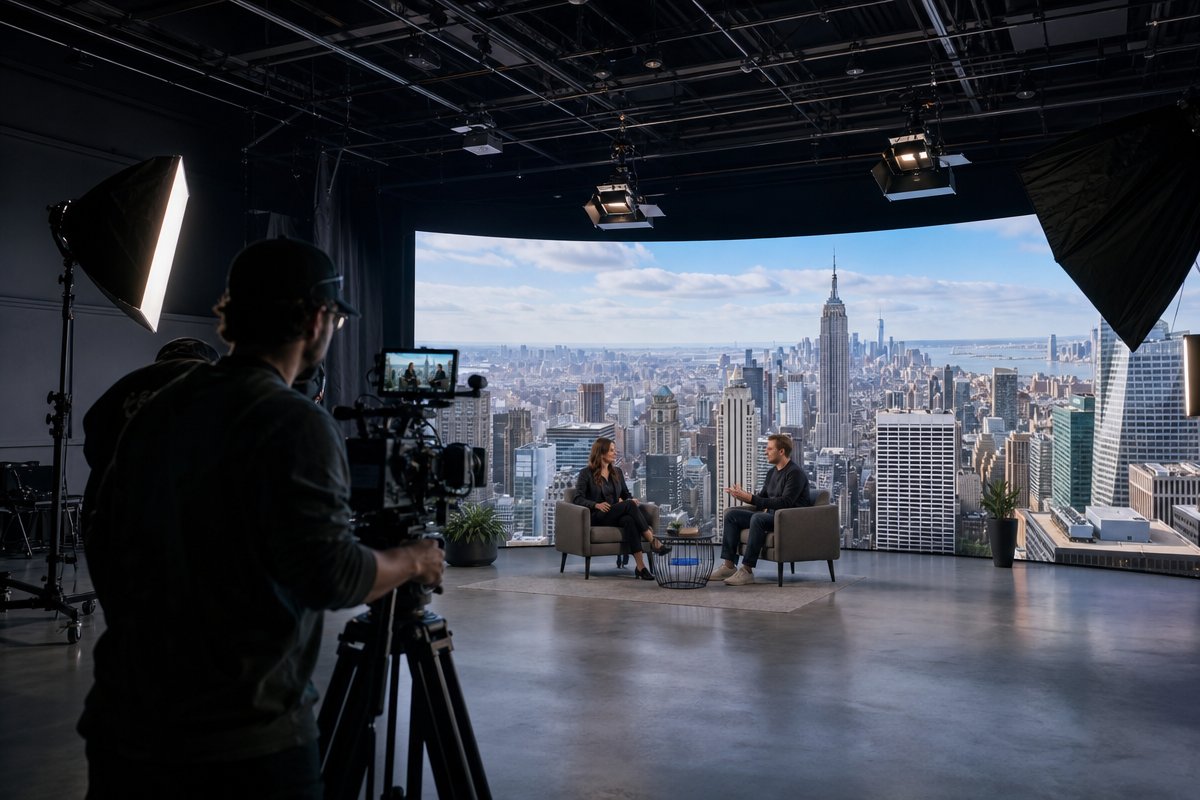
The impact of LED wall technology is not limited to a single phase of production. It reshapes the entire pipeline from concept to delivery.
Pre-Production: Faster, More Collaborative Planning
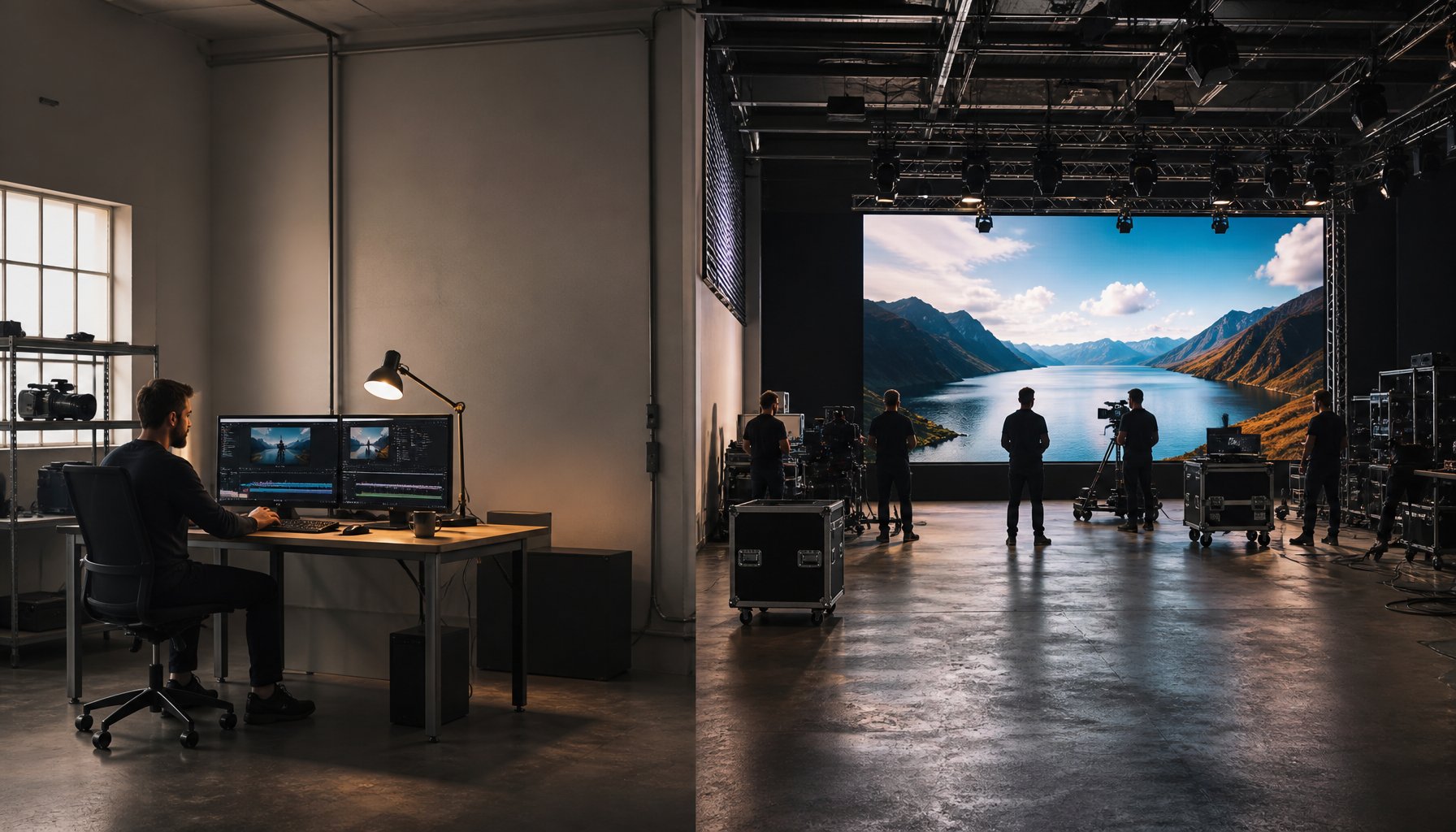
In a traditional production, pre-production involves scouting physical locations, securing permits, coordinating travel logistics, and hoping weather cooperates. With an LED wall studio, your team can design and preview virtual environments weeks before the shoot. Stakeholders can review backgrounds in real time, approve creative direction, and request changes — all before a single frame is recorded. This dramatically reduces the approval bottleneck that plagues large organizations, especially government agencies and corporations with multi-layered sign-off processes.
Production: Real-Time Creative Control
On shoot day, the advantages multiply:
- Instant location changes: Transition from a Washington DC cityscape to a European boardroom to a futuristic data center — all within minutes, without moving a single piece of equipment.
- Director and talent confidence: Actors and spokespeople can see exactly where they are supposed to be, leading to more natural performances and fewer takes.
- Interactive lighting: The LED wall itself becomes the largest, most sophisticated light source on set. As the virtual sun moves in the background, the real light on the talent shifts accordingly.
- Client presence on set: Stakeholders watching the monitor see a near-final image, enabling immediate feedback and reducing post-production revision requests by as much as 60%, based on workflow data from studios that have adopted the technology.
Post-Production: Dramatically Reduced Timelines
This is where the financial math becomes compelling. Traditional green screen workflows can require 40 to 100+ hours of compositing, rotoscoping, and color matching per project. Because LED wall capture bakes the environment into the original footage, post-production often involves only standard color grading, audio mixing, and editorial assembly. For organizations operating on tight campaign timelines — think product launches, advocacy pushes, or federal fiscal-year deadlines — shaving weeks off the delivery schedule is not a luxury. It is a strategic advantage.
Creative Possibilities That Were Previously Out of Reach
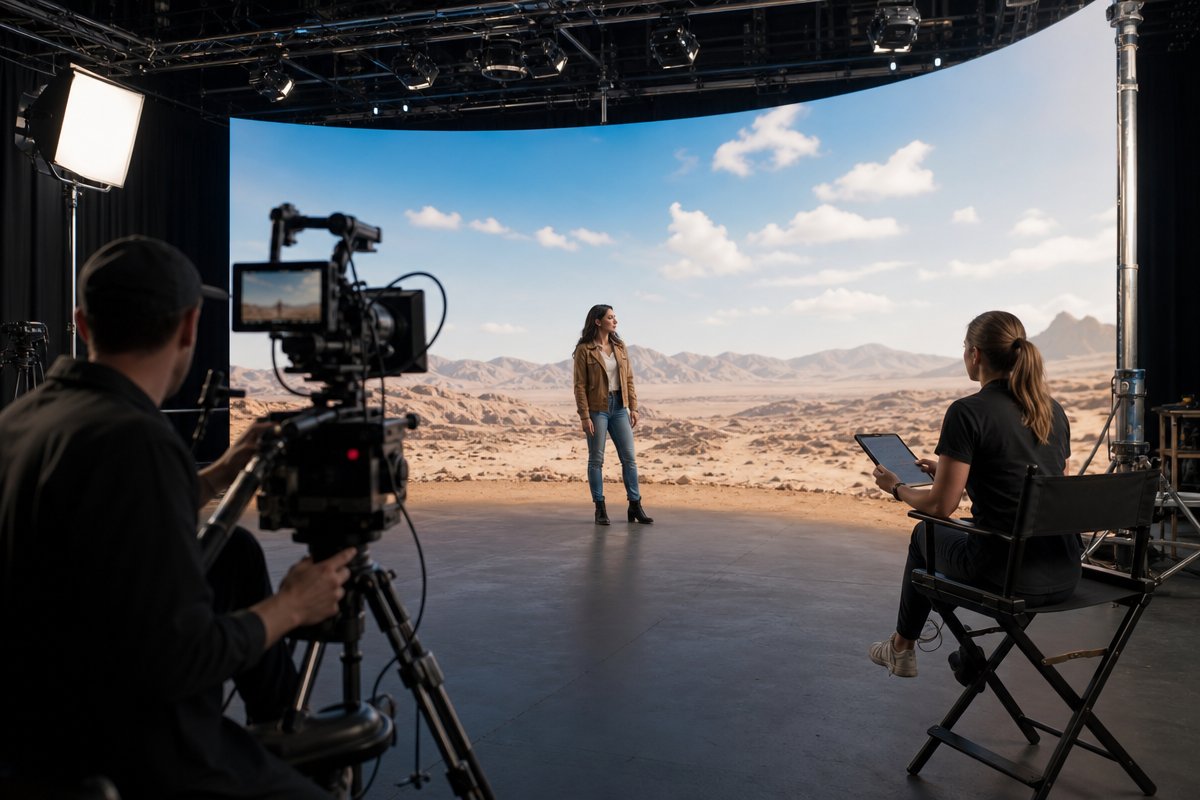
Beyond efficiency, an LED wall studio for video production opens creative doors that were previously locked behind Hollywood-scale budgets.
Impossible Locations, Made Possible
Need to film your CEO delivering a message from the surface of Mars for an aerospace brand video? Want a documentary-style interview set against the interior of a historic building you cannot access? Virtual environments make these scenarios routine. Custom 3D worlds can be built, purchased from asset libraries, or composited from high-resolution photographic scans of real places.
Consistent Branding Across Content
For organizations producing recurring content — talk shows, training series, podcast video, quarterly updates — an LED wall provides a signature environment that can be recalled identically every session. No more worrying about whether the conference room looks the same as it did six months ago. Your branded virtual set is saved, version-controlled, and pixel-perfect every time.
Dynamic Content for Live and Hybrid Events
LED wall stages are also transforming live streaming and hybrid event production. Keynote speakers can present in front of dynamically changing visuals that respond to their content in real time, creating a broadcast-quality experience that far surpasses a PowerPoint slide deck projected on a screen behind them.
Who Benefits Most from LED Wall Studio Production?
While the technology is versatile enough for virtually any sector, certain organizations see outsized returns:
- Government agencies: Secure, controlled studio environments mean sensitive content never needs to be filmed on location where access, security clearances, and logistics create friction.
- Healthcare organizations: Medical environments can be recreated virtually, avoiding the disruption of filming in active clinical settings.
- Nonprofits and advocacy groups: Stretch limited budgets further by eliminating travel and location costs while still producing visually compelling content.
- Technology companies: Showcase products in futuristic, branded environments that reinforce innovation narratives.
- Financial and real estate firms: Present properties, data visualizations, or global market content against polished, professional backdrops without leaving the studio.
If your organization is based in the Washington DC, Northern Virginia, Maryland, or Baltimore corridor, access to this technology is closer than you might think.
What to Look for in an LED Wall Studio Partner
Not all LED wall studios are created equal. The hardware is only as effective as the team operating it. When evaluating a studio partner, consider these criteria:
Technical Expertise and Equipment Quality
Ask about panel resolution, pixel pitch, the render engine used, and the camera tracking system in place. A professional-grade setup should feature panels at 2.6mm pitch or finer, real-time Unreal Engine integration, and a proven tracking solution. The studio should also have experienced virtual production technicians — not just camera operators who learned the software last month.
End-to-End Production Capability
The most efficient workflow comes from a partner that handles concept development, environment design, on-set production, and post-production under one roof. Fragmenting these tasks across multiple vendors introduces communication gaps, version control issues, and timeline risk.
Portfolio and Client Trust
Review past work. Has the studio produced LED wall content for organizations similar to yours? Do they have experience with the compliance requirements, brand standards, or content sensitivities relevant to your industry? A studio trusted by government agencies, major nonprofits, and leading brands brings a level of process maturity that a newcomer to the technology cannot match.
Location and Accessibility
For DC-area organizations, working with a local studio eliminates the cost and complexity of shipping crews and equipment across the country. It also allows for more flexible scheduling, in-person pre-production meetings, and the ability to have key stakeholders present on set during the shoot.
Frequently Asked Questions About LED Wall Studios
How much does it cost to rent an LED wall studio for a video shoot?
Pricing varies based on the size of the LED volume, the complexity of the virtual environments, the length of the shoot, and the level of technical support required. A half-day studio rental with a standard virtual environment and crew can range from $5,000 to $15,000, while multi-day productions with custom 3D environments may run higher. The key comparison is total project cost: when you factor in eliminated travel, location fees, green screen compositing hours, and faster delivery, LED wall production frequently comes in equal to or less than a comparable traditional shoot.
Is LED wall technology only for large-budget productions?
No. While the technology originated in feature film production (famously used on The Mandalorian), it has rapidly become accessible for corporate, nonprofit, government, and brand content. Studios like TriVision have made the technology available at commercial production price points specifically for organizations that need high-quality content without Hollywood budgets.
Can I use an LED wall studio for interviews and talking-head videos?
Absolutely. In fact, interview and executive messaging content is one of the most popular use cases. The LED wall provides a polished, branded backdrop with natural-looking light, and the talent benefits from seeing the environment around them rather than staring at a blank green void. The result is a more natural, confident on-camera presence.
What types of virtual environments can be displayed?
Almost anything. Common options include photorealistic cityscapes, office interiors, nature scenes, abstract branded backgrounds, data visualization environments, and fully custom 3D worlds. Environments can be sourced from asset libraries, built from photogrammetry scans of real locations, or designed from scratch by a 3D art team.
How does an LED wall affect lighting on set?
One of the most significant advantages of LED wall production is that the wall itself acts as the primary light source, wrapping talent in accurate, environment-matched illumination. This creates natural reflections in eyes, skin, glasses, and glossy surfaces — something green screen cannot achieve. Supplementary lights are used to fine-tune contrast and key lighting, but the LED wall does the heavy creative lifting.
Do I need to bring my own production crew?
Most professional LED wall studios offer full crew packages that include a director, camera operators, virtual production technicians, gaffers, and audio engineers. If you have an existing production team, a good studio will integrate with them seamlessly. The critical addition is the virtual production technical crew, which is specialized and typically provided by the studio.
The Bottom Line: LED Wall Studios Are the Future — and the Future Is Now
The shift toward LED wall studio for video production is not a trend. It is a fundamental evolution in how visual content is created. Organizations that adopt this technology gain faster turnaround times, lower total production costs, greater creative flexibility, and a final product that looks unmistakably premium.
For brands, agencies, government teams, and nonprofits in the Washington DC, Baltimore, Richmond, and NYC markets, TriVision Studios offers a state-of-the-art virtual production stage backed by a full-service team that handles everything from environment design to final delivery. If you are ready to see what LED wall production can do for your next project, contact TriVision Studios to schedule a studio tour or consultation. Your next shoot does not have to look like every other shoot — and now, it does not have to.