
You have a video project on the horizon, a budget to justify, and one critical question: do you need a solo Washington DC videographer, or is it time to bring in a full production team? It is one of the most common decisions organizations in the District face, and getting it wrong can mean overspending on a simple shoot or, worse, under-resourcing a high-stakes project that falls flat. According to Wyzowl’s 2026 State of Video Marketing report, 91% of businesses now use video as a core marketing tool, which means the pressure to get production right has never been higher. This guide will help you make the smart call every time.
What a Solo Washington DC Videographer Actually Does

Before you can decide between one professional and many, you need to understand what a single videographer realistically handles. A solo videographer is a one-person crew who typically owns and operates their own camera, audio, and lighting gear. They plan the shoot, set up equipment, direct subjects on camera, capture footage, and often handle basic editing in post-production.
Typical Solo Videographer Strengths
- Speed and flexibility: One person can move quickly through locations, adapt to changing conditions, and keep a low profile during sensitive shoots.
- Lower day rate: You are paying for one professional instead of three to ten, which keeps the budget lean.
- Simplicity: Communication is straightforward. There is one point of contact, one creative perspective, and one schedule to coordinate.
- Intimate feel: For interview-driven content or behind-the-scenes footage, a single operator can put subjects at ease more effectively than a large crew.
Where a Solo Videographer Hits a Ceiling
No matter how talented, one person cannot simultaneously operate two cameras, manage a boom mic, adjust lighting, monitor a live feed, and direct talent. Physics and attention spans set hard limits. When a project demands multi-camera coverage, complex audio, teleprompter operation, or real-time graphics, a single videographer will either have to compromise quality or slow down production significantly.
When a Solo Videographer Is the Right Call

Not every project requires a production army. Here are scenarios where hiring one skilled professional makes perfect sense for Washington DC organizations.
Simple Testimonial or Interview Videos
If you need a single-camera sit-down interview with one subject, basic two-point lighting, and a lavalier mic, a solo videographer can deliver polished results. Nonprofits capturing donor testimonials, government offices recording internal leadership messages, and small businesses filming customer stories all fall into this category.
Social Media Content Capture
Short-form content for Instagram Reels, TikTok, LinkedIn, or YouTube Shorts thrives on authenticity over production polish. A solo videographer with a mirrorless camera and a gimbal can shoot a full day of social clips efficiently. The raw, less-produced aesthetic often performs better on these platforms anyway.
Event B-Roll and Documentation
When you simply need supplementary footage of a conference, gala, or ribbon-cutting, rather than full event coverage, one videographer can roam the room and capture ambient shots, crowd reactions, and key moments without requiring a multi-camera setup.
Internal Communications
Quick CEO updates, HR onboarding clips, or facility walkthroughs for internal audiences rarely justify a full crew. The production value expectations are lower, and the turnaround is usually faster.
When You Need a Full Video Production Team

There is a clear line where a solo operator is no longer enough. Cross it, and you risk delivering a product that does not match the stakes of your project. Here is when you should invest in a complete video production team in Washington DC.
Multi-Camera Productions
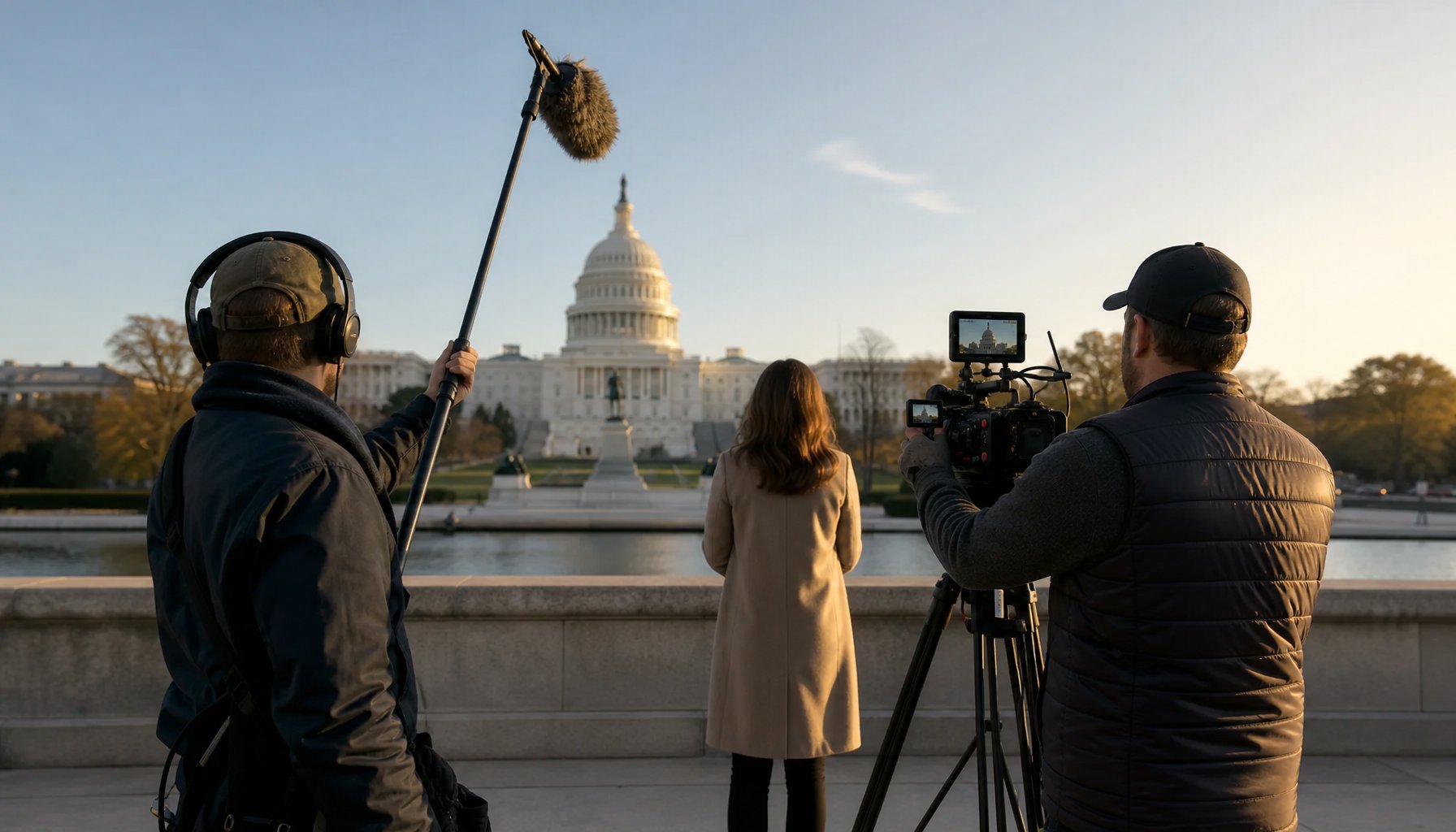
Panel discussions, live events, talk shows, and training sessions that require two or more camera angles need dedicated operators on each camera. A director or technical director also needs to be calling shots in real time, selecting between feeds and ensuring nothing critical is missed. One person simply cannot do this.
Broadcast-Quality Commercials and PSAs
Commercials that will air on television, streaming platforms, or as pre-roll ads demand cinematic production value. That means a director, a director of photography, a gaffer for lighting, a sound mixer, a production assistant, hair and makeup if talent is involved, and a producer managing the schedule. The difference between a solo-shot ad and a team-produced commercial is immediately visible to audiences, and it directly impacts brand perception.
Documentaries and Long-Form Storytelling
Documentary projects involve multiple shooting days across various locations, extensive interviews, archival research, narration recording, color grading, sound design, and sophisticated editing. These projects require a team with specialized roles: a producer to manage logistics, a DP to ensure visual consistency, an editor who understands narrative pacing, and often a motion graphics artist for data visualization or title sequences.
Studio Productions with LED Walls or Complex Sets
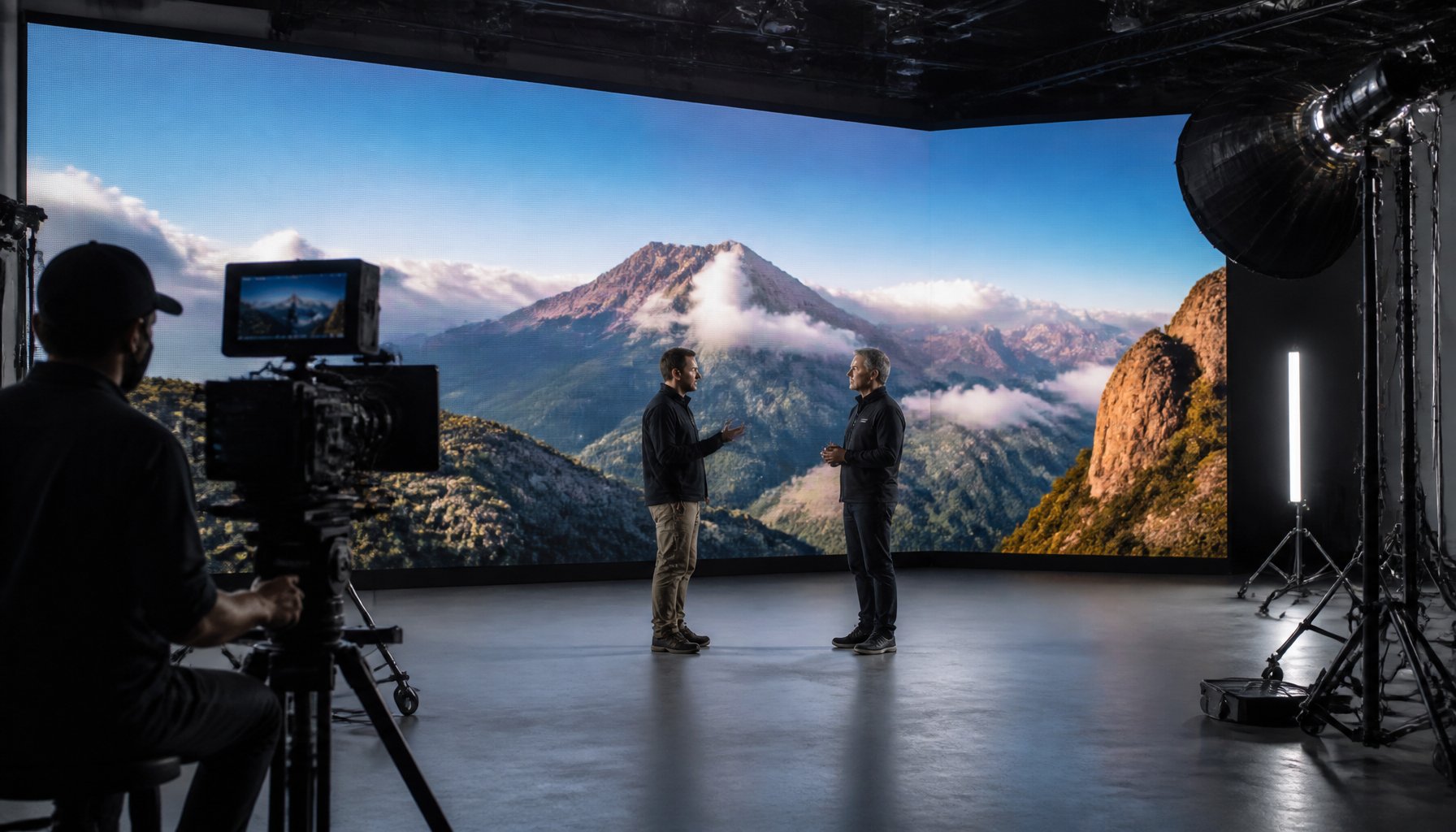
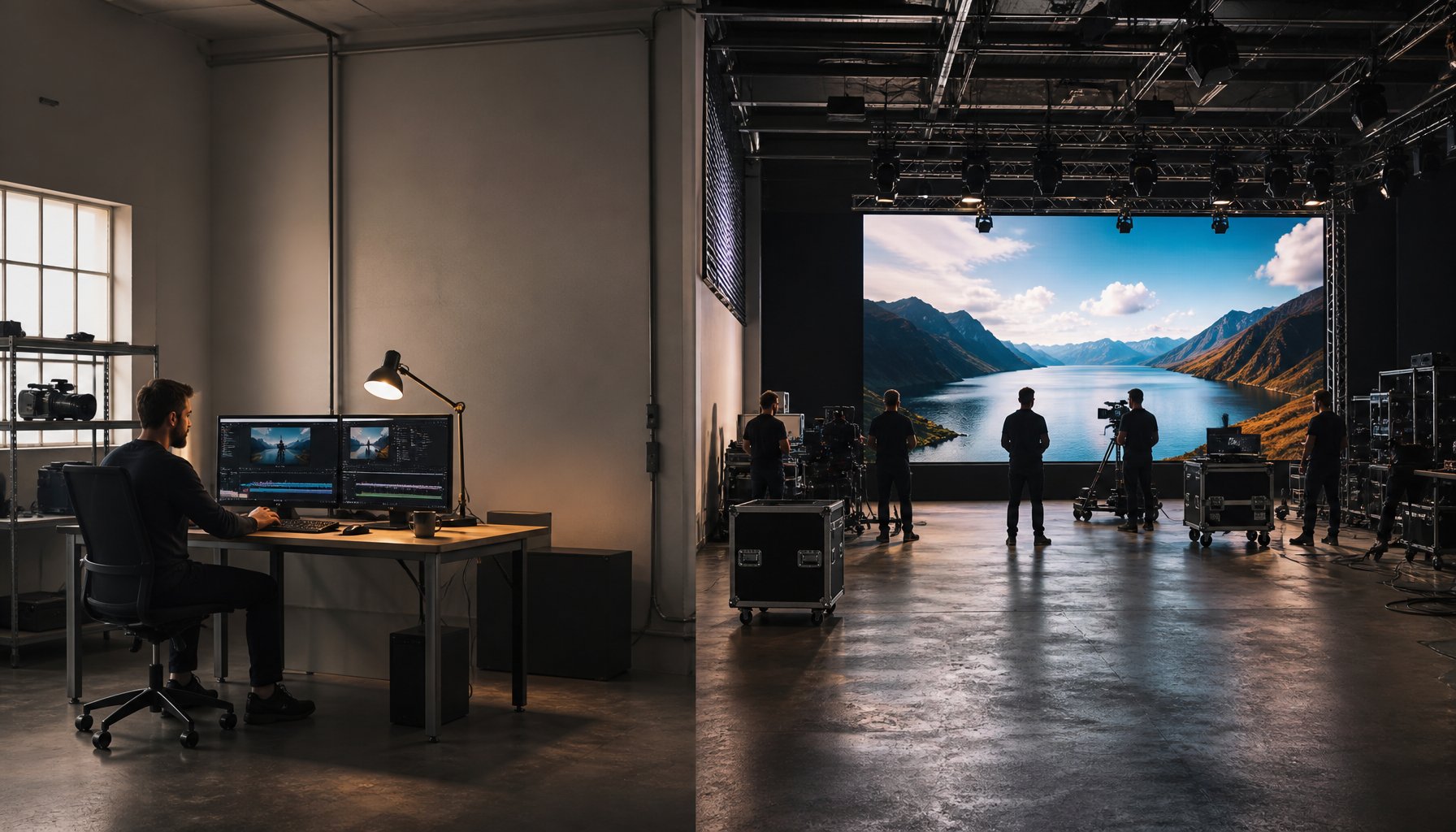
If your project involves studio filming, especially with LED wall virtual production technology, you need technicians to operate the wall, a DP who understands how to light for LED environments, and a director who can leverage the technology creatively. TriVision Studios operates one of the region’s premier LED wall studios, and every virtual production shoot involves a coordinated team to deliver photorealistic results.
Live Streaming and Hybrid Events
Live content has zero margin for error. There are no second takes. A professional live stream requires a technical director switching between cameras, a dedicated audio engineer, a graphics operator, a stream technician monitoring the broadcast feed, and often a producer coordinating with on-site event staff. Trusting this to one person is a recipe for technical failures during the moments that matter most.
High-Stakes Government or Corporate Content
When the content represents a federal agency, a Fortune 500 brand, or a major advocacy campaign, the reputational risk of underproducing is significant. These clients typically require pre-production planning meetings, scripting, storyboarding, location scouting, permitting, professional talent, and a post-production pipeline that includes multiple rounds of review. A team structure ensures accountability at every stage.
The Decision Framework: 5 Questions to Ask Yourself
Still unsure which route fits your project? Walk through these five questions before you make a commitment.
- How many camera angles do I need? If the answer is more than one, you need more than one operator, which means a team.
- Where will this content be seen? Internal audiences are more forgiving. Broadcast, advertising, and public-facing campaigns demand higher production value.
- Is the content live or recorded? Live content requires redundancy and real-time problem solving that only a team can provide.
- What is the complexity of my audio needs? Multiple speakers, music, sound effects, or live mixing all require a dedicated audio professional.
- What are the consequences if the video underperforms? If a failed video means lost funding, a damaged brand, or a compliance issue, invest in the team.
Why Washington DC Projects Often Demand More
The DC market is unique. The density of government agencies, associations, advocacy organizations, and international institutions creates a production environment where the bar is set higher than in many other cities. Audiences here are sophisticated. Decision-makers in federal agencies expect broadcast-level quality. Nonprofit donors who attend Capitol Hill events expect polished fundraising videos. Lobbyists and trade associations need content that commands credibility in rooms where billion-dollar policy decisions are made.
This context matters when choosing your production approach. A solo videographer can absolutely deliver excellent work for the right project, but DC clients frequently find that their content needs, audience expectations, and organizational stakes push them toward a full-service production partner.
TriVision Studios has spent years working with DC-area organizations across government, nonprofit, healthcare, technology, and corporate sectors. That experience has taught us exactly where the line falls between a lean shoot and a full production, and we help clients navigate that decision on every project.
Frequently Asked Questions
How much does a Washington DC videographer cost compared to a full production team?
A solo videographer in the DC area typically charges between $1,500 and $4,000 per day depending on experience, equipment, and deliverables. A full production team, which might include a producer, director, DP, audio engineer, gaffer, and editor, can range from $5,000 to $25,000 or more per shoot day depending on complexity. The key is matching the investment to the project scope. Overpaying for a simple interview is wasteful, but underpaying for a commercial that represents your brand to thousands is far more costly in the long run.
Can a solo videographer handle a corporate event in Washington DC?
It depends on the scope. If you need general highlight footage and a few candid interviews, a solo videographer can handle that well. If you need full ceremony coverage, multi-camera speaker capture, live streaming, and same-day edits, you need a team. Be honest about your deliverables list before deciding.
What roles are on a full video production team?
A typical full production team includes a producer or project manager, a director, a director of photography or camera operator, a gaffer or lighting technician, a sound mixer, a production assistant, and in post-production an editor, colorist, and motion graphics designer. For studio shoots, you may also have a teleprompter operator, a stage manager, and LED wall technicians.
Should I hire a freelance videographer or a production company?
Freelancers offer flexibility and often lower rates for simple projects. A production company like TriVision Studios offers scalability, accountability, and a bench of specialists who can be assembled based on your exact needs. For one-off social media clips, a freelancer may be fine. For ongoing content programs, campaigns, or high-visibility projects, a production company provides consistency, project management, and creative strategy that individual freelancers typically cannot match.
How do I know if my project is too complex for one videographer?
If your project involves any two of the following, it likely requires a team: multiple camera angles, scripted content with talent, live streaming, studio lighting setups, motion graphics, same-day delivery, or broadcast distribution. When in doubt, consult with a production company for an honest assessment. Reputable companies will tell you when a solo operator is sufficient and when you genuinely need more resources.
Make the Right Production Decision for Your DC Project
Choosing between a solo Washington DC videographer and a full production team is not about spending more or less. It is about spending wisely. Match your production resources to your project’s complexity, audience expectations, and organizational stakes, and you will get content that delivers real results without wasting budget.
If you are planning a video project in Washington DC and want an honest assessment of what level of production you actually need, reach out to TriVision Studios. We scale our teams to fit your project, whether that means a nimble two-person crew for a quick interview shoot or a full-service production unit for a broadcast campaign. Let us help you get it right from the start.