Your nonprofit does extraordinary work every single day — but if you can’t communicate that impact in a way that moves people emotionally, donations stall, volunteers lose interest, and your mission struggles to grow. That’s the core challenge of nonprofit video production: transforming real human impact into cinematic stories that compel audiences to act. According to Google’s research, 57% of people who watch a nonprofit’s video go on to make a donation, making video the single most powerful fundraising and awareness tool available to mission-driven organizations.
But here’s the truth most production guides won’t tell you: a polished video with beautiful B-roll and dramatic music won’t move anyone if the story underneath is weak. This guide is about the story — the emotional architecture that turns a good nonprofit video into one that changes minds, opens wallets, and rallies communities. Whether you’re based in Washington DC, Richmond, Baltimore, or New York City, the principles below will help you craft video narratives that truly inspire.
Why Storytelling Is the Heart of Nonprofit Video Production
Nonprofits don’t sell products. They sell belief — belief in a cause, a community, a future worth fighting for. And belief is built through story, not statistics. A data point might earn a nod; a well-told story earns a tear, a share, and a recurring monthly gift.
The Science Behind Emotional Storytelling
Neuroscience research from Paul Zak’s lab at Claremont Graduate University found that character-driven narratives cause the brain to release oxytocin — the neurochemical responsible for empathy and generosity. When viewers feel emotionally transported by a story, they’re significantly more likely to donate money, volunteer time, or share the content with their networks.
This isn’t abstract theory. It’s why the most successful nonprofit campaigns — from Charity: Water’s founder stories to the ASPCA’s iconic television spots — always center on a single person’s journey rather than organizational talking points.
Story vs. Information: The Critical Difference
Many nonprofits make the mistake of treating video as an informational brochure. They list programs, cite statistics, and feature executive directors delivering scripted messages behind a desk. While that content has a place in annual reports or board presentations, it rarely inspires action from the general public.
Effective nonprofit video production starts with a shift in mindset:
- Information tells. Story shows.
- Information appeals to logic. Story appeals to emotion.
- Information describes impact. Story makes the viewer feel the impact.
The goal isn’t to abandon facts — it’s to embed them inside a narrative that gives those facts emotional weight.
The Five-Part Story Framework for Nonprofit Videos
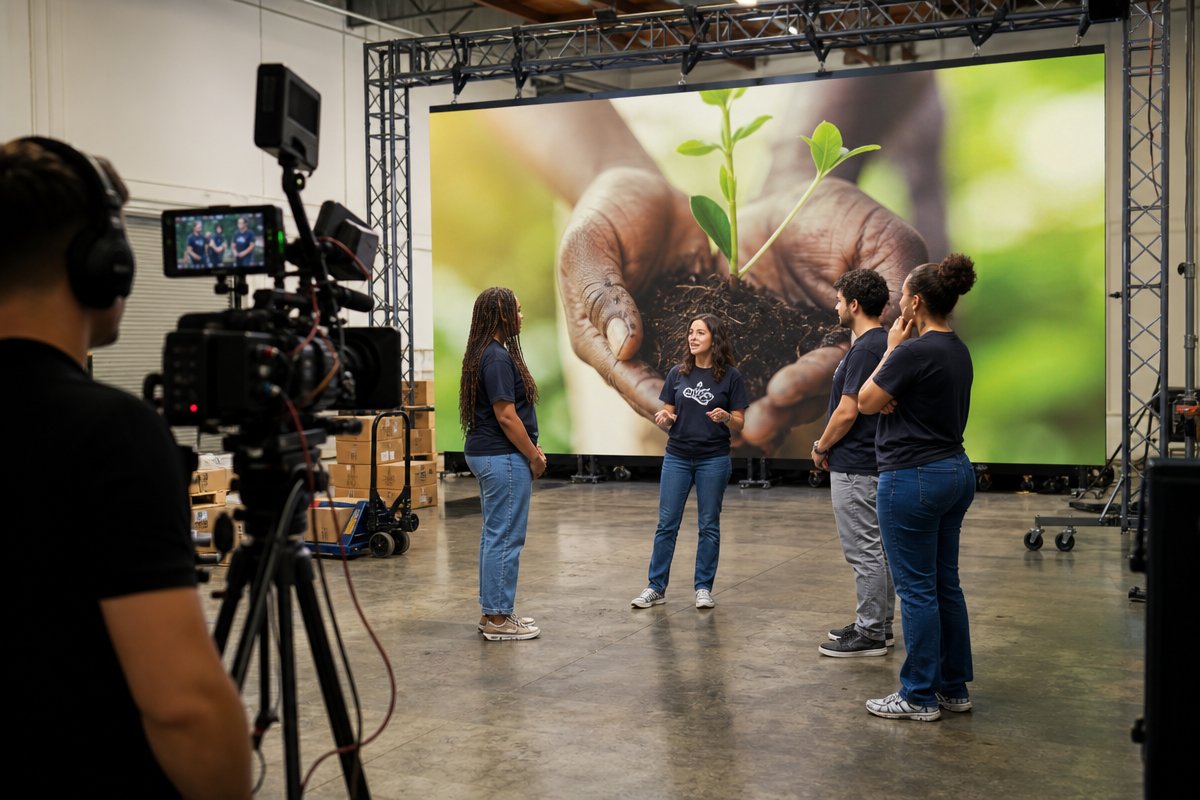
Every inspiring nonprofit video follows a recognizable emotional arc. Whether you’re producing a 60-second social media clip or a 10-minute documentary short, this five-part framework will keep your narrative focused and compelling.
1. The Hook: Establish Stakes Immediately
You have roughly three seconds before a viewer decides to keep watching or scroll past. Open with something that creates immediate tension or curiosity — a striking visual, an unexpected statement, or a question that demands an answer.
Examples:
- A child looking directly into the camera and saying, ‘Nobody told me I was worth something until I came here.’
- A wide shot of an empty food bank shelf with the text: ‘This was Tuesday.’
- A veteran’s hands shaking as he holds a photograph — no narration, just ambient sound.
The hook doesn’t need to explain anything. It needs to make the viewer feel something.
2. The Character: Make It Personal
The most common mistake in nonprofit video production is making the organization the protagonist. Your organization is not the hero of the story — the person you serve is. Or the volunteer whose life was changed. Or the community that came together.
Choose one real person and let the audience walk in their shoes. Give viewers:
- A name and a face
- A specific challenge or struggle (not a generalized issue)
- A moment of vulnerability that invites empathy
When donors see themselves reflected in a character’s humanity, the distance between ‘their problem’ and ‘our problem’ collapses.
3. The Conflict: Don’t Shy Away From Difficulty
Many nonprofits are tempted to sanitize their stories — to skip past the hard parts and jump straight to the happy ending. But conflict is what makes a story compelling. Without struggle, there’s no triumph. Without darkness, the light doesn’t mean anything.
This doesn’t mean exploiting suffering or creating ‘poverty porn.’ It means being honest about the challenges your community faces, with the full dignity and consent of the people whose stories you’re sharing.
4. The Turning Point: Show Your Mission in Action
This is where your organization enters the narrative — not as the hero, but as the catalyst that made change possible. Show the moment when your program, your team, or your community intervention created a shift in the character’s journey.
Be specific. Don’t say ‘we provided resources.’ Show the mentor sitting across the table at 9 PM on a Tuesday, going over a resume for the third time. Show the nurse practitioner driving 40 minutes to a rural home visit. Specificity is what separates a moving story from a generic one.
5. The Resolution and Call to Action
End with transformation — but leave room for the viewer to be part of the story’s next chapter. The most effective nonprofit videos don’t just wrap up neatly. They make the viewer feel that the story is ongoing, that more people need this help, and that they can be the reason the next person gets it.
Your call to action should be clear, single-focused, and emotionally connected to the story:
- ‘Maria got a second chance. Help us reach the 200 families still waiting.’
- ‘Donate today and put a mentor in another young person’s corner.’
Production Tips That Elevate Nonprofit Storytelling
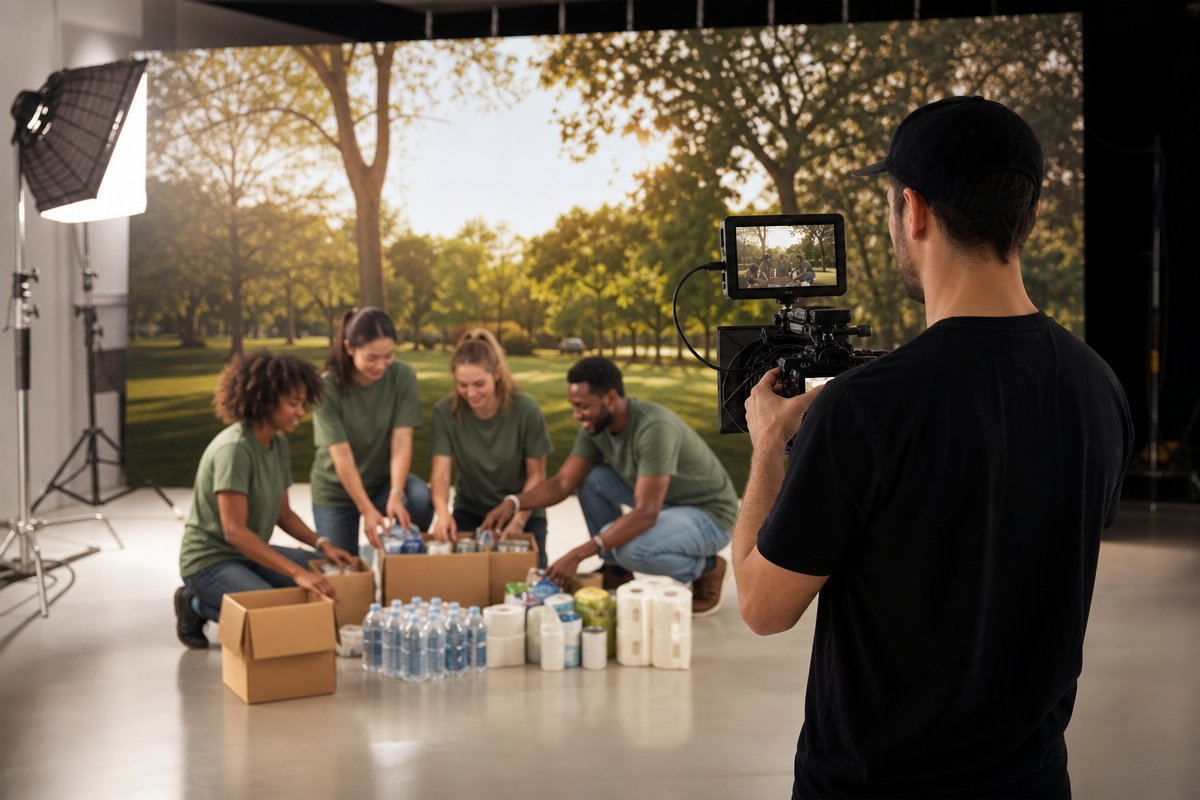
A powerful story needs strong execution. Here are the production techniques that separate amateur nonprofit videos from professional, broadcast-quality content.
Invest in Pre-Production Interviews
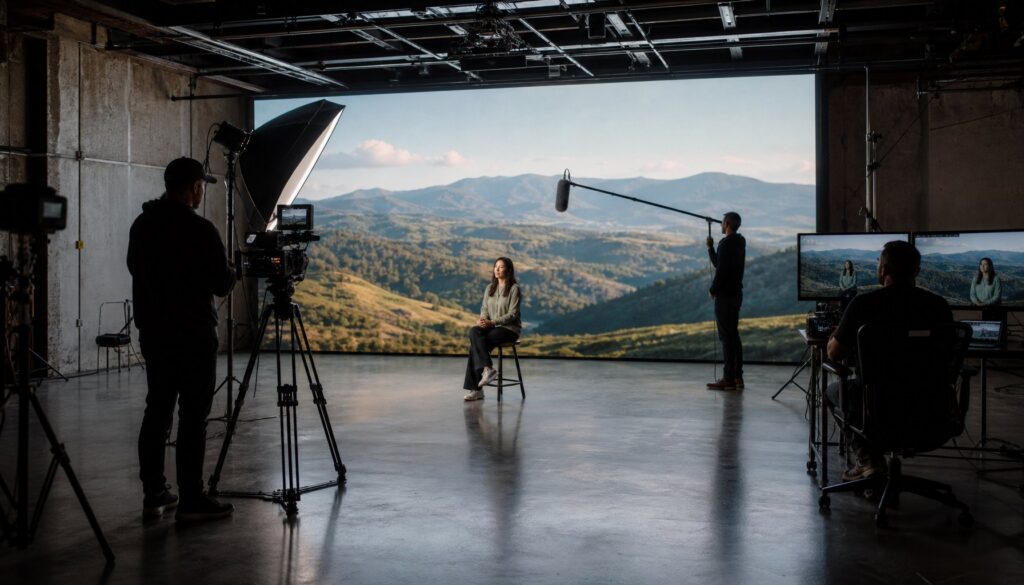
Before cameras ever roll, spend extended time with your subjects — off camera. Understand their full story, their emotional triggers, their language. The best interview moments come when a subject feels safe enough to be vulnerable, and that trust is built before production day, not during it.
Prioritize Audio Quality
Audiences will forgive imperfect visuals. They will not forgive bad audio. A crackly, echoey interview immediately undermines the emotional weight of even the most powerful testimony. Professional lavalier microphones, controlled recording environments, and careful sound design are non-negotiable for effective nonprofit video production.
Use B-Roll to Show, Not Decorate
Every cutaway shot should advance the story or deepen the viewer’s emotional connection. Instead of generic shots of your building’s exterior, show the details that tell the story: the worn spines of books in your literacy program, the hand-written thank-you notes pinned to a corkboard, the quiet moment between a counselor and a client in a hallway.
Music and Pacing: The Invisible Storytellers
Music sets the emotional tone, but it should never manipulate. Choose compositions that complement the story’s natural emotion rather than forcing sentimentality. Pacing matters equally — know when to let a moment breathe with silence, and when to build momentum toward your call to action.
Consider Studio Production for Controlled Segments
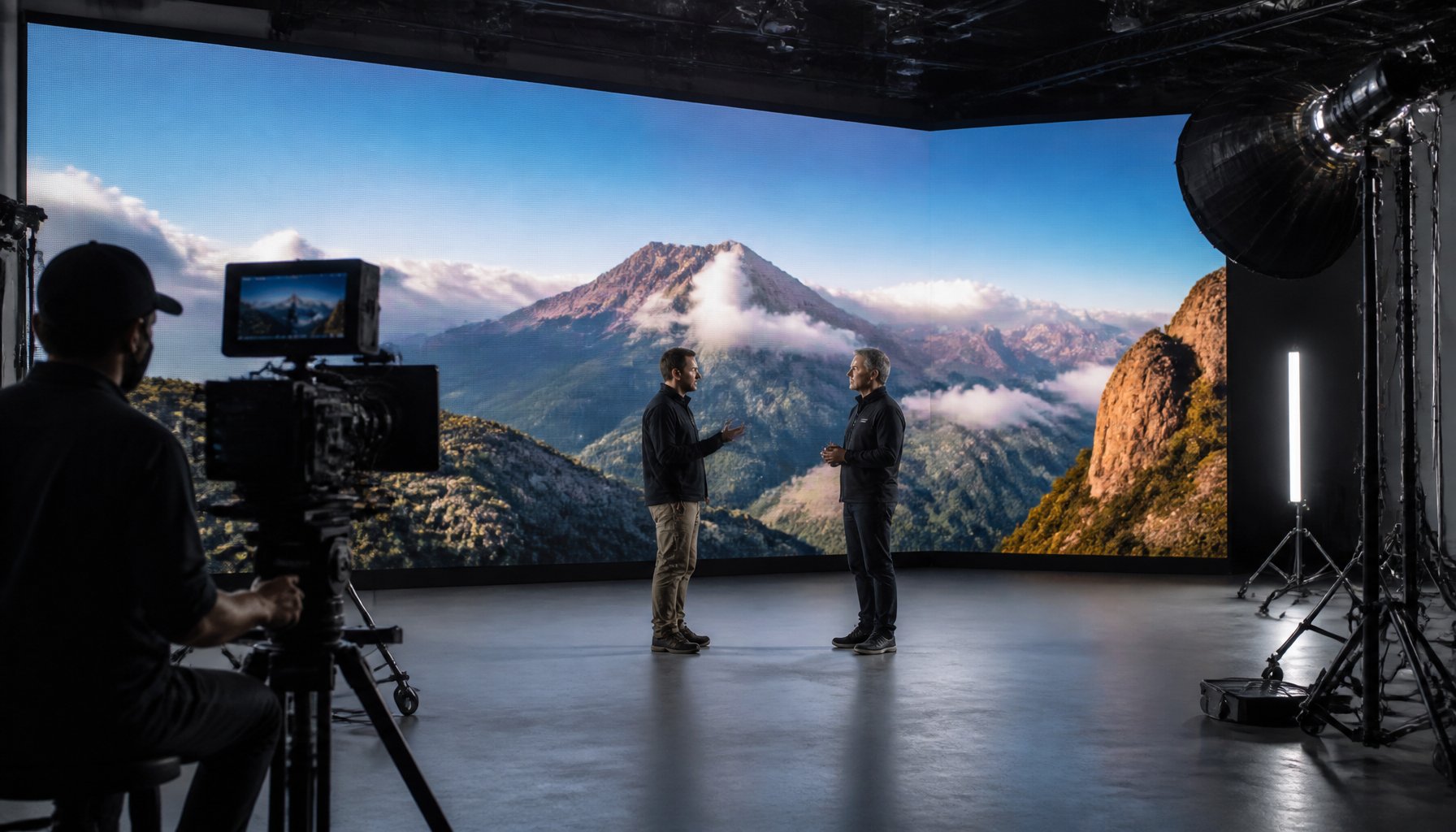
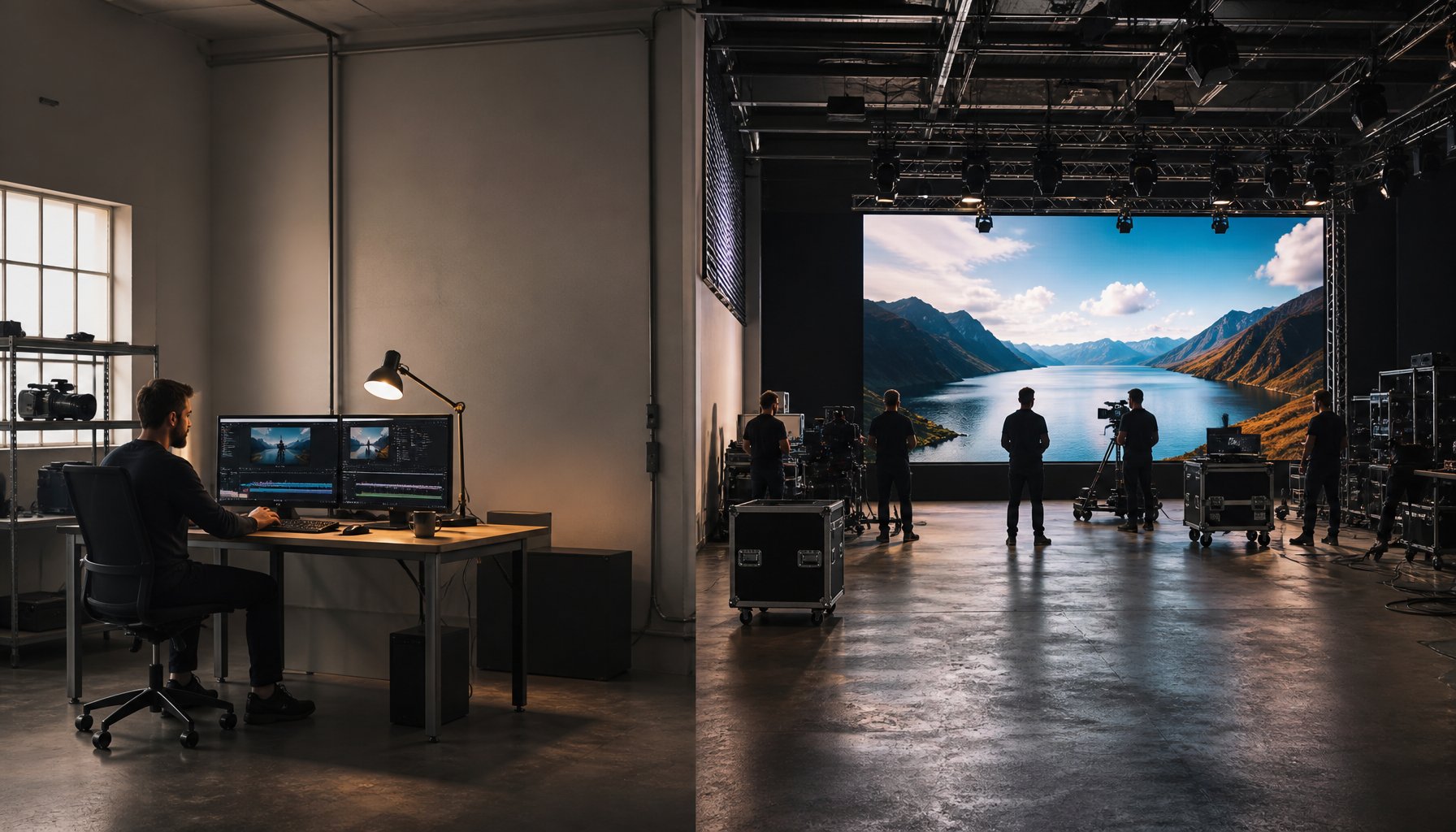
Some elements of your nonprofit video — leadership messages, data visualizations, branded segments — benefit from the controlled environment of a professional studio. Studio production gives you consistent lighting, clean audio, and the ability to incorporate virtual production techniques like LED wall backgrounds that can transport your message visually without the cost of on-location travel.
Types of Videos Every Nonprofit Should Produce
A comprehensive nonprofit video strategy isn’t built on a single video. Different goals require different formats, each leveraging the storytelling principles above in distinct ways.
Mission and Impact Videos
Your flagship storytelling piece — typically two to four minutes — designed to communicate who you are, why you exist, and the tangible difference you make. This is the video that lives on your homepage, plays at galas, and anchors your annual fundraising campaign.
Donor and Volunteer Testimonials
Let the people who support your organization explain why in their own words. These videos build social proof and help prospective donors see themselves in the story.
Campaign-Specific Appeals
Short, urgent, and tied to a specific goal — year-end giving, capital campaigns, emergency relief. These videos work best at 60 to 90 seconds and should drive a single, clear action.
Event Recaps and Sizzle Reels
Capture the energy and community around your events. These videos serve double duty as promotional tools for next year’s event and as thank-you content for attendees and sponsors.
Educational and Advocacy Content
Position your organization as a thought leader by producing videos that educate the public about the issues you address. These pieces build long-term trust and expand your audience beyond your existing donor base.
How to Work With a Video Production Partner
Most nonprofits don’t have in-house production teams, which means choosing the right production partner is one of the most important decisions you’ll make. Here’s how to ensure the collaboration produces exceptional results.
Look for Mission Alignment
The best nonprofit videos come from production teams that genuinely care about your cause. When your production partner understands why your work matters — not just what you need produced — the creative output is measurably stronger.
Prepare Your Subjects
Most people your nonprofit serves have never been on camera. Your production partner should have experience working with non-professional talent — creating comfortable environments, asking open-ended questions, and capturing authentic moments without staging.
Plan for Multi-Platform Distribution
A single shoot should yield multiple deliverables: a full-length version for your website and events, a 60-second cut for social media, a 15-second teaser for paid advertising, and still frames for email campaigns. Discuss these needs before production begins so the shoot is planned accordingly.
Budget Honestly
Professional nonprofit video production is an investment, but it doesn’t have to be prohibitively expensive. Be transparent about your budget with your production partner. Experienced teams — especially those with a track record serving nonprofits — can scale production approaches to match your resources without sacrificing storytelling quality.
Frequently Asked Questions About Nonprofit Video Production
How long should a nonprofit video be?
It depends on the platform and purpose. For social media, aim for 60 to 90 seconds. For website hero videos and gala presentations, two to four minutes is the sweet spot. For mini-documentaries and in-depth impact stories, five to eight minutes can work if the narrative is strong enough to sustain attention. The golden rule: a video should be exactly as long as the story requires — no longer.
How do we tell someone’s story ethically?
Ethical storytelling requires informed consent, editorial control shared with subjects, and a commitment to portraying people with dignity rather than as objects of pity. Always ask: ‘Would this person be proud to show this video to their family?’ If the answer is uncertain, revisit your approach. Compensating subjects for their time is also a best practice that many leading nonprofits have adopted.
What makes nonprofit video production different from corporate video?
The core difference is the emotional contract with the audience. Corporate videos typically aim to build brand trust and drive commercial conversions. Nonprofit videos must inspire belief in a cause and motivate altruistic action — a fundamentally different psychological ask that requires deeper emotional storytelling, authentic human subjects, and narratives centered on impact rather than products or services.
Can we produce effective videos on a limited budget?
Yes, but with important caveats. A single, well-produced story video will always outperform five mediocre ones. Focus your budget on the elements that matter most: strong pre-production planning, quality audio, and skilled editing. A good production partner will help you maximize every dollar by planning multi-use shoots and prioritizing the content that will drive the most impact for your specific goals.
How do we measure the success of our nonprofit videos?
Metrics should align with your video’s purpose. For fundraising videos, track donation conversions and average gift size during campaigns featuring the video. For awareness content, measure view count, watch-through rate, and social shares. For advocacy pieces, track website traffic, email sign-ups, and media pickups. The most sophisticated nonprofits also conduct pre- and post-campaign surveys to measure shifts in audience perception and intent.
Should we hire a local production company or a national one?
Local production companies offer significant advantages for nonprofits: reduced travel costs, familiarity with regional communities and venues, faster turnaround for multi-day shoots, and often a pre-existing understanding of local issues. For organizations in the DC, Richmond, Baltimore, or NYC areas, working with a regional partner that specializes in nonprofit and mission-driven content ensures both logistical efficiency and creative alignment.
Turn Your Mission Into a Movement
The stories your nonprofit holds — of resilience, transformation, and community — are too important to tell poorly. Nonprofit video production done right doesn’t just inform people about your work. It makes them feel like they’re part of it. It turns passive viewers into passionate advocates, one-time donors into lifelong champions.
At TriVision Studios, we’ve spent years partnering with nonprofits and advocacy organizations across Washington DC, Northern Virginia, Maryland, Baltimore, Richmond, and New York City to produce video content that amplifies missions and drives measurable impact. From cinematic impact films to social media campaigns, our team brings the storytelling expertise and production quality your cause deserves.
Ready to tell the story that inspires your next wave of supporters? Contact TriVision Studios to start the conversation.