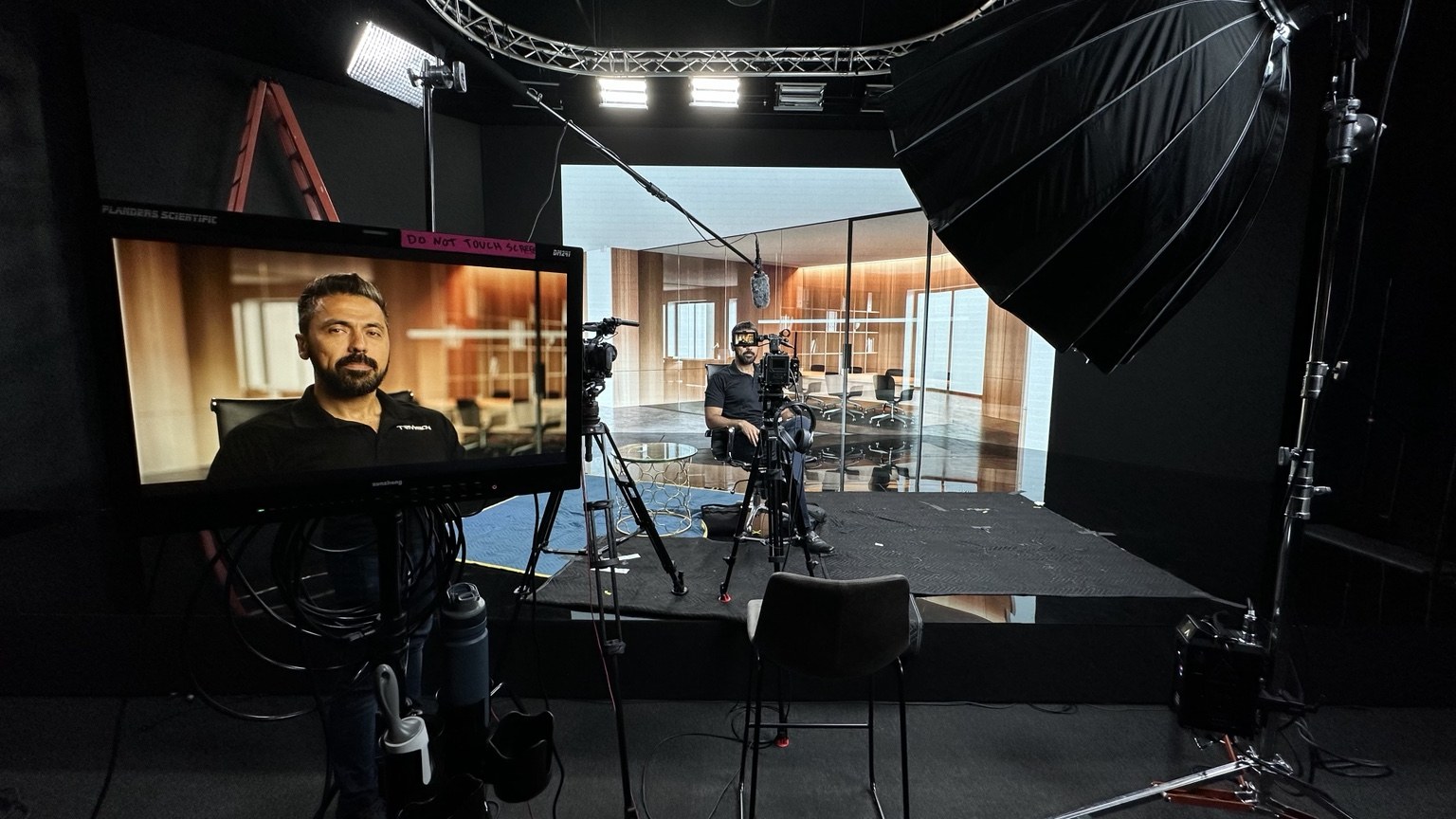
Use a teleprompter when the speaker must deliver approved language accurately and look into the lens. Add a second camera when the edit needs a useful alternate angle. They solve different problems: the prompter helps the person speaking; the second camera gives the editor another way to build the story.
Know which words are locked
Mark language legal or communications has approved, but do not script every answer just because a prompter is available. If the person is speaking to an interviewer, an eye-line to the side usually fits the format; if they are addressing viewers directly, lens-level prompting can help. Make scripts speakable, break long clauses into short beats and let the speaker set the pace.
Choose an angle with a job to do
Plan a wider frame for context and a tighter one for emphasis. Match color, audio, eye-line and action across cameras. A second angle can smooth edits, but won’t fix long or muddy answers. Decide whether you also need vertical deliverables before framing, not in the edit after the shoot.
| Brief | Start with |
|---|---|
| CEO announcement; approved wording | Lens-level prompter; consider a separate angle for edits |
| Conversational Q&A or testimonials | Off-camera interviewer; consider two matched angles |
| Short factual quote; minimal edit | One camera and clean audio may suffice |
| Scripted open + natural discussion | Prompt the open; rehearse the handoff to off-camera Q&A |
Rehearse the first answer, not just the opener
Ask the speaker to give one scripted line and one unscripted answer. Check for eye movement, pace, reflection in glasses, microphone noise and whether the two angles look meaningfully different. Record and play back a short test. If the prompter makes delivery stiff, try shorter cue lines or an off-camera interviewer for that segment.
Write the preflight into the call sheet
Confirm the final script owner and file, pronunciations and how changes will reach the operator. Name the interviewer’s position, primary frame, audio source and recording backup. Agree who calls a reset if the speaker looks at the wrong camera or a script revision arrives on set.
A Chantilly production example
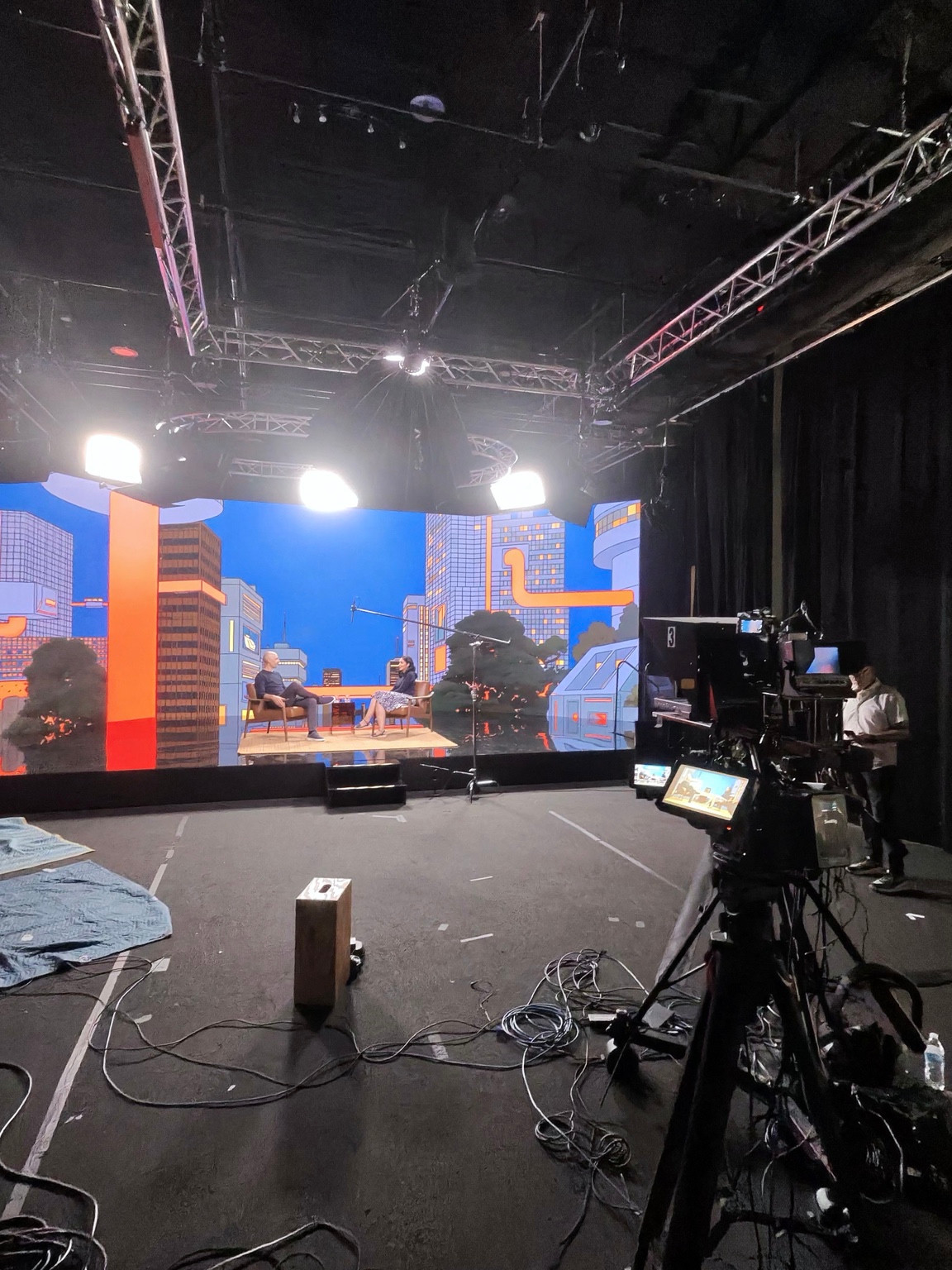
TriVision’s published Zapier / LocalEyes case documents two camera packages with operators and a seated setup in Studio A. Its separate studio tour describes teleprompting and rehearsal capabilities. That does not establish a prompter was used on Zapier; it shows why the two choices should be scoped independently.
Frequently asked questions
Can a prompter help without a word-for-word script?
Yes. Short cue phrases can help, provided the speaker is comfortable and the eye-line fits the format.
Is one camera enough for a corporate interview?
Often. For a short, clean statement, invest first in sound, light and delivery. Add a second angle when it has a defined editorial use.
Should we plan vertical clips before filming?
Yes. Agree the crop or dedicated vertical framing, graphics and text clearance before setting the shots.