Government Video Procurement Is Complex — Here’s Your Roadmap
If you’re a contracting officer, communications director, or program manager at a federal, state, or local agency, you already know that hiring a vendor isn’t as simple as picking up the phone. Figuring out how to hire a video production company for government work means navigating procurement regulations, justifying spend, and ensuring the final product actually moves the needle on your agency’s mission. According to the Government Accountability Office, federal agencies collectively spend billions on communications and media services each year — yet many project leads say the procurement process itself is the single biggest obstacle to getting quality video content produced on time.
This guide walks you through every stage of the process: from defining your project scope to writing an airtight RFP, selecting the right contract vehicle, evaluating proposals, and managing the engagement through delivery. Whether you’re producing a public-facing PSA, an internal training series, or a virtual event broadcast, the steps below will help you secure a capable production partner while staying fully compliant.
Step 1: Define Your Project Scope and Objectives
Before you draft a single procurement document, you need absolute clarity on what you’re trying to accomplish. Skipping this step is the number-one reason government video projects run over budget or miss the mark creatively.
Questions to Answer Internally
- What is the purpose of the video? Training, recruitment, public awareness, legislative testimony support, event documentation, or something else?
- Who is the target audience? Internal staff, the general public, congressional stakeholders, or a specific demographic?
- What deliverables do you need? A single hero video? A series of short social clips? A livestream with on-demand replay? Animation and motion graphics?
- What is your timeline? Are there hard deadlines tied to a campaign launch, congressional session, or fiscal year close?
- What is your estimated budget range? Even a rough ceiling helps vendors propose realistic solutions.
Create a Statement of Work (SOW)
Your SOW is the backbone of the entire procurement. It should detail:
- Project background and objectives
- Specific tasks and deliverables (including quantities, formats, and aspect ratios)
- Performance standards and acceptance criteria
- Period of performance with milestone dates
- Government-furnished equipment or resources, if any
- Section 508 accessibility requirements for all video deliverables
A well-written SOW prevents scope creep and gives evaluators a clear framework for comparing proposals apples-to-apples.
Step 2: Choose the Right Contract Vehicle
Government procurement offers multiple pathways to engage a video production company. The right choice depends on your agency, budget threshold, and urgency.
GSA Schedule (Multiple Award Schedule)
The General Services Administration’s MAS program includes Special Item Numbers (SINs) for audiovisual and media production services. Vendors on GSA Schedule have already been vetted for pricing, past performance, and compliance. Using a GSA Schedule contract can significantly shorten your procurement timeline — from months to weeks in some cases.
Blanket Purchase Agreements (BPAs)
If your agency anticipates recurring video production needs — quarterly training videos, ongoing social media content, or annual event coverage — a BPA lets you establish terms with one or more pre-qualified vendors and issue individual call orders as needs arise. This reduces administrative overhead and builds continuity with your production partner.
Simplified Acquisition Procedures
For projects under the simplified acquisition threshold (currently $250,000 for most civilian agencies), you can use streamlined procedures that require fewer formal steps. This is common for one-off video projects or pilot programs.
Full and Open Competition (FAR Part 15)
Larger, more complex engagements — multi-year IDIQ contracts, agency-wide media support — typically require full and open competition with detailed evaluation criteria, oral presentations, and formal source selection.
Small Business Set-Asides
Depending on your agency’s small business goals, you may need to set aside the procurement for small businesses, 8(a) firms, HUBZone companies, service-disabled veteran-owned small businesses (SDVOSBs), or women-owned small businesses (WOSBs). Many highly capable video production companies in the Washington DC metro area qualify under one or more of these designations.
Step 3: Write an Effective RFP for Video Production
Your Request for Proposal is where you communicate exactly what you need and how you’ll decide who gets the work. A poorly written RFP attracts generic responses; a well-crafted one draws out the best thinking from experienced vendors.
Key Sections of a Government Video Production RFP
- Background and Purpose: Give offerors enough context to propose intelligently. What does your agency do? Why is this video project important? What problem does it solve?
- Scope of Work: Reference the detailed SOW you developed in Step 1.
- Proposal Instructions: Specify page limits, required sections, file formats, and submission deadlines. Be explicit about what you want in each volume (technical approach, past performance, pricing).
- Evaluation Criteria: List factors in descending order of importance. Common criteria for video production RFPs include:
- Technical approach and creative vision
- Relevant past performance (especially with government clients)
- Key personnel qualifications
- Price/cost realism
- Section 508 compliance capability
- Contract Type: Firm-fixed-price (FFP) is most common for defined video projects. Time-and-materials (T&M) may be appropriate for ongoing production support with variable scope.
Pro Tips for RFP Success
- Request demo reels with context. Ask vendors to submit samples of work similar to your project — and to describe their specific role, budget, and timeline for each sample.
- Include a Q&A period. Allow vendors to submit written questions and publish anonymized answers to all offerors. This levels the playing field and reduces ambiguity.
- Don’t over-specify the creative. Define outcomes, not methods. Tell vendors what message you need to convey and let them propose the creative approach. The best production companies will bring ideas you haven’t considered.
Step 4: Evaluate Proposals and Select Your Partner
With proposals in hand, your evaluation team needs a structured process to identify the best value offeror.
Assemble a Technical Evaluation Panel (TEP)
Your panel should include stakeholders who understand both the subject matter and production quality. Consider including:
- The program manager or communications lead who will use the final product
- A contracting professional familiar with FAR evaluation procedures
- A subject matter expert who can assess content accuracy
- Optionally, someone with media or creative production experience
What to Look for in a Government Video Production Partner
Beyond the evaluation criteria in your RFP, here are the attributes that separate truly capable government production companies from the rest:
- Demonstrated government experience: Have they navigated security clearances, worked on military installations, filmed inside federal buildings, or produced content requiring multi-level review cycles?
- End-to-end capability: Can they handle pre-production planning, scripting, on-location and studio filming, post-production editing, animation, captioning, and delivery — or will they subcontract critical phases?
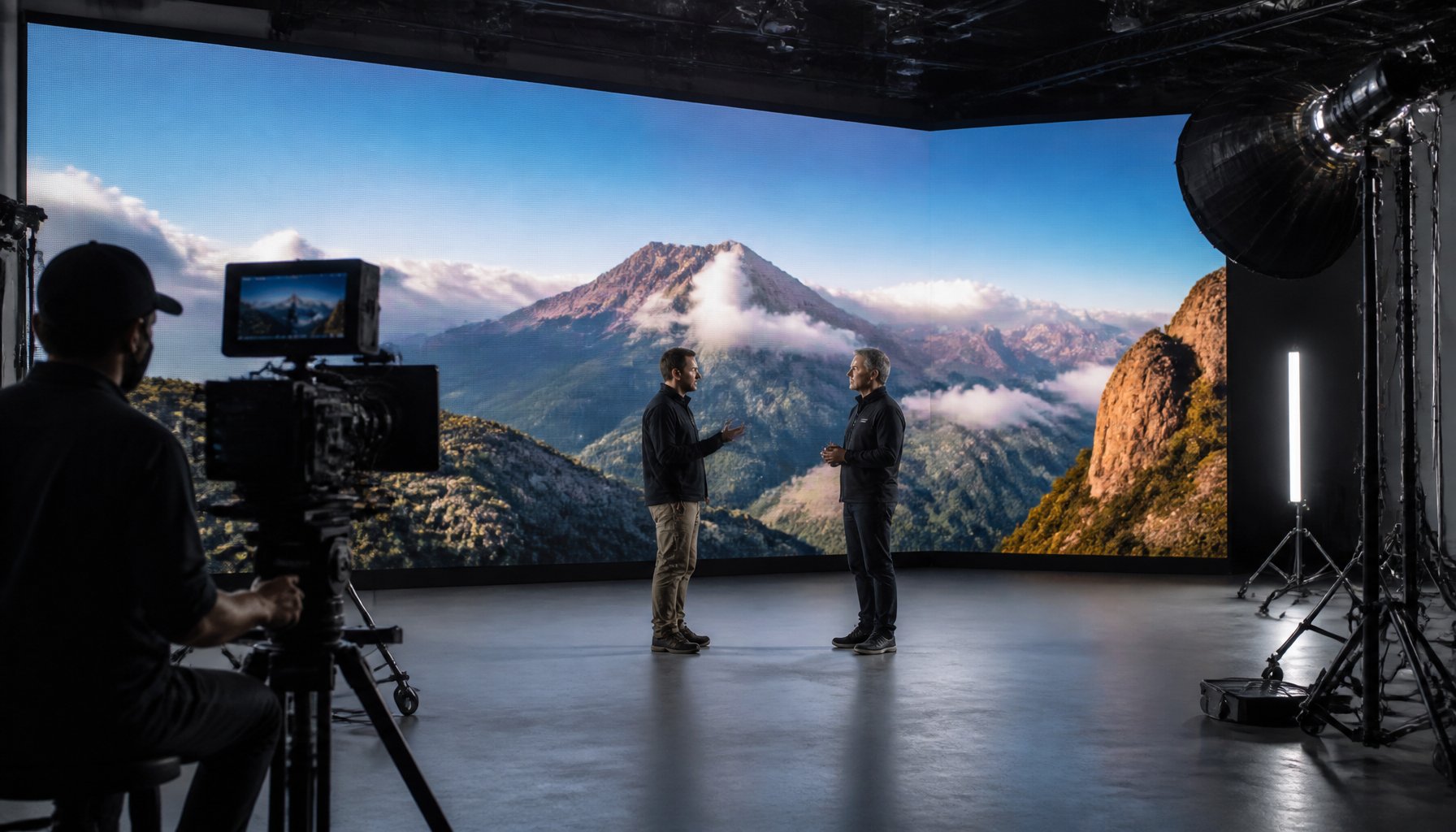
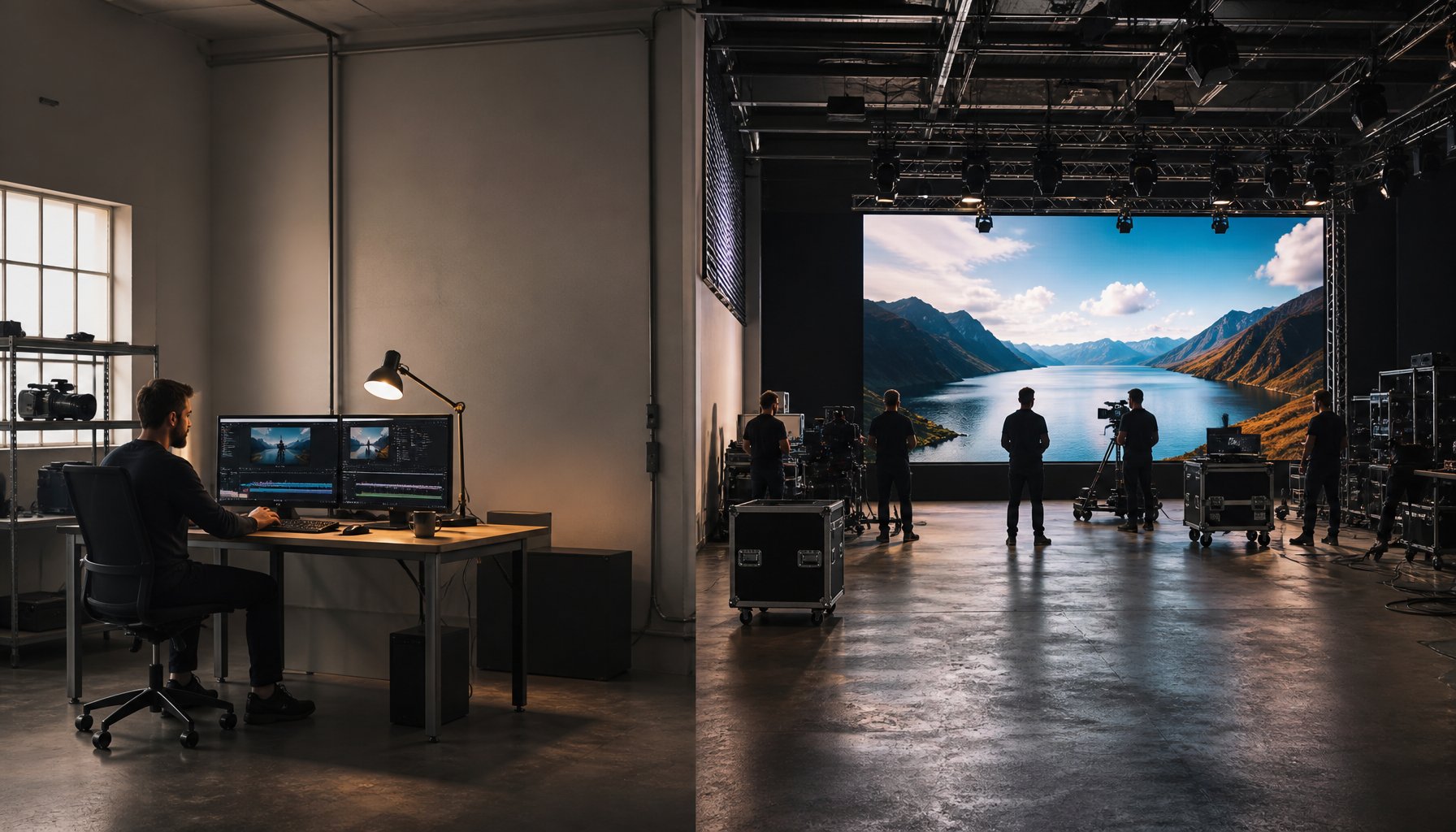
- Studio infrastructure: Companies with their own production studios offer more control over quality, scheduling, and cost. LED wall virtual production technology, professional lighting grids, and controlled sound environments make a measurable difference in production value.
- Accessibility expertise: Section 508 compliance isn’t optional. Your vendor must deliver videos with accurate closed captions, audio descriptions where required, and accessible player compatibility.
- Scalability: Can they handle a single project today and a dozen next quarter without sacrificing quality?
Check Past Performance References
Don’t just read reference letters — call them. Ask previous government clients:
- Did the vendor deliver on time and within budget?
- How did they handle change orders and scope adjustments?
- Were review cycles smooth or contentious?
- Would you hire them again?
Step 5: Navigate Compliance and Security Considerations
Government video production comes with compliance requirements that commercial projects don’t. Address these early to avoid delays during performance.
Security Clearances and Facility Access
If your project involves filming at secure government facilities, your production crew may need background checks or security clearances. Build this lead time into your project schedule — clearance processing can take weeks or months depending on the level required.
Intellectual Property and Data Rights
Ensure your contract clearly specifies who owns the finished video content, raw footage, graphics, and music licenses. Under most government contracts, the agency retains unlimited rights to deliverables. Clarify this in the SOW to prevent disputes.
Section 508 and ADA Compliance
All video content produced for federal agencies must comply with Section 508 of the Rehabilitation Act. This means:
- Accurate synchronized captions for all spoken content
- Audio descriptions for visual information not conveyed through dialogue
- Transcripts available for downloadable media
- Accessible video player embedding on agency websites
Records Management
Video content created under a government contract may be subject to federal records management requirements. Discuss archival formats, metadata standards, and retention schedules with your records management officer before production begins.
Step 6: Manage the Engagement for Maximum ROI
Awarding the contract is just the beginning. How you manage the production relationship directly impacts the quality of your final deliverables.
Establish a Clear Review and Approval Process
Government video projects typically involve multiple stakeholders — public affairs, legal, subject matter experts, and leadership. Define who reviews what, at which stage, and how many revision rounds are included in the contract. A typical production workflow includes approval gates at:
- Creative brief and concept development
- Script or storyboard
- Rough cut edit
- Fine cut with graphics, music, and captions
- Final delivery
Designate a Single Point of Contact
Nothing derails a production faster than conflicting feedback from multiple reviewers. Appoint one Contracting Officer’s Representative (COR) or project lead who consolidates all feedback into a single, unified set of direction for the production team.
Plan for Contingencies
Filming schedules can shift due to weather, executive availability, or facility access changes. Build buffer time into your period of performance and ensure your contract includes provisions for reasonable schedule adjustments without costly modifications.
Frequently Asked Questions
How long does the procurement process take for government video production?
Timelines vary significantly based on your contract vehicle. Using an existing GSA Schedule or BPA, you can potentially award a task order in two to four weeks. A full and open competition under FAR Part 15 can take three to six months or longer, depending on the complexity of the requirement and number of proposals received. Simplified acquisition procedures for smaller projects typically fall somewhere in between.
What should a government video production RFP include?
At a minimum, your RFP should include a detailed statement of work, proposal instructions with page limits and required sections, evaluation criteria listed in order of importance, the contract type, period of performance, applicable FAR clauses, and any agency-specific requirements such as security clearances or Section 508 compliance standards.
Can I sole-source a video production contract?
Sole-source awards are possible but require justification under FAR Part 6. Common justifications include the vendor being the only responsible source, unusual and compelling urgency, or a statutory authority. In practice, sole-source justifications for video production are difficult to sustain because multiple qualified vendors typically exist in most markets, especially in the Washington DC area.
How do I ensure video content meets Section 508 requirements?
Include Section 508 compliance as a mandatory requirement in your SOW and evaluation criteria. Require vendors to describe their captioning, audio description, and accessibility testing processes in their proposals. During production, review caption accuracy at the fine-cut stage and test the final video in accessible players before accepting delivery.
What budget should I plan for a government video project?
Budgets depend on scope, but a professionally produced government video typically ranges from $10,000 to $50,000 or more per finished minute of content. Factors that drive cost include the number of shoot days, locations, talent, animation or motion graphics requirements, and the complexity of the review cycle. Training series and documentary-style projects with extensive interviews and b-roll tend to fall on the higher end.
Ready to Start Your Government Video Project?
Understanding how to hire a video production company for government work doesn’t have to be overwhelming. With a well-defined scope, the right contract vehicle, a clear RFP, and a structured evaluation process, you can secure a production partner who delivers compelling content on time, on budget, and in full compliance.
TriVision Studios has served as a trusted video production partner for federal agencies, state governments, and municipalities across Washington DC, Northern Virginia, Maryland, Baltimore, Richmond, and New York City. From strategic pre-production planning and studio filming in our LED wall virtual production facility to post-production, captioning, and final delivery — we handle every phase in-house. Our team understands government procurement, security protocols, multi-stakeholder review cycles, and Section 508 compliance because we’ve navigated them hundreds of times.
If you’re preparing an RFP or exploring options for your next government video project, contact TriVision Studios for a consultation. Let’s build something that serves your mission and your audience.