You know your organization needs video. Leadership is on board, the budget is approved, and the goals are clear — but what actually happens once you hire a production company? For many corporate clients in Washington DC, the production process itself feels like a black box. You hand off a brief and hope for the best. That uncertainty is exactly what leads to missed deadlines, bloated budgets, and final deliverables that miss the mark. According to Wyzowl’s 2026 State of Video Marketing report, 91% of businesses now use video as a marketing tool, yet many still struggle with the process of getting from concept to a finished product. Understanding the corporate video production process explained in clear, actionable steps is the first thing every stakeholder should demand before a single camera rolls.
This guide walks you through every phase — discovery, pre-production, scripting, production day, post-production, and final delivery — so you know exactly what to expect, what questions to ask, and how to set your project up for success.
Phase 1: Discovery and Strategy — Laying the Foundation
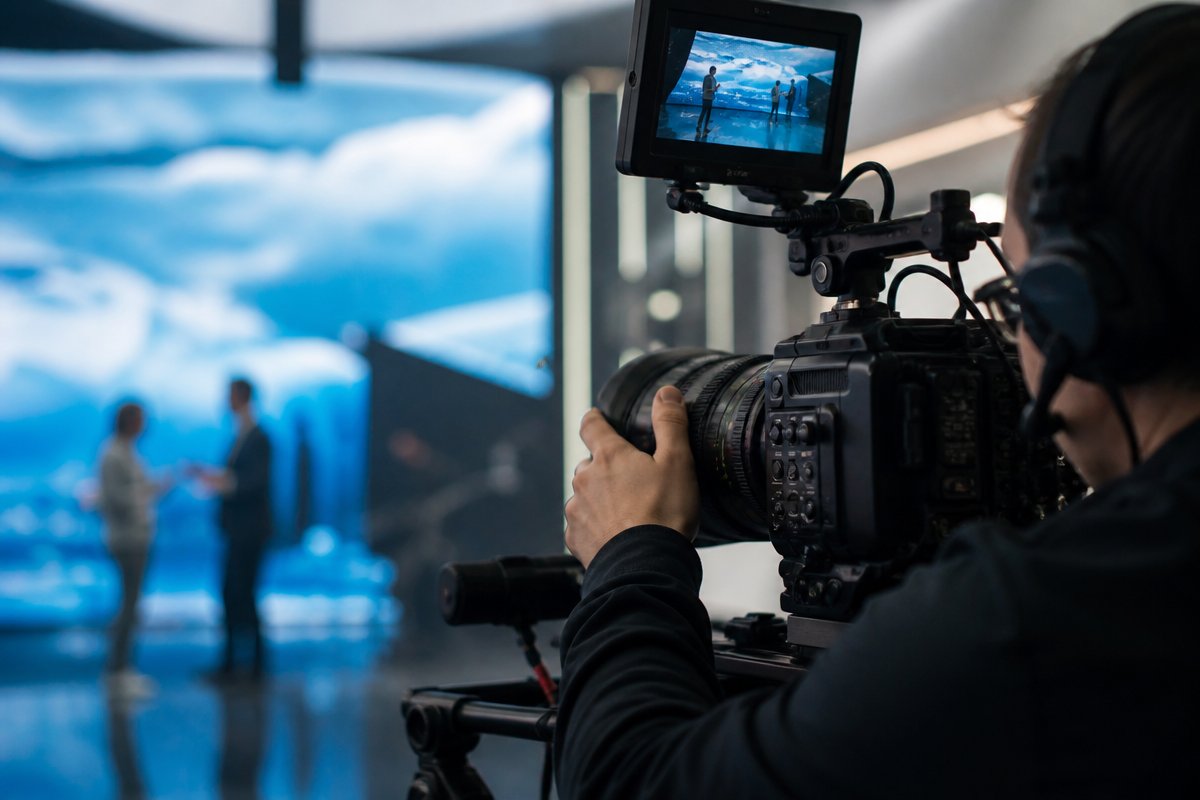
Every high-impact corporate video begins long before anyone picks up a camera. The discovery phase is where your production partner learns your business, your audience, and your objectives inside and out. Skip this step and every decision downstream becomes a guess.
What Happens During Discovery
- Stakeholder interviews: The production team meets with your key decision-makers to understand the video’s purpose. Is this for internal training? External brand awareness? Investor relations? Each goal demands a different creative approach.
- Audience analysis: Who is watching this video, and where will they watch it? A compliance training video for employees requires a different tone, length, and visual style than a customer-facing brand film destined for social media.
- Competitive and brand review: A seasoned team will study your existing brand guidelines, past video content, and even what your competitors are producing to identify opportunities for differentiation.
- Goal setting and KPIs: The best production partners tie creative decisions to measurable outcomes — view count, engagement rate, lead generation, or employee completion rates.
Why This Phase Matters for DC-Area Organizations
Corporate clients in Washington DC — especially government agencies, nonprofits, and advocacy organizations — often have complex approval chains and compliance requirements. Surfacing those constraints during discovery prevents costly reshoots and revision cycles later. At TriVision Studios, the discovery process is built specifically to navigate these realities, drawing on years of experience producing corporate video content for organizations across DC, Northern Virginia, Maryland, and beyond.
Phase 2: Pre-Production — Planning Every Detail
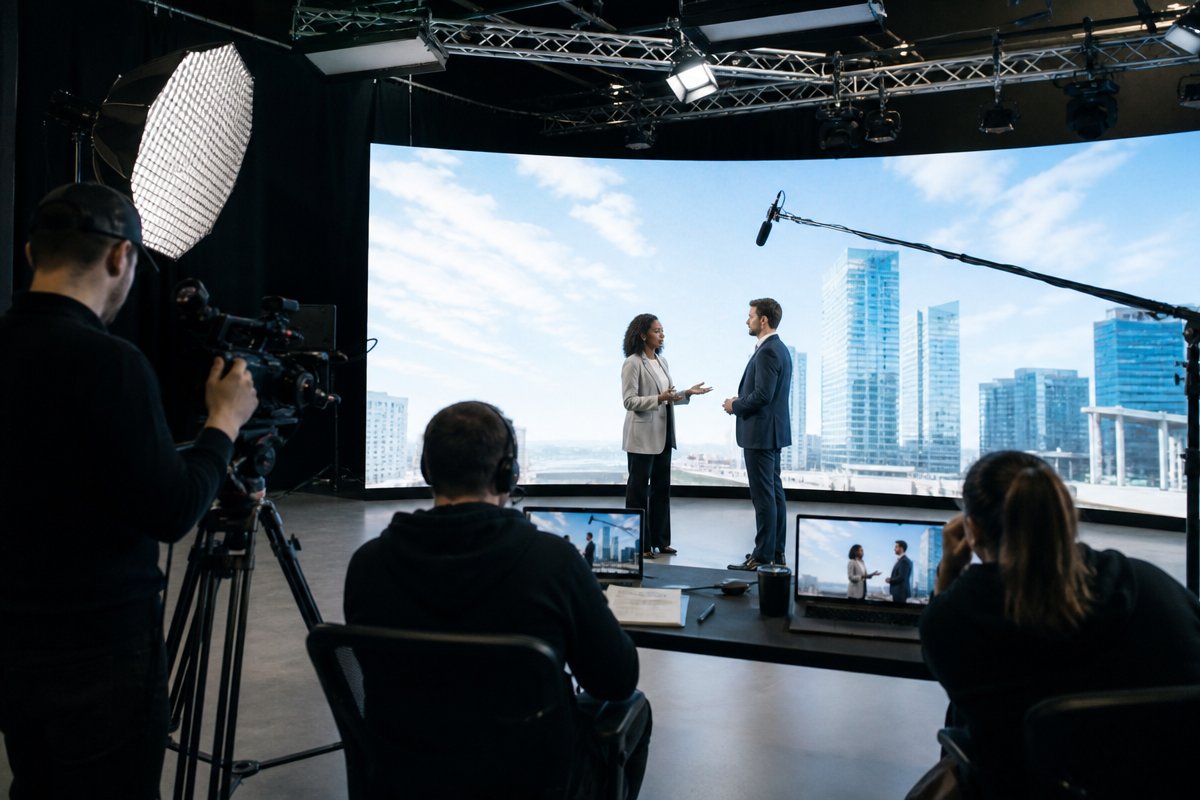
Pre-production is the blueprint phase. It transforms the strategic insights from discovery into a concrete, executable plan. This is where timelines are set, scripts are written, locations are scouted, and talent is cast.
Scripting and Storyboarding
The script is the backbone of your corporate video. A professional scriptwriter translates your messaging goals into a narrative that resonates with your audience. Depending on the video type, this could be a word-for-word teleprompter script, a loose interview guide, or a detailed voiceover narration.
Storyboards or shot lists accompany the script to give everyone — from the creative director to the client — a visual preview of the final product. This step dramatically reduces surprises on shoot day.
Logistics and Scheduling
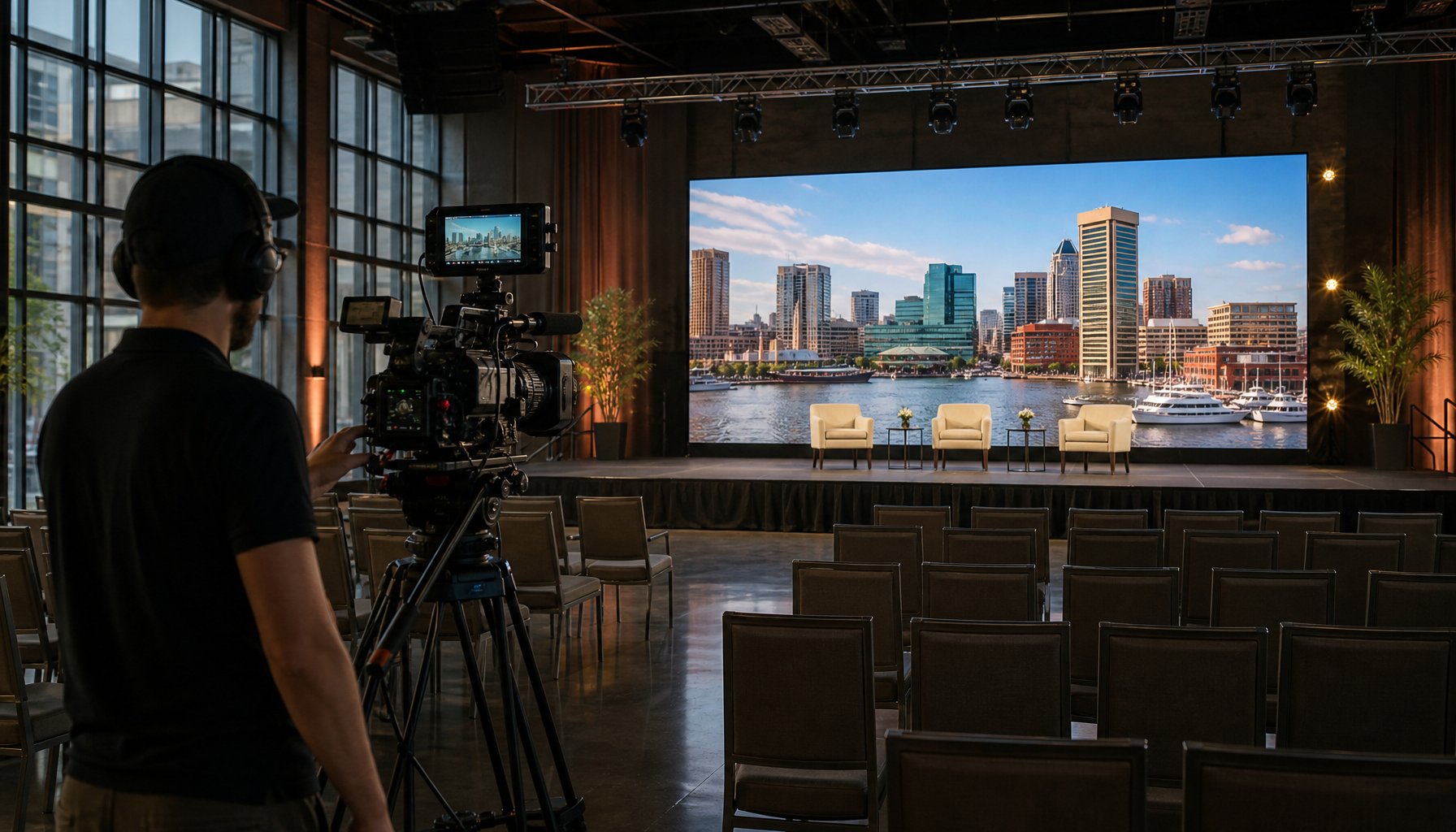
- Location scouting: Whether you’re filming in your corporate office, at a DC landmark, or inside a professional studio, the production team evaluates lighting, sound, power access, and permit requirements.
- Talent coordination: If your video features on-camera spokespeople, executives, or actors, pre-production is when rehearsals, wardrobe decisions, and scheduling happen.
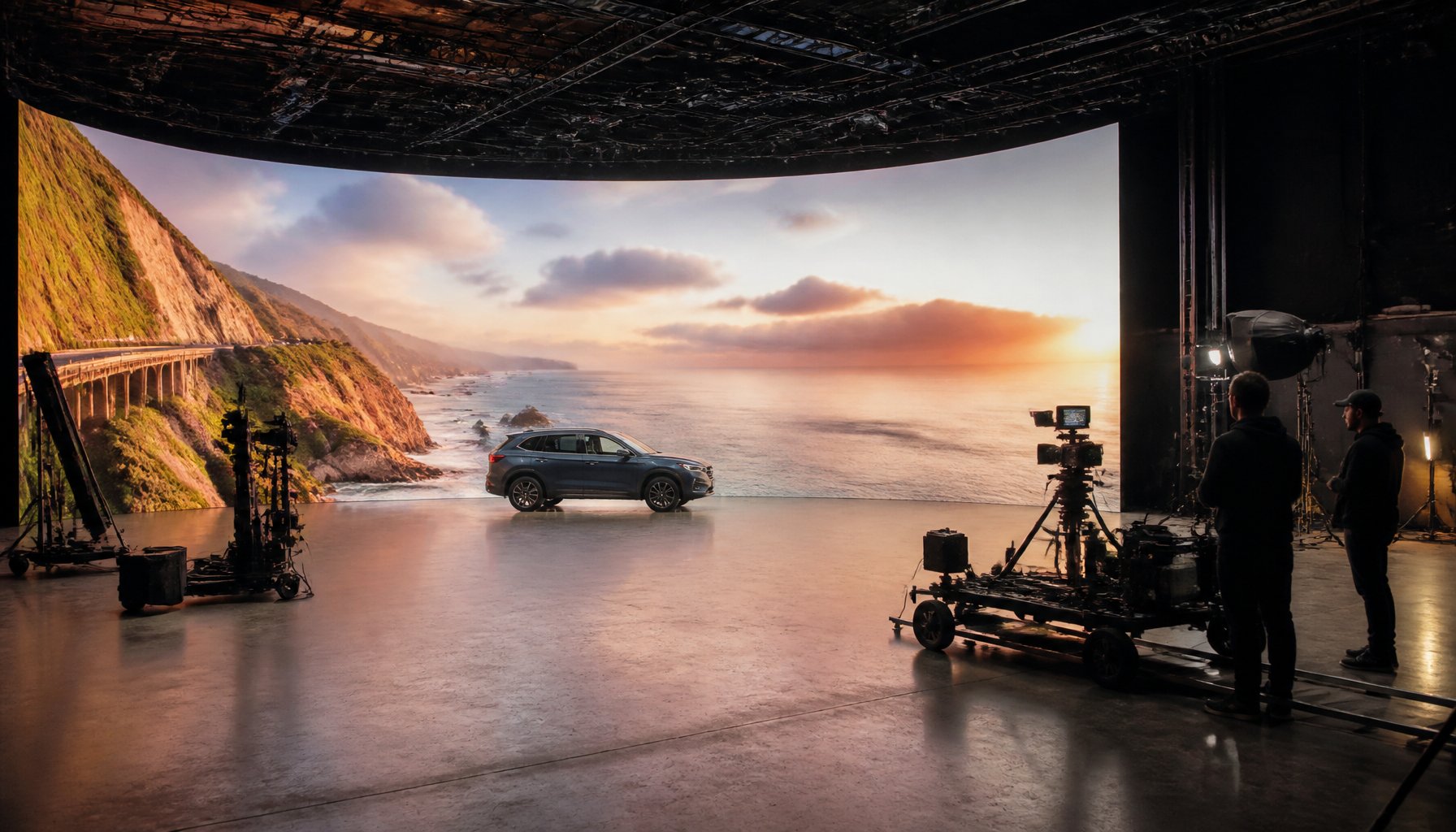
- Equipment planning: The team determines the right camera package, lighting setup, audio gear, and any specialty equipment like drones, sliders, or LED wall stages for virtual production.
- Production schedule: A detailed call sheet outlines every shot, every location, and every participant’s time slot — down to the minute.
Client Approvals Before Moving Forward
This is a critical checkpoint. Before any production day expenses are incurred, you should have a signed-off script, an approved storyboard or shot list, and a finalized schedule. Reputable production companies build formal approval gates into their process to protect both sides.
Phase 3: Production Day — Capturing the Content
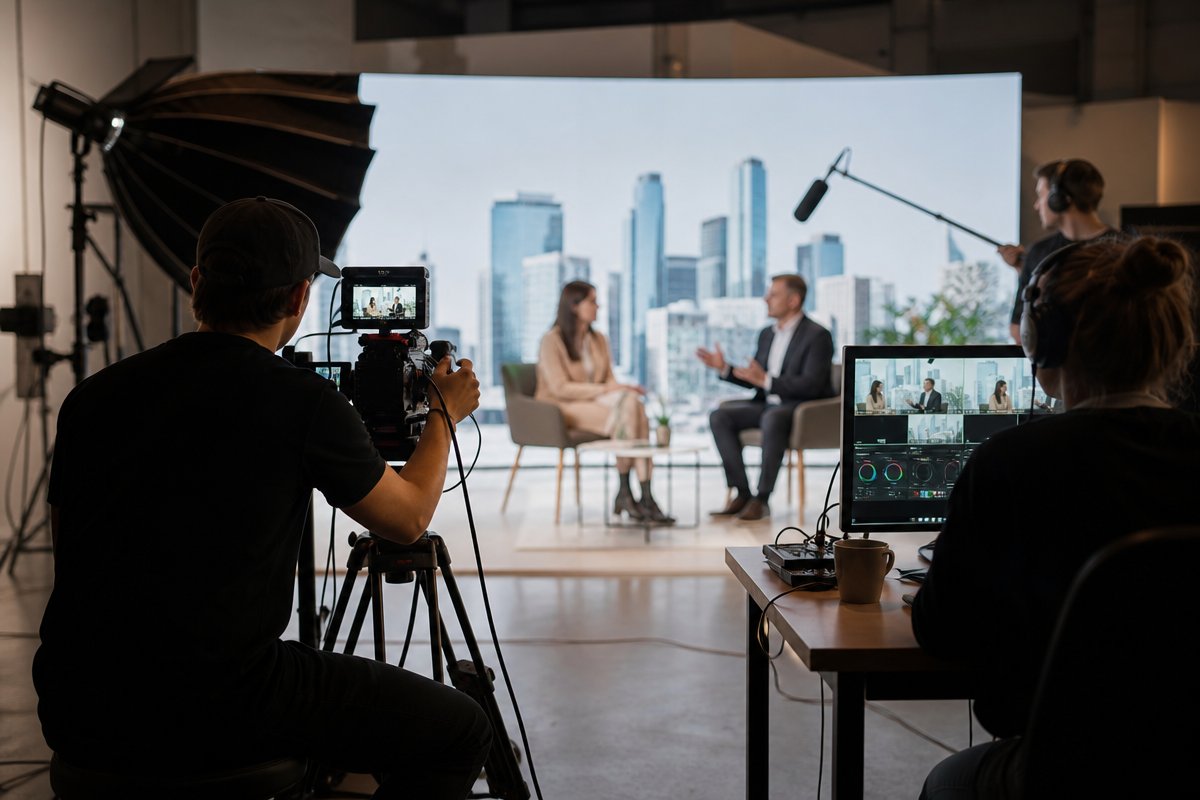
Production day is where strategy meets execution. For many corporate clients, this is the most visible — and often the most nerve-wracking — part of the process. But when discovery and pre-production are done right, production day should feel organized and even enjoyable.
What to Expect On Set
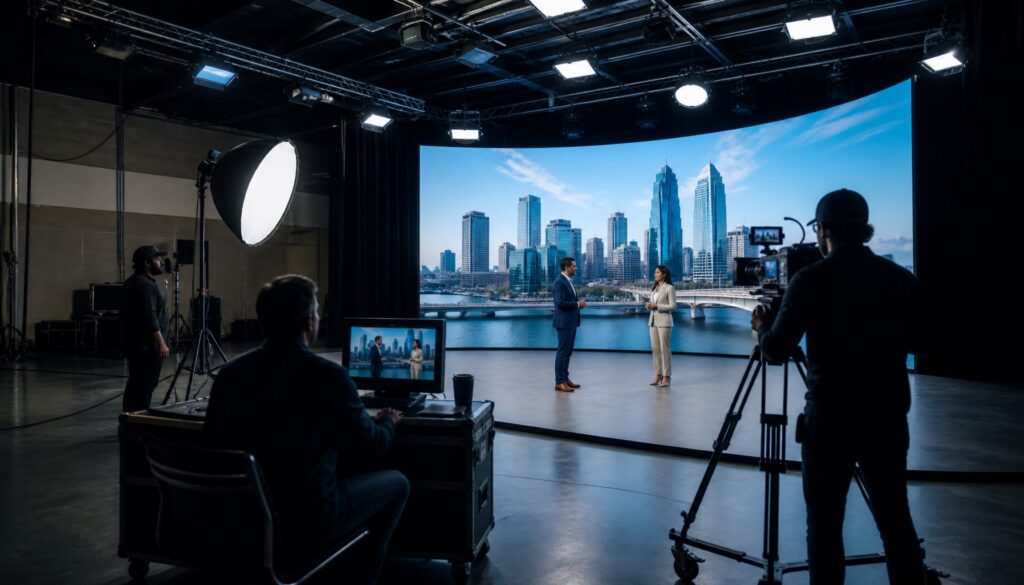
A professional crew typically includes a director, director of photography, camera operators, audio technicians, lighting specialists, and a production assistant. For larger corporate shoots, you may also have a teleprompter operator, a makeup artist, and a dedicated producer managing the schedule.
Here is a typical production day flow:
- Load-in and setup: The crew arrives early to set up lighting, cameras, audio, and any set design elements. This can take one to three hours depending on complexity.
- Lighting and sound checks: Before talent steps on set, the team dials in exposure, color temperature, and microphone levels.
- Talent blocking and rehearsal: On-camera participants walk through their movements and lines while the director and DP finalize framing.
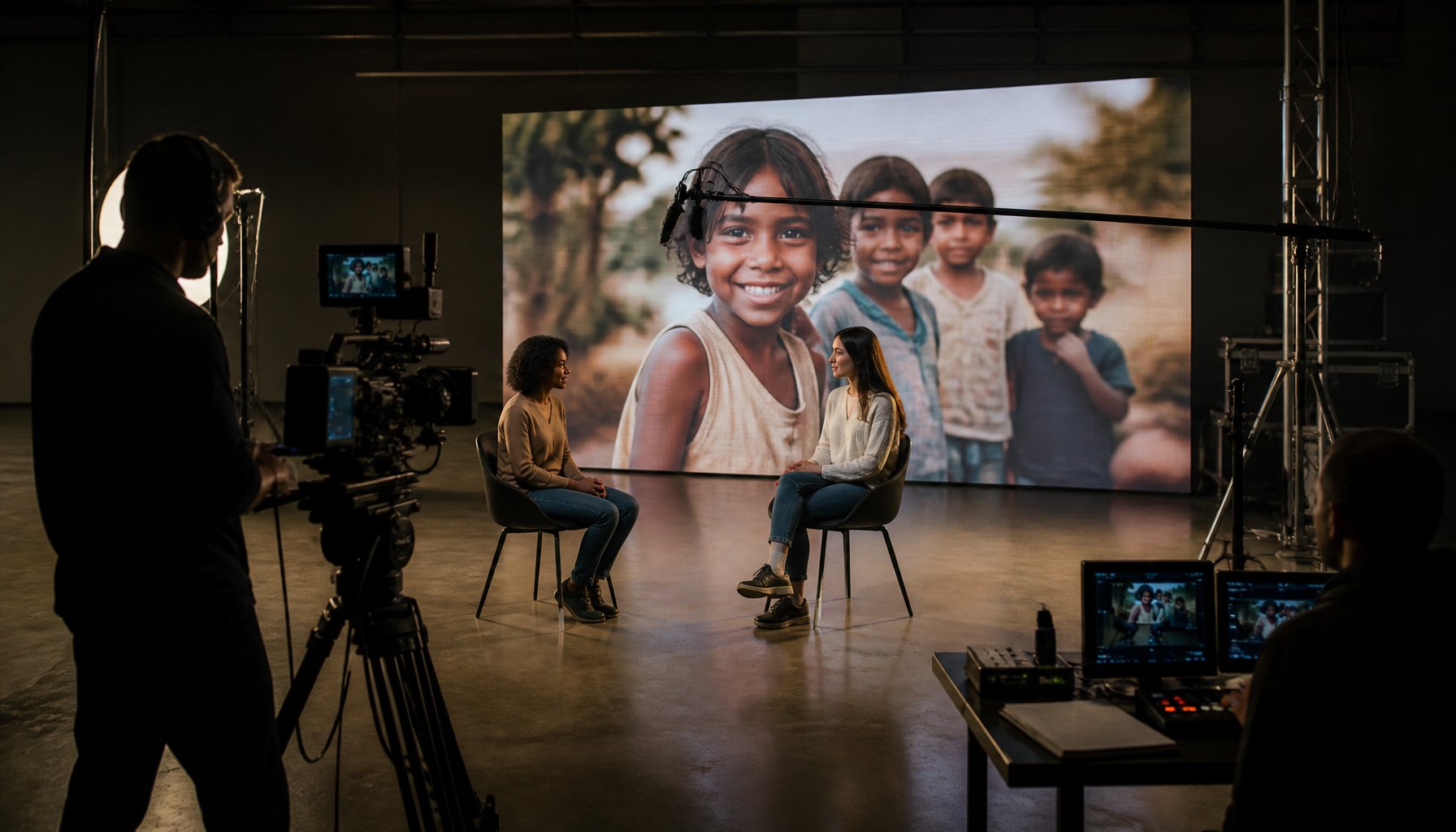
- Principal photography: The actual recording. Depending on the project scope, this may involve interviews, scripted scenes, b-roll footage of your facility or team, product demonstrations, or all of the above.
- Wrap and load-out: Equipment is packed, data is backed up (usually to multiple drives for redundancy), and the producer confirms all planned shots were captured.
Tips for Corporate Clients on Shoot Day
- Designate one point of contact from your team to communicate with the director. Too many voices create confusion.
- Trust the pre-production plan. Last-minute script changes on set are the number one cause of schedule overruns.
- Keep executives’ on-camera time focused. A skilled director can get a great performance in 20-30 minutes rather than burning hours.
- Provide a quiet, dedicated space for filming. Open offices with HVAC noise and foot traffic are the enemy of clean audio.
Phase 4: Post-Production — Where the Story Comes Together
If production day captures the raw ingredients, post-production is where the meal is cooked. This phase typically takes longer than production itself and involves multiple rounds of creative work and client review.
The Editing Workflow
- Footage review and selects: The editor reviews all captured footage, selects the best takes, and organizes everything into a project timeline.
- Rough cut: The first assembly edit. This version establishes the video’s structure, pacing, and narrative flow. It may lack music, color correction, and graphics, but it gives you a clear sense of the story being told.
- Client review — round one: You watch the rough cut and provide consolidated feedback. This is the time to address structural changes — reordering sections, swapping interview soundbites, or adjusting the overall tone.
- Fine cut: The editor incorporates your feedback, tightens pacing, and begins layering in music, motion graphics, lower thirds, and brand elements.
- Color grading: A colorist adjusts the footage for visual consistency and applies a cinematic look that aligns with your brand aesthetic.
- Sound design and mixing: Audio is cleaned up, music levels are balanced against dialogue, and any sound effects or voiceover are integrated.
- Final review and approval: You review the polished cut. At this stage, changes should be minor — a name spelling correction, a logo placement tweak, or a small timing adjustment.
How Many Revision Rounds Should You Expect?
Most professional production companies include two to three rounds of revisions in their standard contracts. TriVision Studios structures its post-production workflow around clear revision milestones so clients always know where they are in the process and what type of feedback is most productive at each stage.
Animation and Motion Graphics
Many corporate videos benefit from animated elements — data visualizations, process diagrams, branded title cards, or fully animated explainer segments. These are created in parallel with the live-action edit and integrated during the fine cut phase.
Phase 5: Delivery and Distribution — Getting Your Video Seen
A finished video file sitting on a hard drive generates zero ROI. The delivery phase ensures your content is formatted, optimized, and deployed wherever your audience lives.
File Formats and Specifications
Your production partner should deliver final files in the formats you need for every platform:
- Full-resolution master: An archival-quality file (typically ProRes or high-bitrate H.264/H.265) for future use.
- Web-optimized versions: Compressed files for your website, email campaigns, or internal platforms.
- Social media cuts: Platform-specific aspect ratios and lengths — 16:9 for YouTube, 9:16 for Instagram Reels and TikTok, 1:1 for LinkedIn feed posts.
- Broadcast-ready files: If your video is airing on television or at a conference, specific technical specifications must be met.
Distribution Strategy Support
The best production partners do not just hand over files and disappear. They help you think through distribution — where to host, how to optimize video SEO with titles and descriptions, whether to run paid promotion, and how to measure performance against the KPIs established during discovery.
Common Mistakes That Derail the Corporate Video Production Process
Even with a clear process, certain pitfalls can compromise your project. Here are the most common ones and how to avoid them:
- Skipping discovery: Jumping straight into production without aligning on strategy leads to a polished video that nobody watches because it was made for the wrong audience.
- Design by committee: Involving too many stakeholders in creative decisions creates conflicting feedback and endless revision cycles. Empower a small team to make decisions.
- Underestimating post-production time: Editing, color, sound, and graphics take time. Rushing this phase shows in the final product. Budget at least two to four weeks for post-production on a standard corporate video.
- Ignoring distribution from the start: If you know the video will live on LinkedIn and your intranet, that should inform creative decisions from day one — length, format, captioning, and tone all change based on platform.
Frequently Asked Questions
How long does the entire corporate video production process take?
A typical corporate video project takes four to eight weeks from discovery to final delivery. Simple projects like a short testimonial may take as little as two to three weeks. Complex multi-location shoots, projects requiring animation, or videos with extensive approval processes can extend to ten or twelve weeks. The discovery and pre-production phases usually account for about 40% of the total timeline.
How involved does our team need to be during production?
Your involvement is heaviest during discovery and pre-production — providing brand assets, reviewing scripts, and approving the creative direction. On shoot day, you should have one decision-maker present. During post-production, your role is to provide clear, consolidated feedback at each review milestone. A good production partner manages the heavy lifting so your team can stay focused on their day jobs.
What should we prepare before our first meeting with a production company?
Come prepared with a clear understanding of your video’s purpose, your target audience, your approximate budget range, and your desired timeline. If you have brand guidelines, past video examples you like or dislike, and any mandatory messaging or compliance requirements, share those upfront. The more information your production partner has from the start, the more efficient and effective the entire process will be.
Can we use footage from a corporate video across multiple platforms?
Yes — and you should plan for this from the beginning. A well-produced corporate video can be repurposed into social media clips, website headers, email marketing assets, trade show content, and internal communications. Let your production team know all intended use cases during discovery so they can capture the right footage and deliver files in the appropriate formats.
What is the difference between a rough cut and a fine cut?
A rough cut is the first assembled edit that establishes the video’s overall structure, narrative flow, and pacing. It typically lacks final music, color grading, motion graphics, and polished audio. The fine cut incorporates client feedback from the rough cut review and adds all finishing elements — branded graphics, licensed music, color correction, and sound mixing. Structural feedback belongs in the rough cut phase; the fine cut stage is for minor refinements only.
Ready to Start Your Corporate Video Project?
Understanding the corporate video production process explained in detail puts you in a stronger position to collaborate with your production partner, avoid common pitfalls, and get a final product that delivers real results. Whether you are a government agency in Washington DC, a nonprofit in Northern Virginia, or a corporation in Baltimore or Richmond, the right process makes all the difference.
TriVision Studios has guided hundreds of organizations through this exact process — from first discovery call to final delivery. If you are ready to create corporate video content that actually moves the needle, get in touch with our team to start the conversation.