
Corporate video is one of the most powerful communication tools for modern businesses, yet many organizations still lack a clear understanding of what professional corporate video production truly involves—from strategy and planning to execution and delivery.what professional corporate video production actually involves, how much it costs, or what results they should realistically expect.
Is it just filming and editing?
Why do some corporate videos drive engagement and ROI while others fall flat?
And how can businesses ensure their investment delivers measurable results?
In this guide, we break down how corporate video production works, what influences cost, and how businesses use video to support marketing, internal communications, training, corporate events, AV services, and studio-based productions — all with real business outcomes in mind.
What Is Corporate Video Production (And Why It Matters)
Corporate video production is the strategic, professional creation of video content designed to support business goals — not entertainment.
Businesses commonly use corporate video for:
- Brand and marketing videos
- Executive and internal communications
- Training and onboarding programs
- Product demos and explainer videos
- Corporate events, conferences, and hybrid meetings
- Studio-based productions and event space recordings
Unlike DIY or basic video content, professional corporate video production focuses on:
- Clear messaging and audience intent
- Strategic planning and creative direction
- High production quality (audio, lighting, visuals)
- Consistent brand representation across platforms
When done right, video goes beyond great visuals—it communicates clearly, builds trust, enhances AV-driven events, and drives meaningful action.
The Corporate Video Production Process (Step by Step)
A clear production process keeps projects on track, prevents miscommunication, and eliminates avoidable expenses.
1. Strategy & Concept Development
Every successful video starts with strategy. At this stage, teams define:
- The purpose of the video (marketing, training, events, internal use)
- Target audience and viewing environment (online, live event, studio, event space)
- Key messages and calls to action
- Tone, style, and visual direction
Skipping strategy is one of the most common reasons corporate video projects underperform.
2. Pre-Production Planning
Pre-production is where quality and efficiency are built. This phase includes:
- Scriptwriting and message refinement
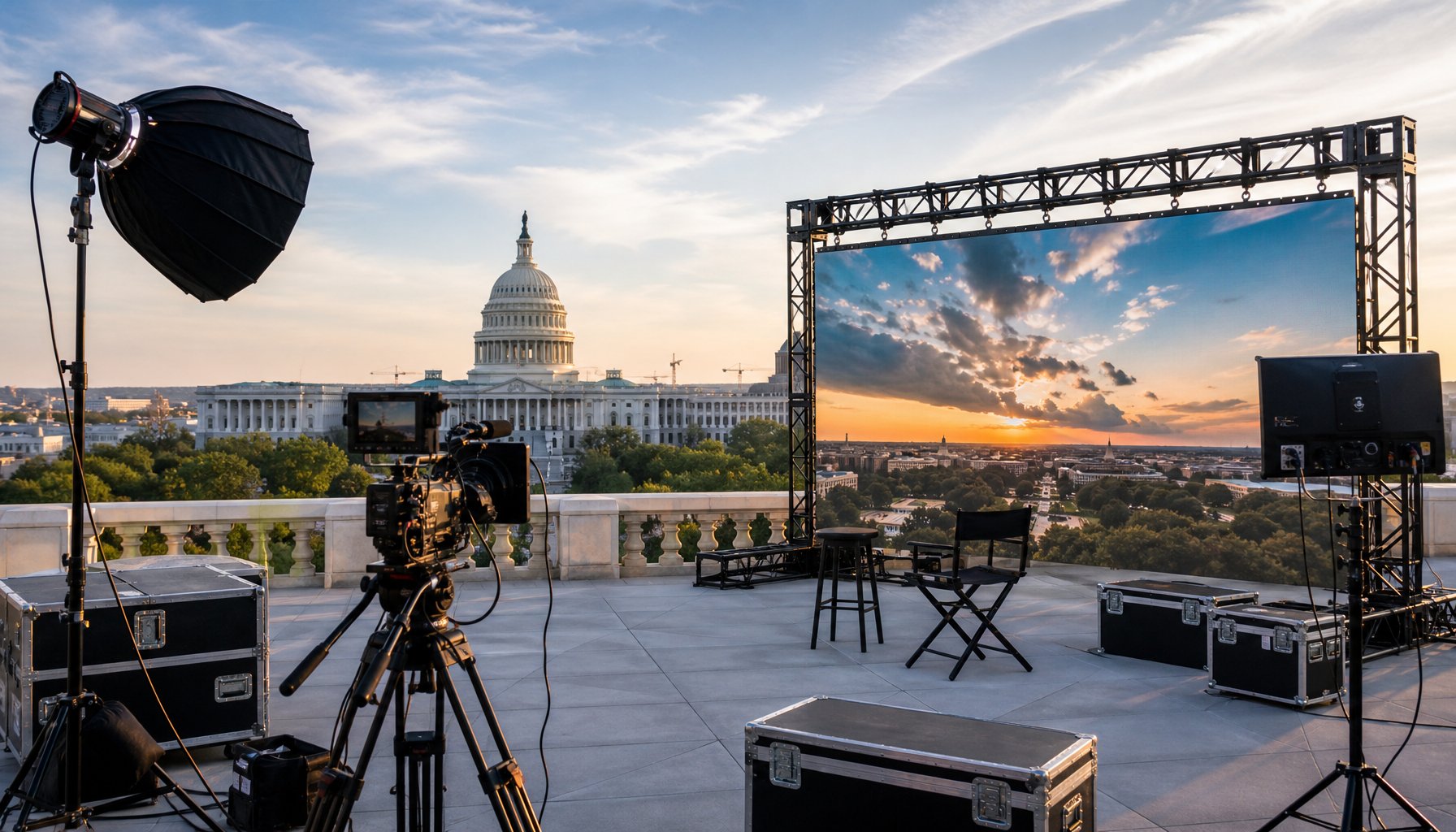
- Location planning (studio, office, or event space)
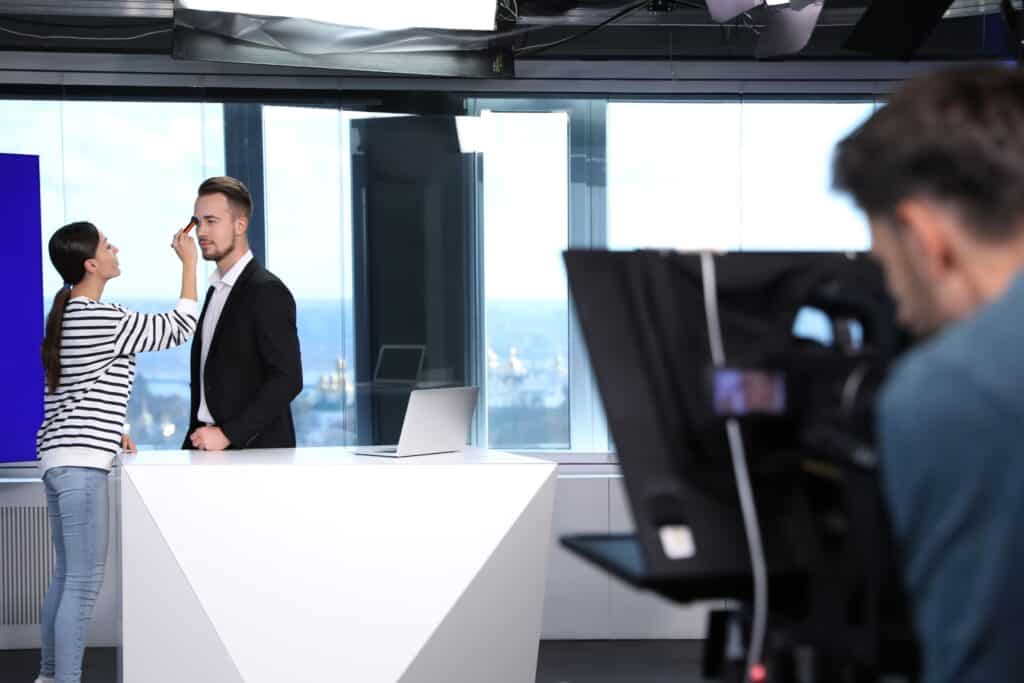
- Presenter or talent coordination
- Production schedules and timelines
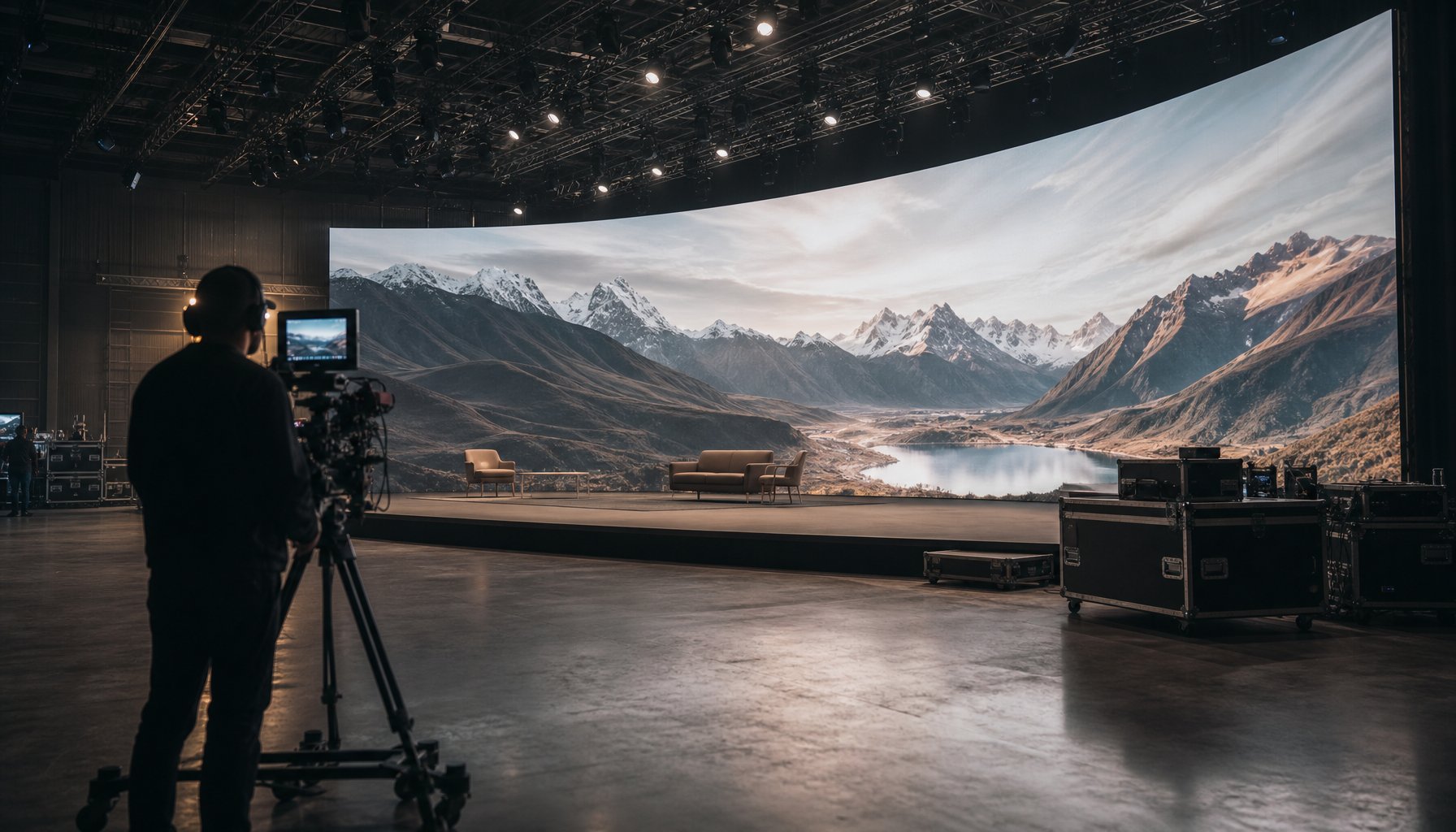
- Equipment planning (cameras, lighting, audio, LED video walls, AV services)
Strong pre-production minimizes risk and ensures filming runs smoothly — especially for corporate events and hybrid productions.
3. Production (Filming)
This is where planning turns into execution. Professional production may include:
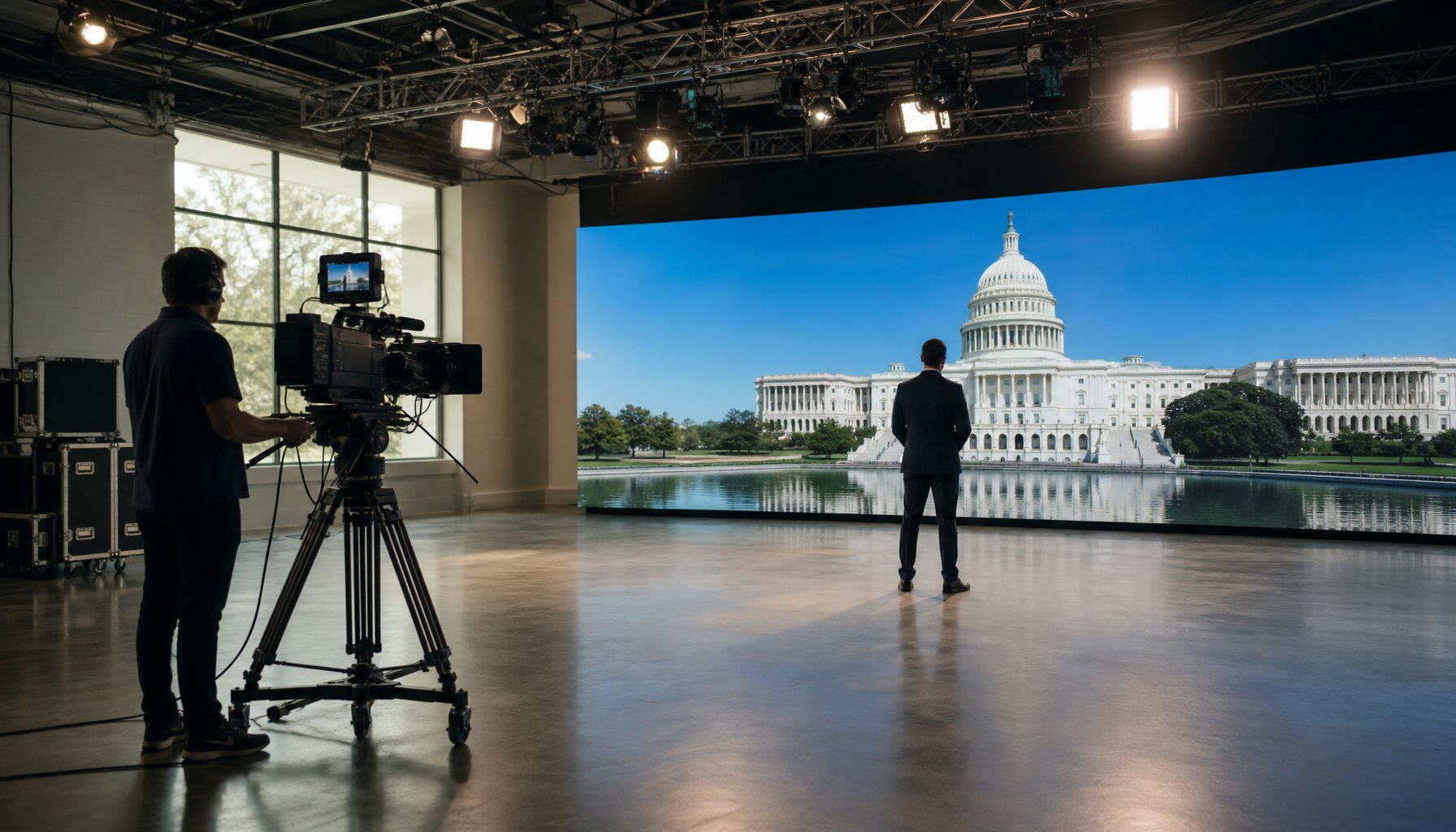
- Studio or on-location filming
- Multi-camera setups for presentations or events
- Controlled lighting and broadcast-quality audio
- Direction to improve on-camera confidence and clarity
- LED video walls or virtual backdrops for immersive visuals
Whether filming in a production studio or a live event space, this phase focuses on capturing clean, consistent footage that performs across platforms.
4. Post-Production
Post-production transforms raw footage into a polished, professional story. This stage includes:
- Editing and pacing
- Motion graphics and branded visuals
- Music selection and audio mixing
- Color correction and visual consistency
This is where storytelling, professionalism, and brand identity come together.
5. Final Delivery & Optimization
Final deliverables are optimized for real-world business use:
- Versions for websites, social media, internal platforms, or broadcast
- Captions and accessibility compliance (including Section 508 when required)
- Optimized formats for streaming, playback, and long-term reuse
Proper delivery ensures your video continues delivering value well beyond launch.

What Affects Corporate Video Production Costs?
The cost of corporate video production depends on your project’s scope, creative goals, and level of production complexity. Key cost drivers include:
- Length and number of videos
- Crew size and experience
- Studio vs on-location or event space filming
- Equipment needs (lighting, audio, cameras, LED walls, AV services)
- Level of editing and motion graphics
- Hybrid or livestream integration
- Talent, licensing, and music usage
Rather than focusing only on price, businesses should evaluate value, reliability, and long-term usability.
Real Business Results Corporate Video Can Deliver
When planned strategically, corporate video produces measurable outcomes.
Stronger Engagement
Video captures attention longer and improves message retention compared to text or slides.
Improved Brand Perception
High-quality visuals, sound, and presentation build credibility and professionalism.
Measurable ROI
Businesses track success through:
- Engagement and view duration
- Lead generation and conversions
- Training completion rates
- Event attendance and replay performance
Long-Term Content Value
One production can support:
- Marketing campaigns
- Internal communications
- Event highlights and recaps
- Social and digital channels
This multiplies ROI without increasing production costs.
Common Corporate Video Mistakes (And How to Avoid Them)
Many organizations struggle due to avoidable mistakes:
- Skipping strategy and planning
- Rushing pre-production
- Underestimating AV services and hybrid requirements
- Choosing low-quality solutions
- Failing to plan for content reuse
Experienced teams avoid these issues by aligning video with business goals from the start.
Corporate Video, Events, Studios & AV Services
Modern corporate video often integrates directly with corporate events, studios, and professional AV services.
This includes:
- Event recordings and livestreams
- LED video walls for branding and presentations
- Audio, lighting, and camera synchronization
- Post-event highlight and recap videos
An integrated approach ensures a consistent experience for in-person and remote audiences.
Important Questions to Ask Before Choosing a Video Production Company
Before choosing a partner, ask:
- Do you support strategy and scripting?
- What’s included in post-production?
- Can you handle hybrid or livestream events?
- Do you work in studios and event spaces?
- Do you provide AV services and LED video walls?
Clear answers signal experience and reliability.
The Future of Corporate Video Production
Corporate video continues to evolve with:
- Short-form and modular content
- AI-assisted editing and personalization
- Immersive visuals using LED backdrops
- Hybrid-ready production workflows
Businesses that adapt early gain a competitive advantage.
Conclusion: Corporate Video Is a Business Strategy, Not Just Content
Corporate video production isn’t just about filming — it’s about clear communication, strategic planning, and reliable execution.
When businesses understand the process, plan budgets thoughtfully, and focus on outcomes, video becomes a long-term asset — not a one-time expense.
With integrated video production, studio environments, event space capabilities, and AV services, companies like TriVision Studios help organizations create professional, engaging, and results-driven video content that supports real business goals.
Frequently Asked Questions
What is corporate video production?
It’s the professional creation of video content designed to support business communication, marketing, training, and events.
How long does corporate video production take?
Most projects take several weeks from planning through final delivery.
What’s the difference between corporate video and hybrid event video?
Hybrid video includes live and remote audiences and requires additional AV and livestream integration.
How much does corporate video production cost in Washington DC?
Costs vary based on scope, crew, equipment, studio use, and post-production needs.
Can corporate video be used for hybrid events?
Yes — and it often improves engagement and content longevity.
Do studios improve video quality?
Yes. Professional studios and production-ready event spaces provide controlled environments that reduce risk and improve consistency.