The Video Production Landscape Is Evolving Faster Than Ever
If you are planning a video strategy for the months ahead, understanding the current video production trends is no longer optional — it is essential. According to Wyzowl’s 2026 State of Video Marketing report, 91% of businesses now use video as a core marketing tool, and 96% of marketers say video has directly increased user understanding of their product or service. The bar for quality, speed, and creativity has never been higher.
Whether you are a government agency in Washington DC, a nonprofit in Richmond, a healthcare brand in Baltimore, or a tech startup in Northern Virginia, the forces reshaping video production in 2026 will affect every project you greenlight this year. Below, we break down the most important shifts — from artificial intelligence in the edit bay to the explosion of immersive, short-form, and virtual production — and explain exactly what they mean for organizations that need high-impact visual content.
AI-Powered Production Workflows Are Redefining Efficiency
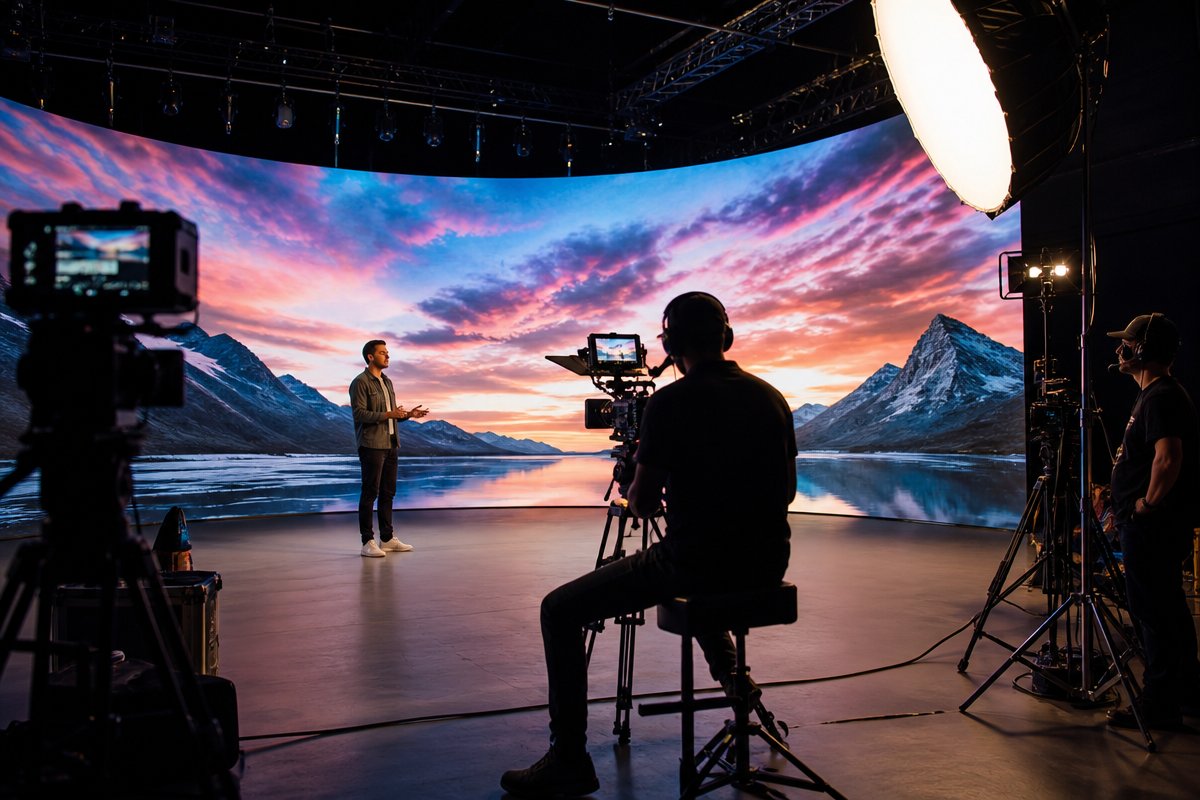
Artificial intelligence is no longer a futuristic buzzword in the video industry. In 2026, AI tools are embedded in nearly every phase of the production pipeline — and the organizations that embrace them are seeing dramatic gains in speed, cost efficiency, and creative output.
Pre-Production: Scriptwriting, Storyboarding, and Research
AI-assisted scriptwriting platforms like Jasper, ChatGPT, and specialized tools built for video production teams now help creators generate first drafts, refine messaging, and even analyze competitor content in minutes. Storyboard generators use text prompts to produce visual shot sequences, giving directors and clients a shared reference before a single camera rolls.
- Faster concept development — What used to require a week of creative meetings can now begin with an AI-generated treatment that the team refines collaboratively.
- Data-driven messaging — AI tools can analyze audience data and SEO trends to recommend language, tone, and even video length for specific platforms.
Post-Production: Editing, Color Grading, and Captioning
AI-driven editing tools such as Adobe Premiere Pro’s AI features, DaVinci Resolve’s neural engine, and Descript’s text-based editor are accelerating post-production timelines significantly. Auto-captioning, intelligent scene detection, and AI color matching allow editors to focus on storytelling rather than tedious manual tasks.
- Automated rough cuts — Some platforms can assemble multi-camera interview footage into a rough edit based on transcript analysis alone.
- Real-time translation and captioning — Essential for government and nonprofit clients who need multilingual accessibility.
However, AI is a tool — not a replacement for experienced producers and editors. The creative judgment, brand sensitivity, and narrative instinct that a professional video production team brings to a project remain irreplaceable. The smartest organizations in 2026 are using AI to amplify human creativity, not substitute for it.
Virtual Production Moves from Hollywood to the Corporate World
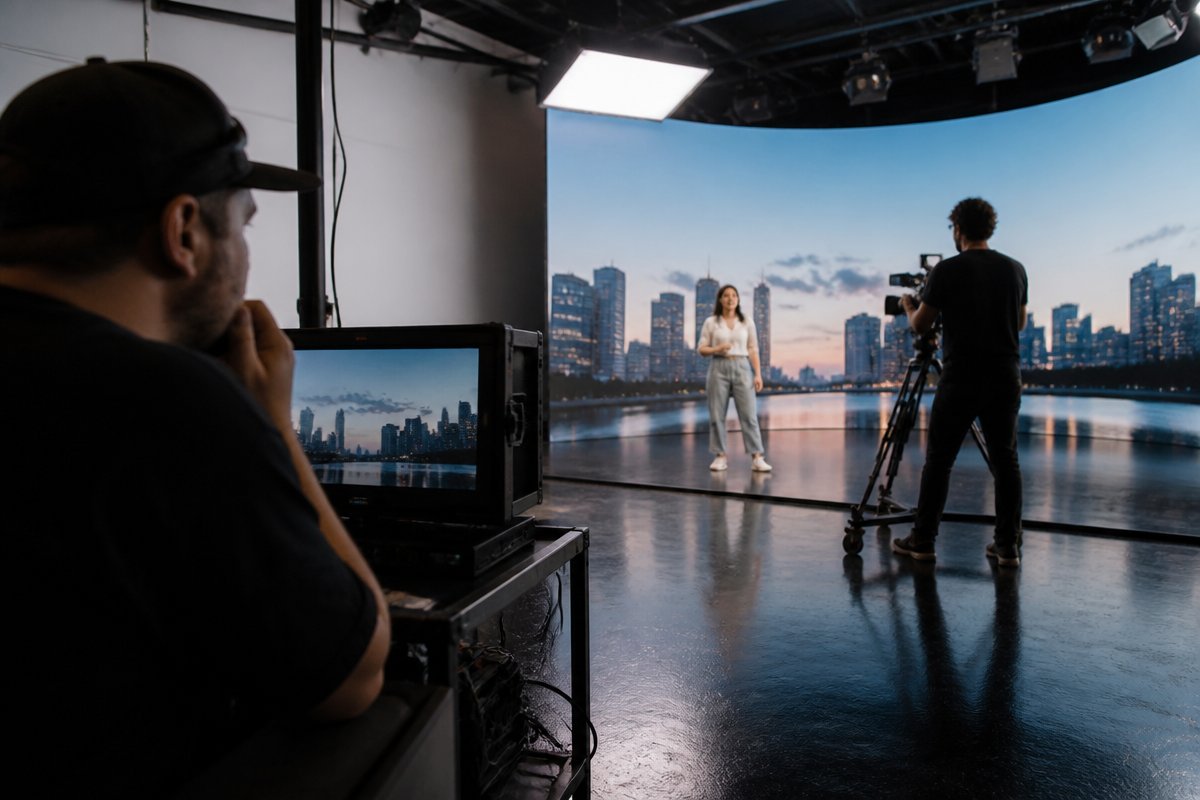
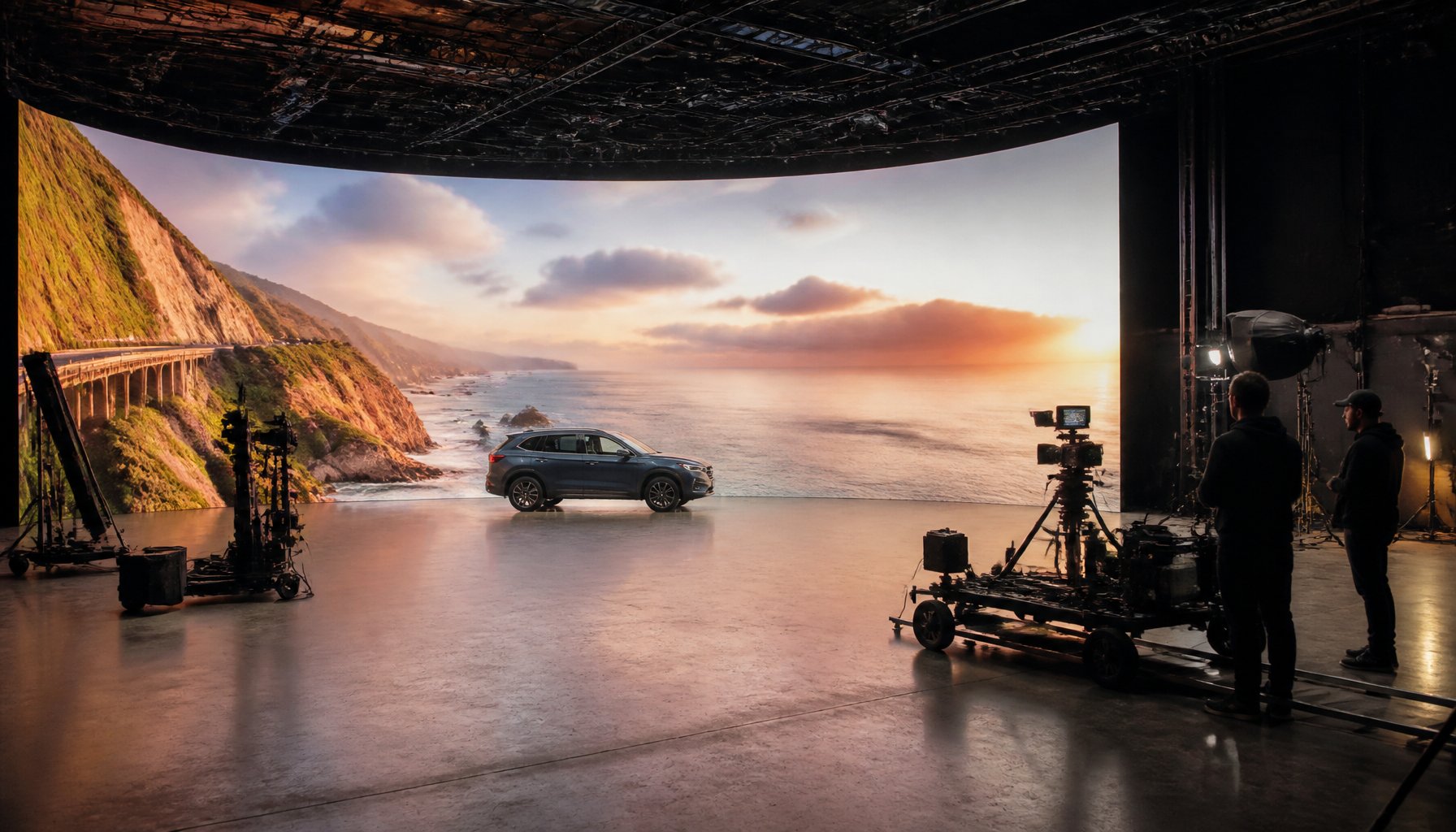
Virtual production — the use of LED wall volumes, real-time rendering engines like Unreal Engine, and in-camera visual effects — was once reserved for blockbuster films and premium television. In 2026, it has firmly crossed over into corporate, government, nonprofit, and commercial video production, especially in markets like Washington DC, Baltimore, and Richmond.
Why Corporate and Government Clients Are Adopting Virtual Production
The appeal is straightforward: virtual production eliminates the need for costly location shoots, international travel, and weather-dependent schedules. A single LED wall stage can transport your spokesperson to a pristine corporate lobby, a global cityscape, a military installation, or an abstract branded environment — all in one shooting day.
- Cost consolidation — Multiple locations in a single studio session dramatically reduces travel, lodging, and logistics budgets.
- Security and compliance — Government agencies and healthcare organizations can film sensitive content without exposing real facilities.
- Creative flexibility — Backgrounds and environments can be changed in real time, enabling rapid iteration and last-minute creative pivots.
- Sustainability — Fewer flights, fewer vehicles, fewer physical sets — virtual production shrinks the carbon footprint of video projects.
LED Wall Technology Keeps Getting Better
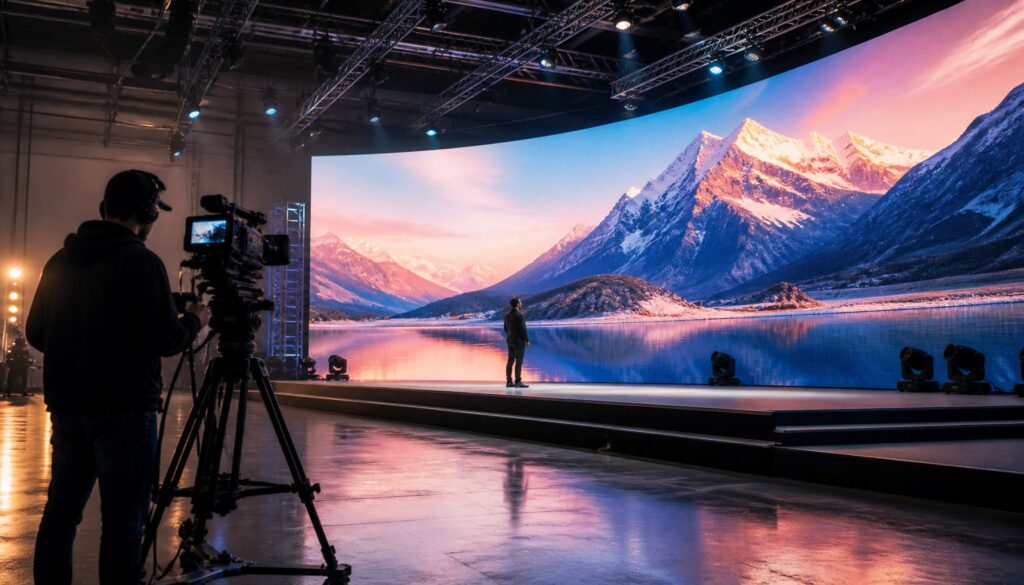
The LED panels used in virtual production stages have seen significant improvements in pixel pitch, color accuracy, and brightness throughout 2025 and into 2026. This means the in-camera composites look more photorealistic than ever, reducing the need for expensive post-production cleanup. Studios offering LED wall rental are making this technology accessible to organizations of all sizes — not just those with Hollywood-level budgets.
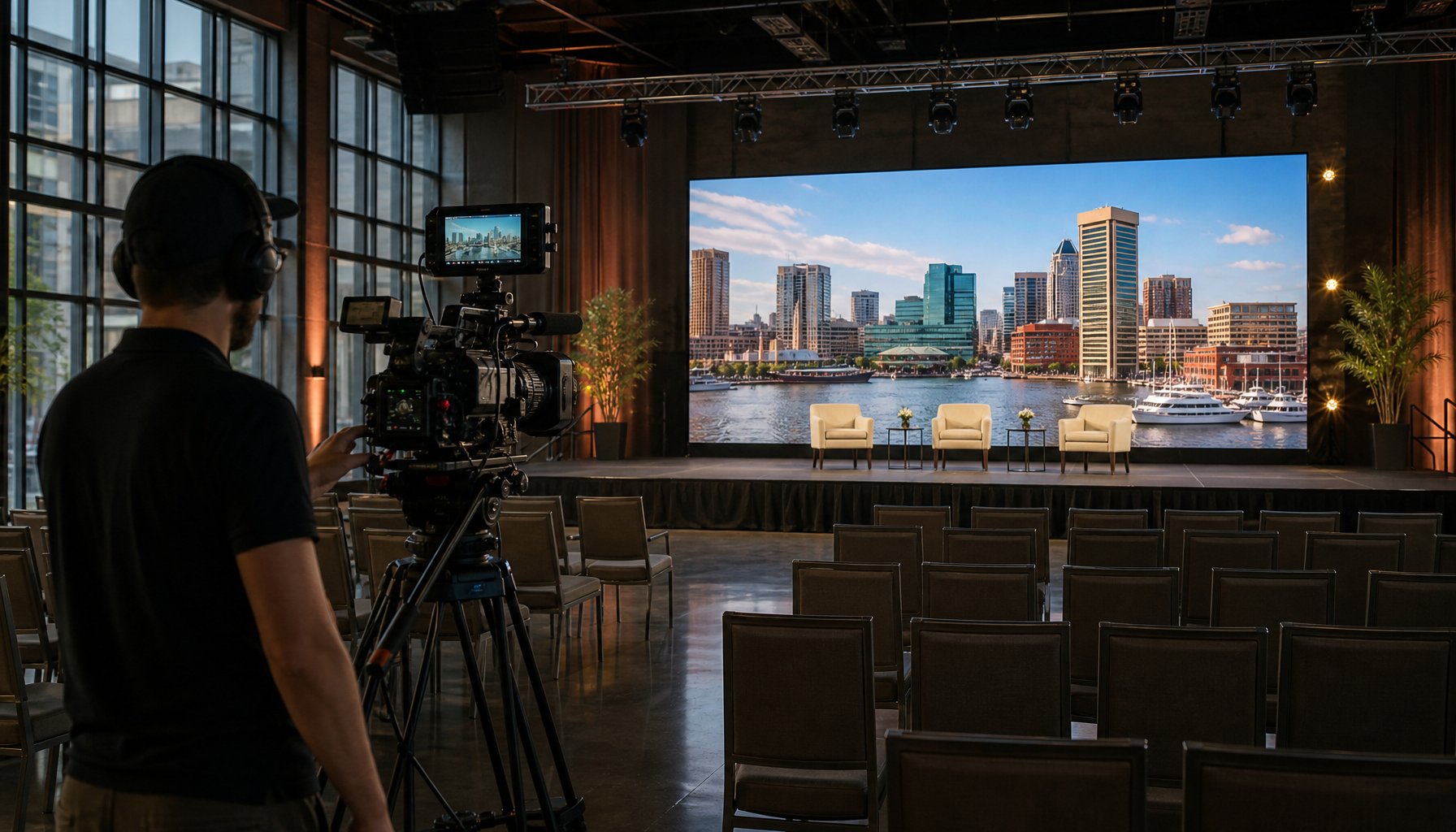
For DC-area brands, the ability to access a virtual production stage locally means faster turnaround times, easier collaboration with your production team, and no need to ship equipment or talent across the country.
Short-Form Video Dominance Continues — But Strategy Matters More
Short-form video is not a new trend, but its dominance in 2026 is undeniable. TikTok, Instagram Reels, YouTube Shorts, and LinkedIn’s native video player have fundamentally changed how audiences consume content. HubSpot’s 2026 marketing data shows that short-form video delivers the highest ROI of any content format for the third consecutive year.
What Has Changed in 2026
The difference now is that simply creating short videos is no longer enough. The market is saturated, and audiences have developed sharper filters for quality and relevance. Here is what separates effective short-form strategies from noise:
- Production value matters — Audiences still respond to authenticity, but lighting, sound, and editing quality signal credibility. A professionally produced 30-second clip outperforms a shaky phone video for most B2B and government communications.
- Series-based content — Rather than one-off clips, leading brands are building episodic short-form series that keep audiences returning. Think of a nonprofit releasing a five-part advocacy series or a healthcare organization publishing weekly patient education shorts.
- Platform-native optimization — Aspect ratios, caption placement, hook timing, and sound design must be tailored for each platform. A single video exported to every channel underperforms platform-specific edits.
- Strategic repurposing — Smart organizations are producing a longer hero video and then working with their production team to extract multiple short-form assets from the same shoot, maximizing the return on every production dollar.
Implications for DC-Area Organizations
For government agencies, nonprofits, and corporations in the Washington DC region, short-form video is an especially powerful tool for public awareness campaigns, recruitment, event promotion, and stakeholder engagement. The key is partnering with a production team that understands both the creative and strategic dimensions of short-form content.
Immersive and Interactive Video Experiences Are Going Mainstream
Immersive video — including 360-degree video, interactive branching narratives, and augmented reality overlays — is moving from experimental novelty to practical business tool in 2026. Several factors are accelerating this shift:
- Apple Vision Pro and Meta Quest adoption — As spatial computing headsets reach broader audiences, demand for immersive content is growing in corporate training, real estate tours, healthcare education, and event experiences.
- Interactive video platforms — Tools like Eko, Wirewax, and HapYak allow viewers to make choices within a video, creating personalized journeys. Training and compliance videos benefit enormously from this approach because learners engage more deeply with material when they actively participate.
- Live event integration — Hybrid events now routinely incorporate interactive video elements, giving remote attendees the ability to choose camera angles, ask questions in real time, and navigate virtual exhibit halls.
Practical Applications for 2026
You do not need a massive budget to start exploring immersive video. Here are accessible entry points:
- 360-degree facility tours — Ideal for universities, hospitals, and government buildings that want to offer virtual walkthroughs.
- Branching training videos — Let employees make decisions within a scenario and see the consequences, dramatically improving knowledge retention.
- Interactive product demos — Allow viewers to click on product features within the video for deeper information layers.
Authenticity and Purpose-Driven Storytelling Win Audiences
In a landscape flooded with AI-generated content and algorithmically optimized clips, audiences in 2026 are gravitating toward video that feels genuinely human. This is especially true for nonprofits, advocacy organizations, and mission-driven brands — but the principle applies across every sector.
What Authentic Video Looks Like in Practice
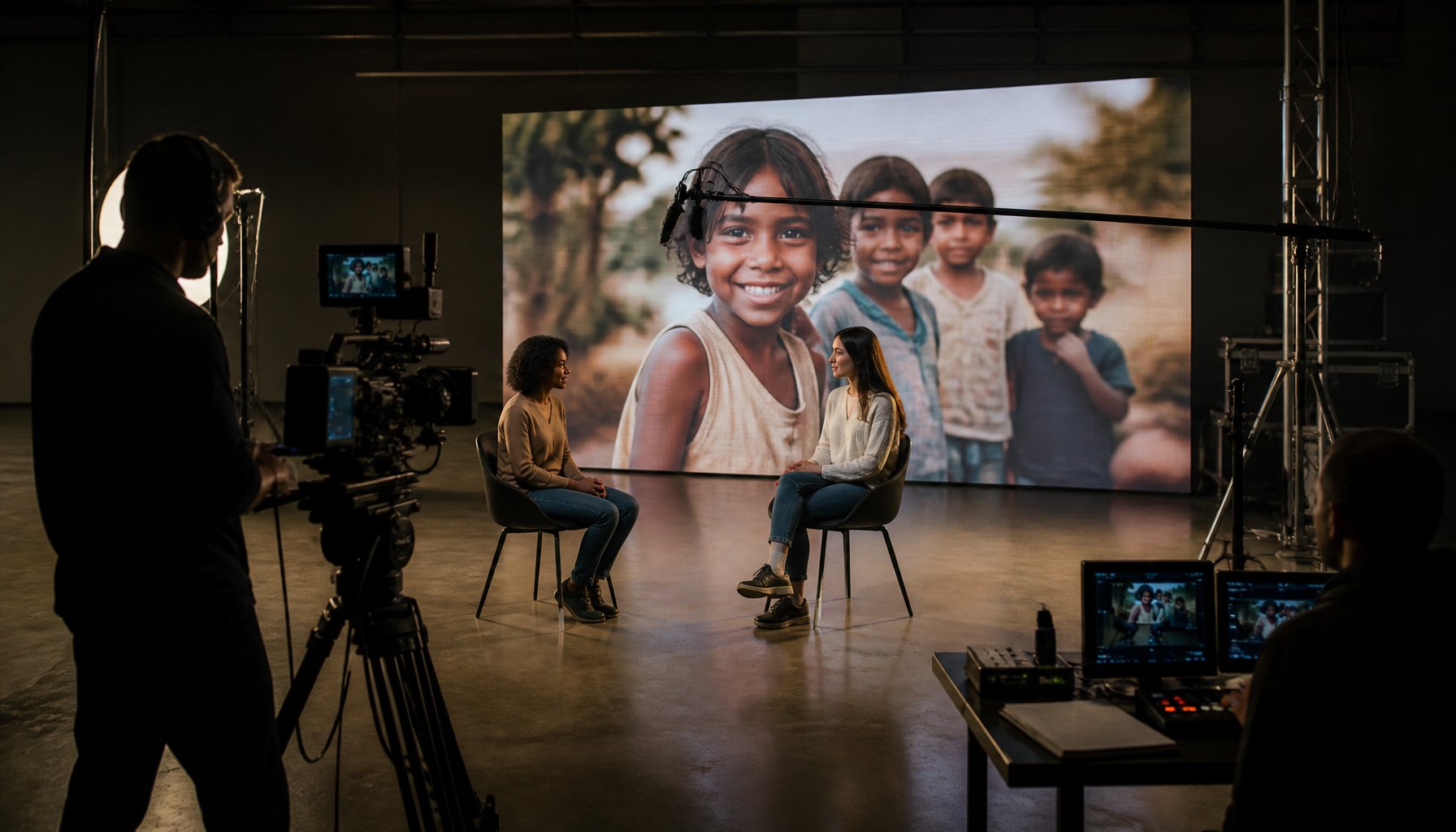
- Real people, real stories — Testimonials, documentary-style profiles, and behind-the-scenes content resonate because they cannot be faked. A nonprofit sharing the voice of a program beneficiary or a government agency highlighting the day-to-day work of its team creates an emotional connection that polished corporate messaging alone cannot achieve.
- Transparent production — Audiences appreciate seeing the process. BTS content, candid moments, and even acknowledged imperfections build trust.
- Values alignment — Purpose-driven storytelling — content that clearly communicates why an organization exists and whom it serves — outperforms generic brand promotion in engagement metrics and audience loyalty.
The production teams that excel in 2026 are those that combine cinematic craft with genuine empathy, spending time understanding the client’s mission before ever picking up a camera.
Data-Driven Video Strategy Is No Longer Optional
Creating beautiful video is only half the equation. In 2026, leading organizations are treating video production as a measurable business investment, not a creative expense. This means:
- Pre-production audience research — Using analytics, surveys, and platform data to inform creative decisions before production begins.
- Performance tracking — Monitoring view-through rates, engagement metrics, conversion attribution, and audience retention curves to understand what is working.
- Iterative optimization — Using data from each video release to refine messaging, format, and distribution strategy for the next one.
The most effective video production partnerships in 2026 are those where the production company functions as a strategic partner — not just a vendor — helping clients interpret data and adjust their content roadmap accordingly.
Frequently Asked Questions About Video Production Trends in 2026
What is the biggest video production trend in 2026?
The integration of AI into production workflows is arguably the most impactful trend this year. From AI-assisted scriptwriting and automated editing to intelligent captioning and data-driven content strategy, artificial intelligence is accelerating every phase of the production process. However, AI works best when paired with experienced human producers who bring creative vision, brand sensitivity, and strategic thinking to the table.
Is virtual production worth the investment for corporate videos?
Yes, increasingly so. Virtual production using LED wall technology allows organizations to film in multiple realistic environments without leaving the studio. This reduces travel costs, shortens production timelines, and provides creative flexibility that traditional location shoots cannot match. For government agencies and corporations in the DC area, access to a local virtual production stage makes this technology both practical and cost-effective.
How important is short-form video for B2B and government organizations?
Extremely important. While short-form video initially gained traction in consumer-facing markets, B2B and government organizations are now seeing significant engagement on platforms like LinkedIn, YouTube Shorts, and even Instagram. The key is ensuring production quality meets professional standards and that each short-form asset is strategically aligned with broader communication goals.
Will AI replace human video producers and editors?
No. AI is a powerful tool for efficiency and scale, but it cannot replicate the creative judgment, emotional intelligence, and strategic thinking that experienced producers and editors bring to a project. The most successful organizations in 2026 are those that use AI to handle repetitive tasks while freeing their human teams to focus on storytelling, client collaboration, and creative problem-solving.
What should I look for in a video production partner in 2026?
Look for a team that stays current with emerging technology — including virtual production and AI tools — while maintaining deep expertise in cinematic storytelling, brand strategy, and the specific needs of your industry. A strong production partner will also help you measure results and iterate on your content strategy over time, functioning as a long-term collaborator rather than a one-project vendor.
How can nonprofits and advocacy organizations leverage 2026 video trends?
Nonprofits can benefit enormously from purpose-driven storytelling, short-form series content, and interactive video formats. Documentary-style profiles, beneficiary testimonials, and advocacy-focused campaigns perform exceptionally well when produced with professional quality and authentic emotional resonance. Strategic repurposing — extracting multiple short-form clips from a single production — helps maximize limited budgets.
Stay Ahead of the Curve with the Right Production Partner
The video production trends shaping 2026 — AI-enhanced workflows, virtual production adoption, short-form strategy, immersive experiences, and authentic storytelling — are not passing fads. They represent fundamental shifts in how organizations communicate, engage audiences, and drive measurable results.
Staying competitive means partnering with a production team that not only understands these trends but has the technology, talent, and strategic insight to put them into action for your organization.
TriVision Studios is a full-service video production company trusted by leading brands, government agencies, nonprofits, and corporations across Washington DC, Northern Virginia, Baltimore, and Richmond. From virtual production and LED wall stages to cinematic corporate films and data-driven content strategy, we help organizations create video that performs. Get in touch to discuss how these trends can work for your next project.