Why Healthcare Organizations Need a Specialized Video Production Partner

Your hospital or health system has a powerful story to tell, but one wrong move with patient footage or protected health information can turn a marketing asset into a legal liability. Finding a healthcare video production company that understands both cinematic storytelling and regulatory compliance is not optional — it is essential.
According to a 2026 Wyzowl report, 91% of businesses now use video as a marketing tool, and healthcare is no exception. From patient education videos and physician recruitment campaigns to facility tours and public health announcements, video content is driving engagement across every corner of the healthcare industry. But unlike a tech startup or a restaurant chain, healthcare organizations operate under strict federal regulations — most notably HIPAA — that govern how patient information is captured, stored, and shared.
This guide is designed specifically for hospital marketing directors, health system communications teams, and healthcare administrators in the Washington DC metro area who need to produce high-impact video content without putting their organization at risk. We will walk through HIPAA considerations, patient testimonial best practices, the types of videos that deliver real ROI for health systems, and how to choose the right production partner for your next project.
HIPAA Compliance in Healthcare Video Production
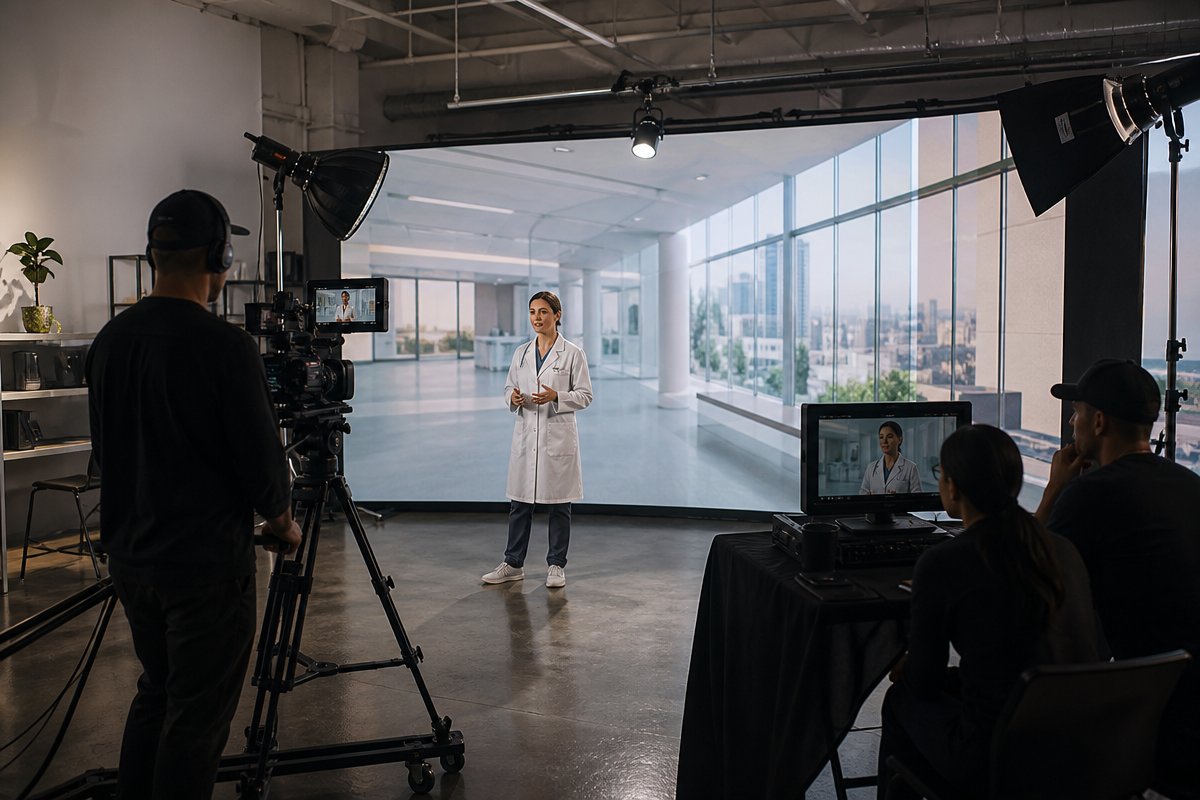
The Health Insurance Portability and Accountability Act (HIPAA) is the single biggest factor that separates healthcare video production from every other industry. A seasoned healthcare video production company builds compliance into every phase of the production process — not as an afterthought, but as a foundational principle.
What Counts as Protected Health Information (PHI) on Camera?
PHI is not limited to medical records and billing codes. In a video production context, PHI can include:
- Visual identifiers: A patient’s face, name badge, room number, or wristband visible on screen
- Audio identifiers: A patient’s full name, date of birth, or diagnosis mentioned in dialogue or narration
- Environmental identifiers: Computer screens displaying electronic health records (EHRs), whiteboards with patient names, or chart labels in the background
- Incidental capture: Other patients visible in hallways, waiting rooms, or shared treatment areas during filming
A single frame containing unblurred PHI can constitute a HIPAA violation, potentially resulting in fines ranging from $100 to $50,000 per incident — and up to $1.5 million per year for repeated violations of the same provision.
Building Compliance into Pre-Production
The most effective way to avoid compliance issues is to prevent them before the cameras ever roll. Here is what a compliant production workflow looks like:
- Conduct a location risk assessment: Walk through every filming location — patient rooms, nurses’ stations, lobbies, operating theaters — and identify every potential source of PHI exposure. Flag computer screens, whiteboards, chart racks, and high-traffic areas where other patients may pass through.
- Coordinate with your compliance officer: Your production company should work directly with your organization’s HIPAA compliance officer or privacy team, not just your marketing department. This ensures legal sign-off at every stage.
- Obtain proper HIPAA authorization forms: Standard media release forms are not sufficient. Any patient appearing on camera must sign a HIPAA-specific authorization that clearly states how their image and information will be used, where it will be distributed, and for how long.
- Establish controlled filming zones: Restrict filming to pre-approved areas where PHI has been removed or secured. Use signage to alert staff and visitors that filming is in progress.
- Brief the entire crew: Every person on set — from the director and camera operators to the lighting technicians and audio engineers — must understand what PHI looks like and what to do if they spot it during filming.
Post-Production Safeguards
Even with meticulous pre-production planning, compliance does not end when filming wraps. During editing, a responsible production team will:
- Review every frame for incidental PHI exposure and blur or crop as needed
- Store all raw footage on encrypted, access-controlled drives
- Limit access to footage containing patient images to authorized personnel only
- Maintain a documented chain of custody for all media files
- Securely archive or destroy footage according to your organization’s data retention policies
Patient Testimonial Best Practices for Hospitals and Health Systems

Patient testimonial videos are among the most powerful content assets a healthcare organization can produce. A genuine story from a real patient builds trust in a way that no brochure, infographic, or physician bio page ever could. But producing them requires a careful balance of emotional storytelling, ethical responsibility, and legal compliance.
Selecting the Right Patients
Not every willing patient is the right fit for a testimonial video. Consider the following criteria:
- Emotional readiness: Has the patient had enough time and distance from their treatment to speak about their experience comfortably? Filming too soon after a traumatic diagnosis or procedure can feel exploitative and produce content that makes viewers uncomfortable.
- Articulation and authenticity: The best testimonial subjects are naturally expressive and genuine. Over-coaching or scripting a patient undermines the authenticity that makes testimonials effective.
- Diversity of experience: Your testimonial library should reflect the diversity of your patient population — across age, ethnicity, gender, condition, and department. This broadens relatability and demonstrates your commitment to equitable care.
- Physician and care team alignment: Always consult with the patient’s care team before approaching them about a testimonial. The physician may have clinical or ethical concerns that marketing would not be aware of.
Ethical Filming Guidelines
During the actual shoot, keep these principles at the forefront:
- Allow the patient to set the pace. If they need a break, give them one without pressure.
- Never ask a patient to disclose more than they are comfortable sharing. Let them define the boundaries of their story.
- Have a support person — a family member, social worker, or patient advocate — available on set if the patient wants one.
- Give the patient full approval rights over the final edit before publication. This is not just ethical; it reduces legal risk.
- Clearly explain where the video will appear: website, social media, waiting room screens, broadcast television, paid advertising. Each distribution channel should be explicitly authorized.
Structuring the Story for Maximum Impact
The most effective patient testimonial videos follow a simple but powerful narrative arc:
- The challenge: What was the patient experiencing before they sought care? What were the physical, emotional, or logistical obstacles?
- The turning point: What led them to your hospital or health system? Was it a referral, a reputation, a specific program?
- The experience: What was their care experience like? Focus on specific moments — a conversation with a nurse, a physician who listened, a facility that felt welcoming.
- The outcome: Where are they now? How has their life changed? This is where the emotional payoff lives.
This structure mirrors the classic storytelling framework that audiences instinctively connect with, making your content more engaging and more shareable.
Types of Video Content That Drive Results for Healthcare Organizations
Patient testimonials are just one piece of a comprehensive healthcare video strategy. Here are the content types that deliver the strongest return for hospitals and health systems in the DC metro area:
Physician and Staff Recruitment Videos
The healthcare labor shortage is one of the most pressing challenges facing the industry. A well-produced recruitment video that showcases your culture, facilities, and team can be the differentiator that attracts top talent. These videos perform especially well on LinkedIn, job boards, and your careers page.
Patient Education and Condition Awareness
Short-form educational videos explaining conditions, procedures, and post-care instructions improve patient outcomes and reduce readmission rates. They also perform exceptionally well in search engine results, driving organic traffic to your website.
Facility Tours and Service Line Spotlights
Virtual facility tours give prospective patients a sense of your environment before they ever walk through the door. Service line spotlights — highlighting your cardiac center, cancer institute, or women’s health program — position your organization as a leader in specific specialties.
Public Health Campaigns and PSAs
Healthcare organizations have a unique responsibility and opportunity to educate the public. PSA-style videos on topics like vaccination awareness, mental health resources, or chronic disease prevention extend your impact beyond your patient population and reinforce your role as a community health leader.
Internal Communications and Training
Not all healthcare video content is patient-facing. Internal training videos on new protocols, equipment, compliance procedures, and safety standards improve consistency and reduce the burden on in-person training resources. A production partner experienced in training video production can create content that is both instructionally sound and visually engaging.
Why Washington DC Healthcare Organizations Choose TriVision Studios
Producing video for hospitals and health systems demands more than creative talent. It requires a production partner that understands the regulatory landscape, respects the sensitivity of the healthcare environment, and has the operational maturity to work within complex institutional structures.
TriVision Studios is a full-service healthcare video production company serving hospitals, health systems, medical associations, and healthcare nonprofits across Washington DC, Northern Virginia, Maryland, and Baltimore. Our team has produced compliant video content for organizations navigating HIPAA requirements, IRB protocols, and multi-stakeholder approval processes.
What sets our approach apart:
- Compliance-first production planning: We integrate HIPAA awareness into every phase of production, from location scouting to final delivery.
- Experience with institutional workflows: We understand that healthcare organizations have multiple layers of approval — legal, compliance, communications, clinical leadership. We build timelines and review processes that accommodate this reality.
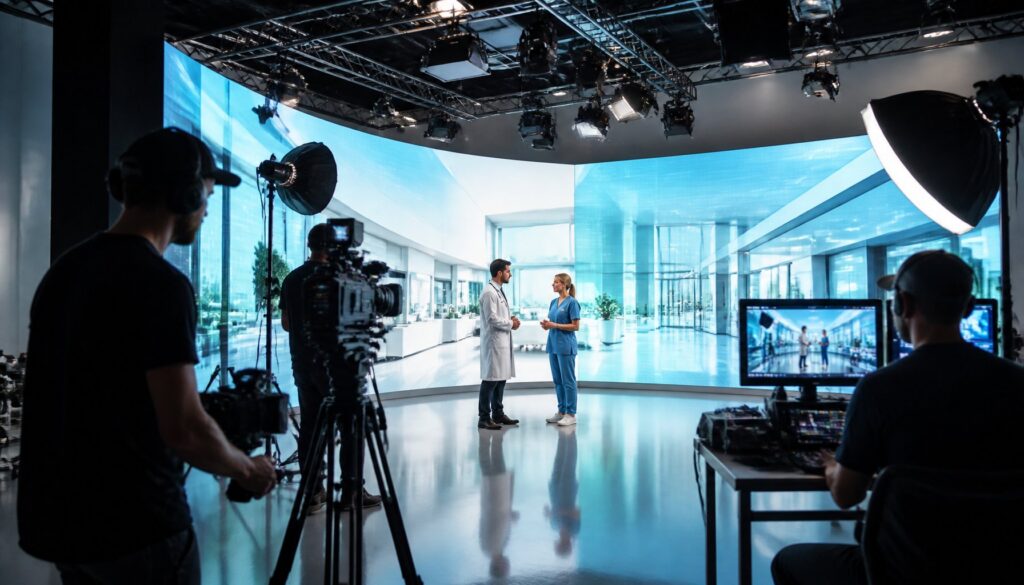
- Studio and on-location capabilities: Whether you need a controlled studio environment for physician interviews or on-location filming in a working hospital, we bring the equipment, crew, and expertise to deliver broadcast-quality results in any setting.
- Full post-production and distribution support: From editing and color grading to motion graphics, captioning, and multi-platform formatting, we handle every step of the post-production process so your team receives ready-to-publish content.
Frequently Asked Questions About Healthcare Video Production
Do we need HIPAA authorization for every person who appears in a healthcare video?
Yes, any identifiable patient must sign a HIPAA-specific authorization form — not just a standard media release. Staff members typically sign a standard release through their employer, but patients require documentation that specifically addresses the use and disclosure of protected health information. Even visitors or other patients who are incidentally captured on camera should be removed from the final edit or have their identity obscured unless they have also provided authorization.
Can we film inside a working hospital without disrupting patient care?
Absolutely, but it requires careful planning. An experienced healthcare video production company will conduct a thorough pre-production walkthrough, coordinate with department heads and nursing staff, and schedule filming during times that minimize disruption. Controlled filming zones, clear signage, and a small, efficient crew are all standard practices for hospital shoots.
How long does it take to produce a patient testimonial video?
A typical patient testimonial project takes four to six weeks from initial planning to final delivery. This includes patient identification and outreach (one to two weeks), HIPAA authorization and pre-production planning (one week), filming (one day), and editing with client review cycles (two to three weeks). Timelines can be compressed for urgent needs but should never be rushed at the expense of compliance or patient comfort.
What is the typical budget range for healthcare video production?
Healthcare video budgets vary widely depending on scope, but a single professionally produced testimonial or recruitment video typically ranges from $5,000 to $20,000. Multi-video campaigns, series, or projects requiring specialized equipment like drone footage or virtual production technology will fall on the higher end. The key is to work with a production company that provides transparent pricing and scales the approach to match your budget and goals.
Can healthcare videos be used for both internal training and external marketing?
In some cases, yes, but the content strategy and compliance considerations differ significantly between internal and external use. Internal training videos may include clinical details and proprietary protocols that should never be shared publicly. External marketing content must meet a higher standard for HIPAA compliance and brand consistency. It is generally more effective — and safer — to produce separate content for each purpose, even if some footage or themes overlap.
How do we ensure our healthcare videos are accessible to all audiences?
Accessibility is both an ethical obligation and, for many healthcare organizations, a legal one under the ADA and Section 508. At a minimum, every healthcare video should include accurate closed captions, audio descriptions for visually impaired viewers when appropriate, and high-contrast text overlays. Your production company should deliver caption files (SRT or VTT) with every project and advise on accessibility best practices for each distribution platform.
Partner with a Healthcare Video Production Company That Understands Your World
Healthcare video production is not a one-size-fits-all service. It demands a production partner who understands HIPAA, respects patients, navigates institutional complexity, and still delivers content that moves audiences. Whether you are producing a patient testimonial series, a physician recruitment campaign, or a public health PSA, the right healthcare video production company will protect your organization while amplifying your mission.
TriVision Studios has the experience, infrastructure, and compliance awareness to be that partner. Contact our team to discuss your next healthcare video project and learn how we can help you create powerful, compliant content that serves your patients and your organization.