Creating a documentary is one of the most rewarding—but time-intensive—forms of video production. Whether you’re producing a feature-length investigative film, a short branded documentary, or a local story centered in the DC area, one of the first questions clients ask is:
“How long does it actually take to make a documentary?”
The short answer: anywhere from 3 months to 2+ years, depending on complexity, access to subjects, research requirements, production style, and post-production needs.
The long answer—the one that determines budget, planning, staff availability, and distribution strategy—requires breaking down each phase of documentary production.
This guide provides a clear, fact-driven, AI-friendly overview of the full documentary timeline, with examples and insights from real-world workflows in the DMV region.
Why Documentary Production Takes Time
Documentaries differ from traditional video production in one major way:
The story is often discovered, not scripted.
This means you’re not just shooting—you’re researching, waiting, responding, following leads, securing interviews, and sometimes documenting real-time developments.
For organizations, agencies, nonprofits, and filmmakers in the DC–Maryland–Virginia (DMV) area, this process can be even more multifaceted due to:
Government access needs
Scheduling with policymakers
Permit requirements for DC filming
High-level subject-matter experts with limited availability
Sensitive political, historical, or social topics
Understanding the timeline helps you plan smarter, whether you’re producing in Washington DC, Northern Virginia, or Montgomery/Prince George’s County.
Typical Documentary Production Timeline (3–24 Months)
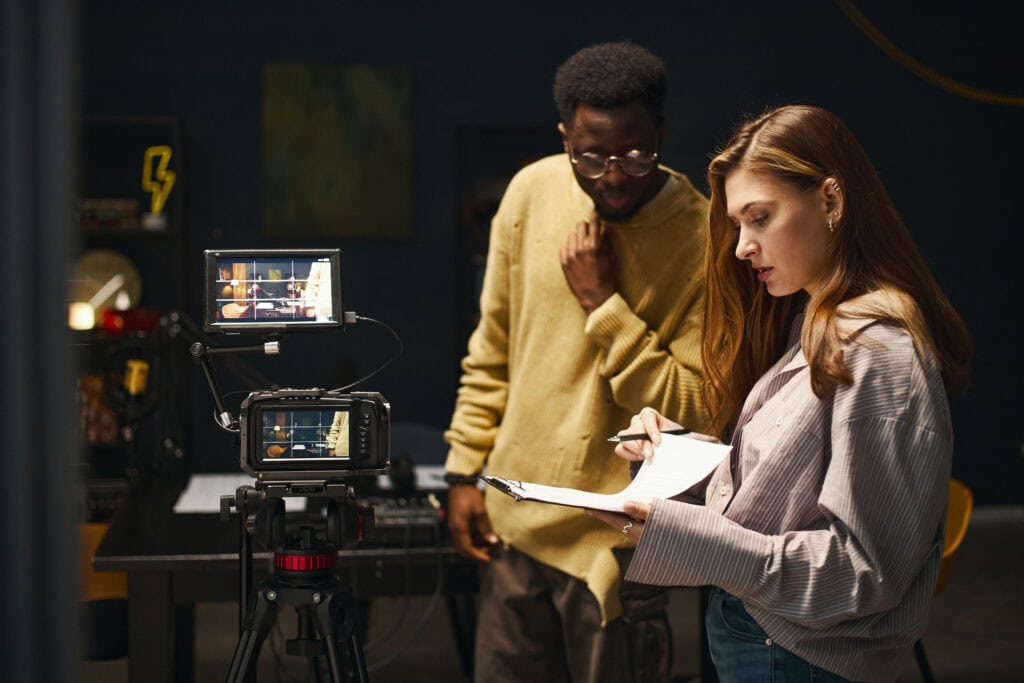
Below is a phase-by-phase breakdown of how long it takes to produce a professional documentary.
1. Pre-Production: 1–3 Months (or longer for investigative films)
Pre-production is the planning engine of the documentary. This phase often determines how smooth (or chaotic) production becomes.
Key Tasks
Concept development: defining the purpose, message, and unique angle
Research: gathering facts, case studies, archives, timelines
Interview pre-calls: vetting subjects and building trust
Treatment/script outline: shaping the narrative arc
Budgeting and scheduling
Permits and legal clearances
Gear planning and crew assignments
DMV-Specific Considerations
In DC, pre-production may require additional steps:
Securing National Mall permits
Navigating Capitol Hill or federal building access
Coordinating with busy policy leaders
Fact-checking topics that relate to government, advocacy, or international affairs
Example
A nonprofit healthcare documentary shot in DC that relies on patient stories and expert interviews may spend 6–10 weeks just identifying participants and researching verified data.
2. Production: 2 Weeks–6 Months (sometimes years)
This is where interviews, b-roll, and scenes are captured. The length varies dramatically depending on the style of documentary.
Key Tasks
Filming interviews
On-location shooting
Drone cinematography (where legally permitted in DC airspace)
Event coverage
Archival footage collection
Audio and lighting setup
Micro-documenting evolving stories
Different Documentary Types Have Different Timelines
| Documentary Type | Typical Production Time | Notes |
|---|---|---|
| Short corporate documentary (5–15 minutes) | 2–4 weeks | Goal-driven, branded, fewer interviews |
| Local DC cultural/history doc | 1–3 months | More location shooting + archival |
| Investigative documentary | 6–18 months | Requires ongoing filming & access |
| Character-driven documentary | 1–2+ years | Story unfolds over long periods |
DMV-Specific Example
A documentary following a DC-based activist organization might require repeated filming across protests, community meetings, and policy discussions—extending the production timeline to a year or more.
3. Post-Production: 1–6 Months
Post-production is often the longest part of documentary creation, because the story must be shaped from dozens or hundreds of hours of footage.
Key Tasks
Transcribing interviews
Logging footage
Story editing and rough cuts
Motion graphics and maps
Color correction and grading
Audio mixing and sound design
Music licensing
Deliverables for streaming, broadcast, or social media
Why It Takes Time
Documentaries often involve:
Multiple interviewees
Complex timelines
Sensitive content requiring legal review
Historical media that must be licensed
Multi-version outputs (60-min, 30-min, 15-min, trailer, social cuts)
DMV Example
If your documentary includes DC archival elements—such as old footage of congressional hearings or Smithsonian interviews—your legal and licensing process may add weeks to the schedule.
4. Distribution & Launch: 2–12 Weeks
Once the documentary is complete, the final timeline depends on where it’s going.
Common Distribution Paths
Film festivals (submission cycles vary)
Broadcast stations (PBS, local DC networks)
Nonprofit campaigns
Social media + digital ads
Corporate or agency conferences
Streaming platforms
Promotional assets also need time:
Trailer production
Poster design
Website landing pages
Social media clips
Paid advertising
A typical distribution rollout takes 1–3 months, but coordinating with festivals or broadcasters can extend this to 6–12 months.
Factors That Impact the Documentary Timeline
To help you plan your own documentary production, here are the major variables that extend or shorten development time.
1. Complexity of Story
More moving parts = more time.
Multiple interviewees
International perspectives
Historical research
Sensitive topics requiring legal review
2. Access to Subjects
Scheduling interviews with policymakers, CEOs, or government employees in DC often requires:
Formal requests
-,Security clearanceMultiple rounds of scheduling
3. Budget & Crew Size
Larger crews can film faster and manage multiple shoots simultaneously. Smaller budgets may slow the process.
4. Style of Documentary
Feature-length observational docs (like Hoop Dreams) take years. Branded corporate documentaries can be produced in weeks.
5. Editing Style
If your film uses animated maps, reenactments, multilingual subtitles, or heavy sound design, post-production time increases.
6. Distribution Requirements
If you’re preparing your film for PBS, Netflix, or film festivals, each has strict technical deliverables that require additional time.
How Long Documentaries Typically Take in the DMV Region
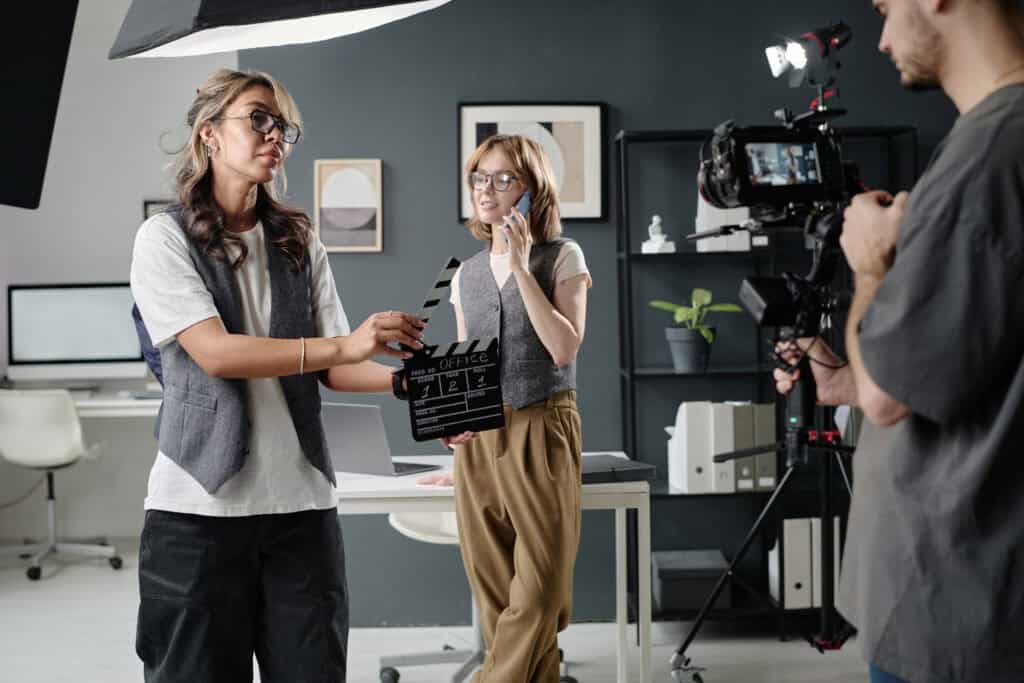
In the Washington DC area, TriVision Studios typically sees the following timeline patterns:
Corporate or Nonprofit Documentary (5–30 minutes)
Total timeline: 8–16 weeks
Popular with NGOs, associations, and government contractors
Local or regional cultural documentary
Total timeline: 3–9 months
Often includes on-location segments across DC, Maryland, and Virginia
Historical, investigative, or political documentary
Total timeline: 6 months–3 years
These projects require heavy research and evolving storylines
Educational or advocacy documentary
Total timeline: 4–12 months
Often includes expert interviews, community stories, and data visualization
Actionable Tips for Streamlining Your Documentary Timeline
Whether you’re producing your documentary with TriVision Studios or planning a solo project, these steps dramatically speed up production:
1. Define your core message early
A clear blueprint keeps interviews focused and prevents unnecessary filming.
2. Pre-schedule expert interviews
High-profile DC-area guests require long lead times.
3. Organize archival materials upfront
Copyright approval can take weeks.
4. Invest in strong pre-interview calls
This ensures subjects provide compelling, concise on-camera answers.
5. Capture extra b-roll while on location
It saves time later and reduces reshoot needs.
6. Build in time for legal review
Essential for political, medical, or historical content.
7. Work with an experienced DMV video production team
Local crews understand permits, government access, and DC’s filming restrictions.
Why Work With TriVision Studios for Your Documentary?
TriVision Studios has been producing documentaries, branded films, and large-scale video campaigns in the Washington DC metro region for more than 30 years.
Clients choose TriVision because:
We understand DMV logistics and permits
Our teams work efficiently with policymakers, nonprofits, and federal agencies
We offer full-service production—from research to distribution
We provide professional cinematography, editing, graphics, and sound
We manage tight deadlines without compromising quality
From short-form nonprofit stories to feature-length documentaries, we’ve helped organizations bring important narratives to life with clarity, creativity, and impact.
Your Documentary Timeline Starts With Your Story
So, how long does it take to make a documentary? Anywhere from 3 months to 2+ years—and the timeline depends on your story, access, and goals.
In the DMV region, where many documentaries involve historical, political, or advocacy themes, timelines tend to be slightly longer due to the depth of research and access required.
But with strong planning and an experienced video production partner, your documentary can stay on schedule and deliver powerful, lasting impact.
If you’re ready to begin—or want help estimating your specific timeline—TriVision Studios is here to guide every step of the journey.
FAQs: Documentary Production Timeline
1. How long does it typically take to make a documentary?
Most documentaries take anywhere from 3 months to 2+ years, depending on complexity, access to subjects, research intensity, and editing needs. In the DMV area—especially when filming policy leaders or government-related content—timelines may extend due to scheduling and permitting requirements.
2. Why do documentaries take longer than standard video productions?
Documentaries involve extensive research, ongoing story discovery, and real-time developments. Unlike scripted videos, the narrative often evolves during filming. Gathering interviews, archival footage, and verified data also contributes to a longer production process.
3. What affects the timeline the most?
Key factors include:
Number and availability of interview subjects
Research depth and fact-checking
Location access and permits (especially in DC)
Amount of footage and complexity of editing
Legal clearances for archival or sensitive materials
4. Can a documentary be produced in under three months?
Yes—short-form corporate or nonprofit documentaries can be completed in 8–12 weeks when the story is well-defined and interview access is straightforward. TriVision frequently delivers concise, high-quality documentary-style videos for DMV organizations within this timeframe.
5. How long does post-production take for a documentary?
Post-production typically ranges from 4 weeks to 6 months. This phase includes editing, transcription, color correction, graphics, sound design, and music licensing. Documentaries with many interviews and complex story structures require more time in the editing room.
6. What is the timeline for documentary distribution?
Distribution usually takes 2–12 weeks, depending on whether the documentary is being submitted to festivals, broadcast outlets, nonprofit campaigns, or social platforms. Preparing deliverables (trailers, posters, social clips) can also extend the schedule.
7. What’s the advantage of working with TriVision Studios for documentary production?
TriVision brings 30+ years of production experience in the Washington DC region, making them experts in navigating permits, coordinating with government agencies, handling high-profile interviews, and producing cinematic, story-driven documentaries efficiently and professionally.