Your in-person audience is energized, but your virtual attendees are dropping off within minutes. Sound familiar? This is the central challenge of hybrid events — and it is exactly why hybrid event video production in DC demands a specialized, tactical approach that most organizations underestimate. According to a 2026 report from Grand View Research, the global virtual events market is projected to exceed $657 billion by 2030, and hybrid formats now account for the majority of large-scale corporate, government, and nonprofit gatherings in the Washington DC metro area. Getting it right means more than just pointing a camera at a stage and streaming it online. It requires a deliberate playbook.
This guide breaks down the technical infrastructure, creative strategy, and logistical planning you need to produce hybrid events that genuinely engage both audiences — the people in the room and the people on the screen.
Why DC Is a Unique Market for Hybrid Event Production
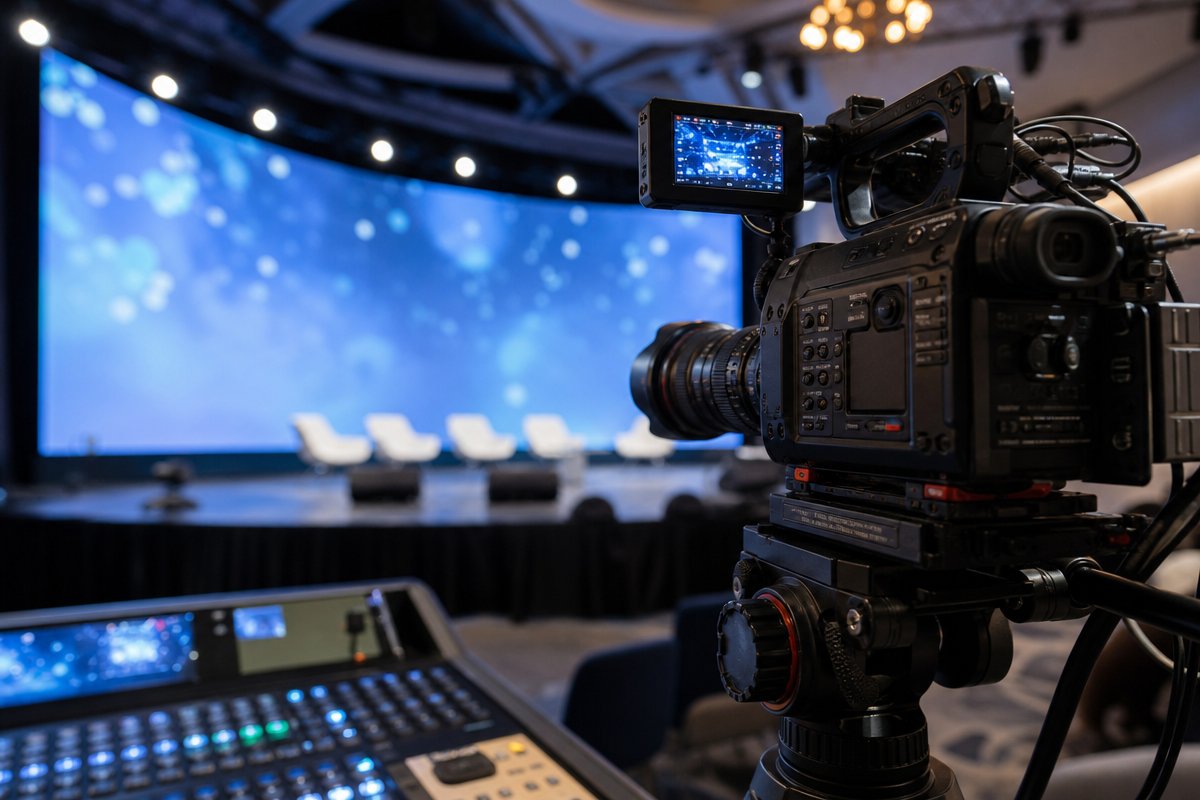
Washington DC is not like other cities when it comes to events. The region hosts a dense concentration of government agencies, international nonprofits, trade associations, and lobbying organizations — all of which rely on events to convene stakeholders who are often spread across the country or the globe. That reality makes hybrid the default format for a huge percentage of DC events.
Factors That Shape DC Hybrid Events
- Security and compliance requirements: Government and government-adjacent events often have strict protocols around streaming platforms, data handling, and venue access. Your production team needs to understand FedRAMP-compliant platforms and controlled-access environments.
- High-profile speakers and panels: DC events frequently feature elected officials, agency heads, and C-suite executives. These speakers may join virtually even when the event itself is in-person, requiring seamless integration of remote presenters into the live production.
- Multi-stakeholder audiences: Attendees range from policy analysts watching from a government office to donors tuning in from another time zone. The production must serve vastly different viewing contexts simultaneously.
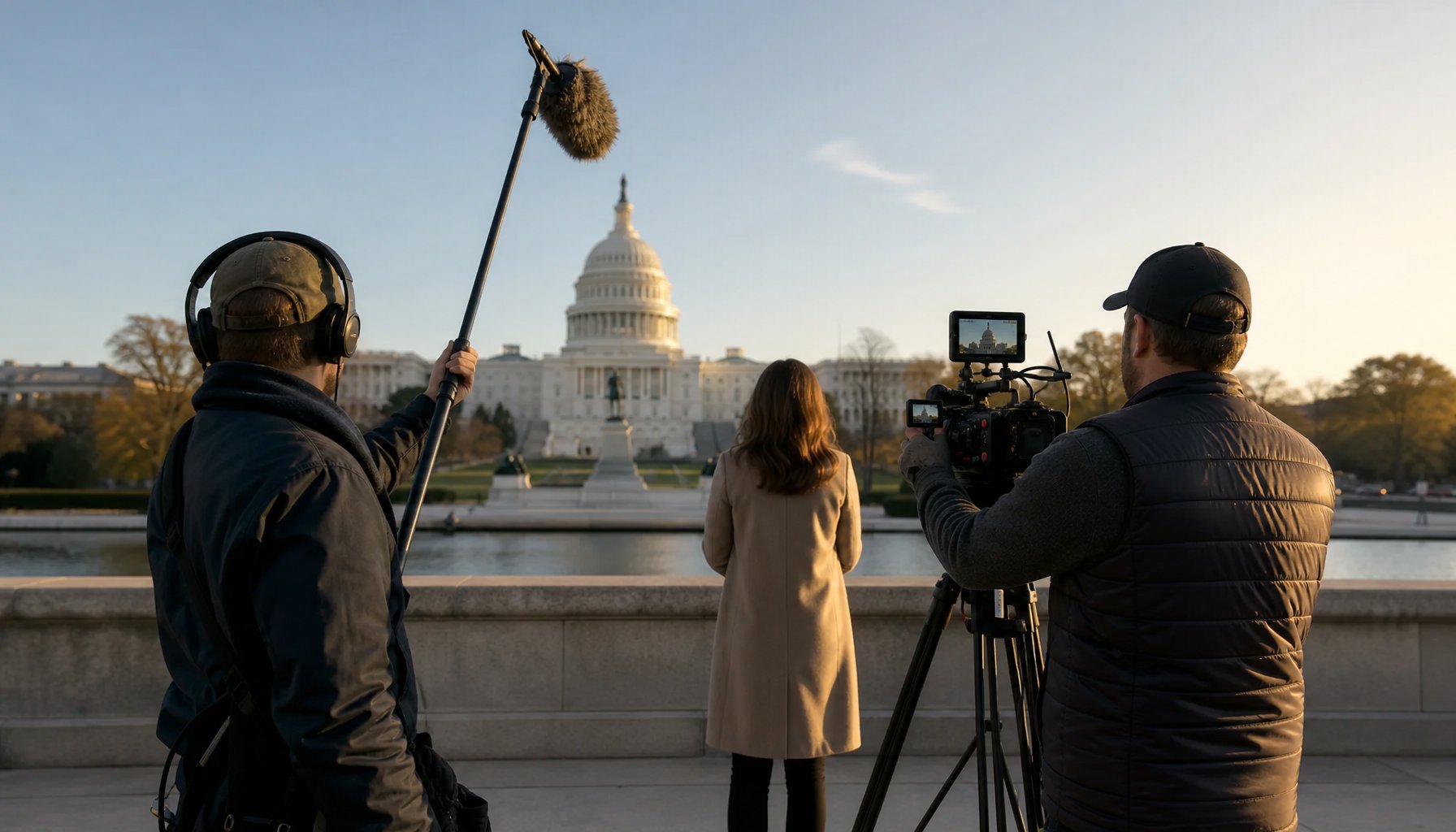
- Venue diversity: From hotel ballrooms on K Street to Capitol Hill conference rooms to purpose-built studios in Northern Virginia, each venue presents unique technical challenges for hybrid production.
Understanding these factors is the first step. The next is building the technical backbone that makes a hybrid event actually work.
The Technical Infrastructure: Building Your Hybrid Production Stack
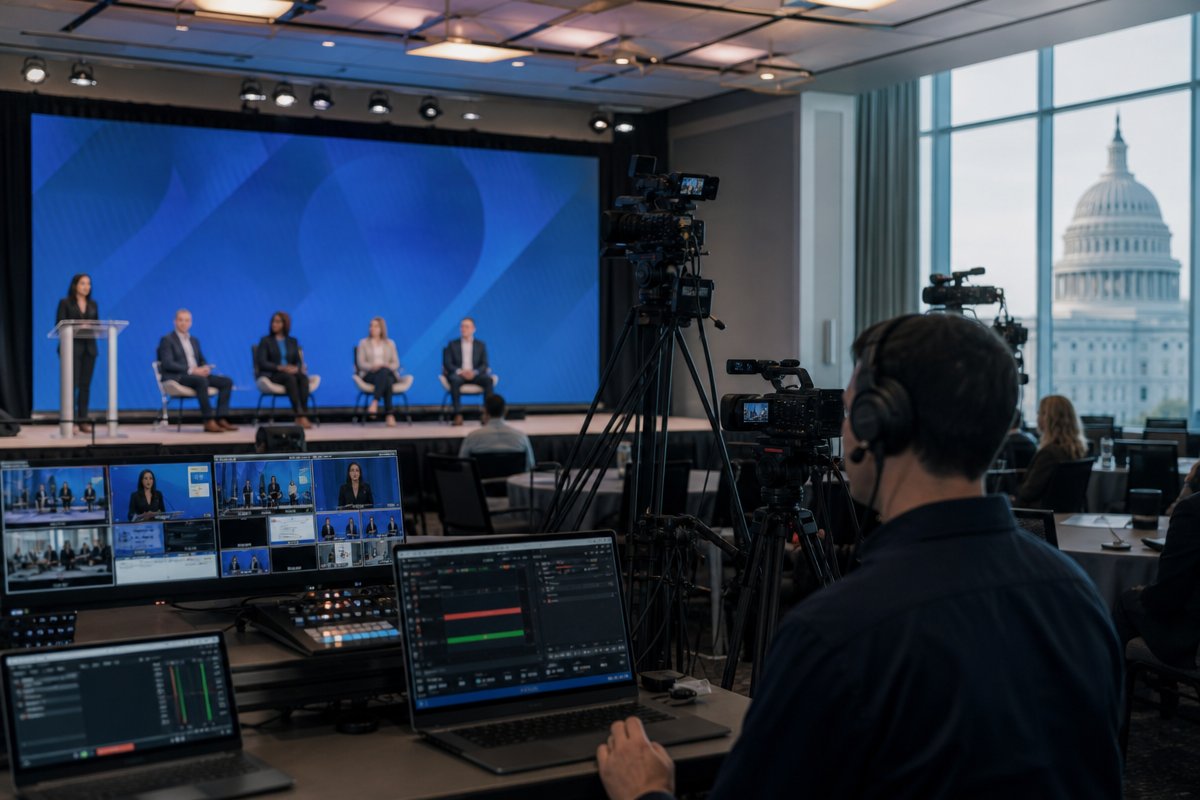
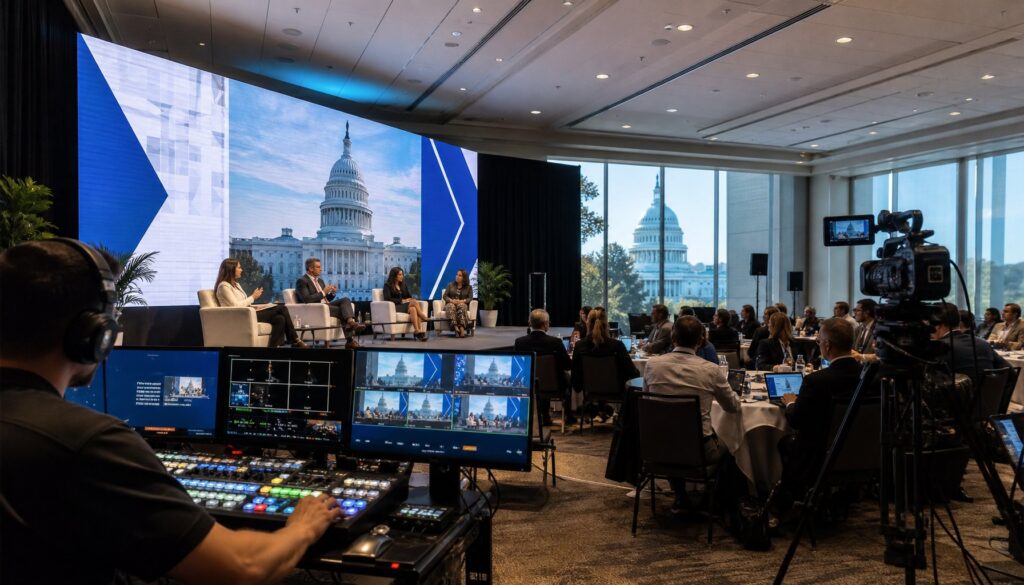
A successful hybrid event is built on a production stack — an integrated system of cameras, audio, streaming, lighting, and switching technology that treats the virtual audience as a first-class participant, not an afterthought.
Multi-Camera Video Capture
A single static camera will kill your virtual audience’s attention. At minimum, plan for three camera angles: a wide shot of the stage, a tight shot on the active speaker, and a roaming or audience-reaction camera. For panel discussions, you may need a dedicated camera per panelist. A technical director should be switching between feeds in real time so the stream feels like a produced broadcast, not a security camera feed.
Broadcast-Quality Audio
Audio is arguably more important than video for remote viewers. Poor audio is the number one reason virtual attendees leave a hybrid event stream. Your setup should include:
- Lavalier or headset microphones for every speaker on stage
- Ceiling or boundary microphones for audience Q&A segments
- A dedicated audio mix for the stream that is separate from the in-room PA system — what sounds great in a ballroom often sounds terrible through laptop speakers
- Audio monitoring with a dedicated engineer listening to the stream output in real time
Streaming and Encoding
Choosing the right streaming platform depends on your audience and security needs. Options range from YouTube Live and Vimeo for public-facing events to platforms like Microsoft Teams Live Events, Zoom Webinars, or specialized government-compliant solutions. Regardless of the platform, you need a hardware encoder — not a laptop running OBS — to ensure stable, high-bitrate output. Redundant internet connections (a hardwired primary and a bonded cellular backup) are non-negotiable for professional hybrid events in DC, where hotel and venue Wi-Fi is notoriously unreliable.
LED Walls and Virtual Production Elements
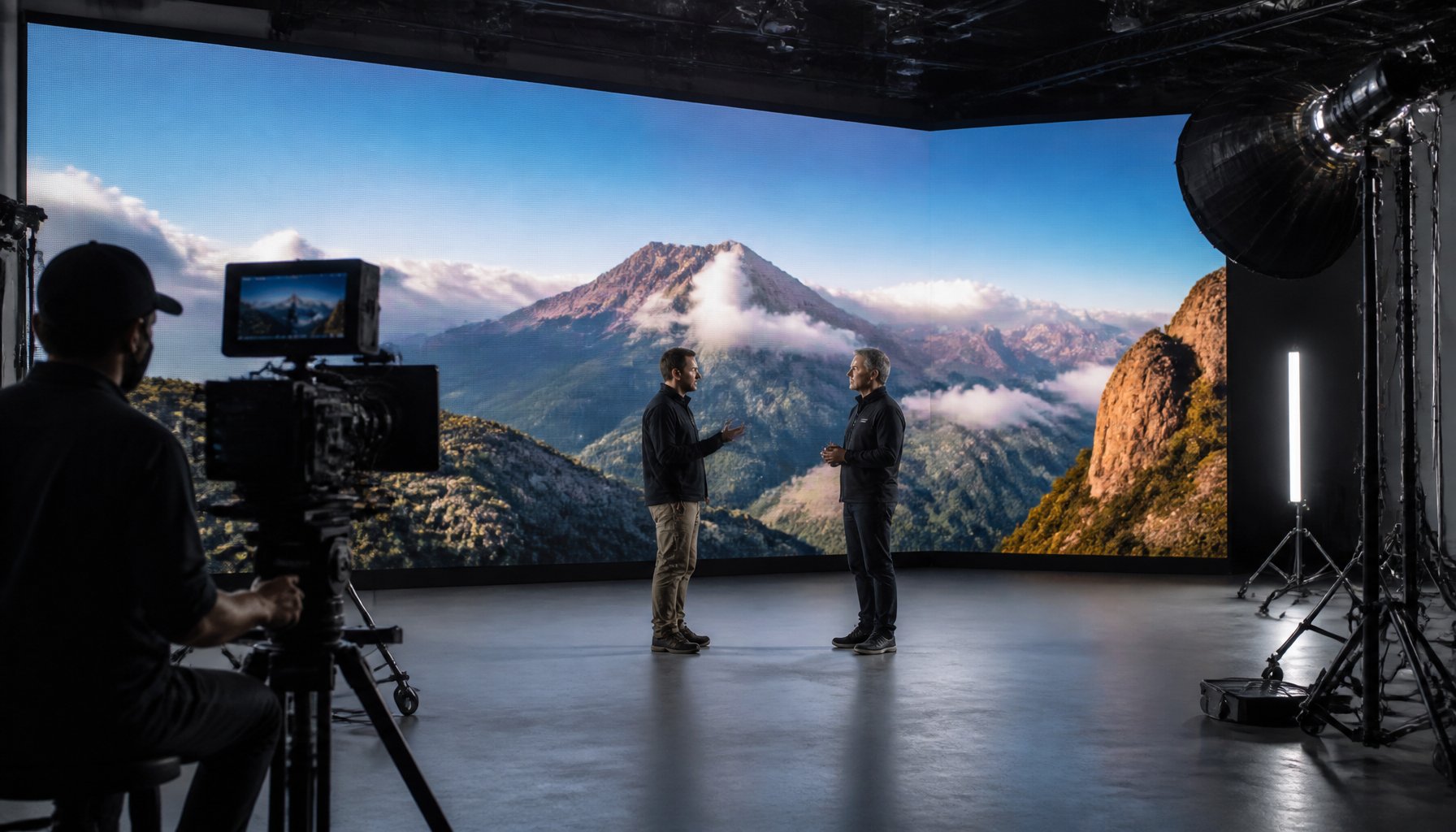
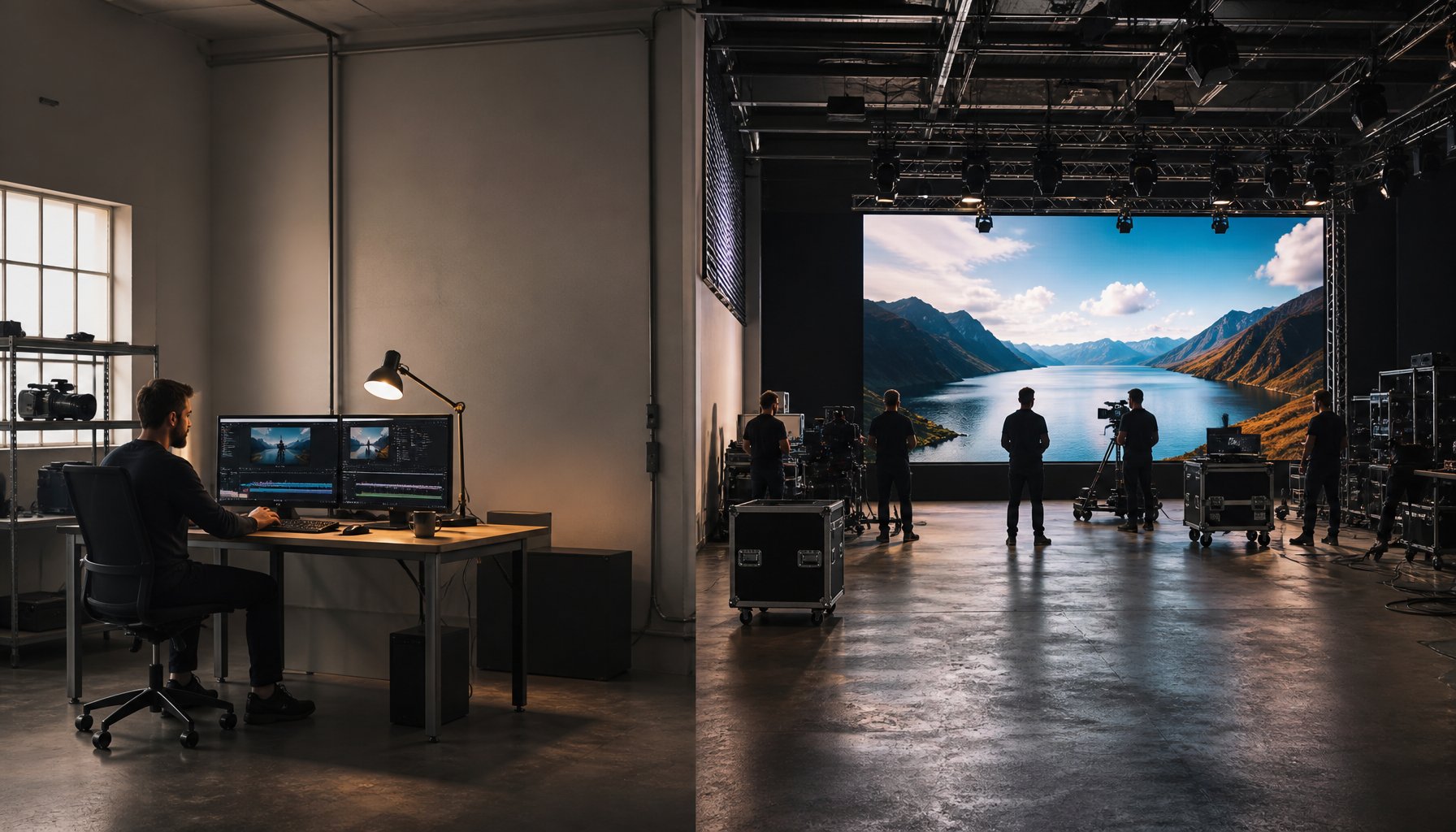
For organizations that want a more polished, branded experience, incorporating an LED video wall into the stage design can elevate both the in-room and on-stream experience. LED walls can display dynamic backgrounds, sponsor branding, live data visualizations, or even life-sized remote speakers — making virtual panelists feel like they are physically on stage. This technology has moved from the realm of broadcast television into corporate and nonprofit events, and DC production companies with LED wall capabilities can integrate this seamlessly.
Graphics, Lower Thirds, and Branding
Your virtual stream needs broadcast-style graphics: speaker name lower thirds, agenda slides, sponsor logos, countdown timers, and transition animations. These elements make the stream feel intentional and professional. They also reinforce branding in a way that benefits your organization long after the event ends, especially when you repurpose the recorded content.
Engaging Two Audiences at Once: The Creative Strategy
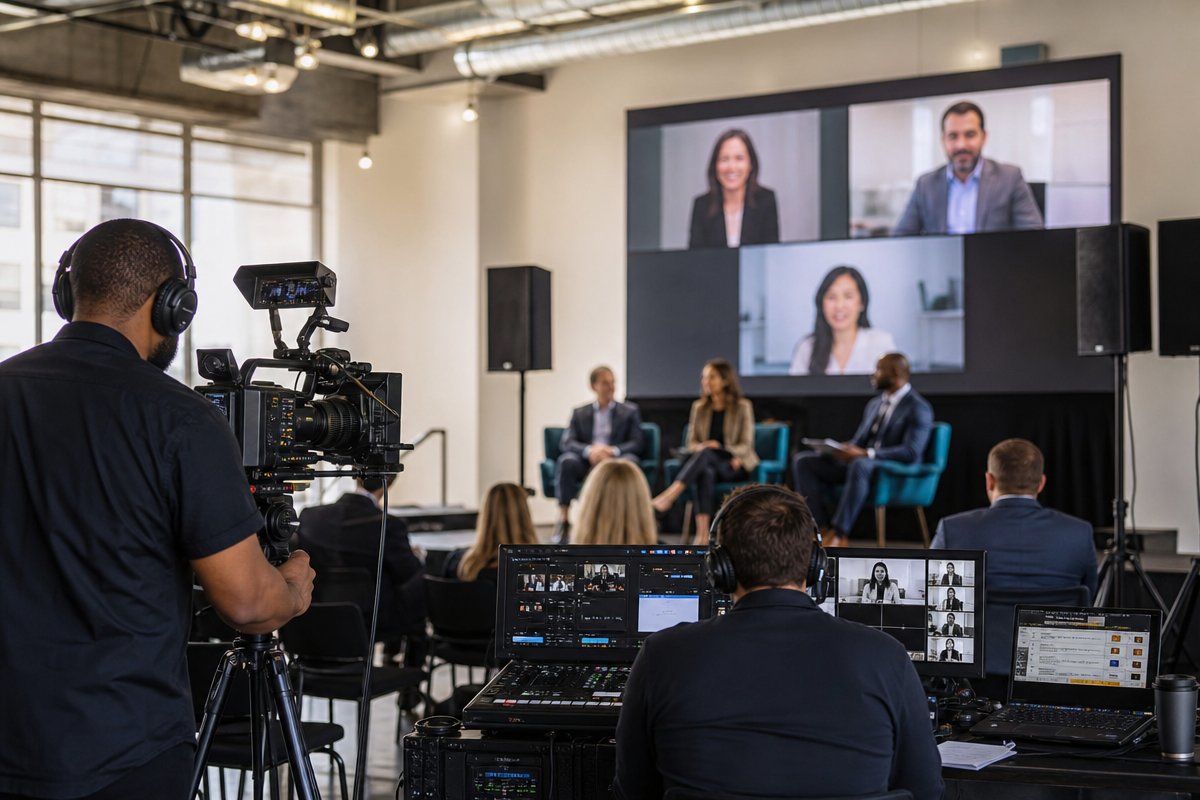
The biggest mistake organizations make with hybrid events is designing the experience for the in-person audience and then simply streaming it. The virtual audience has fundamentally different needs, attention spans, and interaction patterns. Your creative strategy must account for both.
Designing for the Screen First
Counterintuitive as it sounds, design the event for the virtual audience first. The in-person attendees benefit from the energy of being in the room, the networking, the catering. The virtual attendees have none of that. If the on-screen experience is compelling, the in-room experience will automatically be strong. The reverse is not true.
This means:
- Shorter session blocks: Virtual attention drops sharply after 20 minutes. Structure sessions in 15-20 minute segments with clear transitions.
- Visual variety: Alternate between speaker close-ups, slides, video packages, and live polling results to keep the screen visually dynamic.
- Dedicated virtual host: Assign someone to speak directly to the online audience, acknowledge their presence, relay their questions, and manage chat engagement. This person is the bridge between the two audiences.
Interactive Elements That Work for Both Audiences
- Live polling and surveys: Use platforms like Slido or Mentimeter that allow both in-room and remote attendees to participate on their phones. Display results on the LED wall or screen in real time.
- Moderated Q&A: Funnel questions from chat and in-room microphones through a single moderator to create a unified conversation.
- Breakout sessions: For multi-track events, offer virtual-only breakout rooms alongside physical breakout spaces. This gives remote attendees an experience that is uniquely theirs, not a diluted version of the in-room experience.
- Gamification: Leaderboards, trivia, and participation rewards can drive engagement across both audiences simultaneously.
Content Repurposing Built Into the Plan
One of the highest-ROI aspects of hybrid event video production is the content library you create. When the production is done right, you walk away with:
- Full-length session recordings for on-demand viewing
- Short highlight clips for social media
- Speaker soundbites for future marketing
- B-roll footage of the event for sizzle reels
- Testimonial content captured on-site
Planning for repurposing during pre-production — not as an afterthought — dramatically increases the value of your production investment.
Logistics and Planning: The Pre-Production Checklist
Hybrid events have more moving parts than either fully in-person or fully virtual events. A rigorous pre-production process is what separates a smooth show from a chaotic one.
Venue and Technical Assessment
Before committing to a venue, your production team should conduct a site visit to evaluate:
- Internet infrastructure: Is hardwired ethernet available? What is the measured upload speed? Can you get a dedicated line from the venue’s IT team?
- Power capacity: Hybrid production rigs draw significant power. Identify circuit locations and confirm capacity with the venue’s facilities manager.
- Lighting conditions: Existing room lighting rarely works for broadcast-quality video. Plan to bring supplemental LED lighting panels and work with the venue on dimming house lights.
- Load-in logistics: Cases of gear, LED wall panels, and rigging equipment need freight elevator access, loading docks, and adequate setup time. Many DC venues require union labor for load-in, which affects both timeline and budget.
Rehearsals and Run-of-Show
Every hybrid event should have a full technical rehearsal, ideally the day before. This rehearsal should include:
- Testing every microphone and camera position with actual speakers if possible
- Running the stream end-to-end to a private link so someone can evaluate the remote viewer experience
- Walking through every transition, video playback, and graphic cue in the run-of-show document
- Testing the backup internet connection by intentionally disconnecting the primary
- Confirming that remote speakers can connect, that their audio and video quality is acceptable, and that they understand their cues
Day-of Staffing
A professional hybrid event production in DC typically requires:
- Technical Director (switching cameras and managing the live production)
- Camera operators (one per camera)
- Audio engineer
- Stream engineer (managing encoding, platform, and monitoring remote feed quality)
- Graphics operator
- Virtual host or chat moderator
- Producer (overall show caller and point of contact for the client)
Cutting corners on staffing is the fastest way to compromise quality. Each role exists because hybrid production genuinely requires that many simultaneous responsibilities.
Choosing the Right Hybrid Event Production Partner in DC
Not every video production company is equipped for hybrid events. Many excel at pre-produced content — commercials, brand films, training videos — but lack the live production infrastructure and experience to handle a hybrid event with hundreds or thousands of concurrent virtual viewers.
What to Look For
- Live production experience: Ask specifically about hybrid and live-streamed events, not just video production in general. Review case studies or past event recordings.
- In-house equipment: Companies that own their own cameras, switchers, encoders, and LED walls can offer more reliability and flexibility than those who sub-rent everything.
- Studio capabilities: If your event includes pre-recorded segments, speaker introductions, or a studio-based virtual host, having access to a professional live streaming and hybrid event production studio in the DC area adds significant production value.
- Post-production services: The event does not end when the stream goes offline. You need a partner who can edit session recordings, produce highlight reels, and deliver final assets promptly.
- Scalability: Can the company handle a 50-person board meeting and a 2,000-person conference with equal competence? Scalability matters as your event strategy evolves.
Frequently Asked Questions About Hybrid Event Video Production in DC
What is hybrid event video production?
Hybrid event video production is the process of professionally capturing, producing, and streaming a live event so that it simultaneously serves an in-person audience at a physical venue and a remote audience watching online. It involves multi-camera video, broadcast audio, real-time graphics, and a managed live stream — all coordinated to deliver a cohesive experience across both audiences.
How much does hybrid event production cost in DC?
Costs vary significantly depending on event scale, duration, and production complexity. A half-day hybrid event with three cameras, professional audio, streaming, and basic graphics in the DC area typically starts in the $8,000–$15,000 range. Larger multi-day events with LED walls, multiple stages, and complex streaming configurations can range from $25,000 to $75,000 or more. The best approach is to get a detailed, itemized quote based on your specific event requirements.
How far in advance should I book a hybrid event production team?
For events in Washington DC, book your production team at least six to eight weeks in advance. Major conferences, galas, or government events should be booked three to six months ahead, especially during peak seasons (spring and fall) when DC’s event calendar is packed. Early booking ensures availability of key equipment like LED walls and experienced crew members.
Can remote speakers be integrated into a hybrid event seamlessly?
Yes, but it requires planning. Remote speakers should connect via a reliable, high-quality video call platform. Their feed is routed into the production switcher so the technical director can cut to them just like an in-room camera. Displaying the remote speaker on an LED wall or large screen on stage makes them visible to the in-person audience. A pre-event tech check with every remote speaker is essential to troubleshoot audio, lighting, and connectivity issues before the live show.
What internet speed do I need for a hybrid event?
For a reliable, high-quality stream, you need a minimum of 20 Mbps dedicated upload speed, and 50 Mbps or more is strongly recommended. This should be a hardwired connection, not Wi-Fi. Always have a backup connection — typically a bonded cellular solution — in case the primary line fails. Your production team should test the venue’s actual speeds during the site visit, not rely on the venue’s stated capacity.
How do I keep virtual attendees engaged during a hybrid event?
Engagement requires intentional design: assign a dedicated virtual host who speaks directly to the online audience, incorporate live polls and Q&A tools, keep individual sessions under 20 minutes, ensure the stream has dynamic camera switching and broadcast graphics, and create virtual-exclusive content or networking opportunities. The goal is to make remote attendees feel like participants, not spectators.
Turn Your Next DC Event Into a Hybrid Success
Hybrid events are not a trend — they are the standard operating model for organizations in Washington DC that need to reach audiences beyond the room. But producing a hybrid event that truly works for both audiences requires deliberate planning, professional-grade technology, and a production team that understands the unique demands of this format.
TriVision Studios provides full-service hybrid event video production in DC, Northern Virginia, and the surrounding region. From multi-camera live production and LED wall integration to streaming, graphics, and post-event content editing, TriVision brings the equipment, expertise, and crew to make your hybrid event seamless and impactful. Contact TriVision Studios to start planning your next hybrid event.