The Video Production Decision That Could Save—or Cost—You Thousands
Your organization needs video content. That much is clear. According to Wyzowl’s 2026 State of Video Marketing report, 91% of businesses now use video as a core marketing tool, and demand for professional video has never been higher. But the real question keeping marketing directors, communications leads, and executive teams up at night isn’t whether to invest in video—it’s how. Specifically, should you build an in-house video team or outsource to a professional production company?
The in house vs outsourced video production debate isn’t just philosophical. It has real financial consequences. Hire the wrong videographer too early and you’re burning budget on idle talent. Outsource when you should have built internally and you’re overpaying per project. This post breaks down the true costs, hidden trade-offs, and a practical break-even framework so you can make the decision with confidence—whether you’re a nonprofit in Washington DC, a government agency in Northern Virginia, or a growing company in Baltimore or Richmond.
What In-House Video Production Actually Requires
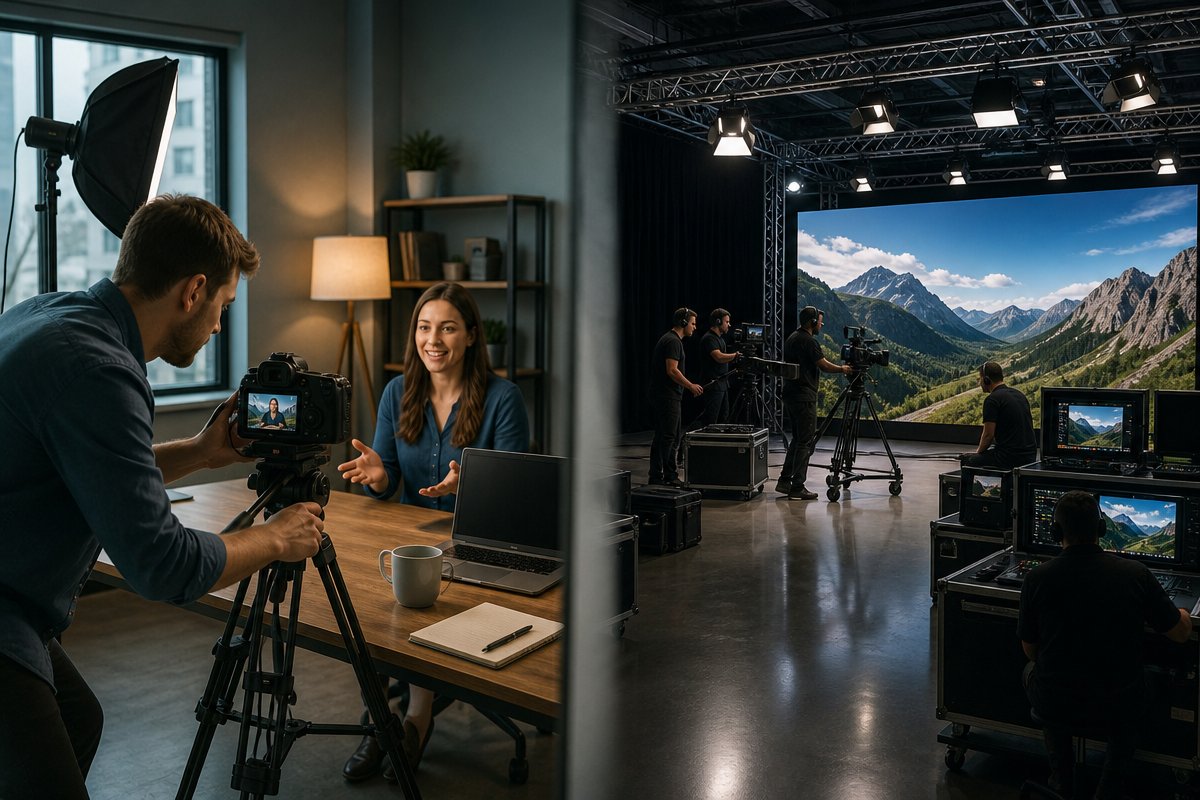
Building an internal video team sounds appealing on paper. You get dedicated talent, brand consistency, and the ability to produce content on demand. But the reality is more complex—and more expensive—than most organizations anticipate.
Staffing Costs
At minimum, an in-house operation requires a videographer/editor who can handle shooting, basic lighting, audio, and post-production. In the DC metro area, a mid-level video producer commands a salary between $65,000 and $95,000 annually, according to Glassdoor and Bureau of Labor Statistics data. Add benefits, payroll taxes, and employer contributions, and your fully loaded cost climbs to $85,000–$125,000 per year for a single hire.
Need motion graphics, color grading, or scripting? That often requires a second specialist or expensive freelance support on top of your full-time hire.
Equipment and Infrastructure
Professional video production requires more than a camera. Here’s a realistic equipment checklist for a capable in-house setup:
- Camera system (cinema-grade body, lenses, accessories): $8,000–$25,000
- Lighting kit (LED panels, modifiers, stands): $3,000–$8,000
- Audio gear (wireless lavs, shotgun mic, recorder): $2,000–$5,000
- Editing workstation (high-performance computer, monitors): $3,000–$7,000
- Software licenses (Adobe Creative Cloud, stock assets, music licensing): $3,000–$5,000/year
- Grip, stabilization, and miscellaneous: $2,000–$5,000
Total initial investment: $21,000–$55,000, plus ongoing maintenance, upgrades, and software renewals. Equipment depreciates and technology evolves quickly—expect to reinvest every 3–4 years.
Hidden Costs Most Organizations Overlook
- Training and professional development: Software updates, new techniques, and industry standards require continuous learning.
- Management overhead: Someone has to direct the creative vision, manage project timelines, and provide quality control. That’s leadership time that has a cost.
- Downtime: Unless you’re producing 3+ videos per month consistently, your in-house team will have idle periods where you’re paying salary for capacity you aren’t using.
- Opportunity cost: A one-person video team can’t simultaneously shoot a training series, edit a marketing spot, and livestream a conference. Bottlenecks are inevitable.
What Outsourced Video Production Looks Like
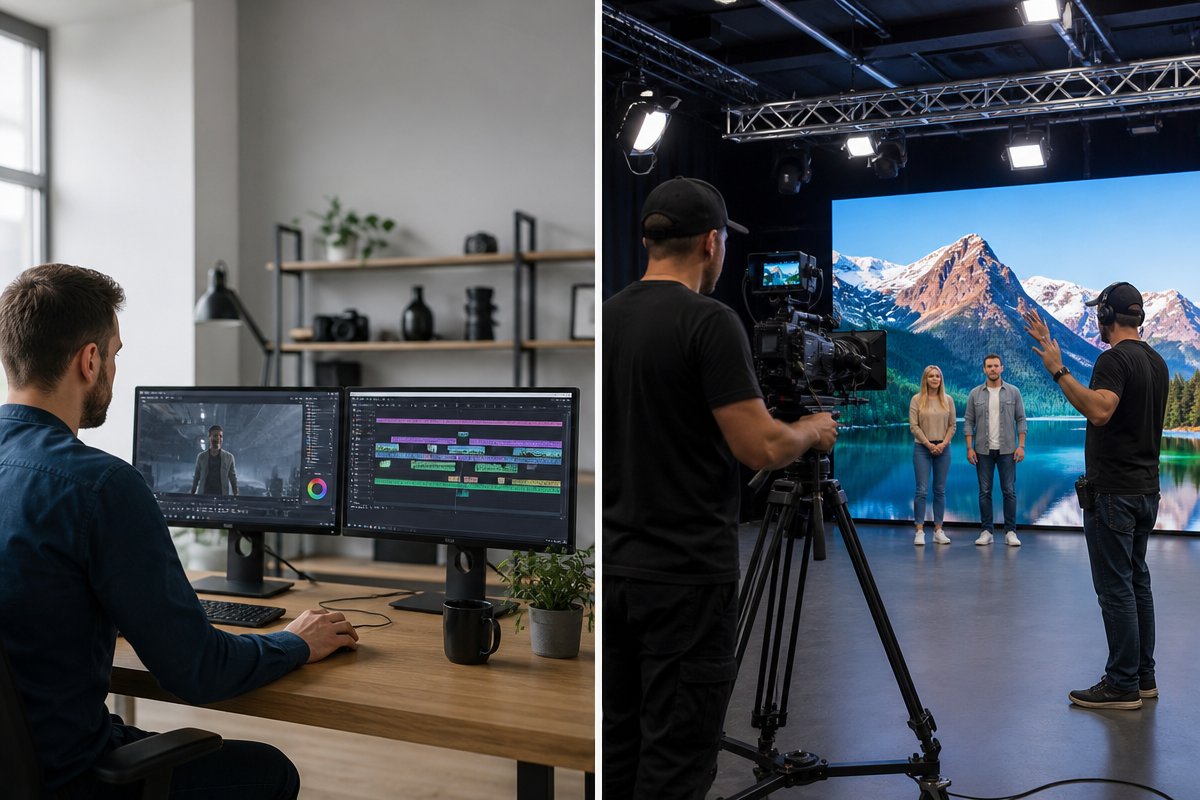
Outsourcing means partnering with a full-service video production company that brings the crew, equipment, creative expertise, and post-production pipeline to every project. You pay per project or on retainer—without carrying fixed overhead year-round.
Typical Project Costs
Professional video production pricing varies based on complexity, length, and deliverables. Here are realistic ranges for the DC, Baltimore, Richmond, and NYC markets:
- Simple interview or testimonial video (1 location, 1 camera, basic edit): $3,000–$7,000
- Corporate marketing video (scripted, multi-location, motion graphics): $8,000–$20,000
- Commercial or PSA (talent, set design, advanced post): $15,000–$50,000+
- Training video series (5–10 modules, consistent format): $15,000–$40,000
- Documentary or long-form content: $25,000–$100,000+
These ranges include pre-production planning, filming, editing, color grading, sound mixing, and final delivery—services that would require multiple specialists if done in-house.
What You Get Beyond the Camera
A capable production partner doesn’t just show up and press record. You’re accessing:
- Creative strategy and scripting: Professionals who understand narrative structure, audience psychology, and brand messaging.
- Specialized crew: Directors, DPs, gaffers, sound engineers, and editors—each an expert in their discipline.
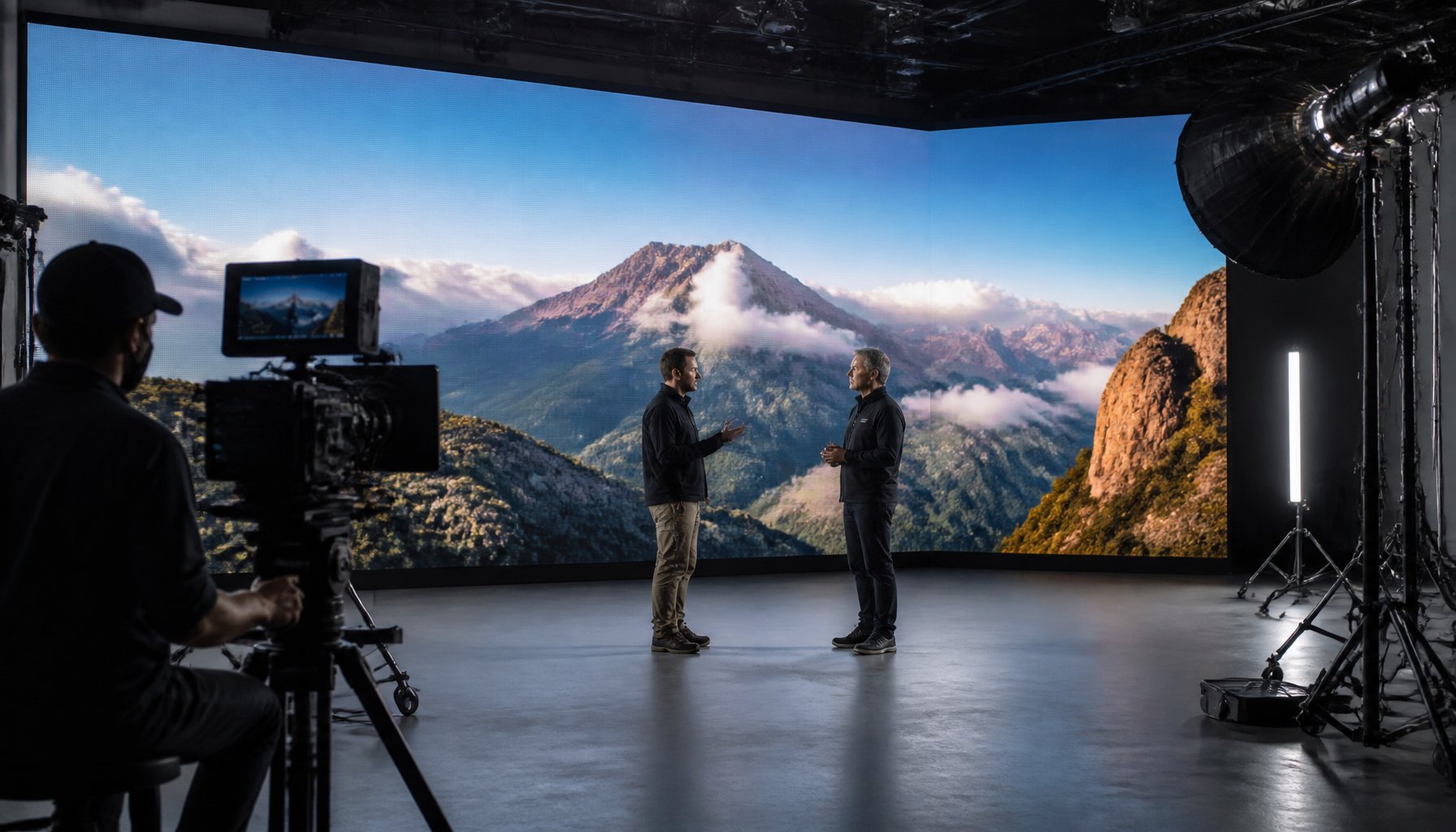
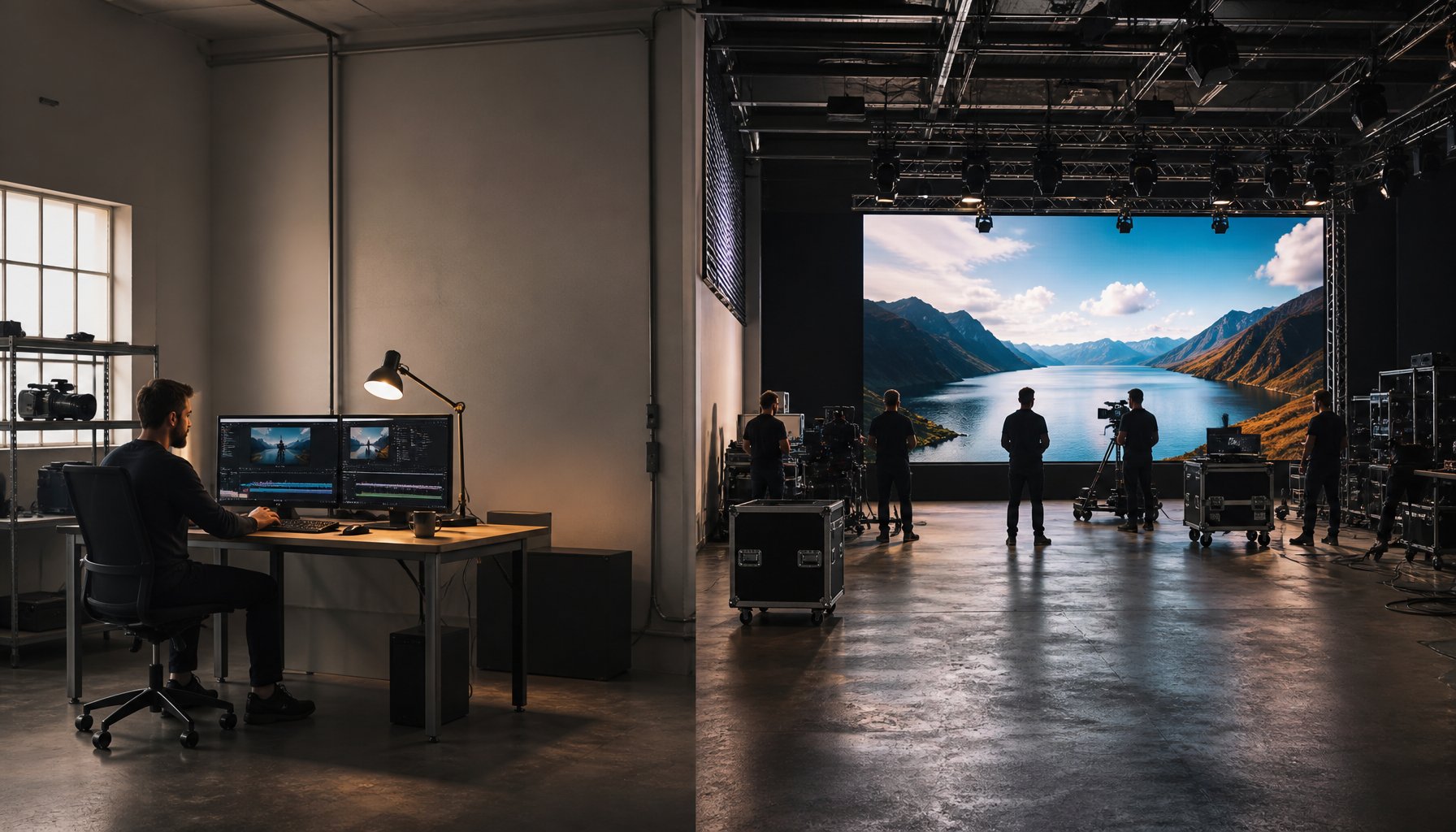
- Professional-grade equipment: Cinema cameras, studio lighting, LED wall virtual production stages, and post-production suites you’d never justify purchasing internally.
- Scalability: Need one video this quarter and five the next? An outsourced partner scales with your needs without you carrying fixed costs.
- Diverse experience: A production company that serves government agencies, healthcare organizations, nonprofits, and tech companies brings cross-industry insight that a single in-house hire simply cannot match.
The Break-Even Analysis: When Does In-House Make Sense?
Here’s where the math matters. Let’s run a straightforward break-even calculation to find the point where bringing production in-house becomes more cost-effective than outsourcing.
Assumptions
- In-house annual cost: $110,000 (mid-range salary + benefits) + $10,000 (annualized equipment/software) = $120,000/year
- Average outsourced project cost: $10,000 per video (mid-range corporate/marketing video)
The Calculation
Break-even point = In-house annual cost ÷ Average outsourced project cost
$120,000 ÷ $10,000 = 12 videos per year
If your organization consistently produces 12 or more professional videos annually—every year, without exception—an in-house team begins to break even on direct costs. Produce fewer than 12, and you’re paying a premium for the convenience of having someone on staff.
But the Real Break-Even Is Higher
That simple calculation doesn’t account for:
- Quality differential: A single in-house producer rarely matches the production quality of a full crew with a director, DP, dedicated sound engineer, and colorist. If lower quality means lower engagement, the ROI gap widens.
- Management and creative direction time: Add 10–15% of a marketing director’s salary for oversight.
- Equipment replacement cycles: Amortize over 3 years, and your annual equipment cost jumps to $12,000–$18,000.
- Variety limitations: An in-house hire skilled at corporate interviews may not have the chops for animation, live event coverage, or virtual production.
When you factor in these real-world variables, the practical break-even often lands closer to 15–20 videos per year—and only if every one of those videos is within your in-house team’s skill set.
The Hybrid Model: Why Most Smart Organizations Land Here
The in house vs outsourced video production decision doesn’t have to be all-or-nothing. Many of the most effective organizations we work with at TriVision Studios use a hybrid approach:
Keep In-House
- Quick social media clips and internal communications
- Simple event documentation and behind-the-scenes content
- Recurring low-complexity formats (weekly updates, basic product shots)
Outsource to a Production Company
- High-stakes marketing and brand videos that represent your organization publicly
- Content requiring specialized equipment (LED wall stages, multi-camera setups, aerial footage)
- Projects demanding advanced post-production (motion graphics, color grading, sound design)
- Large-scale event coverage, conference live streaming, and hybrid event production
- Compliance-sensitive content for healthcare, government, or regulated industries
This hybrid model lets you handle volume internally while ensuring your flagship content meets the professional standard your audience and stakeholders expect.
How to Evaluate a Production Partner
If outsourcing is part of your strategy—whether fully or in a hybrid model—choosing the right production company is critical. Here’s what to evaluate beyond the demo reel:
Industry Experience
Has the company worked with organizations like yours? A production partner experienced with government agencies, nonprofits, healthcare systems, and educational institutions understands compliance requirements, approval processes, and stakeholder dynamics that generic videographers do not.
Full-Service Capabilities
Can they handle the full production lifecycle—concept development, scripting, filming, editing, motion graphics, and distribution-ready delivery? Or will you need to coordinate multiple vendors?
Local Presence and Accessibility
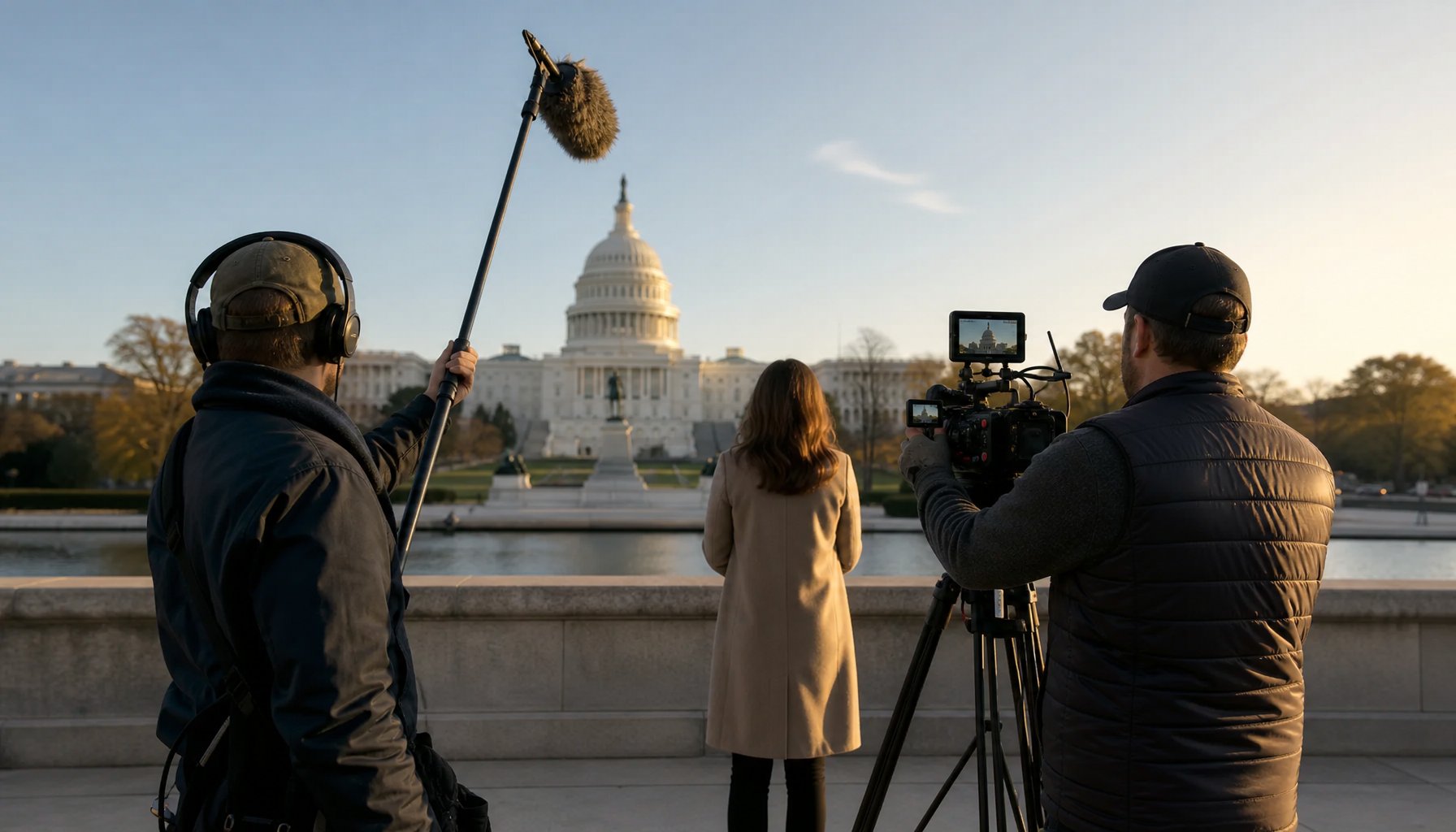
For organizations in Washington DC, Northern Virginia, Maryland, Baltimore, Richmond, or New York City, working with a production company that has a physical presence in your region means faster turnaround, lower travel costs, and a team that understands your local market.
Studio and Technology Access
Does the company operate its own studio? Access to a professional studio with LED wall virtual production capability, controlled lighting, and soundproofed environments opens creative possibilities that location-only companies cannot offer.
Transparent Pricing
Reputable production companies provide detailed proposals that break down costs by phase—pre-production, production, and post-production. Beware of vague quotes or pricing that seems too good to be true.
Frequently Asked Questions
Is it cheaper to produce videos in-house or outsource them?
It depends entirely on volume. If your organization produces fewer than 12–15 professional videos per year, outsourcing is almost always more cost-effective. You avoid fixed salary, equipment, and overhead costs and only pay for what you need. Organizations producing 20+ videos annually in a consistent format may find in-house production more economical—but only if they can maintain quality across all deliverables.
What are the biggest risks of building an in-house video team?
The primary risks are underutilization and quality limitations. If your video needs fluctuate—heavy one quarter, light the next—you’re paying full salary during slow periods. Additionally, a single in-house producer typically excels in one or two formats but lacks the specialized skills needed for diverse content types like animation, virtual production, or cinematic documentary work.
Can I start with outsourcing and transition to in-house later?
Absolutely, and many organizations do. Starting with a production partner lets you establish your video strategy, learn what content types perform best, and build a library of professional content. Once you have consistent, predictable demand—and a clear understanding of what you need—you can make a more informed hiring decision. Some organizations keep a hybrid model permanently.
How do I know if my organization produces enough video to justify an in-house team?
Run the break-even calculation outlined above using your actual costs. Factor in your local salary market, the types of videos you need, and whether a single hire can realistically handle all of them. If the math doesn’t clearly favor in-house, outsourcing or a hybrid model is the safer financial choice.
What types of video should always be outsourced?
High-visibility content—brand commercials, fundraising campaign videos, executive-level presentations, and content for large conferences or public audiences—should almost always be handled by a professional production company. The stakes are too high and the technical demands too complex for most in-house setups. The same applies to content requiring specialized technology like LED volume stages or multi-camera live streaming.
How does outsourcing work with tight turnaround deadlines?
Experienced production companies are built for project-based work and often handle tight timelines better than in-house teams, which may be juggling multiple internal requests. A good partner will establish clear milestones during pre-production and communicate realistic delivery dates upfront. Retainer arrangements can guarantee priority scheduling for organizations with recurring needs.
Make the Right Investment for Your Organization
The in house vs outsourced video production decision isn’t about choosing the cheapest option—it’s about choosing the smartest one for your organization’s specific needs, volume, and quality standards. For most organizations producing fewer than 15 videos per year, outsourcing delivers superior quality at a lower total cost. For those with higher volume, a hybrid model often provides the best of both worlds.
TriVision Studios has spent years serving as the outsourced production partner for government agencies, nonprofits, healthcare organizations, tech companies, and corporations across Washington DC, Northern Virginia, Maryland, Baltimore, Richmond, and New York City. Whether you need a single high-impact marketing video or an ongoing content partnership, our team brings the crew, the studio, the technology, and the strategic expertise to make every project count.
Ready to see what professional production can do for your organization? Contact TriVision Studios to discuss your next project and get a transparent, detailed proposal.