Your team sat through a two-hour compliance seminar last quarter, and by the following Monday, most of them had forgotten half of what was covered. Sound familiar? According to research published by the Journal of Applied Psychology, learners retain only about 10–20% of information delivered through text or lecture alone—but that number jumps to 65% or higher when visuals and video are involved. For organizations across Washington DC, Northern Virginia, and Maryland, training video production in DC has become the most reliable way to engage employees, standardize knowledge transfer, and measurably reduce onboarding time.
Whether you run a federal agency navigating strict compliance mandates, a healthcare system rolling out new protocols, or a nonprofit onboarding a wave of seasonal staff, professionally produced training videos solve a universal problem: how to teach complex information so it actually sticks. This guide walks you through everything DC-area organizations need to know—from planning and production to measuring ROI—so you can make the smartest investment in your team’s development.
Why DC Organizations Are Investing in Training Video Production
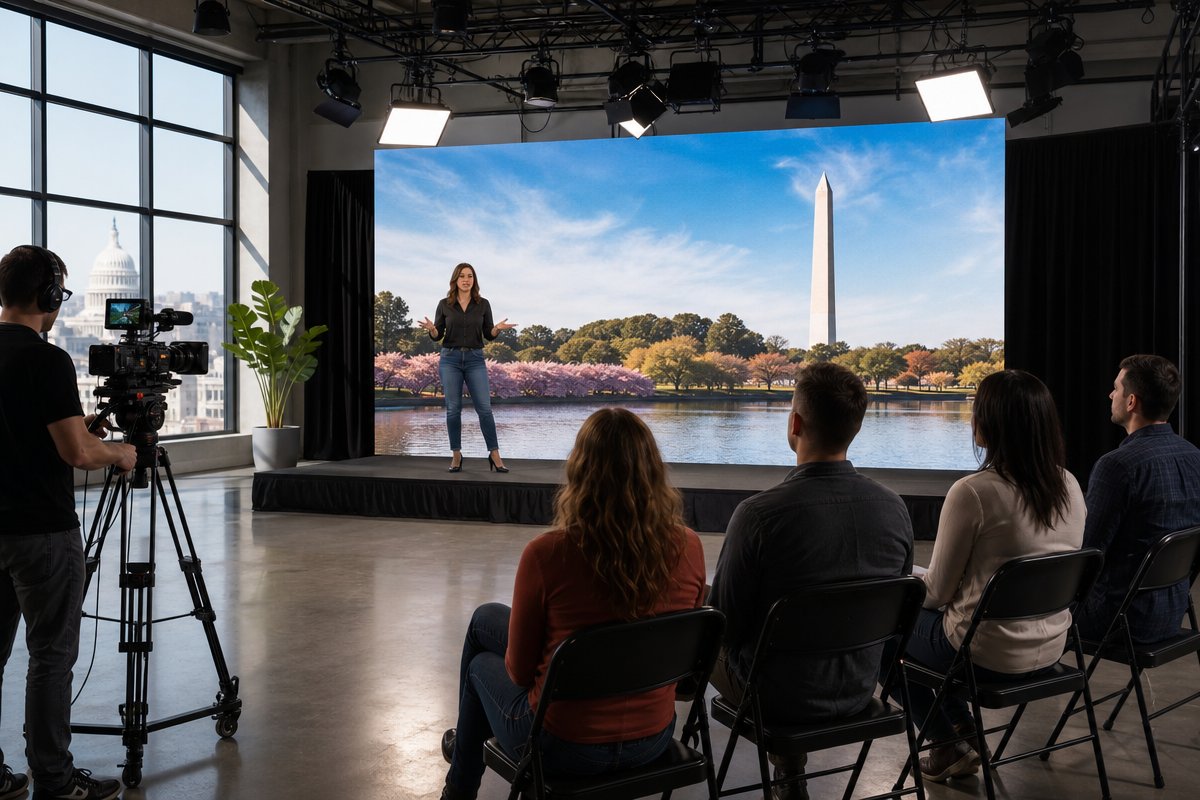
The Washington DC metro area is home to one of the most educated and professionally demanding workforces in the country. Government contractors, associations, tech firms, and healthcare networks all share a common challenge: delivering consistent, high-quality training at scale. Here is why video has become the preferred format.
Consistency Across Locations and Teams
When trainers deliver content in person, subtle variations creep in. One facilitator emphasizes certain policies; another skips details. A professionally scripted and produced training video ensures every employee—from the DC headquarters to a satellite office in Richmond or Baltimore—receives the exact same information, delivered with the same tone and accuracy.
Faster Onboarding, Lower Costs
Replacing a single mid-level employee can cost an organization anywhere from 50% to 200% of that person’s annual salary, according to Gallup. A significant portion of that cost is tied to the ramp-up period. Training videos let new hires self-pace through orientation modules, revisit complex sections, and reach productivity faster—without pulling senior staff away from their own responsibilities.
Compliance and Documentation
For government agencies and government contractors operating under strict regulatory frameworks, training isn’t optional—it’s mandated. Video creates a documented, auditable record showing that specific content was delivered. Paired with a learning management system (LMS), organizations can track who watched what, when, and whether they passed the accompanying assessment.
Higher Engagement and Retention
Forrester Research found that employees are 75% more likely to watch a video than read a document. In practice, this means the safety procedures, ethics guidelines, or software tutorials you need your team to absorb are far more effective when produced as compelling, well-paced video content rather than a 40-page PDF.
Types of Training Videos That Deliver Results
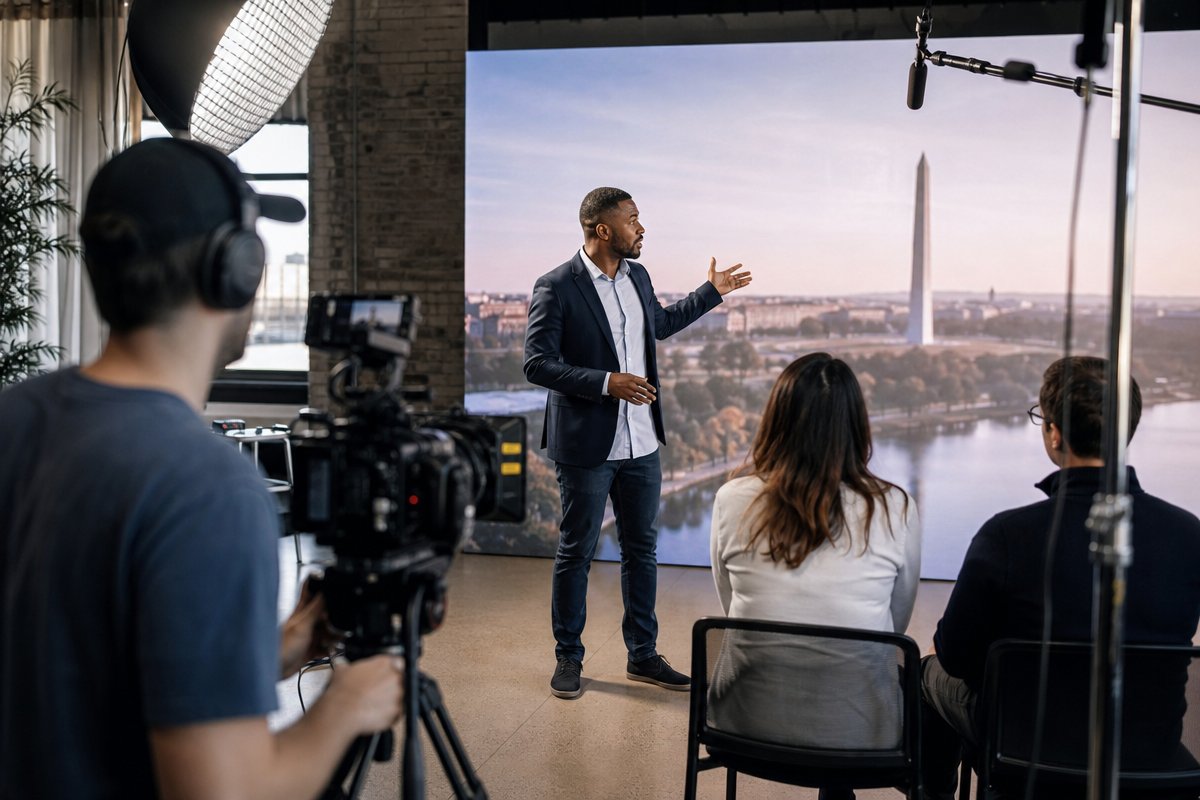
Not all training videos are the same. The format you choose should align with the content, the audience, and the learning objective. Here are the most effective types for DC-area organizations.
- Onboarding & Orientation Videos: Introduce new hires to company culture, leadership, workplace policies, and expectations. These set the tone from day one and can be updated modularly as policies evolve.
- Compliance & Regulatory Training: Cover mandatory topics like workplace safety (OSHA), cybersecurity awareness, anti-harassment policies, HIPAA, or ethics standards. Clear, professional delivery is non-negotiable.
- Software & Systems Tutorials: Screen-capture walkthroughs paired with voiceover narration help employees master new tools. These are especially valuable during system migrations or technology upgrades.
- Process & Procedure Demonstrations: Show, don’t tell. For healthcare workers learning a new clinical procedure or warehouse staff following updated safety protocols, video demonstrations remove ambiguity.
- Leadership & Soft-Skills Development: Scenario-based videos that depict real workplace situations—conflict resolution, customer service interactions, management communication—are powerful coaching tools.
- Microlearning Modules: Short, focused videos (typically 2–5 minutes) that address a single concept. These are ideal for mobile learning and ongoing professional development programs.
What Goes Into Professional Training Video Production in DC
Creating an effective training video is more than pointing a camera at a presenter. It requires strategic planning, skilled execution, and polished post-production. Here is what the process looks like when you work with an experienced production partner like TriVision Studios.
Phase 1: Discovery and Strategy
Every project starts with understanding the learning objectives. What does the audience need to know, do, or feel after watching? This phase includes stakeholder interviews, audience analysis, and content audits to determine the scope.
Key questions addressed during discovery:
- Who is the primary audience (new hires, managers, field staff, all employees)?
- What compliance or regulatory standards must be met?
- Will the videos be integrated into an LMS or distributed via intranet?
- What is the shelf life of the content—will it need annual updates?
- Are translations or closed captions required for accessibility?
Phase 2: Scripting and Storyboarding
The script is the backbone of any training video. Professional scriptwriters translate dense policy language or technical procedures into clear, conversational narration that respects the viewer’s time. Storyboards map out visuals—determining where to use on-camera presenters, b-roll footage, screen captures, animations, or text overlays.
Phase 3: Production
This is where the content comes to life. Depending on the project scope, production may involve:
- Studio filming with professional lighting, audio, and teleprompter setups
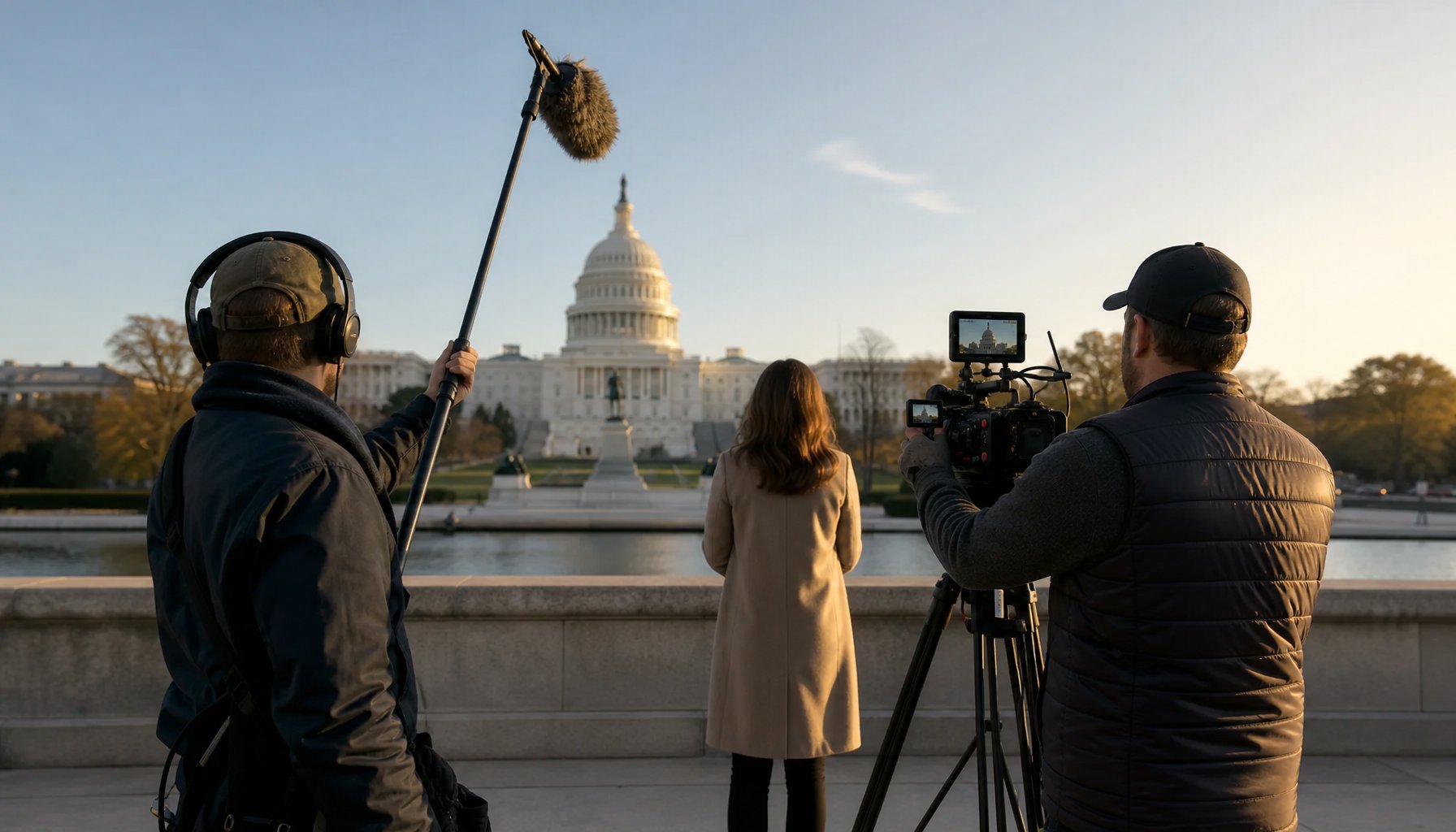
- On-location shooting at offices, facilities, or job sites across the DC metro area
- Talent direction—coaching subject-matter experts or professional actors for on-camera delivery
- Motion graphics and animation for abstract or data-heavy concepts
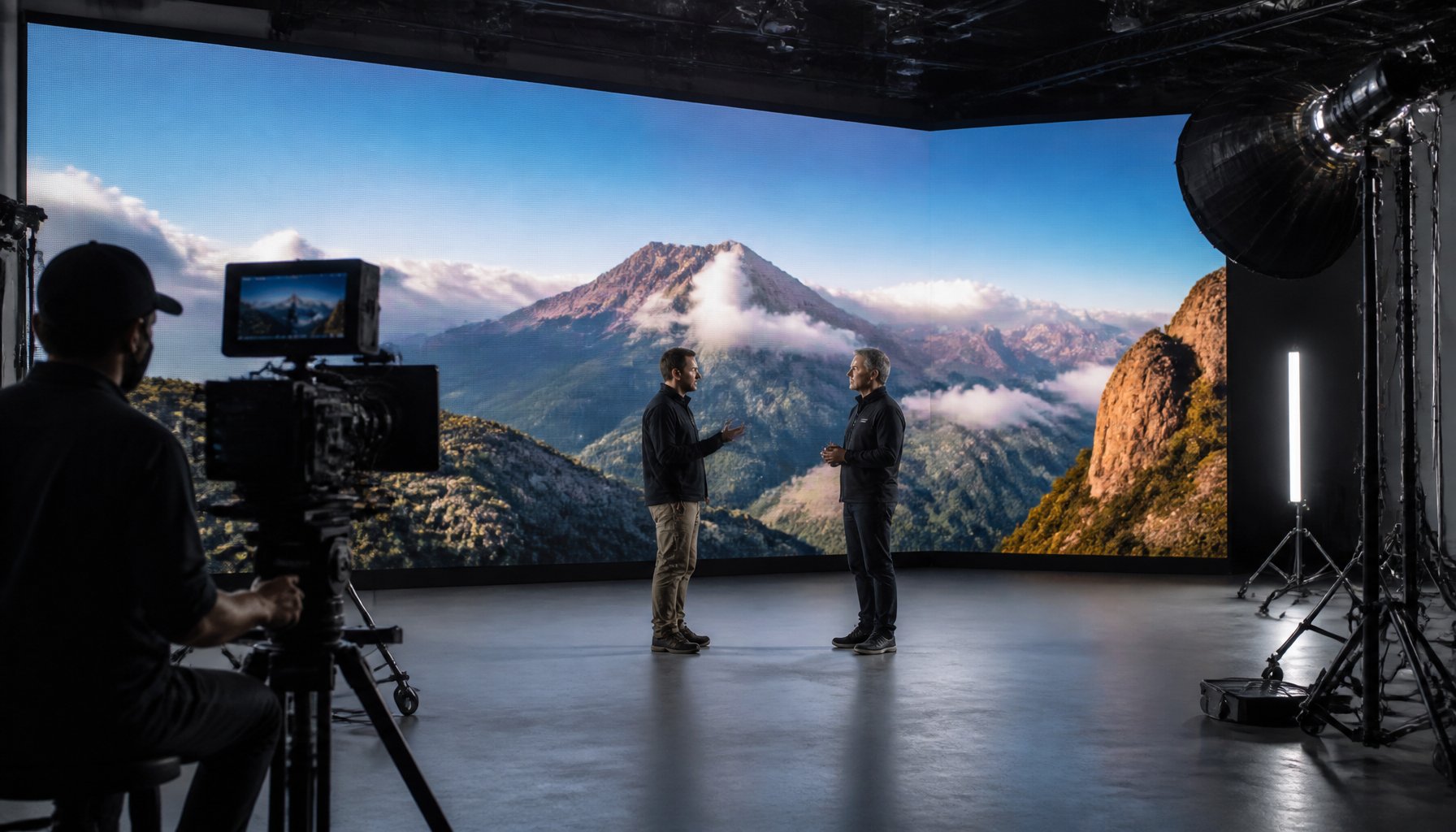
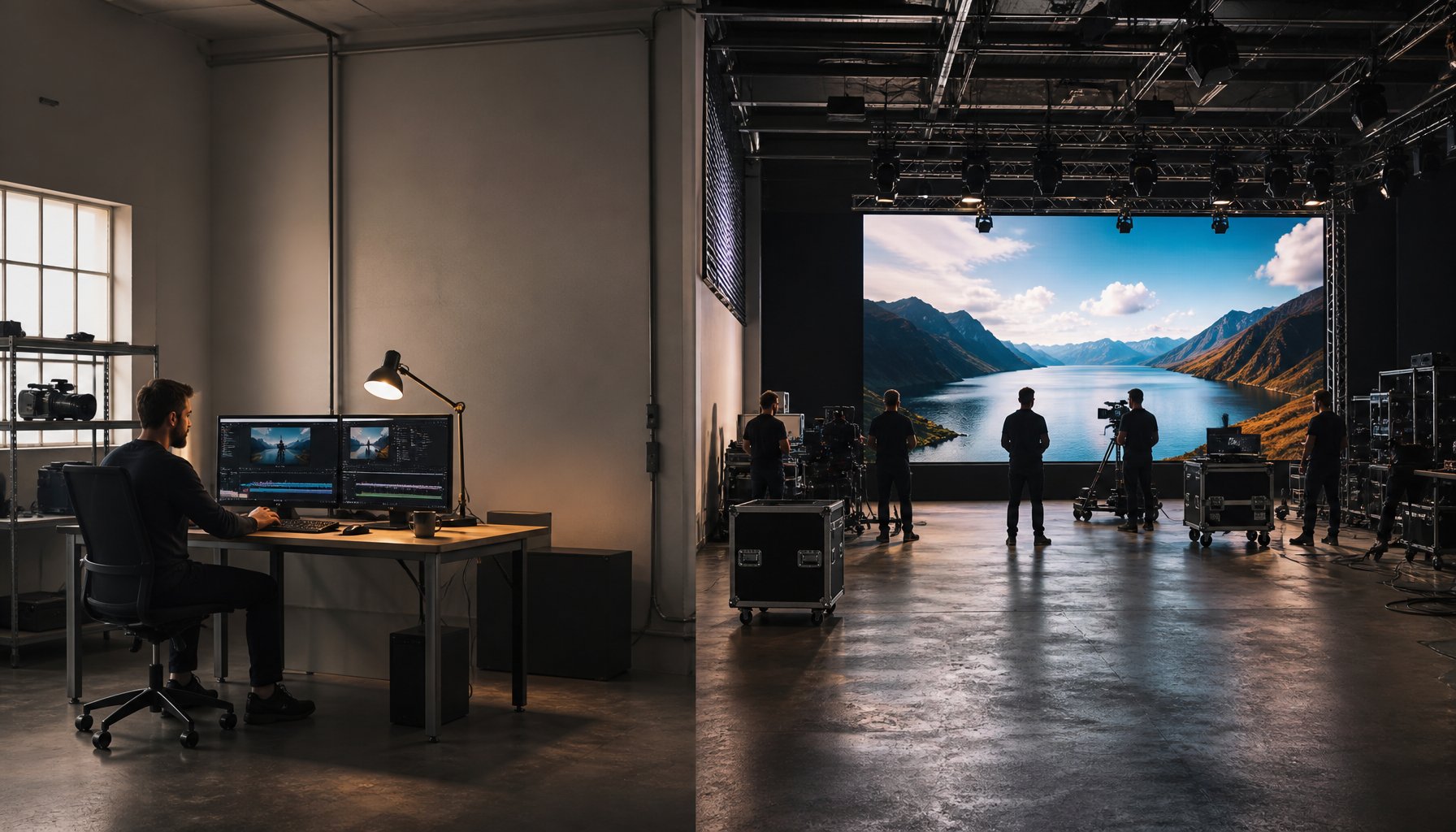
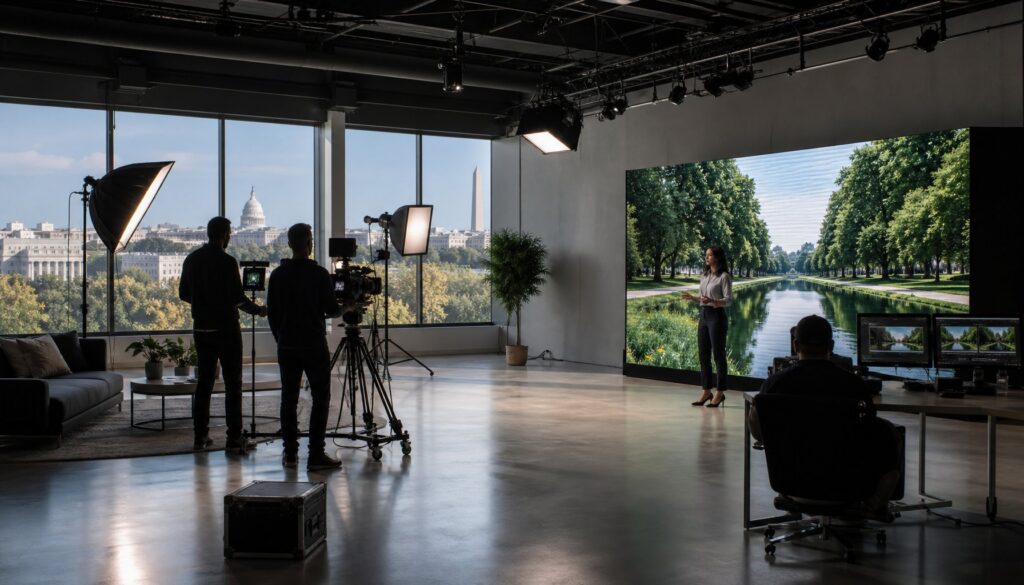
TriVision Studios operates a full-service production studio in the DC area equipped with LED wall technology, professional sound stages, and the crew to handle everything from a single presenter shoot to a multi-day, multi-location production.
Phase 4: Post-Production and Delivery
Editing, color grading, sound mixing, graphic overlays, captioning, and final quality checks all happen in post-production. This phase also includes formatting the final deliverables for the intended platforms—whether that is an LMS, internal SharePoint site, YouTube (unlisted), or secure hosting environment for sensitive government content.
Best Practices for Effective Training Videos
Even the most beautifully shot video will fail if it does not respect adult learning principles. These best practices will help your training content achieve measurable outcomes.
- Keep it focused. Each video should address one core topic or learning objective. Trying to cover too much in a single video leads to cognitive overload and lower retention.
- Respect the viewer’s time. For most topics, aim for 3–7 minutes per module. If the subject demands more depth, break it into a series of shorter episodes.
- Use real scenarios. Abstract rules are forgettable. Showing a realistic workplace scenario—what went wrong, what the correct action looks like—makes the content relatable and memorable.
- Include interactive elements. When distributing through an LMS, incorporate quizzes, knowledge checks, or branching scenarios that require active participation.
- Prioritize accessibility. Closed captions are not optional. They serve deaf and hard-of-hearing employees, non-native English speakers, and anyone watching in a sound-sensitive environment. Section 508 compliance is particularly important for federal organizations.
- Plan for updates. Policies change. Build your videos with a modular structure so individual sections can be re-recorded without reshooting the entire program.
Choosing the Right Training Video Production Partner in DC
The DC market has no shortage of video production companies, but training video production requires a specific skill set that goes beyond cinematic visuals. Here is what to look for.
Experience with Your Sector
A production company that has worked with government agencies understands security clearance logistics, interagency review processes, and 508 compliance requirements. One that has partnered with healthcare organizations knows HIPAA sensitivity. Choose a team that speaks your industry’s language.
In-House Capabilities
Working with a full-service production company means scripting, filming, animation, editing, and captioning all happen under one roof. This eliminates the coordination headaches and cost overruns that come from juggling multiple freelancers or subcontractors.
A Portfolio of Training-Specific Work
Ask to see examples of training and educational videos, not just marketing reels. The disciplines are different. Training content demands clarity, pacing for comprehension, and instructional design awareness—not just flashy visuals.
Scalability
Many DC organizations need not one video, but an entire library—sometimes 10, 20, or 50+ modules. Your production partner should be able to offer volume pricing, efficient production workflows, and a project management structure that keeps multi-video projects on schedule.
Frequently Asked Questions About Training Video Production in DC
How much does training video production cost in the DC area?
Costs vary based on scope, length, and complexity. A straightforward single-presenter training video with basic graphics might range from $3,000 to $8,000 per finished minute. More complex productions involving multiple locations, actors, animation, and interactive elements can run higher. TriVision Studios works with organizations to define scope early so there are no budget surprises, and volume discounts are available for multi-video training series.
How long does it take to produce a training video?
A typical single training video takes 4–6 weeks from kickoff to final delivery. This includes discovery, scripting, production, and post-production. Larger programs involving multiple modules may span 2–4 months, depending on the review and approval process within your organization. Government clients should factor in additional time for interagency reviews.
Can existing training materials be converted into video?
Absolutely. Existing PowerPoint decks, written SOPs, policy manuals, and even outdated training videos can serve as the content foundation. A skilled production team will restructure this material into a video-friendly format—improving flow, adding visual storytelling elements, and ensuring the final product meets modern engagement standards.
Do you provide closed captions and translations?
Yes. Closed captioning is included as a standard deliverable for accessibility and Section 508 compliance. Translation and foreign-language voiceover services are also available for organizations with multilingual workforces or international audiences.
What if our content changes frequently—will we need to reshoot everything?
Not if the videos are designed with modularity in mind. By structuring training content into standalone sections or chapters, individual segments can be updated or replaced without reshooting the entire program. This is a core part of the planning strategy TriVision implements for clients who anticipate regular policy or procedure changes.
Can training videos be integrated into our LMS?
Yes. Final video files can be delivered in SCORM-compliant or xAPI formats compatible with most major learning management systems, including Cornerstone, Absorb, TalentLMS, and government platforms like the Federal LMS. Standard MP4 delivery is also available for organizations using simpler distribution channels.
Invest in Training Content That Actually Works
Your team’s time is valuable. Every hour spent in an ineffective training session is an hour lost to productivity—and a compliance risk left unaddressed. Training video production in DC gives organizations the power to deliver consistent, engaging, and measurable learning experiences that scale with their workforce.
TriVision Studios has partnered with government agencies, healthcare networks, nonprofits, and corporations across Washington DC, Northern Virginia, Maryland, Richmond, and Baltimore to produce training and educational video content that drives real results. From a single compliance module to a full onboarding video library, the team handles every phase—strategy, scripting, production, and post-production—so you can focus on what matters most: your mission.
Ready to transform your training program? Contact TriVision Studios to discuss your project and get a custom production plan tailored to your organization’s goals.