You have a concept that demands exotic locations, dynamic backgrounds, or immersive environments — but flying your crew halfway around the world is not in the budget. So you are left with a critical decision: should you shoot on a traditional green screen or invest in virtual production with an LED wall? According to a 2026 report from Grand View Research, the global virtual production market is projected to surpass $4.5 billion by 2028, growing at over 15% annually. That explosive growth signals a clear industry shift, but it does not mean green screen is obsolete. The right choice depends entirely on your project goals, budget, timeline, and creative vision. This side-by-side breakdown of virtual production vs green screen will give you the clarity you need to make a confident, informed decision for your next shoot in the Washington DC area.
What Is Virtual Production and How Does It Work?
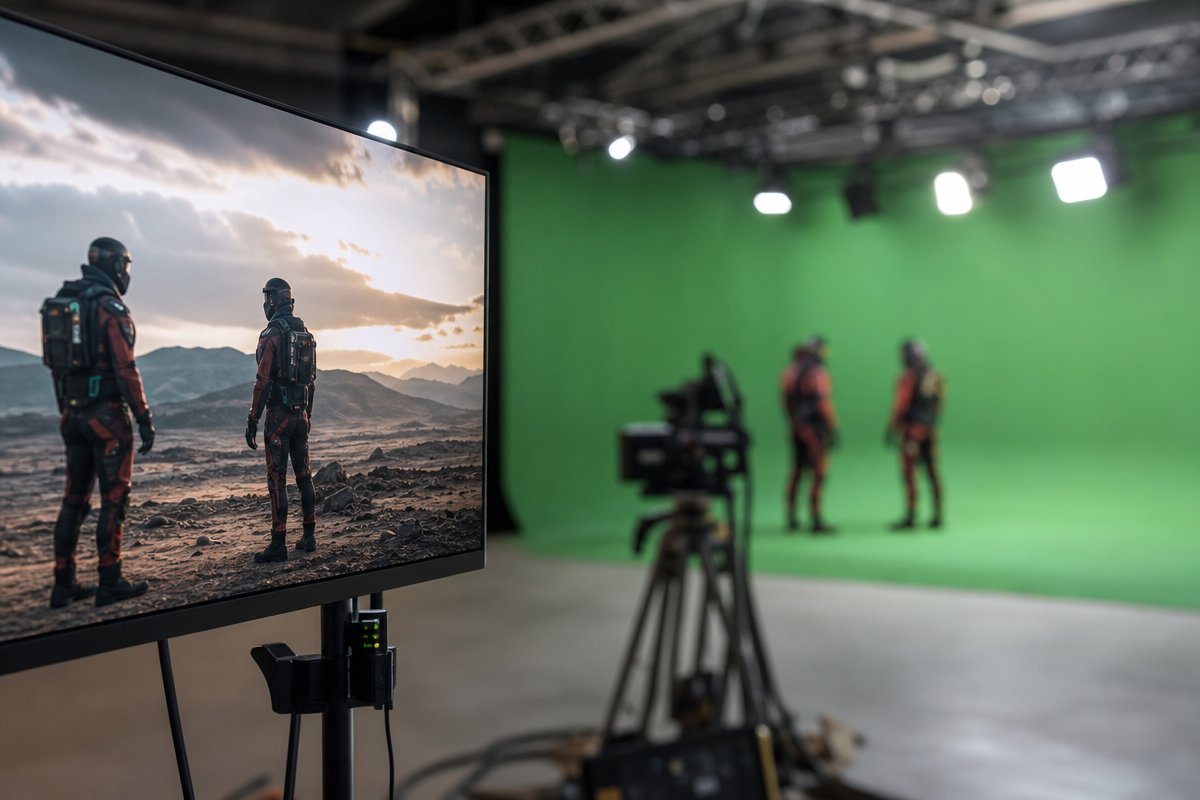
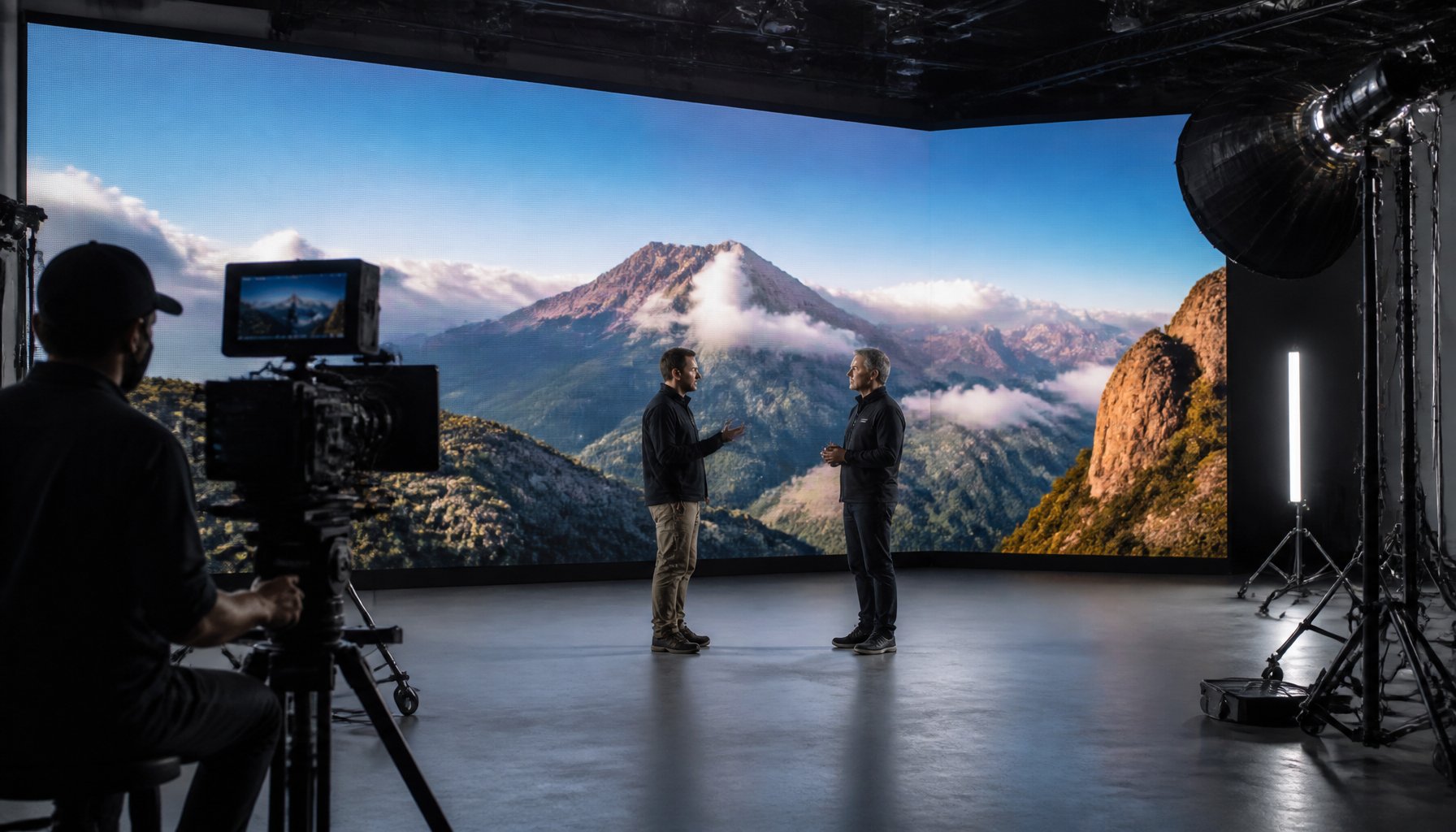
Virtual production uses large-scale LED wall displays to project real-time, computer-generated environments behind and around your talent. Powered by game engines like Unreal Engine, these environments react dynamically to camera movement, creating parallax and perspective shifts that look indistinguishable from real-world locations on camera.
Key Components of Virtual Production
- LED Volume: A curved or multi-panel LED wall (and sometimes ceiling) that wraps around the set, displaying high-resolution backgrounds.
- Real-Time Rendering Engine: Software like Unreal Engine generates and adjusts the virtual environment in real time.
- Camera Tracking: Sensors track the camera position and feed that data back to the engine, ensuring the background perspective matches the lens movement.
- On-Set Lighting Integration: The LED panels themselves emit light that naturally wraps around talent and props, creating realistic reflections and ambient color.
The result is a fully immersive, in-camera visual effect. What the director sees on the monitor is essentially the final shot — no compositing required in post-production.
What Is Green Screen Production?
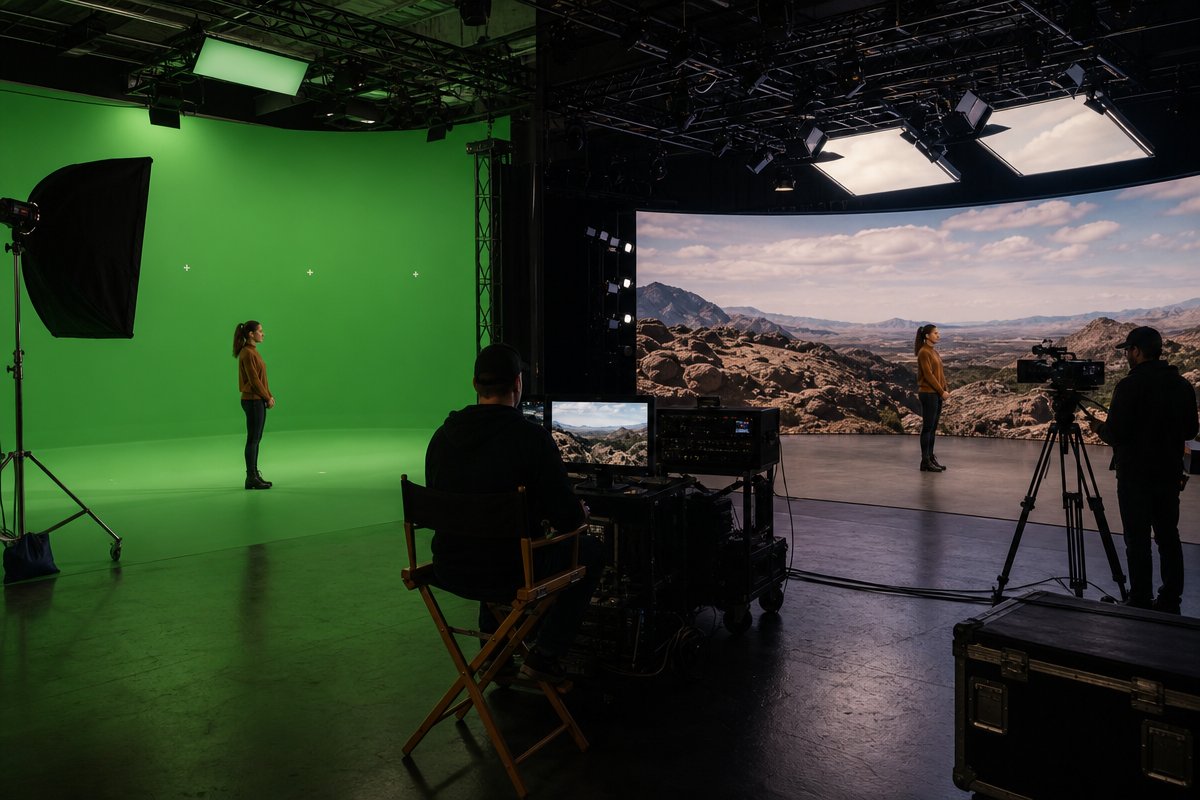
Green screen — also called chroma key — is a technique that has been a staple in film, television, and corporate video for decades. Talent performs in front of a uniformly lit green (or sometimes blue) backdrop. In post-production, editors digitally remove the green color and replace it with the desired background image, video, or animation.
Core Requirements for Green Screen
- Evenly Lit Backdrop: The green surface must be lit without hotspots, wrinkles, or shadows to ensure clean keying.
- Separation Lighting: Talent needs separate lighting rigs to avoid green spill — the unwanted green reflection that bleeds onto skin, hair, and wardrobe.
- Post-Production Compositing: Skilled editors use software like After Effects or DaVinci Resolve to key out the green and composite the final background.
- Wardrobe Restrictions: Anything green on set — clothing, accessories, props — will disappear during the keying process.
Green screen is proven, widely accessible, and cost-effective for many projects. But it comes with creative and technical limitations that virtual production was designed to overcome.
Virtual Production vs Green Screen: A Detailed Comparison
Let us break down the factors that matter most when choosing between these two approaches.
1. Visual Realism and In-Camera Results
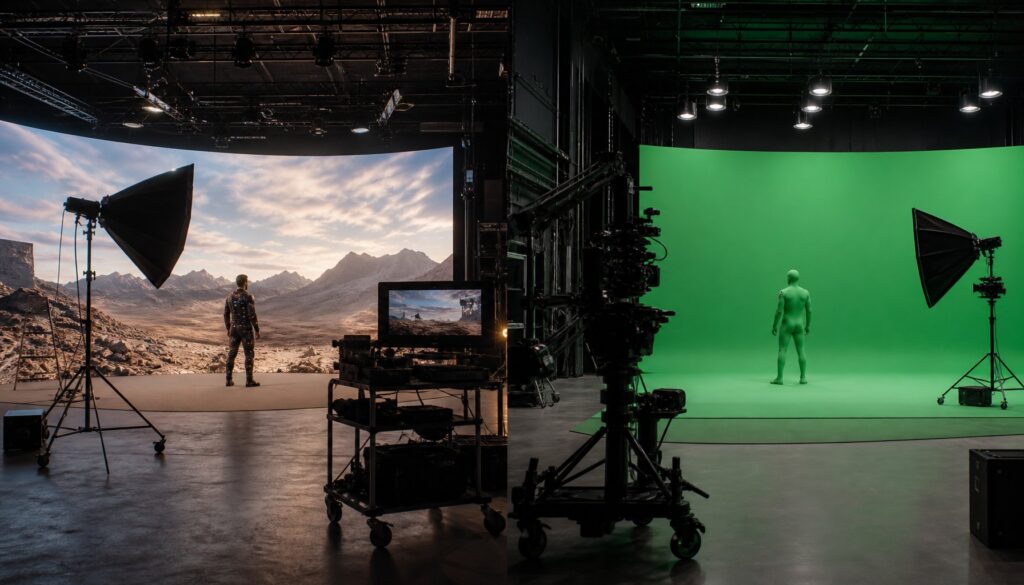
Virtual Production: The LED wall delivers the final background in-camera. Reflections on glass, metal, and eyes are real. Lighting from the environment naturally wraps around talent. There is no guesswork — what you see on the monitor is what you get in the edit.
Green Screen: The background does not exist during filming. Actors perform against a blank green void, and the environment is added later. Even with skilled compositing, subtle mismatches in lighting direction, color temperature, and shadow angles can make the final shot feel artificial.
Winner: Virtual production, especially for projects where photorealism and immersion are critical — commercials, brand films, and cinematic storytelling.
2. Lighting and Reflections
This is arguably the single biggest differentiator in the virtual production vs green screen debate.
With an LED wall, the environment is the light source. If your virtual background is a sunset over the Potomac, warm golden light actually bathes your talent. If the scene shifts to a cool blue laboratory, the ambient light changes instantly. Reflective surfaces — sunglasses, car hoods, polished tables — naturally show the environment behind them.
On a green screen set, a lighting team must manually recreate the lighting conditions of a background that does not physically exist yet. Reflective surfaces become a nightmare: they pick up green instead of the intended environment. Hair edges and fine details often require painstaking rotoscoping to look convincing.
Winner: Virtual production by a significant margin.
3. Cost Considerations
This is where the comparison gets nuanced.
- Green Screen Upfront Costs: Lower. A green screen setup requires fabric or paint, basic grip equipment, and standard studio lighting. Many production studios offer green screen stages affordably.
- Green Screen Hidden Costs: Higher than expected. Professional compositing, rotoscoping, motion tracking, and color matching in post-production add hours — sometimes days — to the editorial timeline. Complex shots with hair, translucent materials, or motion blur can balloon post budgets.
- Virtual Production Upfront Costs: Higher. LED wall rental, technical operators, real-time engine artists, and camera tracking systems represent a significant day-rate investment.
- Virtual Production Savings: Drastically reduced post-production time. Elimination of travel costs to physical locations. Faster on-set decision-making because directors approve the final look in real time.
For a single talking-head video with a simple background, green screen is almost always more cost-effective. For a multi-location brand campaign, a documentary-style piece requiring diverse environments, or any project with reflective wardrobe and props, virtual production often delivers better value when you factor in total production cost.
4. Creative Flexibility on Set
Virtual Production: Directors can change the background instantly — swap a cityscape for a forest, adjust the time of day from noon to dusk, or shift the entire color palette without moving a single light. This real-time control accelerates creative decision-making and reduces the risk of costly reshoots.
Green Screen: Creative decisions about the background are deferred to post-production. While this offers flexibility in editing, it also means the director and talent are working blind on set. Performances can suffer when actors cannot see or interact with the environment around them.
Winner: Virtual production for directors who want creative control in the moment. Green screen for projects where the background design is still evolving during post.
5. Talent Performance
This advantage is often overlooked but critically important. When talent stands inside an LED volume surrounded by a realistic environment — a bustling city street, a corporate boardroom, a dramatic landscape — their performance improves. Eye lines are natural. Emotional reactions are genuine. Body language aligns with the space.
On a green screen stage, actors stare into a featureless green void and imagine the world around them. Professional actors can manage this, but for corporate spokespeople, executives, medical professionals, or nonprofit advocates who are not trained performers, the disconnect often shows on camera.
Winner: Virtual production, especially for non-actors and testimonial-style content.
6. Post-Production Timeline
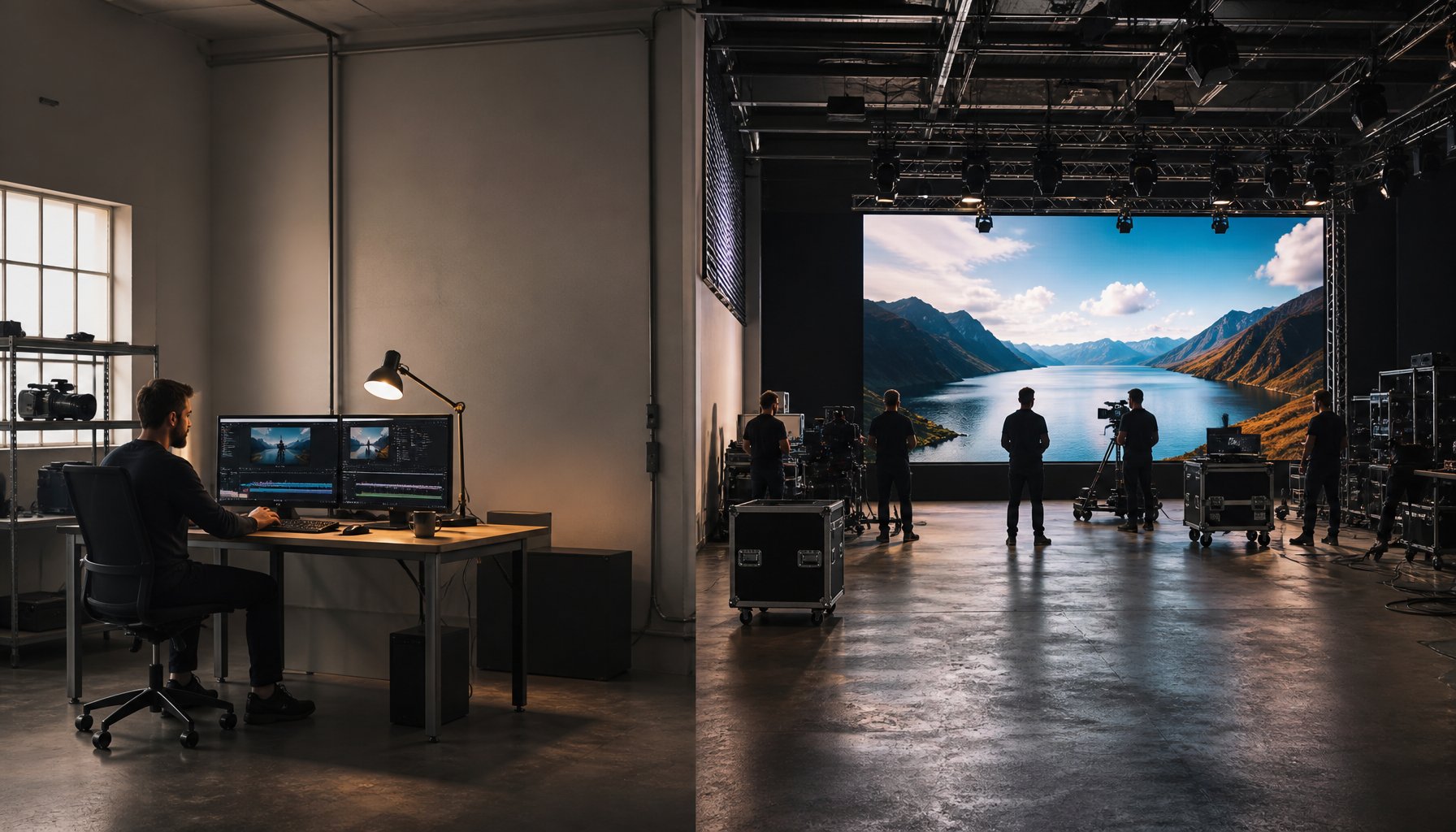
Virtual Production: Because the final composite is captured in-camera, post-production focuses primarily on color grading, audio mixing, and editorial assembly. Turnaround times can be 30–50% shorter compared to green screen projects of similar complexity.
Green Screen: Post-production timelines expand significantly. Keying, compositing, edge refinement, color matching, shadow creation, and quality control across every shot add days or weeks to the schedule.
Winner: Virtual production for speed to delivery.
Best Use Cases for Each Technology
When to Choose Virtual Production
- Commercials and brand films requiring cinematic environments
- Corporate videos featuring executives or spokespeople who benefit from immersive backgrounds
- Multi-location narratives where travel is impractical or too expensive
- Projects involving reflective surfaces, glass, or metallic props
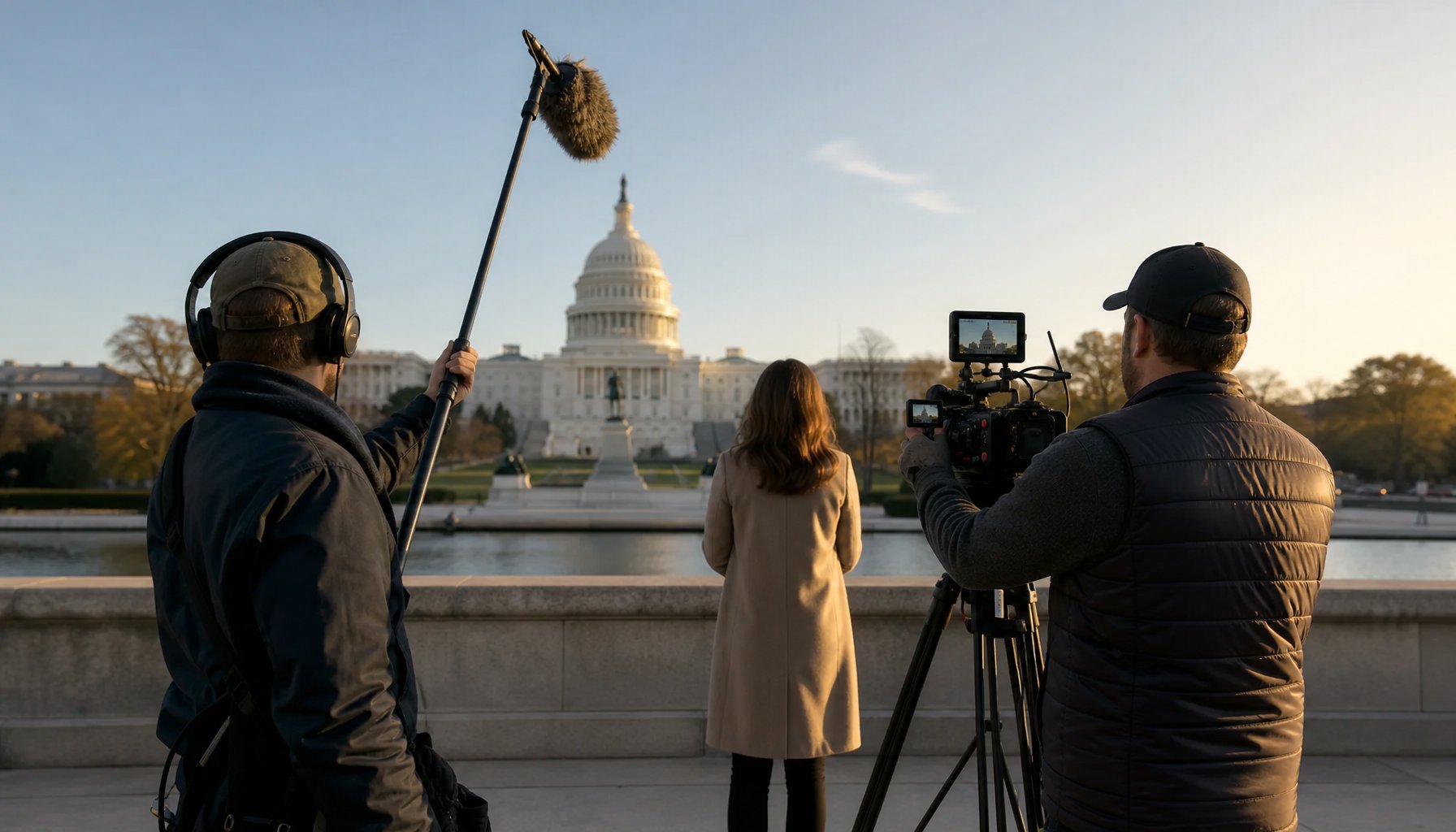
- Government and nonprofit videos needing realistic settings without security or logistical complications of on-location filming
- Any shoot where reducing post-production time is a priority
When to Choose Green Screen
- Simple composites with flat or graphic backgrounds
- Animation-heavy projects where the entire background will be motion graphics
- Tight budgets where the background requirements are minimal
- News-style or interview formats with basic virtual sets
- Projects where the background design will not be finalized until post-production
What to Look for in a Production Partner
Whether you choose virtual production or green screen, the quality of your final video depends on the team executing it. Here is what to evaluate:
- Technical Expertise: Virtual production requires specialists who understand real-time rendering, camera tracking, and LED calibration. Green screen demands skilled lighting technicians and experienced compositors. Make sure your production company has demonstrated proficiency in whichever approach you select.
- Studio Infrastructure: Not all studios are equipped for virtual production. Look for a partner with a purpose-built LED volume, professional-grade panels, and the supporting technology stack. For green screen, ensure the studio has adequate stage size, cyclorama walls, and proper lighting grids.
- Creative Collaboration: The best production partners do not just execute — they consult. They help you determine which technology fits your goals, audience, and budget before a single light is turned on.
- Portfolio and Experience: Review past projects. Have they produced work similar to yours? Do their virtual production or green screen samples demonstrate the level of quality you expect?
Frequently Asked Questions
Is virtual production more expensive than green screen?
The upfront day rate for virtual production is typically higher due to LED wall rental, real-time engine operation, and camera tracking systems. However, when you factor in reduced post-production costs, elimination of location travel, and faster turnaround times, virtual production can be comparable or even more cost-effective for complex projects. Simple projects with basic backgrounds will almost always be cheaper on green screen.
Can virtual production completely replace green screen?
Not entirely. Green screen remains the better choice for certain applications — particularly projects with heavy motion graphics overlays, animation-driven backgrounds, or extremely tight budgets. Virtual production is ideal when photorealism, natural lighting, and talent performance are priorities. The two technologies serve different creative needs and will continue to coexist.
What types of videos benefit most from virtual production?
Commercials, brand campaigns, corporate testimonials, documentary-style narratives, government agency videos, and any content requiring realistic environmental settings benefit enormously from virtual production. Projects that involve multiple locations, reflective wardrobe or props, or non-professional talent who perform better in immersive settings see the greatest return on investment.
Do actors prefer virtual production over green screen?
In most cases, yes. Being surrounded by a realistic environment helps talent deliver more natural, emotionally connected performances. This is especially true for corporate spokespeople, executives, and subject matter experts who are not trained actors. The immersive LED environment reduces the cognitive load of imagining a scene that does not exist.
How long does it take to set up a virtual production shoot?
Setup time varies based on the complexity of the virtual environment and the scale of the LED volume. A straightforward single-environment shoot can be ready in a few hours. More complex productions with multiple environment changes, custom 3D assets, and advanced camera tracking may require a full day of pre-light and technical rehearsal. Your production partner should build this prep time into the schedule.
Which option is better for government and nonprofit video projects?
Both can work well, but virtual production offers distinct advantages for government and nonprofit clients. It eliminates the need to secure filming permits at sensitive locations, avoids security complications, and allows agencies to depict diverse settings without travel. Green screen is viable for simpler projects like internal training videos or interview-based content with basic backgrounds.
Making the Right Choice for Your Next Project
The virtual production vs green screen decision is not about which technology is universally better — it is about which one is right for your specific project. If you need photorealistic environments, natural lighting, faster post-production, and stronger talent performances, virtual production is the clear winner. If your project calls for simple backgrounds, graphic overlays, or operates on a lean budget, green screen remains a proven and effective solution.
At TriVision Studios, we operate a full-service virtual production stage in the Washington DC area equipped with professional-grade LED walls, real-time rendering capabilities, and the creative team to bring any environment to life. We also maintain professional green screen stages for projects where chroma key is the smarter fit. Our team consults with every client to recommend the right approach based on your goals, audience, and budget — not a one-size-fits-all formula.
Ready to determine which technology is right for your next video? Contact TriVision Studios to schedule a consultation and see our virtual production stage in action.