Your Federal Training Videos Don’t Have to Be Boring
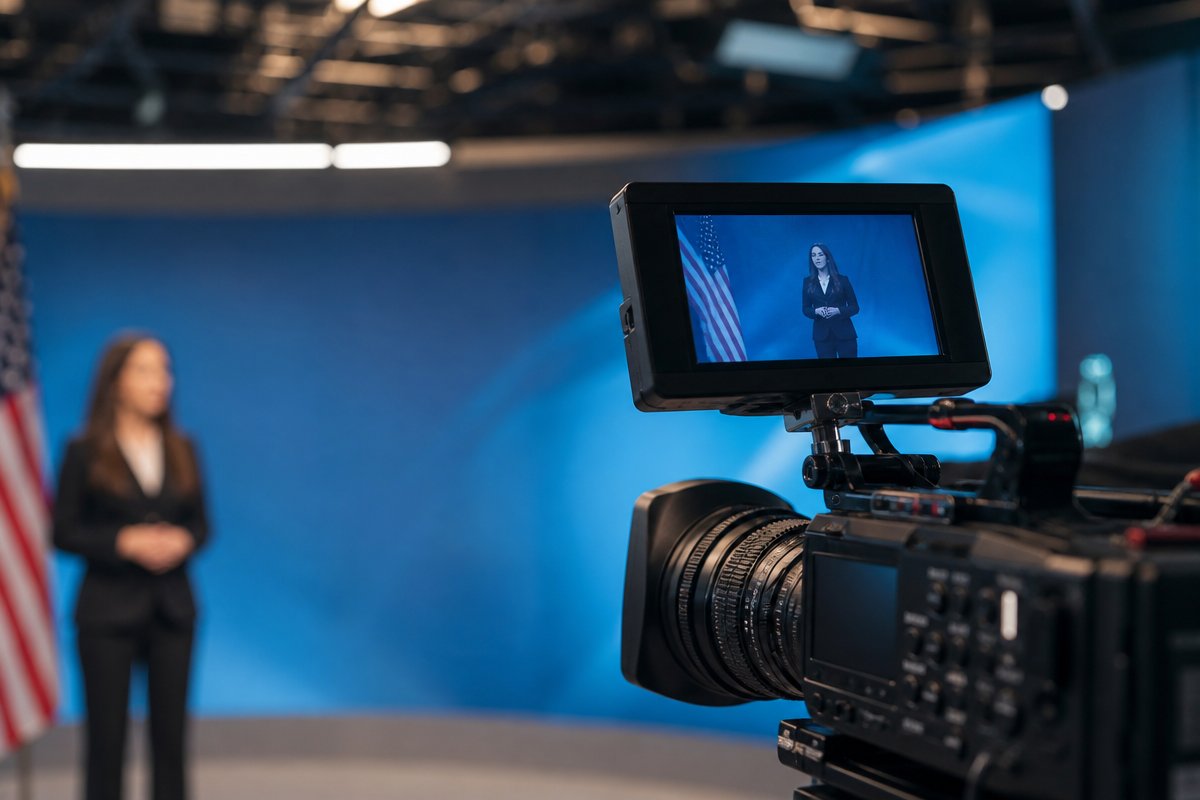
Let’s be honest: when most federal employees hear the words ‘mandatory training video,’ they brace themselves for a painful experience. Monotone narration, clip-art-era graphics, walls of regulatory text read aloud verbatim — it’s the kind of content that practically begs people to tune out. And when people tune out, compliance suffers, retention drops, and agencies waste the very budget they spent producing the content.
Here’s the problem that matters: according to a 2023 report from the Government Accountability Office, nearly 40% of federal agencies cited insufficient training effectiveness as a barrier to meeting workforce development goals. That’s not a creative problem alone — it’s a mission-critical gap. If you’re searching for a government training video production company in DC that understands how to close that gap, you need a partner who lives at the intersection of regulatory compliance and cinematic engagement.
At TriVision Studios, we’ve spent years producing training video content for federal agencies, defense contractors, and government-adjacent organizations across Washington DC. This post breaks down exactly how compliant government training videos can also be genuinely compelling — with real-world approaches, practical frameworks, and lessons learned from the production floor.
Why Most Government Training Videos Fail (And What to Do Instead)
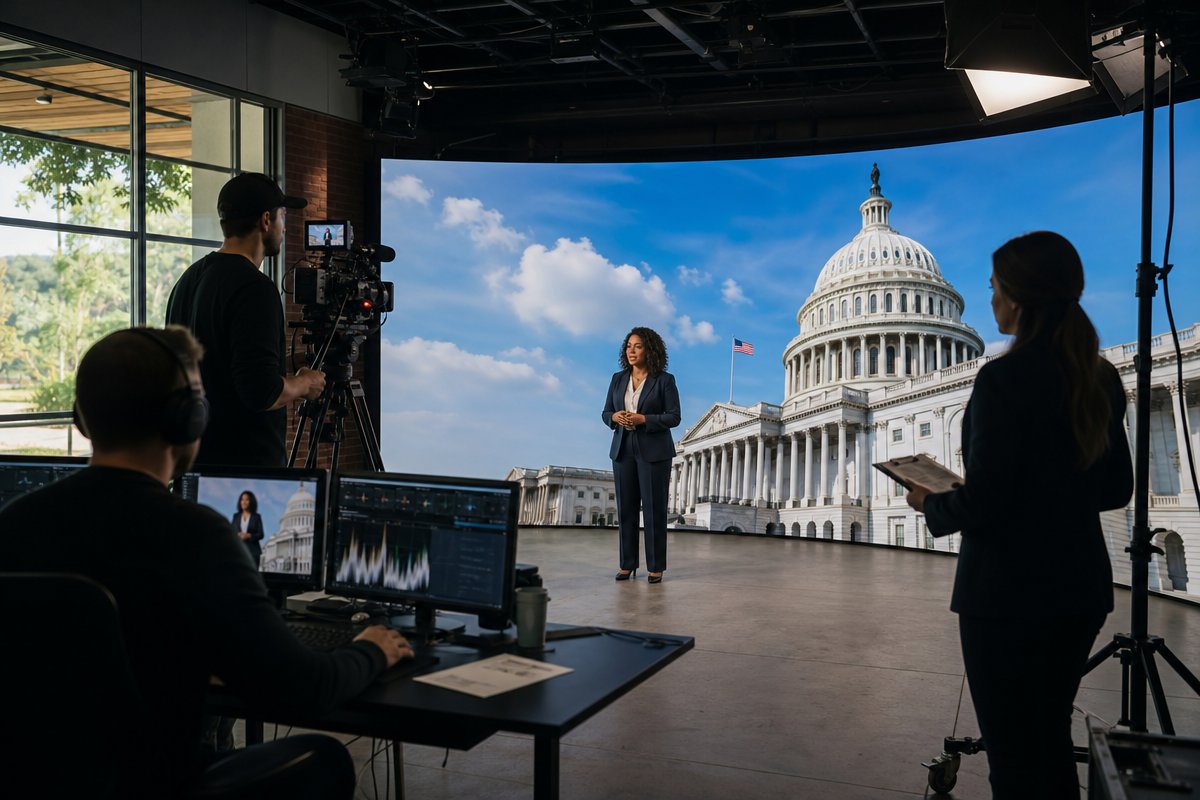
Before we talk about what works, it’s worth understanding why so much government training content falls flat. The root causes are predictable and almost always the same.
The Compliance Trap
Government training videos exist because regulations demand them. Whether it’s cybersecurity awareness under FISMA, anti-harassment training required by the EEOC, ethics training mandated by the Office of Government Ethics, or safety protocols governed by OSHA — the content must cover specific learning objectives and legal language.
The trap? Agencies and their vendors focus so heavily on checking regulatory boxes that they forget the video still needs to teach a human being something. Compliance becomes the ceiling rather than the floor.
The ‘Lecture on Camera’ Default
Budget constraints and risk aversion push many agencies toward the simplest possible format: a subject-matter expert reading from a script on camera, supplemented by PowerPoint slides. It’s cheap. It’s technically compliant. And it’s almost completely ineffective at changing behavior or building knowledge retention.
What Actually Works
The most effective government training videos treat compliance requirements as creative constraints — not creative killers. They:
- Embed mandatory language within narrative scenarios rather than reciting it in isolation
- Use real-world situations federal employees actually recognize
- Incorporate interactive elements, motion graphics, and professional sound design
- Break long modules into short, focused segments (microlearning)
- Include assessments that reinforce key points through application, not memorization
Case Study Approach: How Effective Federal Training Content Gets Made
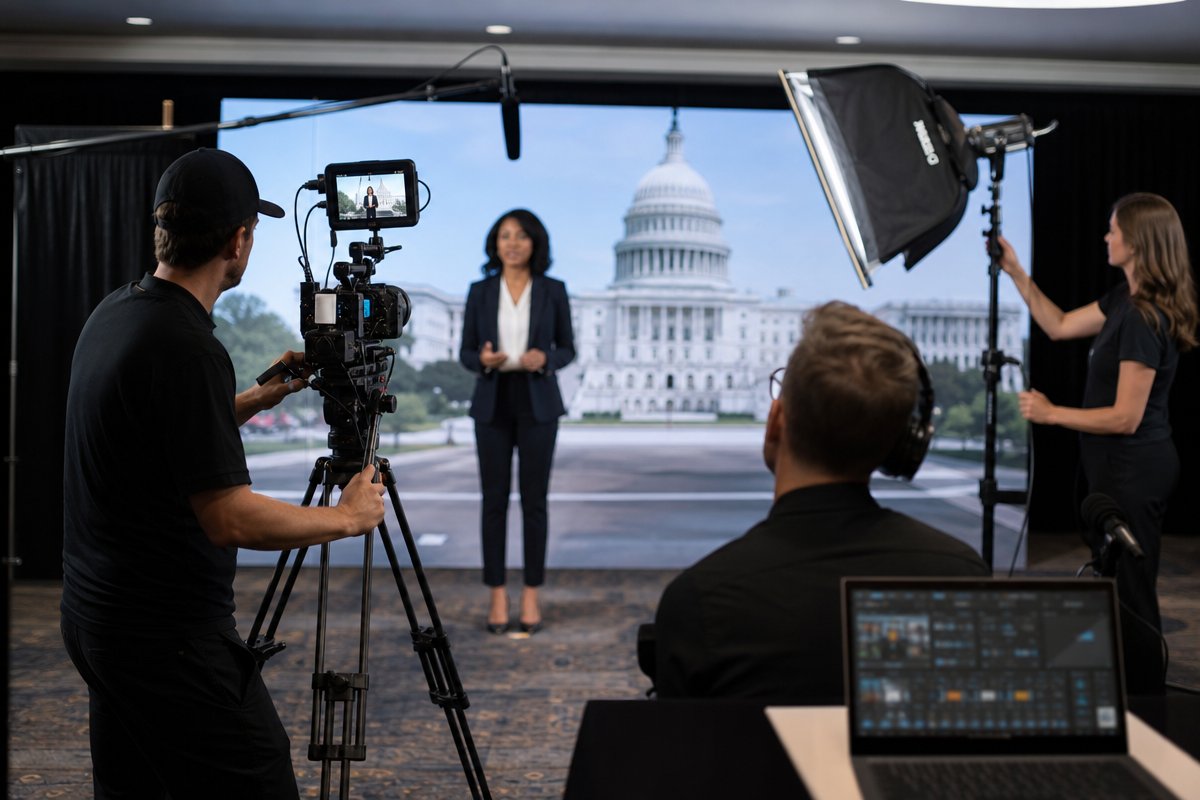
To illustrate what’s possible, let’s walk through three common government training scenarios and show how a production company with federal experience transforms each one from checkbox content into something employees actually remember.
Scenario 1: Cybersecurity Awareness Training
The mandate: Under FISMA and OMB Circular A-130, every federal employee must complete annual cybersecurity awareness training. The content must address phishing, password hygiene, incident reporting, and acceptable use policies.
The typical approach: A 45-minute narrated slideshow with stock photos of padlocks and hooded hackers. Employees click ‘Next’ until it’s over.
The better approach: A series of five short scenario-based videos (3-5 minutes each) following a fictional federal employee named ‘Jordan’ through realistic situations — receiving a suspicious email during a busy workday, connecting to public Wi-Fi at a conference, accidentally downloading an unauthorized application. Each scenario presents a decision point, shows the consequences of both the right and wrong choice, and reinforces the specific regulatory requirement through context rather than recitation.
The production uses professional actors, realistic office environments (filmed in-studio with controlled lighting and sound), and motion graphics to visualize abstract concepts like network architecture and data flow. The mandatory legal language appears as on-screen text overlays during relevant moments rather than as a script the narrator reads cold.
The result: Employees engage with the content because it mirrors their actual work experience. Knowledge retention improves because the information is tied to emotional context and narrative stakes — not abstract policy language.
Scenario 2: Ethics and Standards of Conduct
The mandate: 5 CFR Part 2635 requires executive branch employees to understand Standards of Ethical Conduct. Training must cover gifts, conflicts of interest, misuse of position, outside activities, and post-employment restrictions.
The typical approach: A recorded webinar featuring a lawyer from the agency’s Office of General Counsel reading through regulations with occasional pauses for questions nobody asks.
The better approach: A documentary-style video featuring interviews with real agency leaders discussing ethical dilemmas they’ve witnessed (anonymized as needed), intercut with animated vignettes that dramatize common gray-area scenarios. For example: a program manager is offered conference tickets by a contractor — is it a gift or a legitimate business courtesy? The video walks through the analysis using the actual regulatory framework, but it does so through story rather than lecture.
Production value matters here. Professional lighting, thoughtful composition, and broadcast-quality audio signal to employees that the agency takes this content seriously — which in turn signals that they should too.
Scenario 3: Workplace Safety and Emergency Procedures
The mandate: OSHA standards and agency-specific Occupational Safety and Health plans require regular training on emergency evacuation, active threat response, first aid, and hazard reporting.
The typical approach: A facilities manager walks through procedures on a handheld camera. Audio echoes. The exit signs are barely visible.
The better approach: A cinematic training film shot on location at the actual facility, using professional camera work to clearly show evacuation routes, rally points, emergency equipment locations, and reporting procedures. Slow-motion and aerial drone footage add visual clarity. A calm, authoritative narrator guides viewers through each protocol step by step, while on-screen graphics highlight key information.
For active threat scenarios, carefully produced dramatic recreations — filmed with professional actors in controlled environments — demonstrate proper responses without being gratuitous. These segments are developed in close consultation with agency security personnel to ensure accuracy and sensitivity.
The Production Framework: Balancing Compliance and Creativity in Washington DC
Every successful government training video follows a production framework that accounts for the unique requirements of federal work. Here’s the process that works.
Phase 1: Compliance Mapping
Before a single frame is shot, the production team works with the agency’s subject-matter experts, legal counsel, and training coordinators to map every regulatory requirement the video must satisfy. This creates a compliance checklist that serves as the foundation for the creative brief — not a separate document that gets bolted on afterward.
Phase 2: Creative Development
With the compliance map in hand, writers and directors develop a creative treatment that addresses every requirement through engaging formats: narrative scenarios, documentary interviews, animated explainers, or hybrid approaches. The key principle is that every mandatory learning objective gets a creative vehicle.
Phase 3: Review-Ready Production
Government projects involve review cycles. Often multiple review cycles. A production company experienced in federal work builds this into the timeline and budget from day one. Scripts are approved before production begins. Rough cuts are delivered for stakeholder review with time for revisions. Final deliverables are formatted for the agency’s Learning Management System (LMS) and meet accessibility requirements under Section 508.
Phase 4: Delivery and Measurement
The finished videos are delivered in formats compatible with SCORM, xAPI, or whatever standard the agency’s LMS requires. Where possible, built-in assessment questions and completion tracking help the agency document compliance and measure effectiveness.
What to Look for in a Government Training Video Production Company in DC
Not every production company is equipped for government work. Federal training video production requires a specific combination of capabilities that most commercial shops simply don’t have. Here’s what to evaluate.
- Federal experience: Have they worked with agencies before? Do they understand the FAR, COR relationships, and government procurement timelines?
- Security awareness: Can they handle sensitive but unclassified content? Do they have experience working in secure facilities?
- Section 508 compliance: Can they deliver videos with accurate captions, audio descriptions, and accessible player formats?
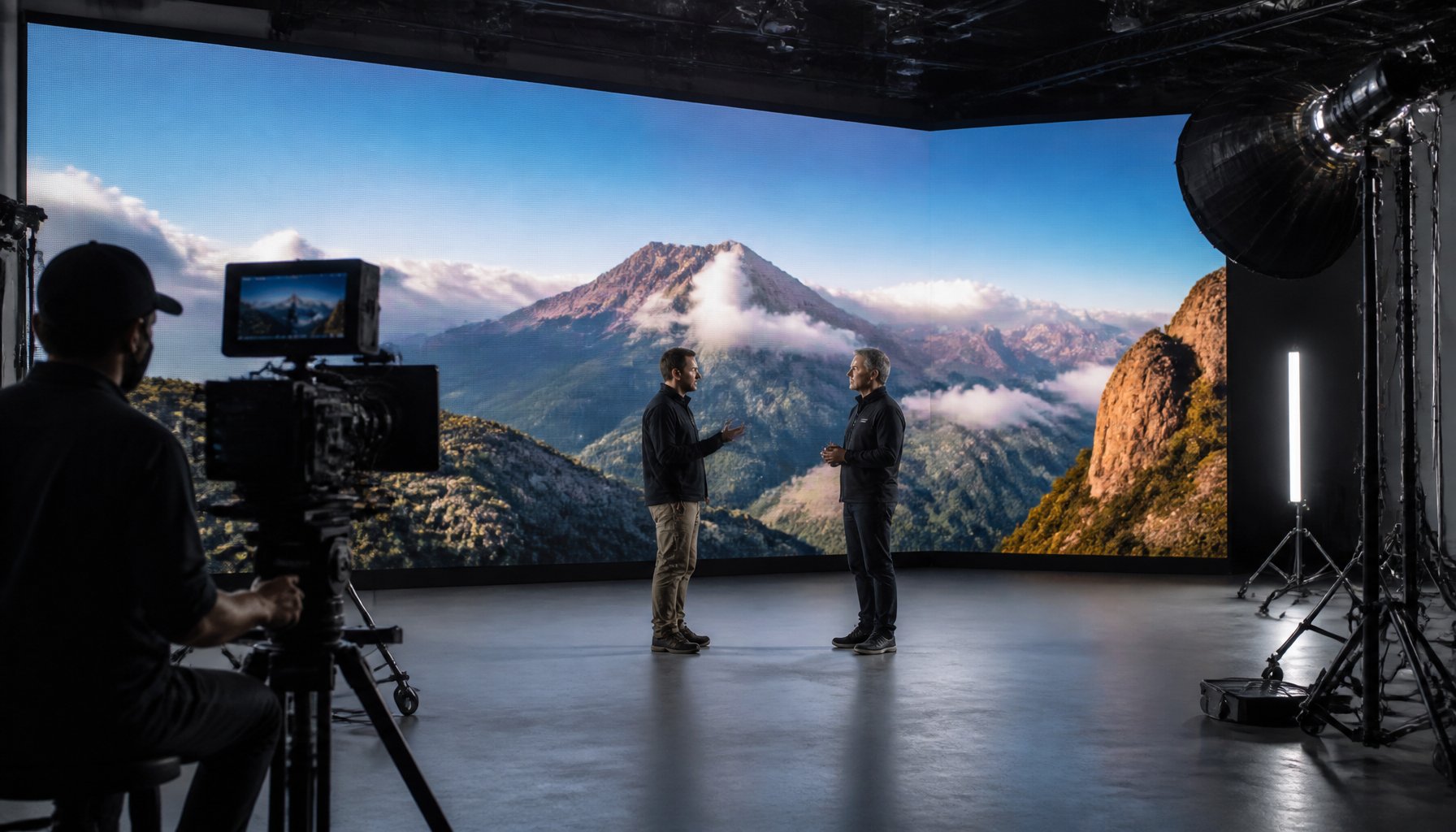
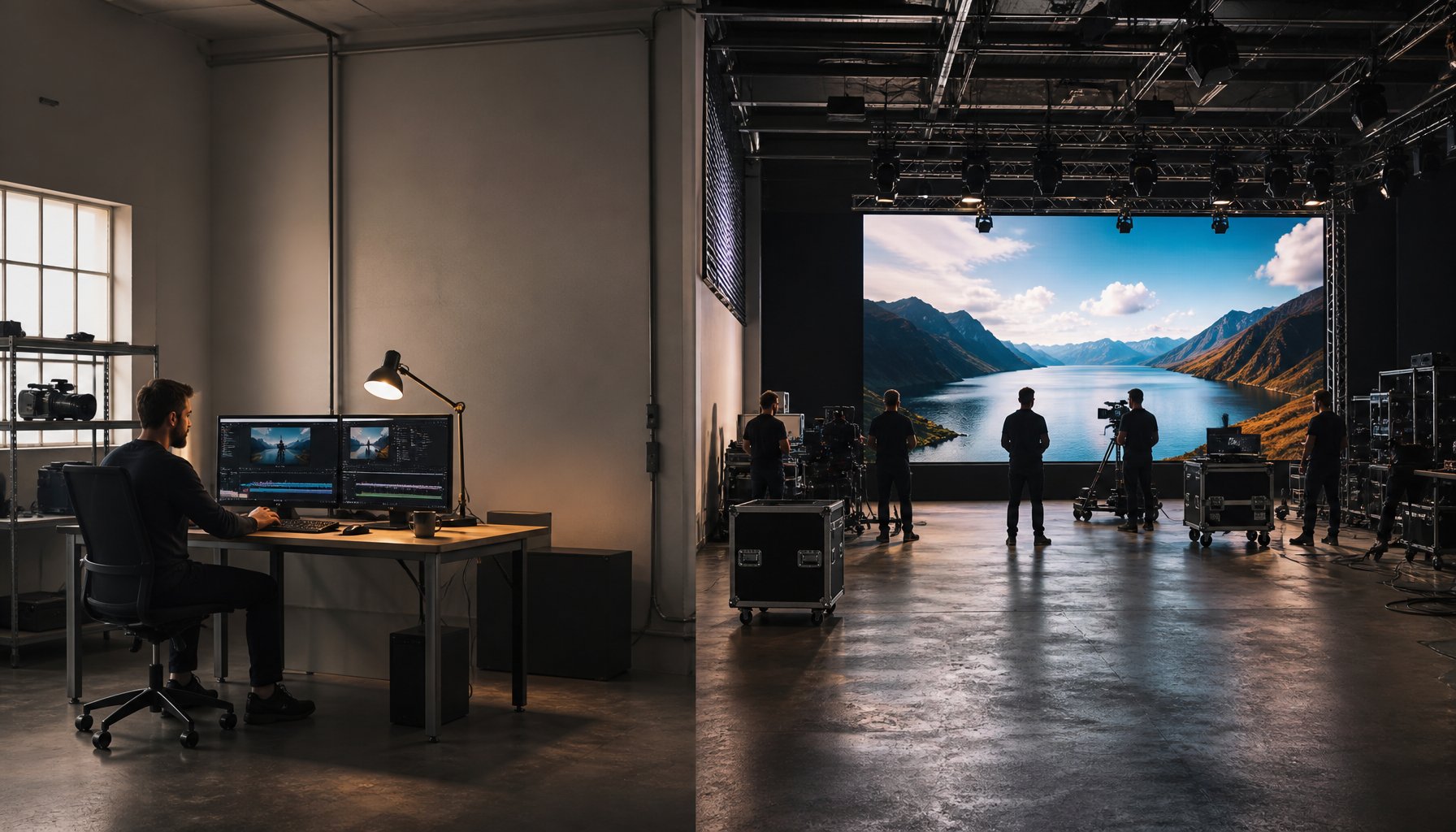
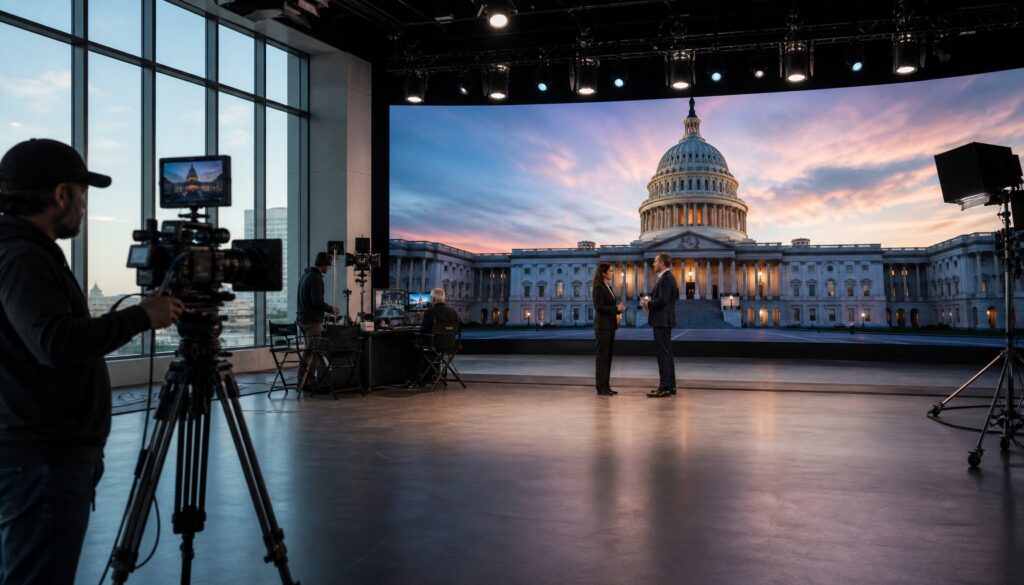
- Studio capabilities: Do they have a professional studio environment for controlled production, or are they relying entirely on location shoots? A dedicated studio production facility gives agencies more control over quality and scheduling.
- Full-service post-production: Government training videos often need motion graphics, animation, color grading, and LMS-compatible encoding. A company that handles everything in-house reduces risk and turnaround time.
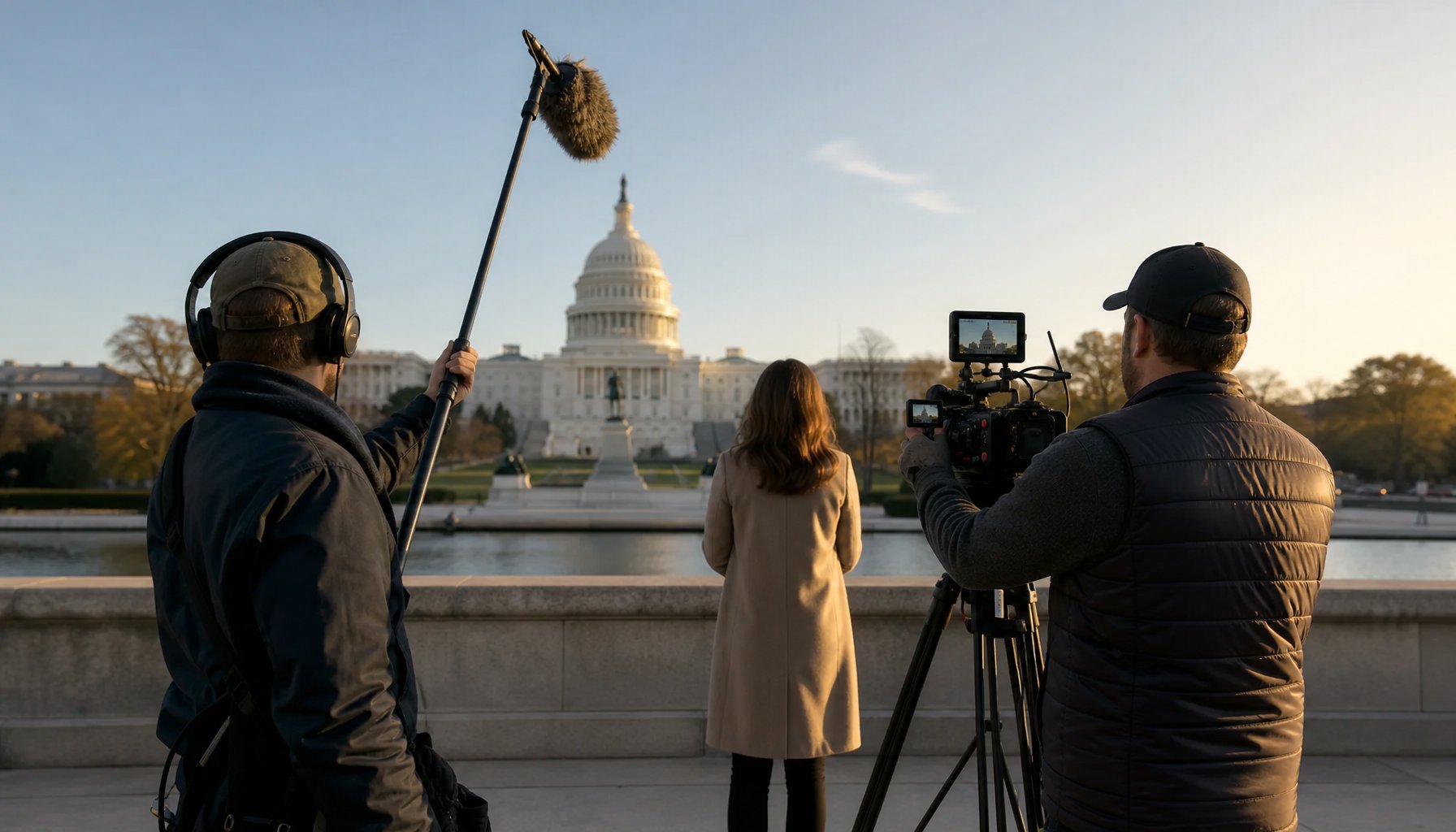
- Proximity to DC: Being local to Washington DC, Northern Virginia, or Maryland isn’t just convenient — it means the production team understands the federal ecosystem, can attend in-person reviews, and can shoot on location at agency facilities when needed.
Frequently Asked Questions
How much does government training video production cost in Washington DC?
Costs vary significantly based on scope, format, and complexity. A single short-form training module (3-5 minutes) with professional actors, studio filming, and motion graphics typically ranges from $15,000 to $40,000. Multi-module training series with scenario-based content, custom animation, and LMS integration can range from $75,000 to $200,000 or more. The most important factor is aligning the budget with the training’s complexity and the audience size — a video seen by 100,000 federal employees justifies a very different investment than one seen by 200.
How long does it take to produce a federal training video?
A typical timeline for a single training video module runs 8 to 14 weeks from kickoff to final delivery. This includes compliance mapping, script development, agency review cycles, production, post-production, and 508 compliance work. Multi-module series can take 4 to 8 months depending on the number of segments and the complexity of the review process. Experienced production companies build government review timelines into the schedule from the start to avoid delays.
Can training videos meet Section 508 accessibility requirements?
Absolutely — and they must. Section 508 of the Rehabilitation Act requires that all electronic content produced by or for federal agencies be accessible to people with disabilities. For video, this means accurate closed captions, audio descriptions for visual-only content, keyboard-navigable video players, and sufficient color contrast in graphics. A qualified production company handles all of this as a standard part of the deliverable, not as an afterthought.
What makes scenario-based training videos more effective than lecture-style content?
Research in instructional design consistently shows that scenario-based learning improves knowledge retention and behavior change compared to passive lecture formats. When learners see themselves in realistic situations and observe the consequences of different decisions, they form stronger mental models for applying that knowledge in their actual work. For government training specifically, scenarios also provide a natural way to embed regulatory language in context — which helps employees understand the purpose of the rule, not just its text.
Do we need to use the production company’s studio, or can they film at our agency location?
Both options work, and many projects use a combination. Studio filming provides complete control over lighting, sound, and environment — which is ideal for interview segments, scripted scenarios, and any content requiring a polished, consistent look. Location filming at agency facilities adds authenticity, especially for safety training, facility-specific procedures, or content that needs to show real work environments. A good production partner will recommend the right mix based on your training objectives and logistics.
Stop Wasting Budget on Training Videos Nobody Watches
Federal agencies spend millions of dollars every year on training video content that employees endure rather than engage with. That’s not just a waste of budget — it’s a failure of the training mission itself. When compliance content doesn’t connect, employees don’t learn, behaviors don’t change, and agencies face the same risks the training was supposed to mitigate.
It doesn’t have to be that way. The right government training video production company in DC brings together federal compliance expertise and genuine creative craft to produce training content that employees actually watch, absorb, and apply.
TriVision Studios has been producing government video content in Washington DC for years — working with federal agencies, defense organizations, and government contractors who demand both compliance rigor and production quality. If your agency is planning a training video initiative in 2026 and you want content that actually works, reach out to our team for a consultation. Let’s make something your employees will remember for the right reasons.