Your Donors Want to Feel Something Before They Give

Your nonprofit does incredible work. But if your fundraising campaign relies on a wall of text and a donate button, you are leaving money on the table. Nonprofit fundraising video production is the single most effective tool for turning passive supporters into active donors. According to a 2026 report from Nonprofit Tech for Good, organizations that use video in their fundraising campaigns see donation conversion rates up to 57% higher than those that rely on text and images alone.
The challenge is not whether you need a fundraising video. It is whether you can create one that actually moves people to act. This guide breaks down the exact frameworks, techniques, and distribution strategies that separate a forgettable appeal from a video that fills your campaign coffers. Whether you are based in Washington DC, Northern Virginia, or Baltimore, these tactics apply to every nonprofit ready to amplify its impact.
The Emotional Storytelling Framework That Drives Donations
A fundraising video is not a documentary. It is not a recap of your annual report. It is a carefully constructed emotional journey designed to lead a viewer from awareness to empathy to action, all within 60 to 180 seconds. Here is the framework that works:
The Three-Act Fundraising Narrative
- Act 1 — The Tension: Introduce a real person or community facing a specific, relatable challenge. Avoid abstractions. Do not say ‘millions go hungry.’ Instead, show Maria, a single mother in DC, choosing between paying rent and feeding her children. Specificity is what creates emotional connection.
- Act 2 — The Turning Point: Show how your organization stepped in. This is where your mission becomes tangible. Feature the moment of intervention: the meal delivered, the scholarship awarded, the medical treatment provided. Let the beneficiary tell this part in their own words.
- Act 3 — The Invitation: Transition from the story to the viewer. Make it clear that this outcome was only possible because of donors like them. Then present a clear, urgent call to action.
Emotional Triggers That Convert
Not all emotions are equal when it comes to fundraising. Research from the Stanford Social Innovation Review shows that videos evoking a combination of empathy and hope outperform those that rely solely on guilt or sadness. Here is how to balance them:
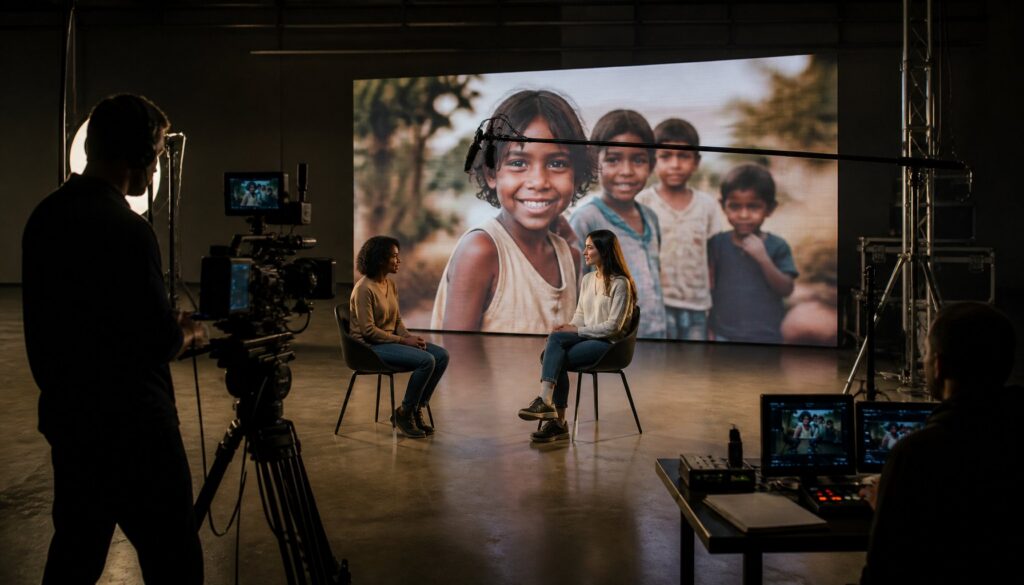
- Empathy: Close-up shots of faces, authentic audio of personal stories, and moments of vulnerability pull viewers into the experience.
- Hope: Show outcomes. Show smiles. Show progress. Donors give because they believe their contribution will make a difference, not because they feel helpless.
- Urgency: A time-bound campaign or a matching gift deadline creates the push a viewer needs to donate now rather than later.
This balance is what separates professional nonprofit video production from a well-meaning but ineffective DIY attempt.
Crafting Calls to Action That Actually Convert
You have told a beautiful story. The viewer is moved. Now what? This is where most nonprofit fundraising videos fail. The call to action is either buried, vague, or absent entirely. Here is how to fix that.
The Anatomy of a High-Converting CTA
- Be specific: Do not say ‘Please consider supporting us.’ Say ‘Donate $25 today to provide a week of meals for a family in need.’
- Be visual: Display the donation URL or QR code on screen. If the video lives on a landing page, place the donate button directly below the player.
- Be singular: One video, one action. Do not ask viewers to donate, volunteer, share, and sign a petition all at once. Pick the primary conversion goal and build the entire video around it.
- Be urgent: ‘Every dollar donated before March 31st will be matched 2-to-1’ is infinitely more compelling than ‘Your donation matters.’
Mid-Video vs. End-of-Video CTAs
Data from Wistia shows that mid-roll CTAs can have conversion rates up to 16.95%, compared to post-roll CTAs at around 10.98%. For fundraising videos, consider placing a brief text overlay or verbal mention of the donation opportunity at the emotional peak of the story, not just at the end. Many viewers will not watch to the final frame. Capture their attention while they are most moved.
Production Elements That Elevate Fundraising Videos
A fundraising video does not need a Hollywood budget, but it does need to look and sound professional. Donors associate production quality with organizational credibility. A poorly lit, shaky-camera video can actually undermine trust.
Visuals That Build Trust
- Cinematic B-roll: Show your organization in action. Volunteers packing boxes, students in classrooms, patients receiving care. These shots give context and credibility to the personal story at the center of your video.
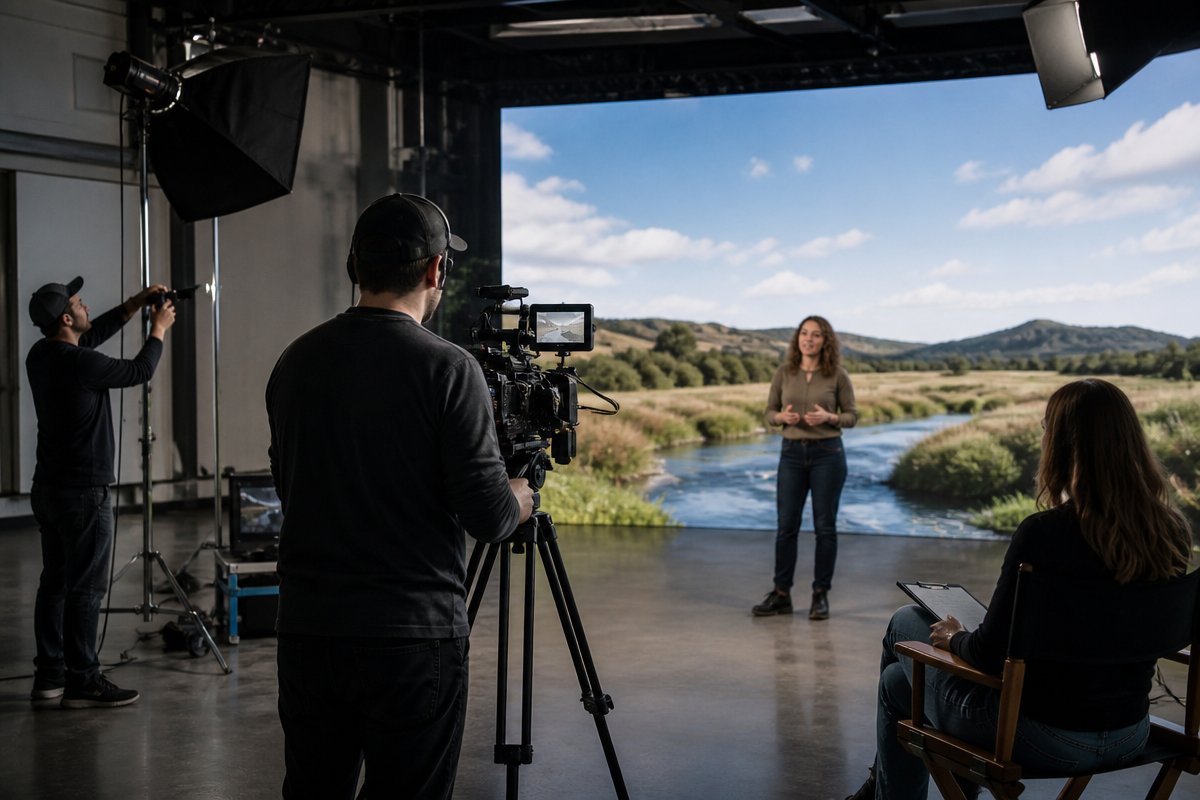
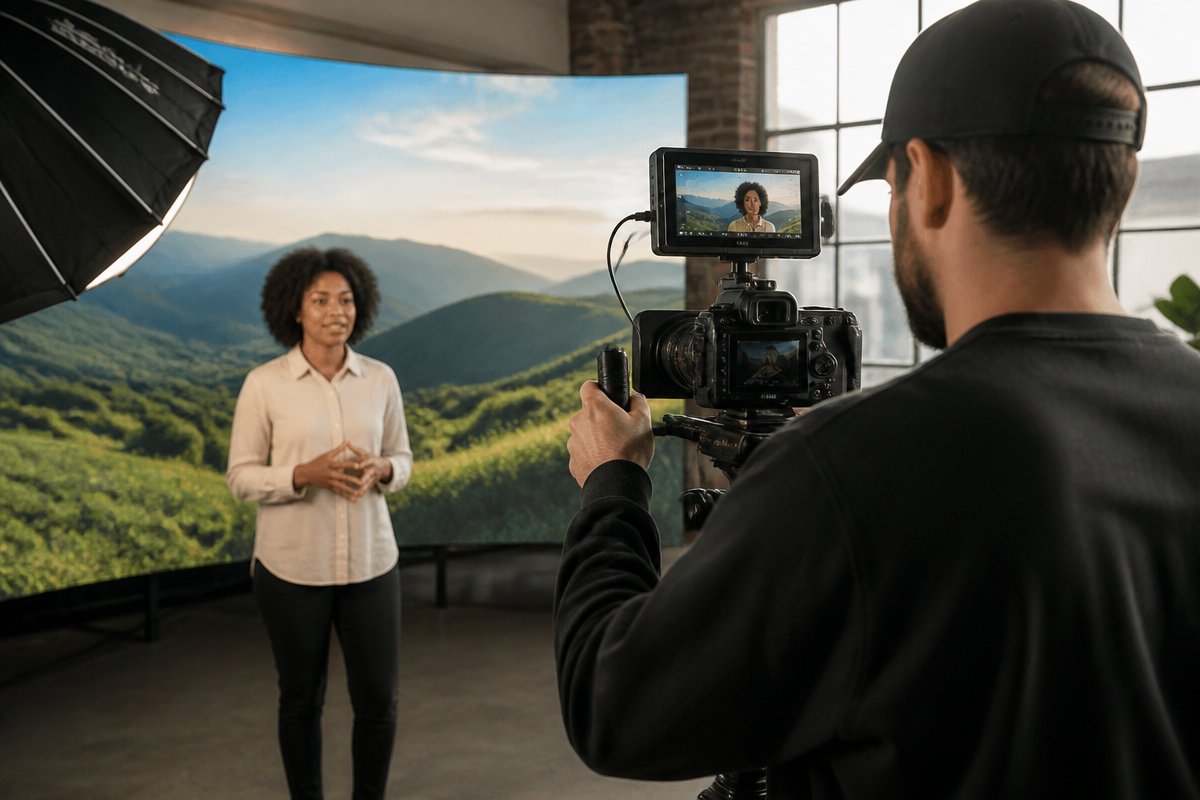
- Authentic interviews: Use a two-camera setup with soft, natural lighting. Let subjects speak in their own words without heavy scripting. Authenticity resonates more than polish.
- Brand consistency: Incorporate your logo, brand colors, and typography in lower thirds and end cards. This reinforces recognition and professionalism.
Audio That Carries Emotion
Never underestimate sound design. A licensed music track that builds subtly beneath a personal story can amplify emotion without manipulating the viewer. Poor audio, on the other hand, is the fastest way to lose a viewer. Invest in professional lavalier microphones for interviews and ensure clean audio capture on location.
Optimal Length for Fundraising Videos
Keep your primary fundraising appeal between 90 seconds and two minutes. This is long enough to tell a complete story and short enough to hold attention through the CTA. For annual campaigns or galas, you may produce a longer three-to-five minute version, but always create a shorter cut for social media and email distribution.
Distribution Strategies That Maximize Reach and ROI
A great fundraising video is worthless if nobody sees it. Distribution strategy is half the battle, and too many nonprofits treat it as an afterthought. Here is a tactical plan for getting your video in front of the right people at the right time.
Email Campaigns
Email remains the highest-converting channel for nonprofit fundraising. According to M+R Benchmarks, email-driven donations account for roughly 28% of all online revenue for nonprofits. Here is how to use video in email effectively:
- Use a thumbnail image with a play button that links to a landing page with the embedded video and a donate form directly below.
- Include the word ‘video’ in the subject line. Campaign Monitor reports that this can increase open rates by up to 19%.
- Send a follow-up email three to five days later to those who opened but did not donate, featuring a shorter cut or a different angle of the same story.
Social Media Distribution
Each platform requires a different approach:
- Facebook and Instagram: Upload natively. Do not paste a YouTube link. Native uploads receive significantly more reach. Add captions, as up to 85% of social video is watched without sound.
- LinkedIn: Ideal for corporate donors, board members, and institutional funders. Frame the video with a post that highlights measurable impact.
- YouTube: Optimize the title and description with keywords. This becomes a long-term discoverability asset for your cause.
- TikTok: Repurpose the most emotional 30-second clip. Nonprofits like charity: water have proven that short-form fundraising content can go viral and drive significant donations.
Website and Landing Pages
Your fundraising video should live on a dedicated landing page, not buried in a blog post or media library. The page should include the video above the fold, a clear donation form, impact statistics, and social proof such as donor testimonials or partner logos. A/B test the page with and without the video to measure its direct impact on conversions.
Event and Gala Screenings
If your nonprofit hosts an annual gala or fundraising event in the DC or Baltimore area, the fundraising video should be the emotional centerpiece. Screen it immediately before the live ask. This primes the audience emotionally and creates a shared experience that drives higher pledge amounts. Organizations that use video during live fundraising events report up to 30% higher donations compared to events without video, according to data from OneCause.
Why Washington DC Nonprofits Choose Professional Production
Washington DC is home to more nonprofits per capita than any other city in the United States. The competition for donor attention is fierce. A professionally produced fundraising video signals to donors, grantmakers, and institutional funders that your organization is serious, credible, and worth investing in.
TriVision Studios has partnered with nonprofits, advocacy organizations, and government agencies across Washington DC, Northern Virginia, Maryland, and Baltimore to produce fundraising videos that deliver measurable results. From pre-production strategy and scripting to cinematic filming and post-production, every step is designed to maximize emotional impact and donor conversion.
Working with a local production team also means faster turnaround, on-the-ground knowledge of your community, and the ability to capture authentic stories in the neighborhoods and facilities where your work happens.
Frequently Asked Questions
How much does nonprofit fundraising video production cost?
Costs vary depending on scope, but a professional fundraising video typically ranges from $5,000 to $25,000. This includes pre-production planning, a one-to-two day shoot, interviews, B-roll, music licensing, editing, and delivery in multiple formats. The ROI often far exceeds the investment. A single well-produced video can be used across multiple campaigns and channels for a year or more.
How long should a nonprofit fundraising video be?
For digital campaigns, aim for 90 seconds to two minutes. For gala or event screenings, three to five minutes is appropriate. Always create shorter 30-to-60 second cuts for social media. The key is matching length to platform and context.
What makes a fundraising video different from a general nonprofit video?
A general nonprofit video may focus on awareness, education, or brand building. A fundraising video has one specific goal: to drive donations. Every creative decision, from story selection to music to CTA placement, is made with conversion in mind. The storytelling framework, emotional arc, and call to action are all calibrated to move the viewer toward giving.
Can we use real beneficiary stories in our fundraising video?
Yes, and you should. Authentic stories from real beneficiaries are the most powerful element of any fundraising video. However, always obtain signed release forms, be sensitive to privacy concerns, and let subjects tell their stories in their own words. A professional production team will guide you through this process ethically and effectively.
How do we measure the success of a fundraising video?
Track these key metrics: total donations attributed to the campaign, donation conversion rate on the landing page, video view-through rate, email click-through rate, and social media engagement. Compare these against previous campaigns that did not use video to quantify the impact. Most nonprofits see a clear lift in both donation volume and average gift size.
Should we produce a new fundraising video every year?
Ideally, yes. Donor fatigue is real, and fresh stories keep your audience engaged. However, a well-produced video can be repurposed and re-edited with updated data and new CTAs to extend its shelf life. Many nonprofits invest in one flagship fundraising video per year and supplement it with shorter social media clips throughout the campaign cycle.
Turn Your Mission Into a Movement
The difference between a nonprofit that struggles to meet its fundraising goals and one that consistently exceeds them often comes down to one thing: the ability to tell a story that moves people to act. Nonprofit fundraising video production is not a luxury. It is the most direct path between your mission and the funding you need to fulfill it.
If your organization is ready to create a fundraising video that inspires donors, drives conversions, and amplifies your impact, TriVision Studios is here to help. With deep experience serving nonprofits across Washington DC, Baltimore, and the greater Mid-Atlantic region, our team knows how to craft stories that open hearts and wallets. Contact us today to start planning your next fundraising campaign.