Why LED Wall Rental Is Reshaping Modern Production
You have a production on the horizon — maybe a commercial, a corporate keynote, or a virtual production shoot — and you know a flat backdrop or basic green screen won’t cut it anymore. LED wall rental has become the technology that separates average content from cinematic, immersive experiences, and demand is surging. According to Fortune Business Insights, the global LED display market is projected to reach $31.6 billion by 2030, driven largely by the film, broadcast, and corporate event sectors adopting LED volume stages at an unprecedented rate.
But choosing the right LED wall for your project isn’t as simple as picking the biggest screen you can afford. Pixel pitch, panel type, processing power, rigging requirements, and content workflow all play a role. This guide breaks down everything you need to know — nationally and technically — so you can make a confident, informed decision the next time you book an LED wall for any production.
Understanding LED Wall Technology Types
Not all LED walls are created equal. Before you rent, you need to understand the core technology categories available and what each one is best suited for.
Direct-View LED Panels
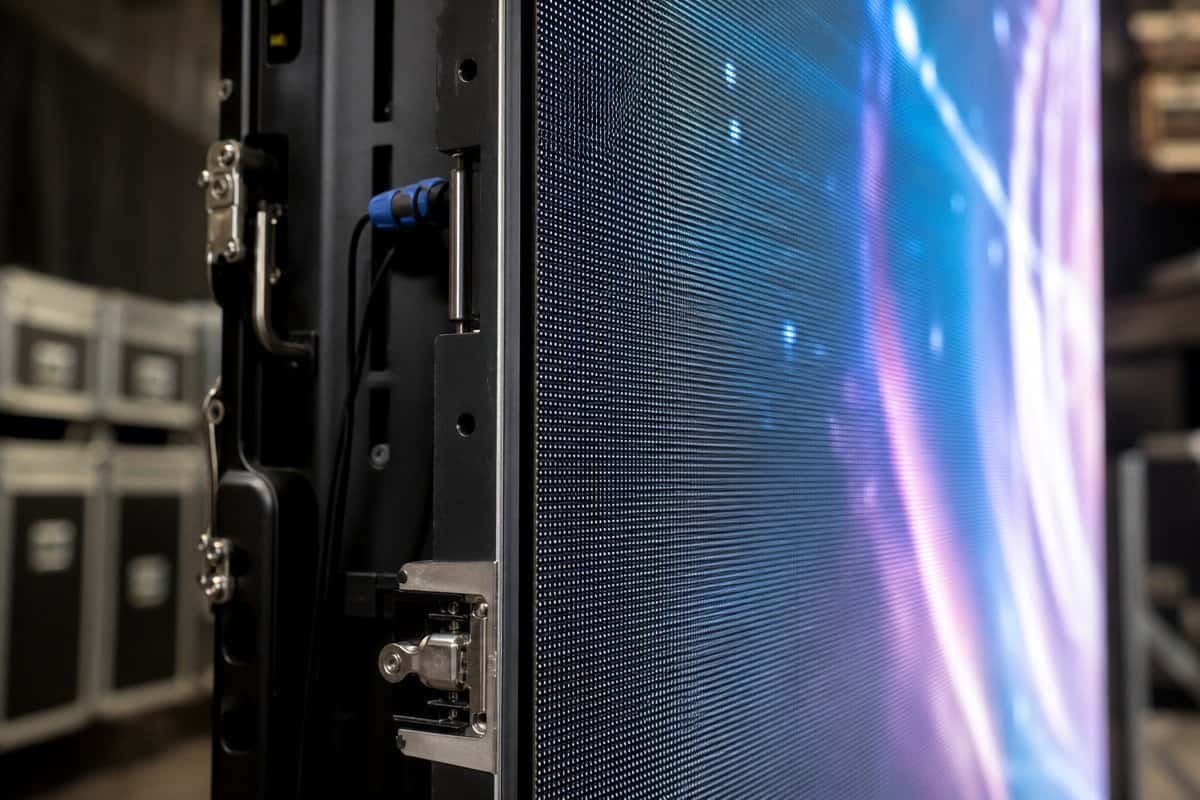
These are the workhorses of the LED wall rental market. Direct-view LED panels use individually mounted LEDs arranged in a grid to produce images without a projector or backlight. They’re bright, vibrant, and visible from virtually any angle. You’ll find them on virtual production stages, trade show floors, concert tours, and broadcast studios worldwide.
- Best for: Virtual production, live events, broadcast studios, large-format displays
- Key advantage: Superior brightness and color accuracy, even under ambient light
- Consideration: Higher rental cost for fine-pitch panels
Indoor vs. Outdoor LED Panels
Indoor panels are designed for controlled environments — studios, conference halls, and soundstages. They feature tighter pixel pitches for close viewing distances and are calibrated for accurate color reproduction essential for camera work. Outdoor panels, on the other hand, prioritize brightness (often 5,000+ nits) and weather resistance. If your production involves an outdoor festival, a building wrap, or a public-facing event, outdoor-rated panels are non-negotiable.
Curved and Flexible LED Panels
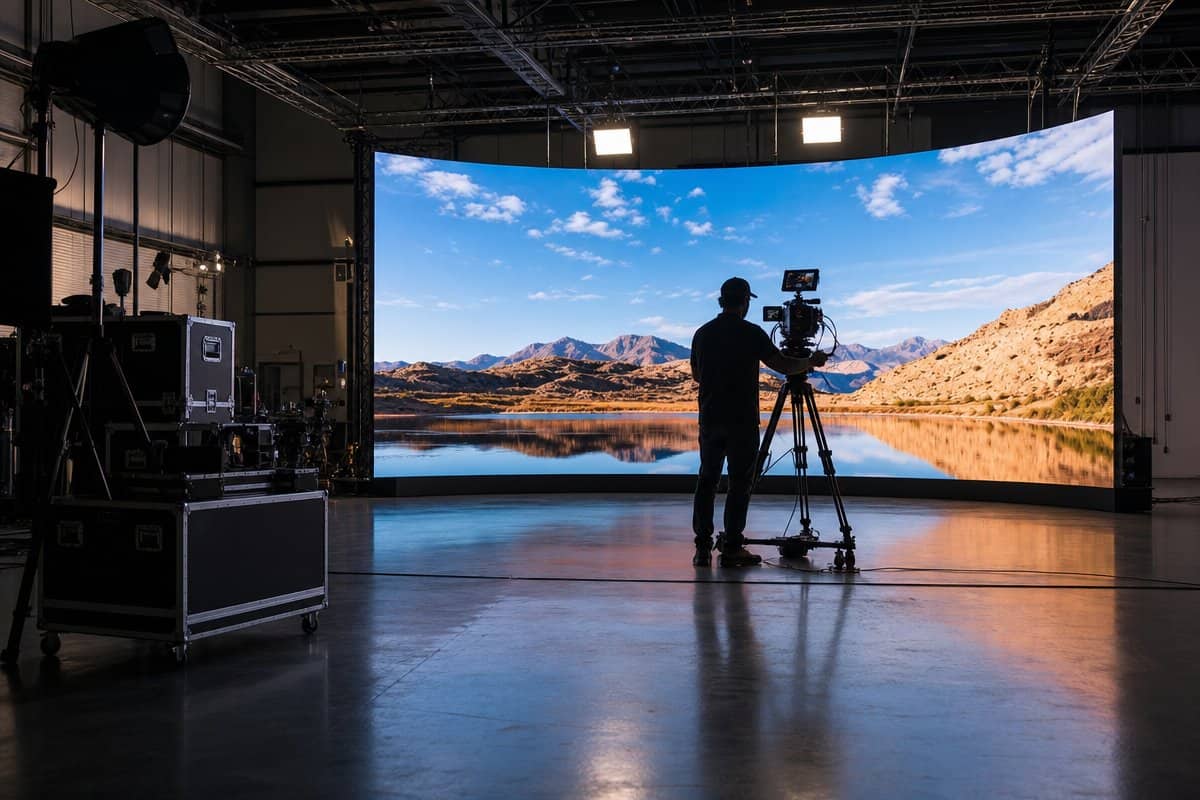
Some productions require non-flat configurations — concave curves for immersive virtual production volumes, convex shapes for wraparound stage designs, or even ceiling-mounted panels for overhead lighting simulation. Flexible LED modules can bend to specific radii, giving production designers the creative freedom to build environments that would be impossible with rigid flat panels alone.
Pixel Pitch: The Single Most Important Spec to Understand
If there’s one technical specification that will determine the quality and cost of your LED wall rental, it’s pixel pitch. Pixel pitch refers to the distance (in millimeters) between the center of one LED pixel and the center of the adjacent pixel. The smaller the number, the higher the resolution — and the higher the price.
How Pixel Pitch Affects Your Production
- P1.2 – P1.9 (Fine Pitch): Ideal for camera-facing work including virtual production, commercials, and broadcast. These panels deliver razor-sharp images even at close distances, making them the gold standard for any content captured on camera.
- P2.0 – P2.9 (Medium Pitch): A strong middle ground for corporate events, presentations, conferences, and hybrid event stages where the audience is typically 8–15 feet from the screen.
- P3.0 – P5.0+ (Wide Pitch): Best for large-venue applications — concerts, outdoor events, trade shows — where viewers are farther away and absolute pixel density is less critical.
Matching Pixel Pitch to Viewing Distance
A common rule of thumb in the industry is to multiply the pixel pitch by approximately 8 to find the minimum comfortable viewing distance in feet. So a P2.5 panel looks best at about 20 feet or more, while a P1.5 panel can hold up beautifully at just 12 feet. For on-camera work, many directors of photography prefer to get even closer, which is why fine-pitch panels in the P1.2–P1.5 range are essential for virtual production shoots.
Sizing Your LED Wall: How Big Do You Actually Need?
One of the most frequent questions production teams face is how large their LED wall needs to be. The answer depends on your use case, your venue, and your creative goals.
Standard Sizing Guidelines
- Corporate presentations and keynotes: A 16-by-9-foot wall is a common starting point. It provides an impactful backdrop for a single speaker and is large enough to display data, video content, and branding with clarity.
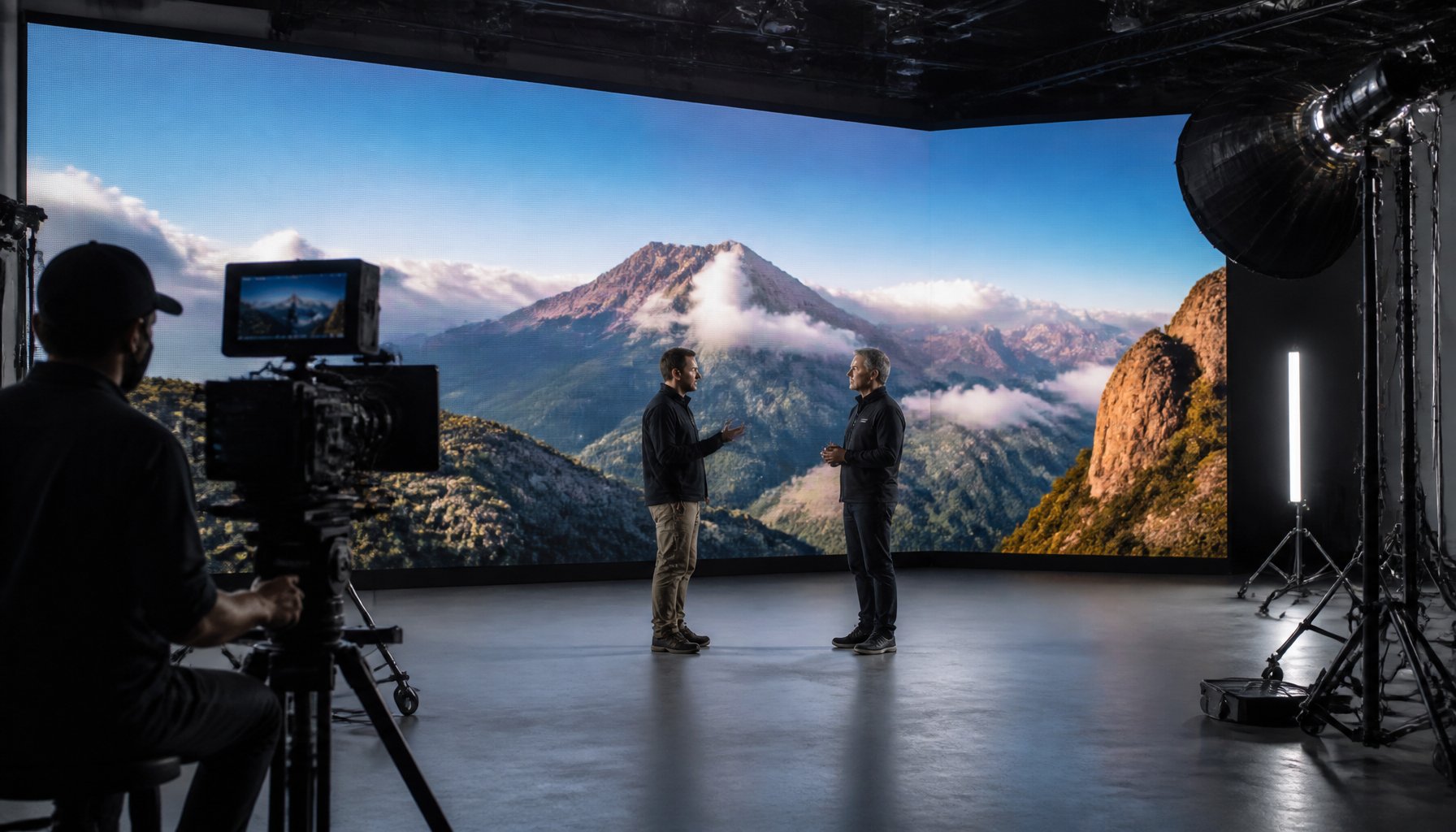
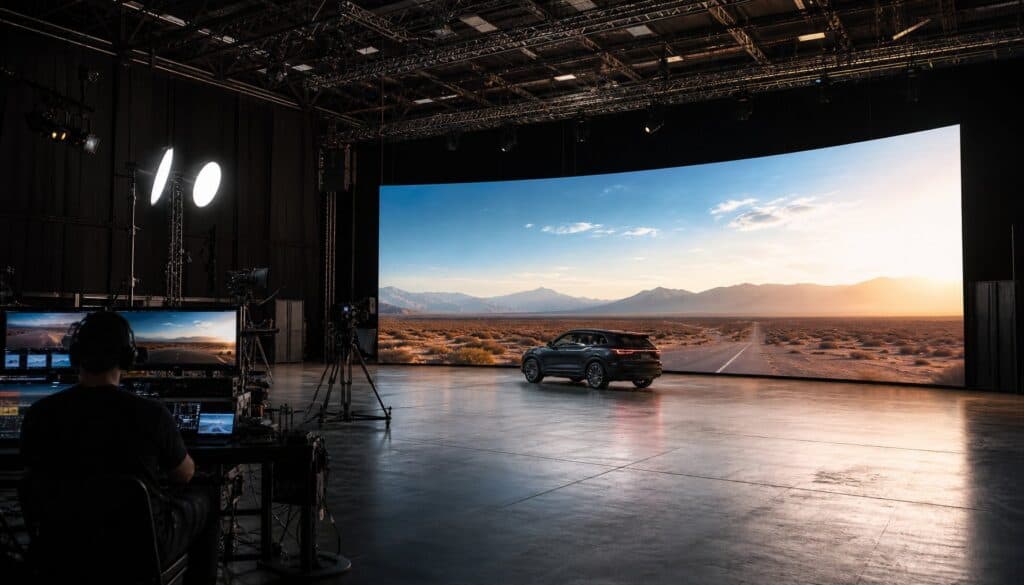
- Virtual production volumes: Most professional VP stages run 20 to 40 feet wide, 10 to 16 feet tall, with optional ceiling and side-wing panels. The goal is to fill the camera’s field of view entirely so that no edge of the wall is visible in the final frame.
- Live events and concerts: Walls can scale to 50 feet wide or more, often combining multiple sections, IMAG screens, and creative LED shapes to create a dynamic visual experience.
- Broadcast and studio work: 12-by-8-foot to 20-by-12-foot configurations are typical, depending on how many camera angles need to see the wall and whether talent will be standing or seated.
Don’t Forget the Physical Footprint
LED walls aren’t just screens — they come with frames, support structures, cabling, processors, and sometimes dedicated HVAC considerations because the panels generate heat. When planning your rental, factor in at least 3 to 5 feet of depth behind the wall for rigging and technician access, plus adequate power circuits. A 20-foot-wide fine-pitch LED wall can draw 30 to 60 amps or more depending on content brightness.
How to Match the Right LED Wall to Your Production Needs
Choosing the right wall means aligning technology with creative intent. Here’s a decision framework that works across production types.
For Virtual Production and In-Camera VFX
Virtual production — where real-time 3D environments are rendered on LED walls and captured directly in-camera — is one of the most demanding use cases. You need:
- Fine pixel pitch (P1.5 or smaller)
- High refresh rate (3,840 Hz or higher to avoid moiré and banding on camera)
- Wide color gamut with accurate calibration
- Genlock and frame sync capability with your camera system
- Integration with Unreal Engine or other real-time rendering platforms
This is where working with an experienced studio matters enormously. The wall itself is only part of the equation — camera tracking, real-time rendering, lighting design, and content pipeline all have to work in concert.
For Corporate Events and Conferences
The priorities shift to reliability, quick setup, and content flexibility. Medium-pitch panels (P2.5–P3.0) typically deliver excellent visual quality for audiences seated 15 feet or more from the screen. You’ll want a processing system that can handle multiple input sources — laptops, playback servers, live camera feeds — and switch between them seamlessly.
For Commercials and Branded Content
Commercials demand cinematic quality. Fine-pitch walls (P1.2–P1.9) are standard, and the content displayed on the wall often serves as both a practical lighting source and a visible background element. The ability to control brightness zones and color temperature on the wall is crucial for matching talent lighting.
For Live Streaming and Hybrid Events
When your LED wall will be seen both by a live audience and through a camera for a remote audience, you need a wall that performs for both. This often means fine-to-medium pitch with a high refresh rate and careful calibration to avoid the flickering or color shifts that look fine in person but fall apart on a stream.
What to Look for in an LED Wall Rental Provider
The hardware is important, but the team behind it can make or break your production. Here’s what separates a reliable rental partner from a risky one.
- Technical expertise: Can they advise on pixel pitch, processing, and content specs — or do they just drop off panels and leave? The best providers function as technical partners, not just equipment vendors.
- On-site support: LED walls require calibration, troubleshooting, and real-time adjustments. Insist on having a qualified LED technician on-site for the duration of your production.
- Content pipeline guidance: Your wall is only as good as the content displayed on it. A knowledgeable provider will advise on resolution, frame rate, color space, and file formats to ensure your visuals look flawless.
- Insurance and contingency: Panels can fail. Processors can glitch. Ask about backup hardware, redundancy plans, and insurance coverage.
- Portfolio and references: Ask to see past projects, particularly ones similar to yours. A provider with deep experience in virtual production will approach your shoot very differently than one who primarily serves trade shows.
Frequently Asked Questions About LED Wall Rental
What is the average lead time for booking an LED wall rental?
For standard corporate events, 2 to 4 weeks of lead time is common. For virtual production shoots or large-scale events requiring custom configurations, plan for 4 to 8 weeks minimum. During peak seasons — late Q4 and early Q1 — availability tightens considerably, so booking early is strongly recommended.
Can I use any content on an LED wall, or does it need to be specially formatted?
Content should be formatted to the exact pixel resolution of your wall configuration. Stretching, upscaling, or using incorrect aspect ratios will result in visible quality loss. For virtual production, content must be rendered in real time using platforms like Unreal Engine at the wall’s native resolution and matched frame rate. For events, pre-rendered content in ProRes or high-bitrate H.264/H.265 at the wall’s native resolution will deliver the best results.
Is LED wall rental better than projection for my event?
In almost every measurable way — brightness, contrast, color accuracy, viewing angle, and ambient light performance — LED walls outperform projection. The primary trade-off is cost. Projection is less expensive for very large surfaces where image quality is less critical. But for any production where the display will appear on camera or where ambient lighting cannot be fully controlled, LED is the superior choice.
Do I need a special venue or studio for an LED wall shoot?
Not necessarily, but the venue must meet certain requirements: adequate power supply (dedicated circuits, often 200 amps or more for large walls), sufficient ceiling height for rigging, climate control to manage heat output, and a controlled lighting environment if the wall is being used for on-camera work. Purpose-built studios designed for LED wall production eliminate these variables entirely.
What happens if an LED panel malfunctions during my shoot?
Reputable rental providers carry backup panels and modules on-site. Individual LED modules can typically be hot-swapped in minutes without taking down the entire wall. This is another reason why on-site technical support is essential — a trained technician can diagnose and resolve issues quickly, minimizing downtime.
Ready to Book Your LED Wall Rental?
Whether you’re planning a virtual production shoot, a high-profile corporate event, a broadcast segment, or a commercial campaign, the right LED wall rental decision comes down to matching the technology to your creative and technical requirements. Pixel pitch, panel type, wall sizing, content pipeline, and on-site support all factor into a successful outcome.
TriVision Studios operates full-service LED wall rental and virtual production stages in Washington DC, Richmond, New York City, and Baltimore — trusted by leading brands, government agencies, nonprofits, and production teams nationwide. Our team handles everything from technical consultation and wall configuration to real-time content rendering and on-set support, so your production looks exceptional from first frame to last.
Contact TriVision Studios today to discuss your upcoming project and find the right LED wall solution for your needs.