Why LED Wall Virtual Production Is Redefining How Brands Create Video
You have a vision for your next video project: a sweeping desert backdrop, a sleek metropolitan skyline, or an immersive sci-fi environment. Traditionally, achieving any of those looks meant booking flights, securing location permits, hauling equipment across state lines, and praying for cooperative weather. Today, LED wall virtual production benefits are eliminating those headaches entirely—and the industry is taking notice. According to a 2025 report from Grand View Research, the global virtual production market is projected to exceed $4.7 billion by 2030, growing at a compound annual growth rate of over 15 percent. That momentum is not just driven by Hollywood blockbusters; corporate brands, government agencies, nonprofits, and mid-market companies in cities like Washington DC, Richmond, Baltimore, and New York City are embracing the technology to produce higher-quality content faster and at lower cost.
If you are evaluating whether LED wall virtual production is right for your next project, this guide breaks down the five most impactful benefits—and explains why organizations across the Mid-Atlantic region are making the switch in 2026.
1. Dramatic Travel Cost Savings Without Sacrificing Location Authenticity
The Old Way Was Expensive
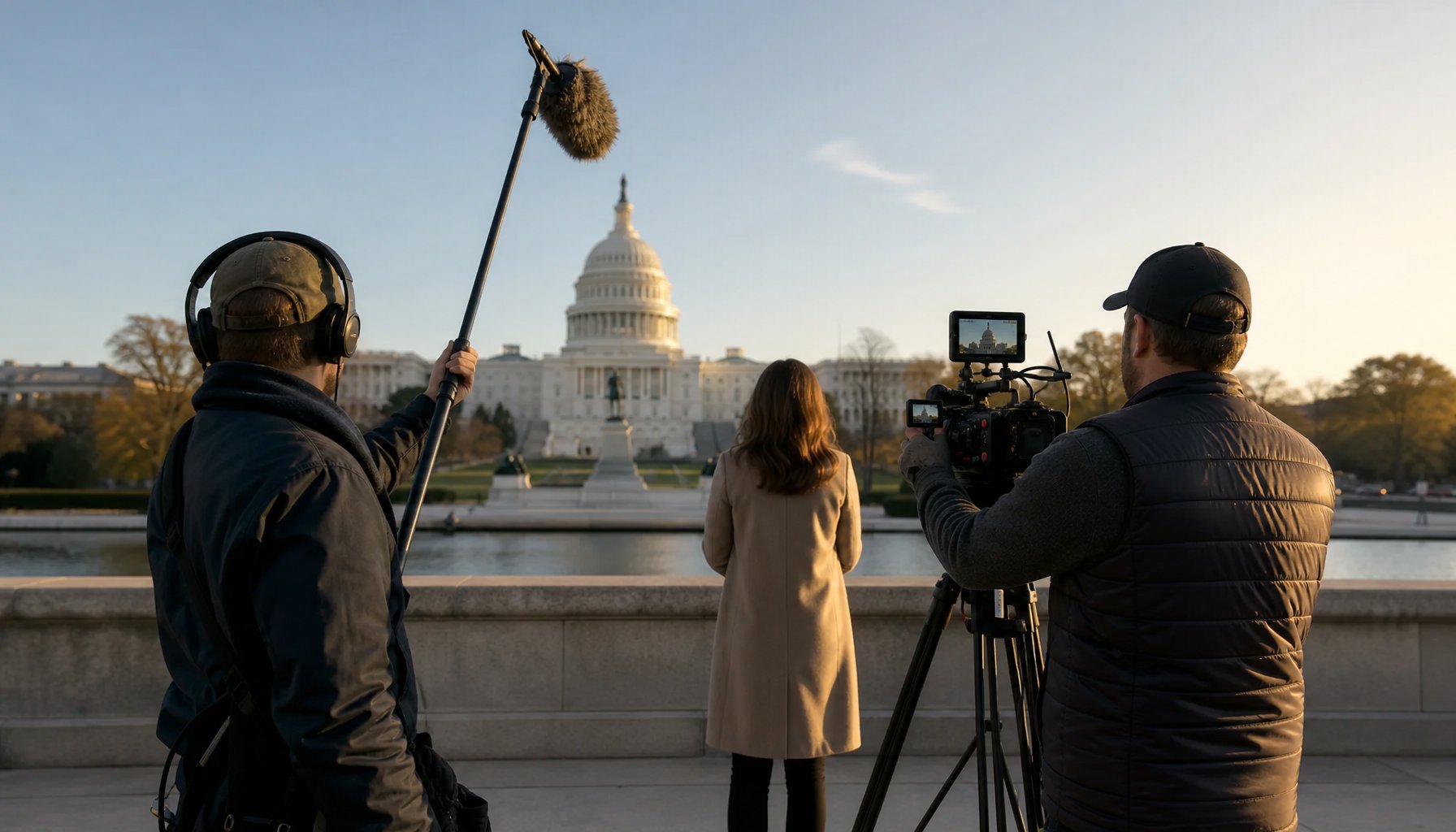
Location shoots have always been one of the biggest line items on a production budget. Airfare, hotels, per diem meals, ground transportation, location fees, and overtime hours add up quickly. For a DC-based government agency filming a training scenario set in a Middle Eastern village, or a nonprofit documenting the impact of international aid work, the logistics alone can consume 30 to 50 percent of the total production budget.
How LED Walls Change the Equation
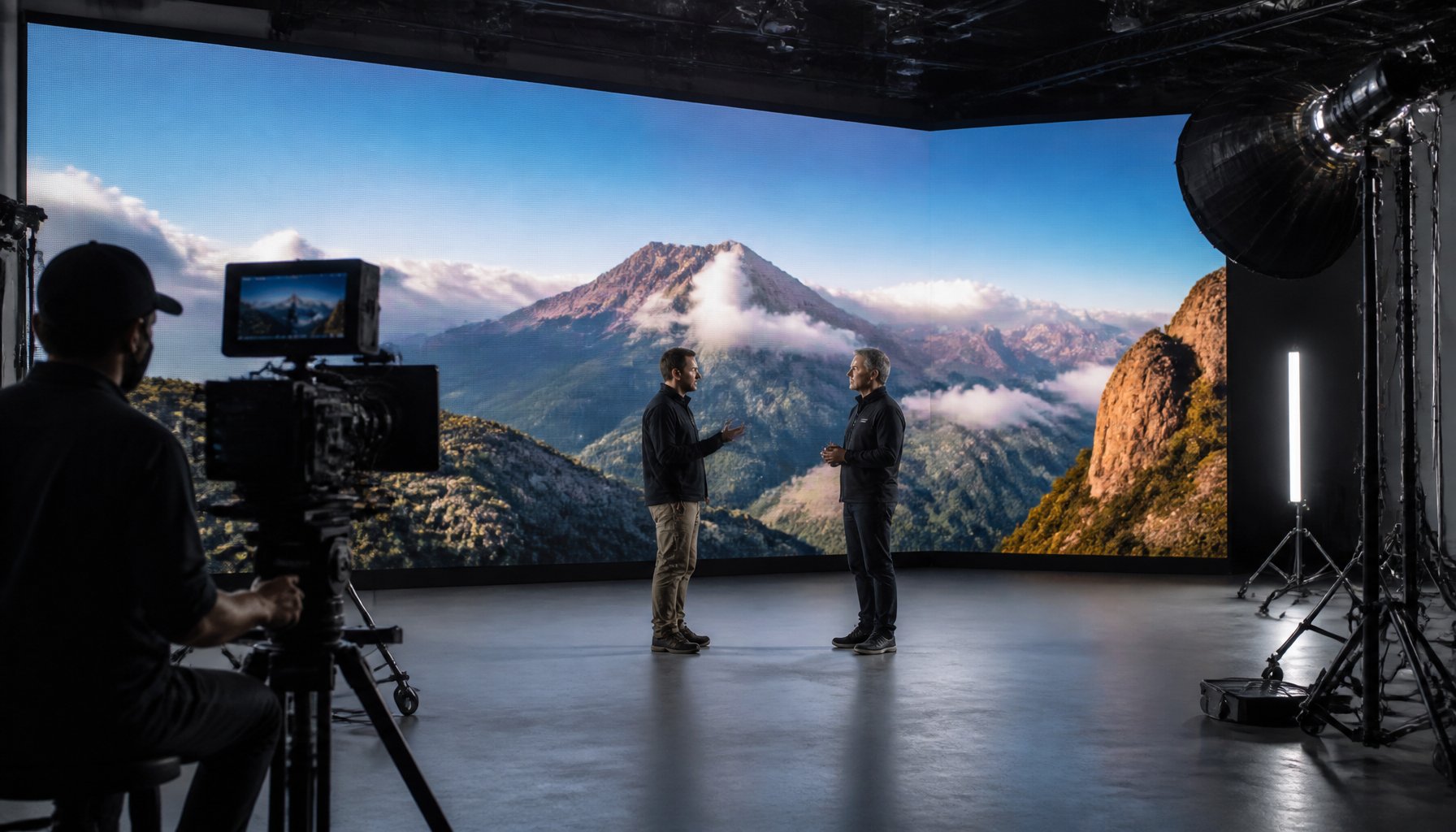
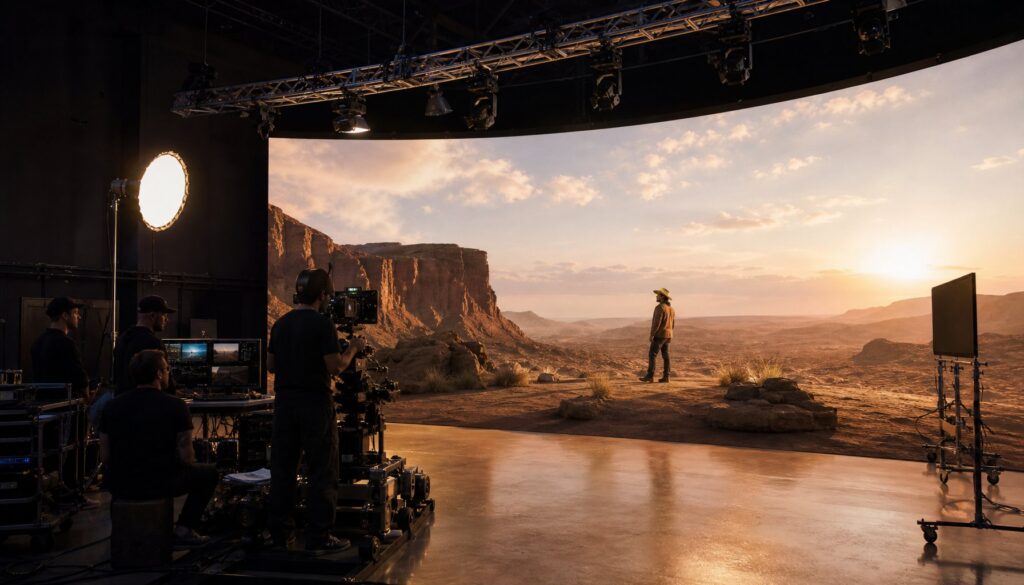
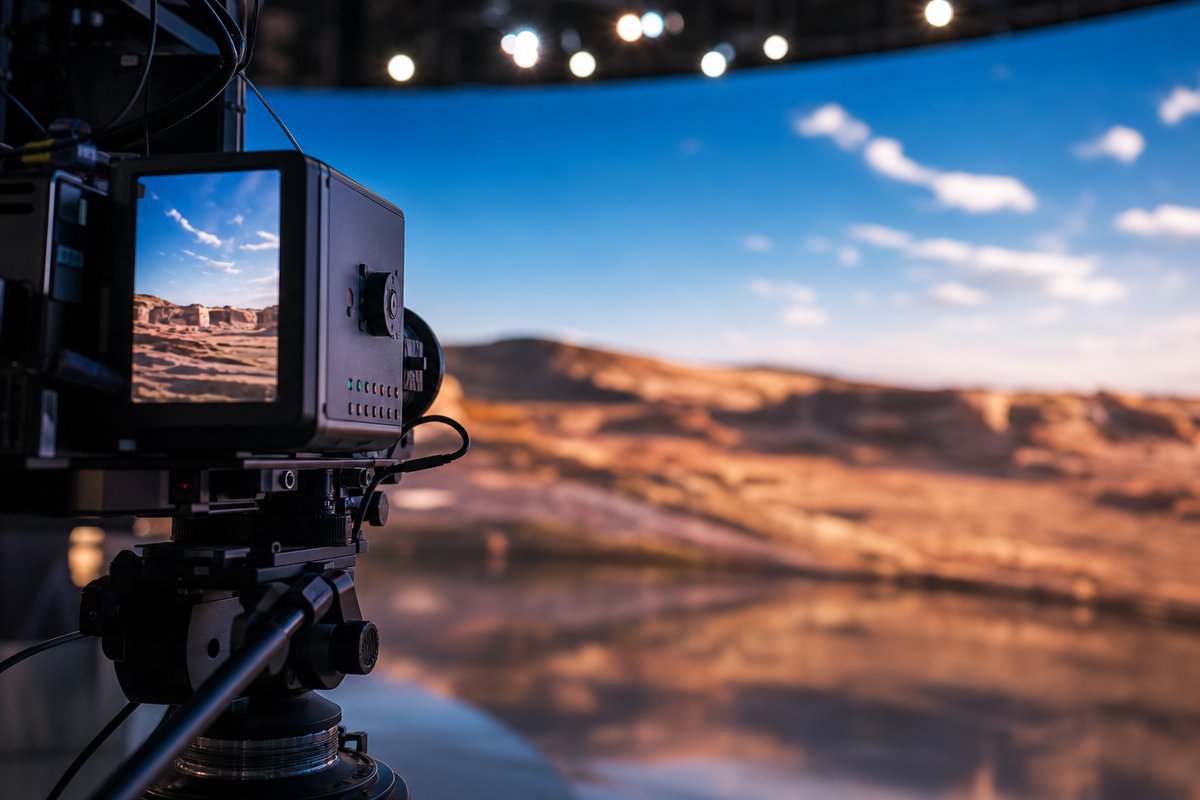
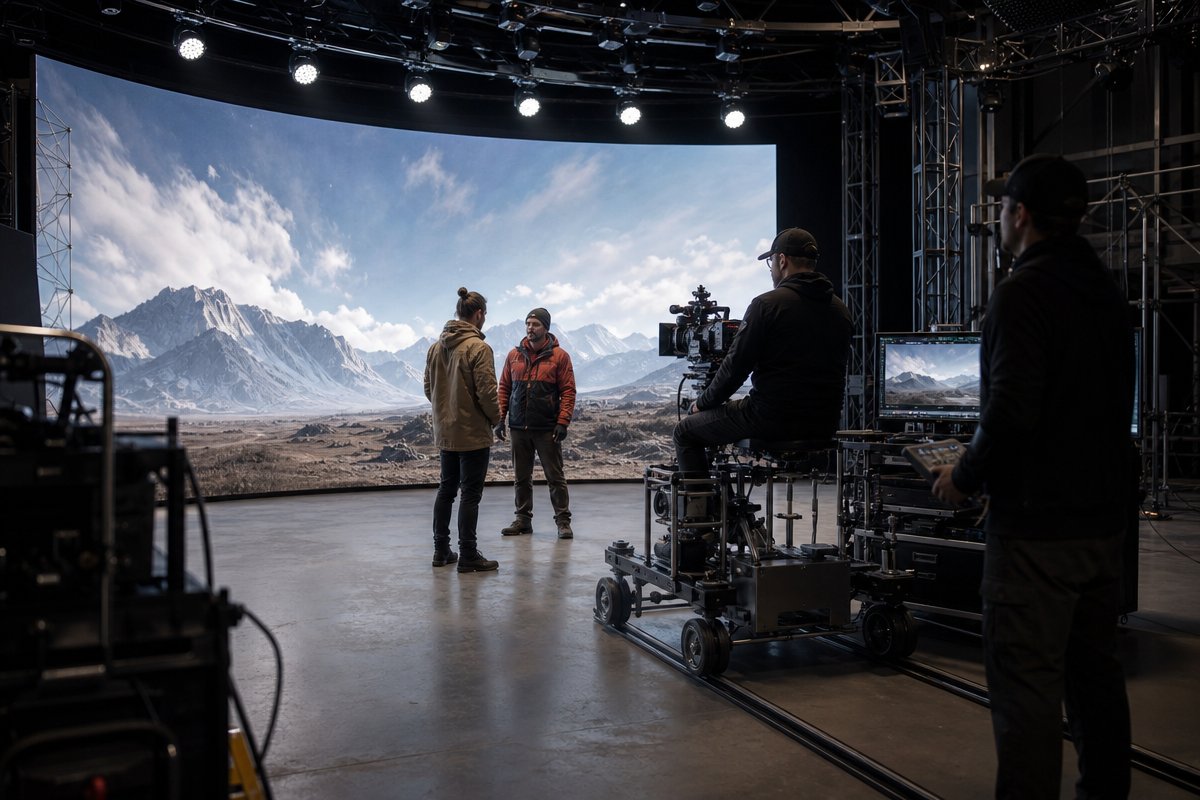
With LED wall virtual production, photorealistic environments are rendered in real time on massive, high-resolution LED panels that surround the on-camera talent. The result is a convincing, camera-ready backdrop that eliminates the need to physically travel to a distant location. Your entire cast and crew stay in one studio—whether that studio is in Washington DC, Northern Virginia, or Baltimore—and the world comes to you.
- No airfare or hotel costs for cast, crew, or stakeholders
- No location permits or fees—you control every pixel of the environment
- No weather delays—rain, wind, and harsh sunlight are irrelevant
- Reduced insurance exposure from fewer travel-related liabilities
For organizations producing content across multiple simulated locations, the savings compound rapidly. A single studio day can cycle through five or more virtual environments, something that would require a week or more of traditional location shooting.
2. Unmatched Creative Control for Directors and Producers
Real-Time Environment Manipulation
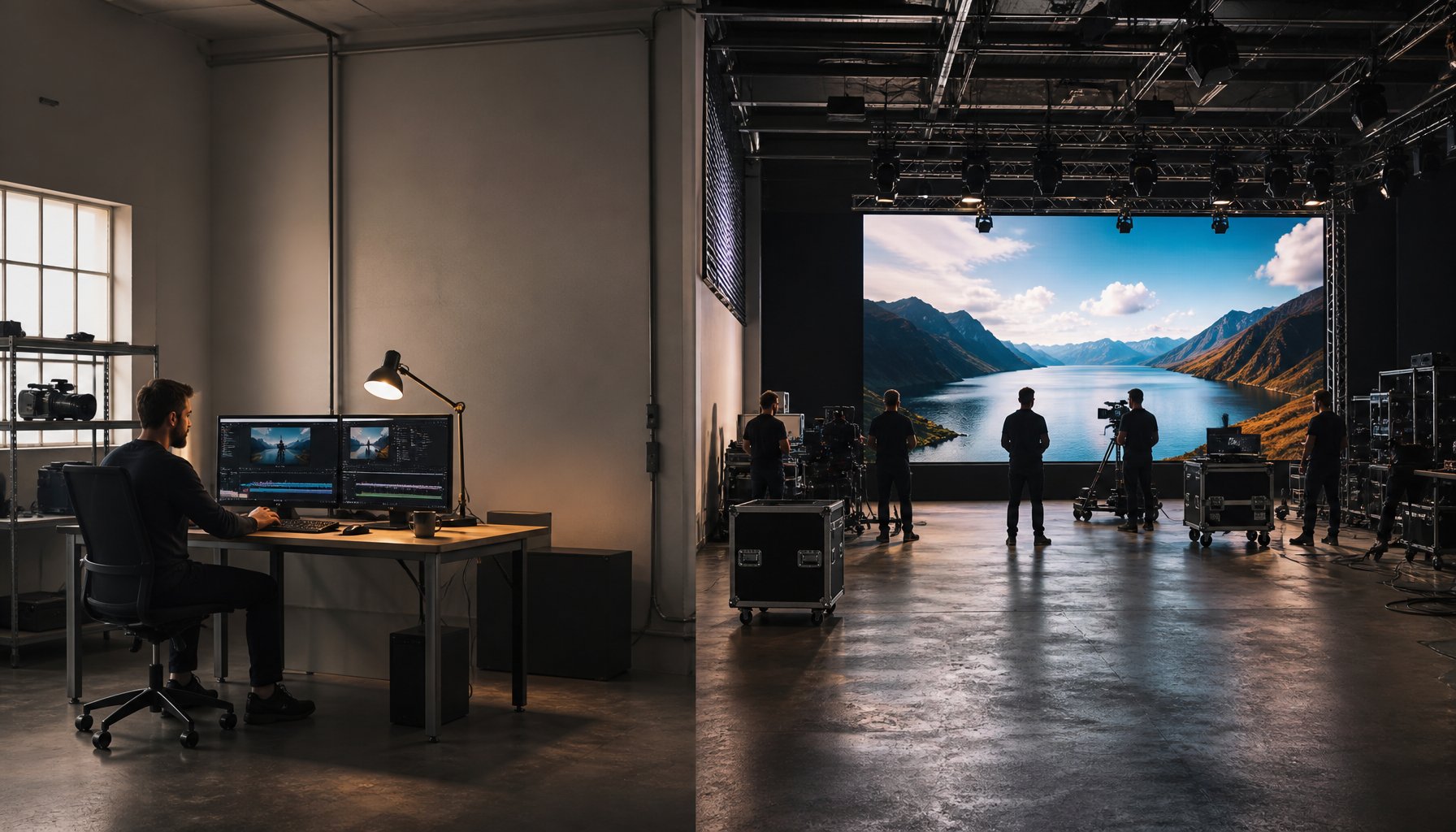
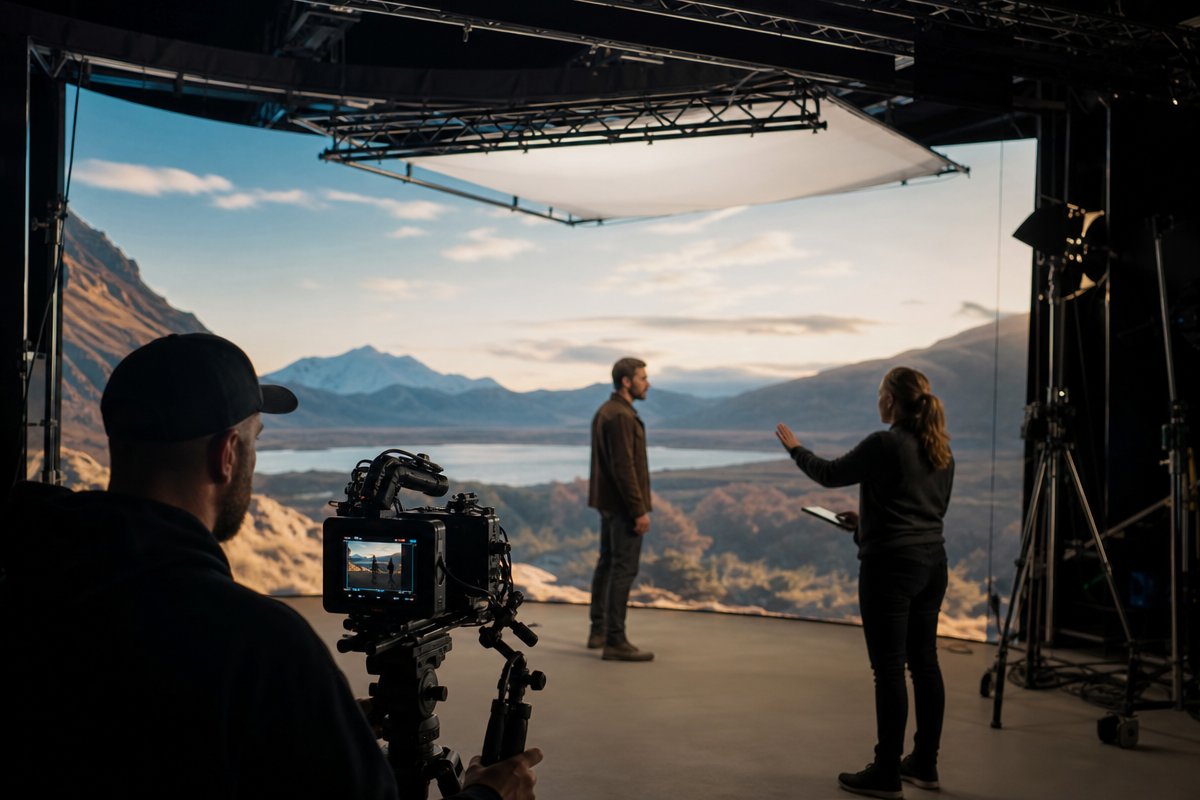
One of the most transformative LED wall virtual production benefits is the level of creative control it puts directly in the hands of directors and producers. Unlike green screen compositing—where the final background is added months later in post-production—LED wall environments are visible on set in real time. Directors can see exactly how the talent interacts with the background, adjust lighting to match the virtual scene, and make creative decisions on the spot.
What This Means in Practice
Imagine you are filming a corporate leadership message and the CEO wants a window behind them showing a dynamic city skyline transitioning from day to night. On an LED wall stage, the production team can:
- Load the skyline environment and adjust the time of day in seconds
- Shift the camera angle to find the most flattering composition
- Change the entire background—from New York to London to Tokyo—without resetting a single light
- Preview the final look on the camera monitor immediately, giving stakeholders confidence in the output before they leave the studio
This immediacy reduces revision cycles, shortens approval timelines, and ensures that what the client sees on set is what they get in the final deliverable. For agencies and brands accustomed to lengthy post-production review processes, this is a significant workflow improvement.
3. Superior Visual Realism Compared to Green Screen
The Green Screen Problem
Green screen technology has served the industry well for decades, but it carries well-known limitations. Green spill—where green light reflects onto talent’s skin, hair, and wardrobe—requires painstaking correction in post. Transparent or reflective objects like glass, water, or eyeglasses become compositing nightmares. And actors performing against a blank green void often struggle to deliver natural, grounded performances because they cannot see the world their character is supposed to inhabit.
LED Walls Deliver In-Camera Results
LED wall virtual production solves these problems at the source. Because the background is actually emitting light and color from physical LED panels, the environment interacts naturally with everything in the scene:
- Accurate reflections appear in glass, metal, and even talent’s eyes
- Natural light wrapping means the environment’s color temperature and ambient light match the foreground seamlessly
- No green spill to clean up, which saves hours of post-production compositing work
- Actors see the environment around them, leading to more authentic and emotionally connected performances
The result is footage that looks and feels like it was shot on location—because, from the camera’s perspective, it essentially was. This photorealistic quality is especially critical for commercial productions, PSAs, and documentary-style content where believability is paramount.
4. Faster Production Timelines From Pre-Production to Delivery
Consolidating Multiple Shoot Days Into One
Time is one of the most valuable and most constrained resources in any production. LED wall virtual production compresses timelines at every stage:
- Pre-production: Virtual environments can be designed and approved digitally before the shoot day, reducing on-set surprises
- Production: Switching between backgrounds takes minutes instead of the hours required to break down and travel to a new physical location
- Post-production: Because compositing is largely done in-camera, the editorial team receives cleaner footage that requires far less visual effects work
A Real-World Timeline Comparison
Consider a healthcare organization in the DC area producing a recruitment video that needs to show scenes in a hospital corridor, an outdoor campus, and an executive boardroom. With traditional production, that is a minimum of two shoot days plus travel and setup time between locations. With LED wall virtual production, all three environments can be captured in a single studio session lasting six to eight hours. Post-production that might have taken three weeks of compositing and color correction is reduced to a standard edit timeline.
For government agencies operating under tight fiscal-year deadlines or nonprofits coordinating content around advocacy campaigns, this acceleration is not just convenient—it is strategically essential.
5. Sustainable, Eco-Conscious Production Practices
Reducing Your Carbon Footprint
Sustainability is no longer a fringe consideration—it is a core value for many organizations, especially in the public sector and nonprofit space. Traditional video production generates a meaningful environmental footprint: flights, fuel for equipment trucks, diesel generators for remote power, and the waste associated with building and dismantling physical sets.
The Environmental Case for Virtual Production
LED wall virtual production dramatically reduces these impacts:
- Eliminated air and ground travel for location shoots
- No physical set construction—environments are digital, reusable, and produce zero material waste
- Lower energy consumption compared to powering a full location shoot with portable generators
- Reusable digital assets—a virtual environment built for one project can be modified and repurposed for future productions
The British Film Institute and the Albert Consortium have documented that virtual production techniques can reduce a production’s carbon emissions by up to 50 percent compared to equivalent location-based shoots. For organizations that report on ESG (Environmental, Social, and Governance) metrics or that operate under sustainability mandates, this benefit carries real institutional value.
Who Benefits Most From LED Wall Virtual Production?
While the technology is versatile enough for nearly any content type, certain organizations and project categories see outsized returns:
- Government agencies producing training simulations, public service announcements, or recruitment content that requires diverse location settings
- Nonprofits and advocacy organizations telling stories that span multiple geographies without the budget for international travel
- Healthcare companies creating patient education or facility recruitment videos in controlled, HIPAA-conscious environments
- Corporate brands producing high-volume marketing content that needs to look premium without premium location budgets
- Technology companies launching products with futuristic, immersive visual narratives
Across Washington DC, Richmond, Baltimore, and the greater Mid-Atlantic region, the demand for accessible, high-quality virtual production capabilities has grown steadily as more organizations recognize these advantages.
Frequently Asked Questions About LED Wall Virtual Production Benefits
How realistic do LED wall backgrounds actually look on camera?
Modern LED wall stages use panels with pixel pitches as fine as 1.5mm or smaller, delivering resolution that is virtually indistinguishable from real environments when captured through a professional cinema camera. Because the LED panels emit real light, reflections, ambient color, and light wrapping behave naturally—producing results that surpass green screen compositing in most scenarios. The key to maximum realism is working with an experienced virtual production team that understands camera tracking, color calibration, and content creation for LED volumes.
Is LED wall virtual production only for big-budget Hollywood films?
Not at all. While the technology gained mainstream visibility through productions like The Mandalorian, it has become increasingly accessible to corporate, government, nonprofit, and commercial productions. Studios in the DC area now offer LED wall stage rentals that make the technology available to organizations with a wide range of budgets. In many cases, the savings on travel, location fees, and post-production compositing make LED wall production cost-competitive with—or even less expensive than—traditional multi-location shoots.
What types of video content work best with LED wall virtual production?
LED wall stages excel for content that requires specific or hard-to-reach locations, consistent lighting conditions, or immersive branded environments. Common use cases include corporate brand videos, product launches, training and simulation content, commercials, PSAs, talk shows, podcasts with dynamic backdrops, and documentary-style storytelling. Content that is primarily interview-based or that takes place in a simple studio setting may not require the technology, though even those formats can benefit from the elevated production value an LED environment provides.
How long does it take to set up a virtual environment on an LED wall?
Pre-built environments can be loaded and calibrated in under an hour. Custom environments—designed specifically for a client’s creative brief—are typically developed during pre-production and are ready to display when the shoot day begins. Switching between pre-loaded environments during a shoot takes as little as five to ten minutes, allowing production teams to capture content across multiple virtual locations in a single session.
Do actors and on-camera talent prefer LED walls over green screens?
Overwhelmingly, yes. Talent consistently reports that performing in front of a visible, immersive environment—rather than a blank green void—helps them deliver more natural, emotionally connected performances. They can reference real visual landmarks, react to environmental cues like lighting shifts, and feel physically present in the scene. This translates directly to more authentic footage and fewer takes needed to capture the right performance.
Can I use LED wall virtual production for live streaming or hybrid events?
Absolutely. LED wall stages are an excellent solution for live streaming, virtual galas, hybrid conferences, and broadcast-style events. The real-time rendering capability means backgrounds can be dynamic—responding to presentation cues, changing between segments, or displaying branded content. Organizations in Washington DC and the surrounding region regularly use LED wall stages for high-profile live events where production value and audience engagement are critical.
Ready to Experience LED Wall Virtual Production Benefits Firsthand?
The advantages of LED wall virtual production—cost savings, creative control, visual realism, faster timelines, and sustainability—are not theoretical. They are being realized right now by organizations across Washington DC, Northern Virginia, Baltimore, Richmond, and New York City that are choosing smarter, more efficient ways to produce high-impact video content.
TriVision Studios operates a fully equipped virtual production stage designed for exactly these kinds of projects. Whether you are a government agency preparing a training series, a nonprofit telling a global story from a local studio, or a brand launching a campaign that demands cinematic visuals, our team brings the technical expertise and creative vision to make LED wall virtual production work for your goals and your budget.
Contact TriVision Studios today to schedule a studio tour or discuss how LED wall virtual production can transform your next project.