You have a product, a service, or a message that deserves a massive audience—but the thirty-second window of a commercial is unforgiving. According to a 2026 Nielsen report, viewers form a judgment about a video ad within the first two seconds, and nearly 65% of consumers say a well-produced commercial directly influences their purchase decisions. If you are investing in commercial video production in DC, you need a partner and a process that can turn a blank page into a broadcast-ready spot that actually moves the needle. This guide walks you through every phase of that journey—from the first creative conversation to the moment your commercial hits the airwaves, streaming platforms, or social feeds.
Washington DC is not just the nation’s capital; it is a media-saturated market where advocacy groups, tech companies, healthcare brands, and government-adjacent organizations all compete for attention. A generic approach will not cut it here. Let us break down exactly how a high-caliber commercial comes to life in this market.
Phase 1: The Creative Brief and Strategic Foundation
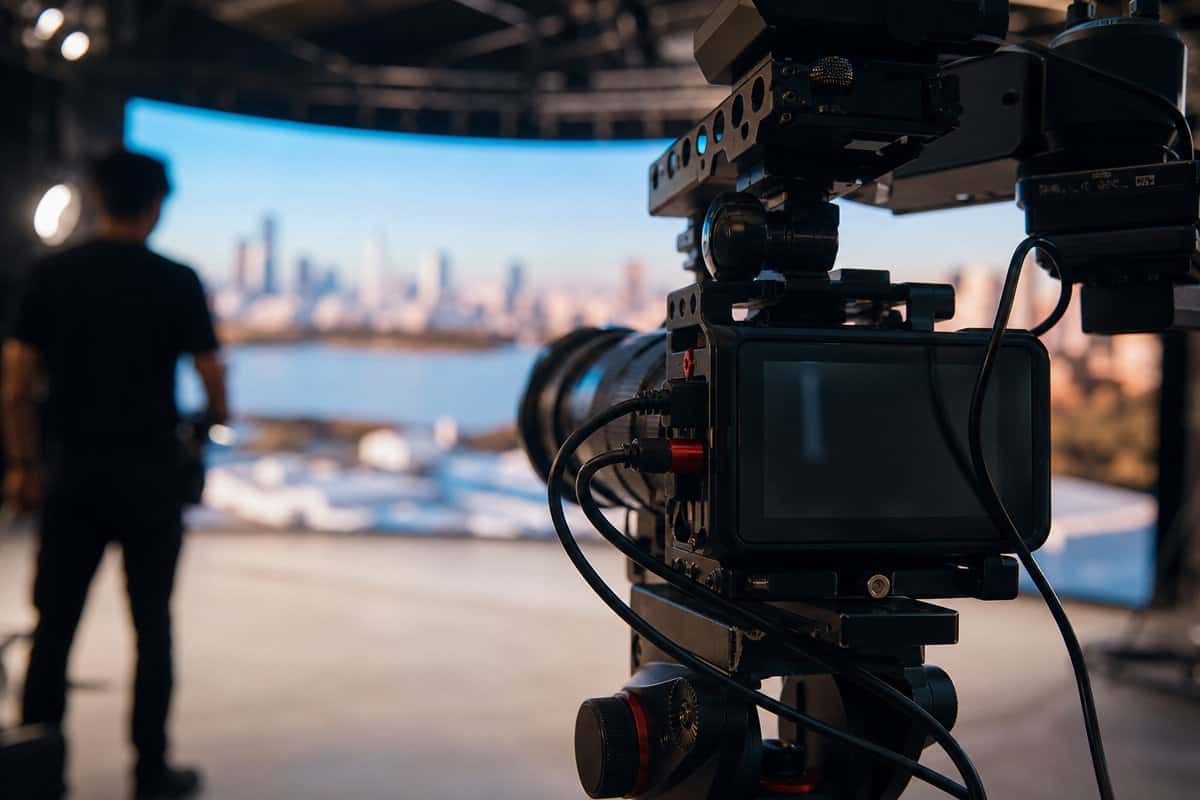
Every broadcast-quality commercial begins long before a camera powers on. It starts with a strategic conversation—one that aligns your brand objectives, target audience, and distribution channels into a single, focused document: the creative brief.
What a Strong Creative Brief Covers
- Campaign objective: Are you driving awareness, generating leads, launching a product, or shifting public perception?
- Target audience: Demographics, psychographics, viewing habits, and the platforms where they spend their time.
- Key message: The single idea you want the viewer to remember after the spot ends.
- Tone and style: Cinematic and aspirational? Conversational and relatable? Urgent and action-driven?
- Budget parameters: Understanding financial boundaries early ensures creative ambitions stay realistic and every dollar works harder.
- Distribution plan: Broadcast television, connected TV (CTV), YouTube pre-roll, social media, or a combination—each platform shapes the creative approach.
In the DC market, this phase often involves additional layers of stakeholder alignment. Nonprofits may need board approval, government-adjacent organizations may have compliance requirements, and corporations headquartered in Northern Virginia or Maryland may need messaging that resonates across multiple regional audiences. A production company with deep DC-area experience understands these dynamics and builds them into the brief from day one.
Phase 2: Concept Development and Storyboarding
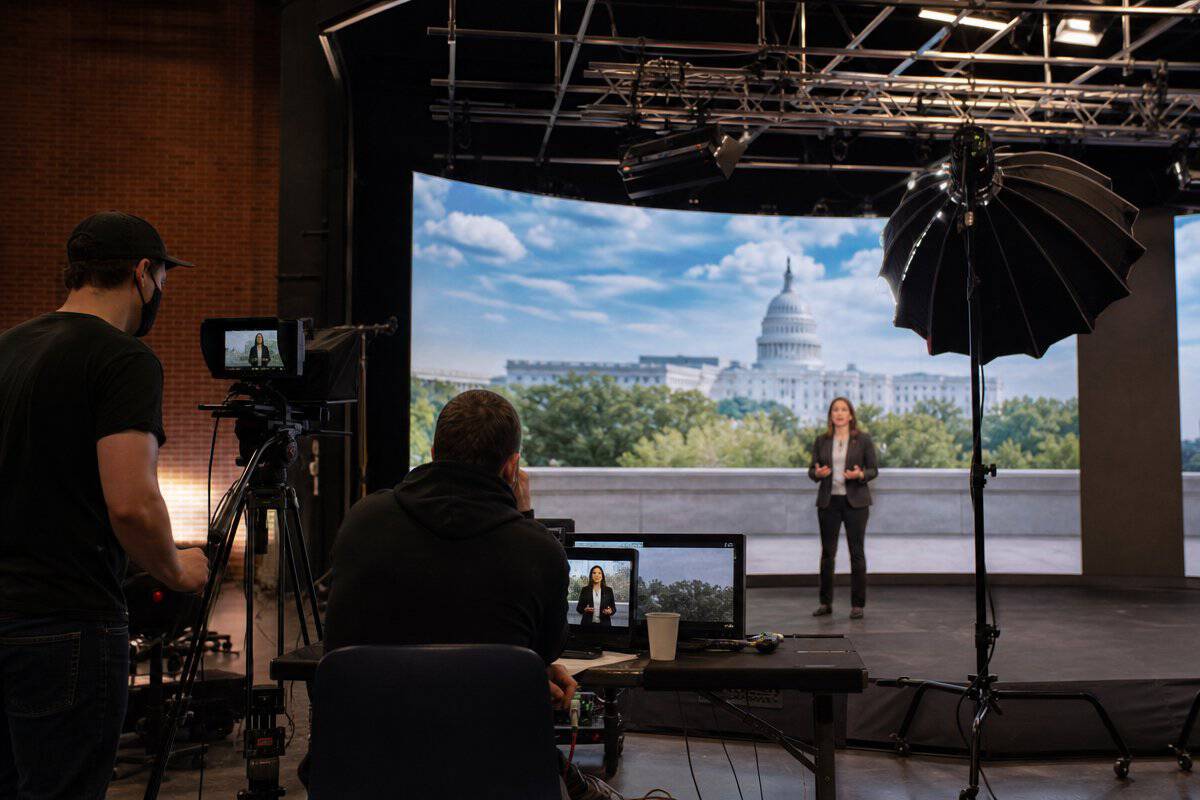
With the brief locked in, the creative team moves into ideation. This is where the commercial begins to take visual and narrative shape.
From Ideas to a Visual Blueprint
Concept development is not about throwing ideas at the wall. It is a disciplined process of generating multiple creative directions, pressure-testing each one against the brief, and refining the strongest option into a detailed concept. Here is what that typically looks like:
- Brainstorming session: Writers, directors, and producers generate three to five distinct creative concepts.
- Concept presentation: The top two or three ideas are presented to the client with mood boards, reference clips, and written treatments.
- Script development: The selected concept is developed into a full script—dialogue, voiceover, on-screen text, and visual direction included.
- Storyboarding: Frame-by-frame illustrations map out every shot, camera angle, and transition. This becomes the production blueprint.
Storyboards are especially critical for commercials because every second of screen time costs money. A thirty-second spot typically contains twelve to twenty individual shots. Mapping these out in advance prevents costly surprises on set and ensures the director, cinematographer, and editor are all working from the same visual playbook.
Why DC-Specific Knowledge Matters Here
A commercial shot against the backdrop of the National Mall carries different visual weight than one filmed in a sleek Tysons Corner office or along Baltimore’s Inner Harbor. Knowing which DC-area locations reinforce your brand message—and understanding the permitting process for each—is a competitive advantage that saves time and elevates production value.
Phase 3: Pre-Production Planning
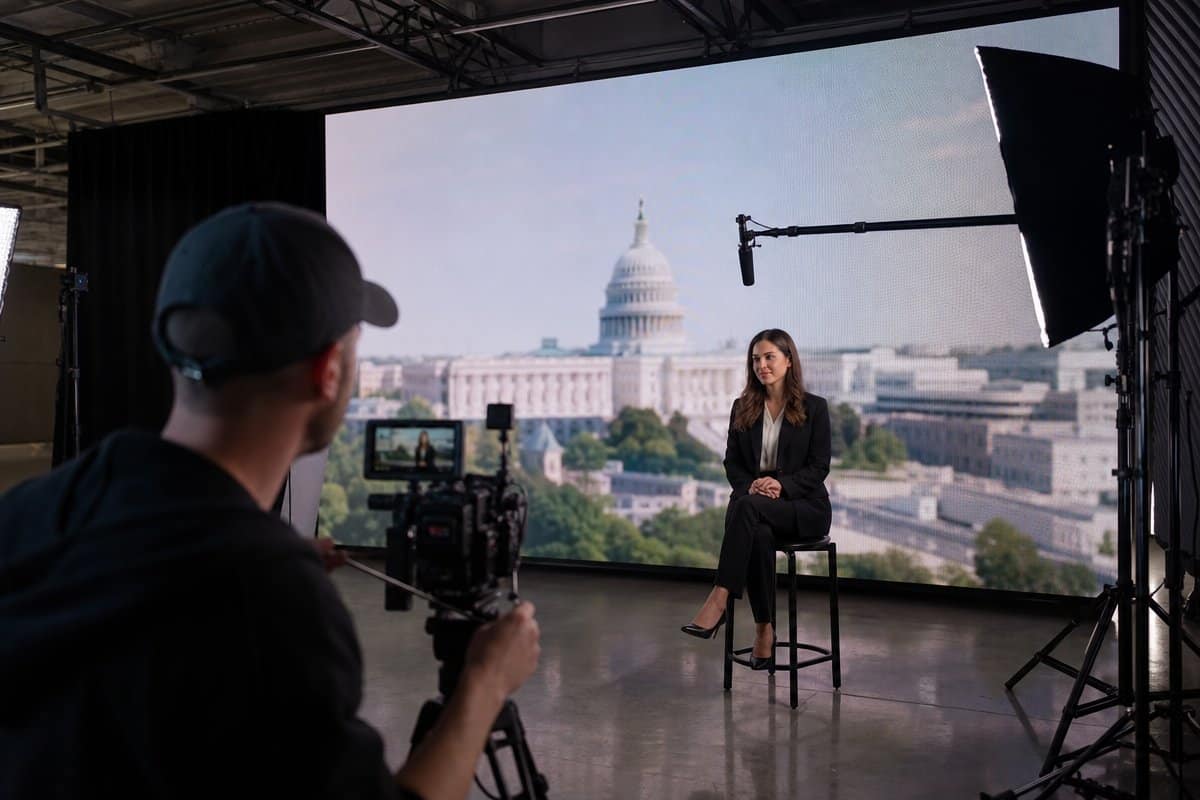
Pre-production is the logistics engine that makes the creative vision executable. It is arguably the phase where experienced production companies deliver the most value, because meticulous planning here prevents budget overruns and schedule chaos later.
Key Pre-Production Deliverables
- Production schedule: A detailed, hour-by-hour shoot plan that accounts for talent availability, location access, lighting conditions, and equipment setup times.
- Location scouting and permitting: DC, Arlington, Alexandria, Bethesda, and Richmond all have different filming regulations. Professional scouts identify the best locations and handle permit applications.
- Casting: Whether you need professional actors, real employees, or community members, casting sessions ensure the on-screen talent authentically represents your brand and audience.
- Crew assembly: Director, director of photography, gaffer, sound engineer, hair and makeup, production assistants—the crew roster is built to match the scope of the project.
- Equipment planning: Camera packages, lenses, lighting rigs, audio gear, teleprompters, and specialty equipment like drones, jibs, or LED wall stages are confirmed and tested.
- Wardrobe, props, and set design: Every visual element the viewer sees on screen is selected and approved during this phase.
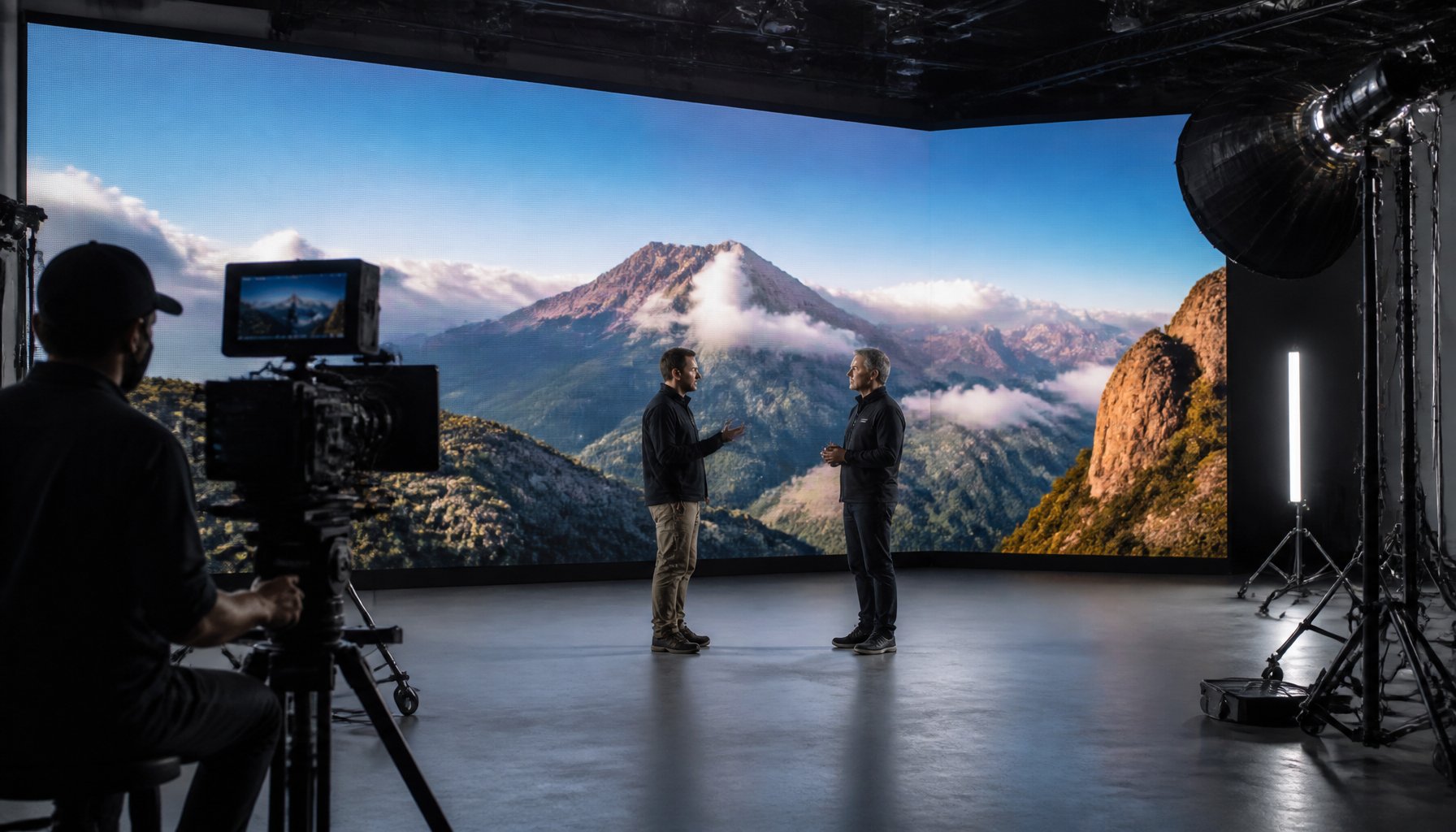
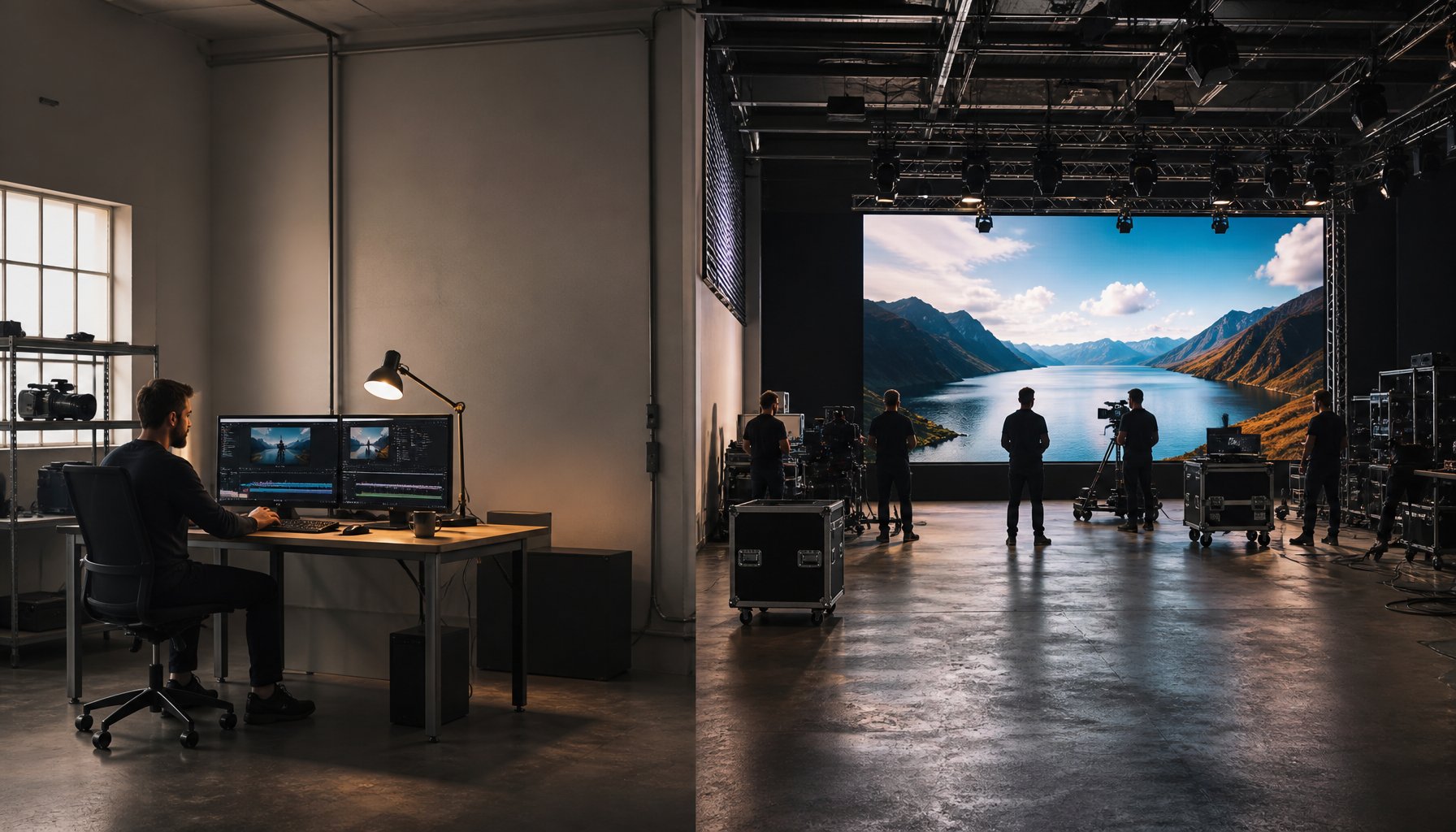
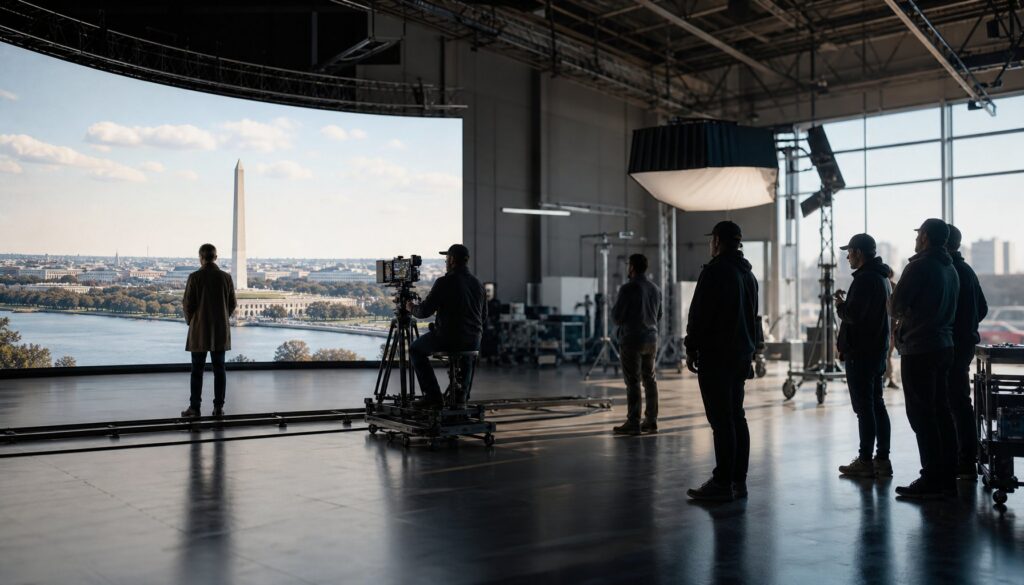
For brands seeking a controlled studio environment, facilities like TriVision Studios’ commercial and PSA production stage in the DC area offer turnkey solutions—professional lighting grids, sound-treated spaces, and even LED wall technology for virtual production backgrounds that eliminate the need for costly on-location shoots.
Phase 4: Production Day—Capturing the Magic
This is the phase most people picture when they think of commercial video production: cameras rolling, directors calling action, and talent delivering lines. But a well-run production day is far more structured than it appears.
What a Typical Commercial Shoot Looks Like
- Call time and setup (2-3 hours): Crew arrives early to build sets, rig lighting, calibrate cameras, and run technical checks.
- Talent preparation (1 hour): Hair, makeup, wardrobe, and a brief rehearsal to dial in performances.
- Principal photography (4-8 hours): Scenes are shot according to the storyboard. Multiple takes and angles are captured to give the editor maximum flexibility.
- B-roll and pickup shots (1-2 hours): Supplemental footage—product close-ups, environmental shots, and reaction shots—fills gaps and adds production polish.
- Wrap and data management: Equipment is broken down, and all footage is backed up to multiple drives immediately. Data loss prevention is non-negotiable.
Studio vs. On-Location Shoots in DC
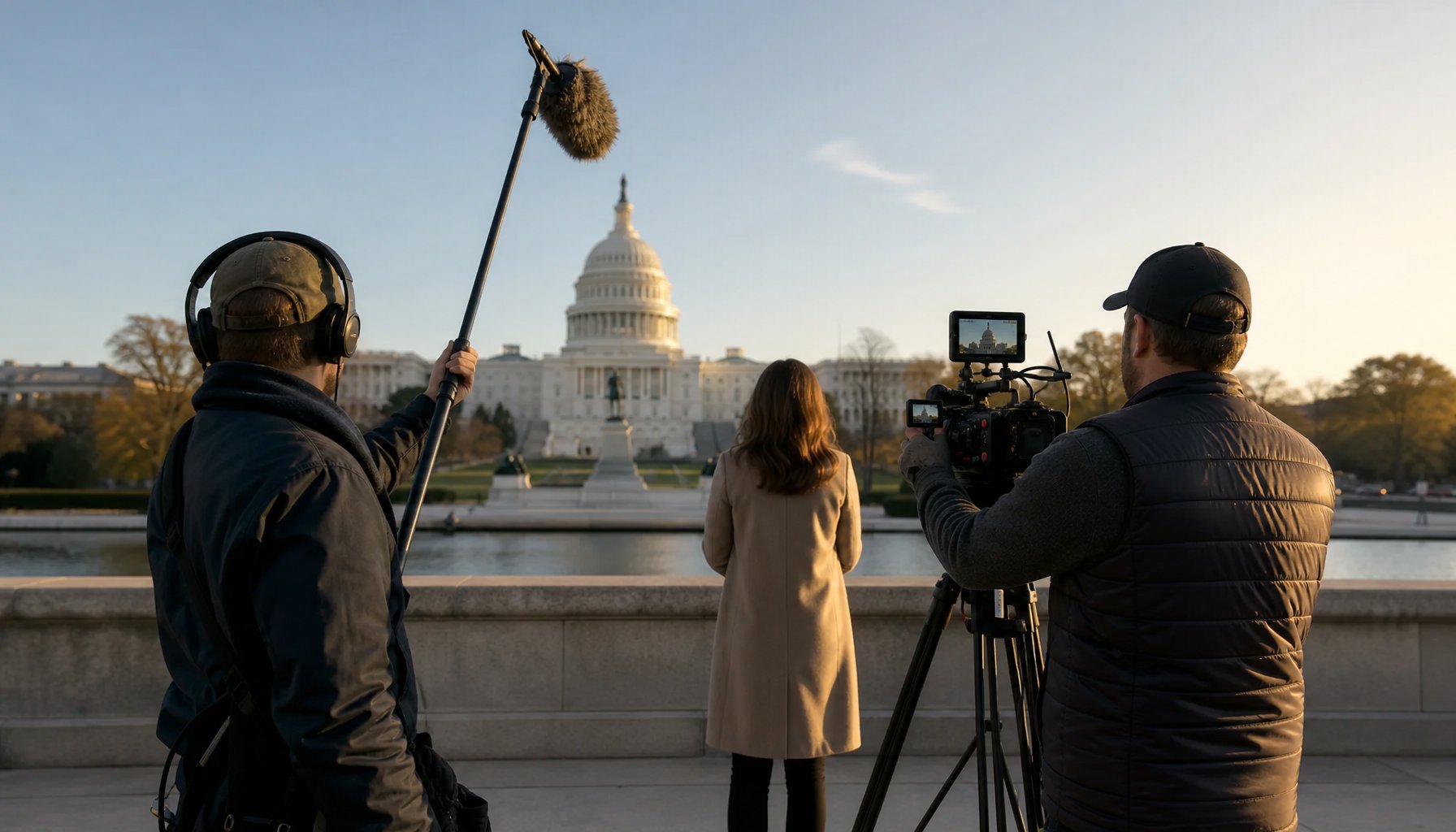
Both approaches have their strengths. Studio shoots offer complete control over lighting, sound, and environment—critical for product demos, testimonial-style spots, and anything requiring LED virtual production backgrounds. On-location shoots in DC provide authenticity and recognizable backdrops, but they introduce variables like weather, ambient noise, and foot traffic. Many commercials combine both, shooting controlled interior scenes in-studio and exteriors on location.
Phase 5: Post-Production and the Edit Suite
Raw footage is not a commercial. Post-production is where hours of captured material are sculpted into a tight, emotionally resonant, and technically flawless final product.
The Post-Production Workflow
- Rough cut: The editor assembles the footage into a first draft that follows the storyboard structure. Timing, pacing, and narrative flow are the priorities here.
- Client review and revisions: Stakeholders review the rough cut and provide feedback. A professional production company builds two to three revision rounds into the project scope.
- Color grading: A colorist adjusts every frame to ensure visual consistency and establish the commercial’s mood—warm and inviting, cool and corporate, bold and high-contrast.
- Sound design and mixing: Music licensing or original scoring, sound effects, voiceover recording, and final audio mixing ensure the commercial sounds as good as it looks.
- Motion graphics and titles: Lower thirds, logo animations, legal disclaimers, and call-to-action overlays are designed and integrated.
- Final mastering: The finished commercial is exported in every format required for its distribution channels—broadcast specs (HD, 4K), social media aspect ratios (16:9, 9:16, 1:1), and streaming platform requirements.
Post-production is also where animation and motion graphics can elevate a commercial from good to exceptional. Data visualizations, animated product features, and kinetic typography can communicate complex information in seconds—a particularly valuable tool for DC-area technology, healthcare, and financial services brands.
Phase 6: Delivery, Distribution, and Performance Tracking
A finished commercial sitting on a hard drive helps no one. The final phase ensures your spot reaches the right audience on the right platforms at the right time.
Delivery Formats and Channels
- Broadcast television: Files must meet strict technical specifications (ProRes, specific loudness standards, closed captioning) for network and cable placement.
- Connected TV and OTT: Platforms like Hulu, Roku, and Amazon Fire TV have their own specs and ad-buying processes.
- YouTube and social media: Shorter cutdowns (fifteen-second and six-second versions) are often produced alongside the hero spot for pre-roll, in-feed, and story placements.
- Website and landing pages: Embedded versions optimized for web playback drive engagement on your owned channels.
Measuring Commercial Performance
The best DC production partners do not disappear after delivery. They help you understand how the commercial is performing. Key metrics include view-through rate, click-through rate, brand lift, cost per completed view, and—most importantly—whether the ad is driving the action defined in the original creative brief.
Frequently Asked Questions About Commercial Video Production in DC
How long does it take to produce a commercial in DC from start to finish?
A standard thirty-second commercial typically takes four to eight weeks from creative brief to final delivery. This includes one to two weeks for concept development and pre-production, one to two days of filming, and two to four weeks of post-production. Rush timelines are possible but may require additional resources and budget.
What is the difference between a commercial and a corporate video?
Commercials are designed for paid media placement—broadcast TV, streaming platforms, digital ad networks—and are built to persuade a specific audience to take a specific action within a very tight timeframe (usually fifteen to sixty seconds). Corporate videos are typically longer-form content used for internal communications, website storytelling, investor relations, or earned media. The production standards for commercials are generally higher because they compete directly with other polished advertising content.
Do I need to hire actors for my DC commercial?
Not necessarily. Many effective commercials feature real employees, customers, or community members. However, professional talent brings consistency, on-camera polish, and the ability to deliver multiple takes without fatigue. Your production team can help you decide which approach best serves your message and budget.
Can a commercial be repurposed for social media?
Absolutely, and it should be. A well-planned production captures footage and designs the edit to allow for multiple deliverables—a hero thirty-second spot for broadcast, a fifteen-second cutdown for YouTube pre-roll, vertical edits for Instagram and TikTok, and still frames for display advertising. Planning for repurposing during pre-production maximizes your return on investment.
What makes the DC market unique for commercial production?
DC is a top-ten media market with an audience that is highly educated, politically engaged, and media-savvy. Commercials here often need to be more substantive and credible than in other markets. The city also offers iconic visual backdrops, a deep pool of diverse on-camera talent, and proximity to decision-makers in government, advocacy, and enterprise organizations. Production companies rooted in this market understand how to navigate its specific permitting processes, cultural nuances, and audience expectations.
Ready to Take Your Commercial From Concept to Air?
Creating a broadcast-quality commercial in DC demands more than good equipment—it requires strategic thinking, meticulous planning, and a production team that has navigated every phase of this process hundreds of times. From the first line of the creative brief to the final broadcast master, every decision shapes whether your commercial captures attention or gets skipped.
TriVision Studios is a full-service video production company headquartered in the Washington DC area, trusted by leading brands, corporations, government agencies, and nonprofits to produce high-impact commercials and PSAs that deliver measurable results. If you are ready to invest in commercial video production in DC that moves your audience to action, reach out to the TriVision team to start the conversation.