Your executive team just approved a corporate video that needs three distinct locations, a tight two-week deadline, and a budget that barely covers one traditional shoot day. Sound familiar? You are not alone. According to Deloitte’s 2026 TMT Predictions report, more than 60 percent of enterprise media budgets are now shifting toward technology-driven production methods that compress timelines without sacrificing quality. That is exactly where the virtual production benefits for corporate video become impossible to ignore. Instead of shipping crews, equipment, and talent across the country, corporate teams in Washington DC, Richmond, Baltimore, and New York City are stepping onto an LED wall stage and getting the same results—often better—in a fraction of the time and cost.
This article is not a primer on what virtual production is or how it compares to green screen. Those topics have been covered. This is a business-case breakdown for corporate video teams, marketing directors, and procurement officers who need hard reasons to justify the investment. Let us walk through the specific advantages, the real-world math, and the strategic scenarios where virtual production delivers the highest return.
How Virtual Production Reduces Corporate Video Costs
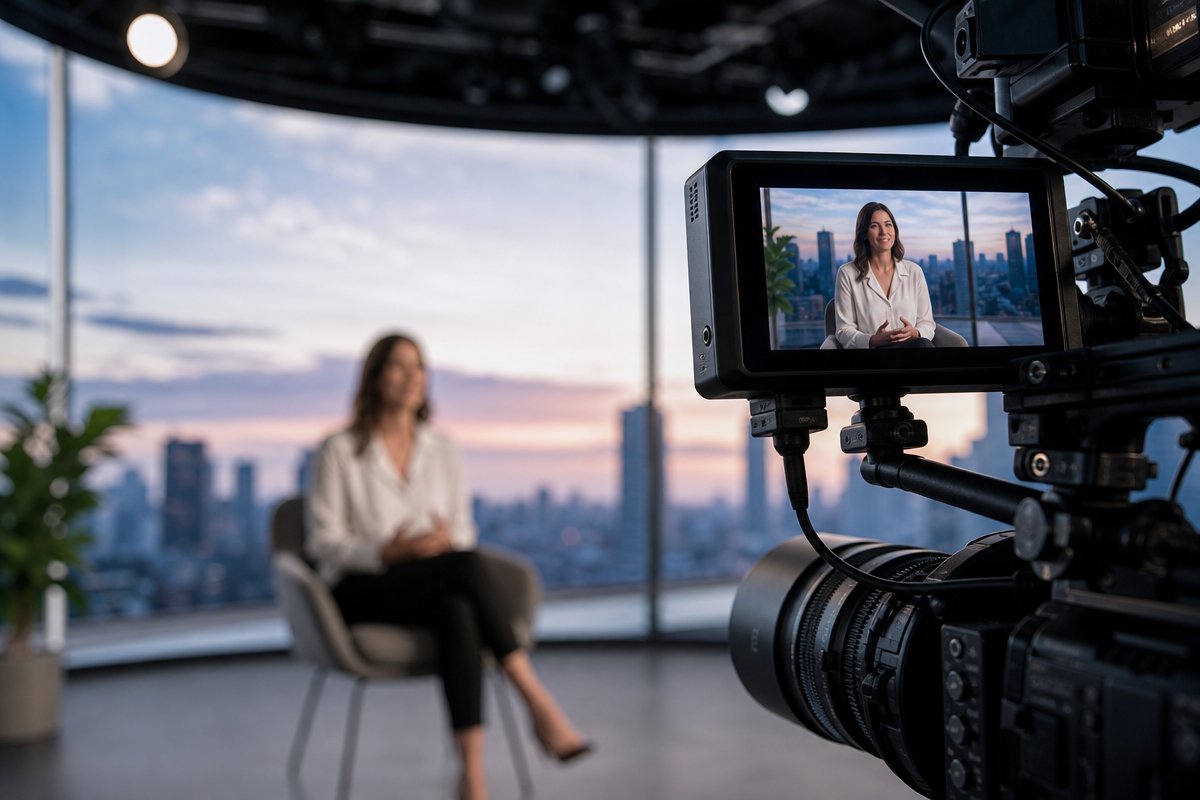
Cost is the first question every stakeholder asks, and it deserves a thorough answer. Virtual production does not magically eliminate every line item on a budget, but it restructures where your money goes—and in most corporate scenarios, it dramatically lowers total spend.
Eliminating Travel and Location Fees
Traditional corporate video projects that require multiple locations often pile up expenses in categories that have nothing to do with storytelling:
- Travel and lodging for crew, talent, and client stakeholders
- Location permits and insurance for each venue
- Transportation and logistics for equipment trucks and grip vans
- Catering and per-diem costs that multiply with each additional shoot day
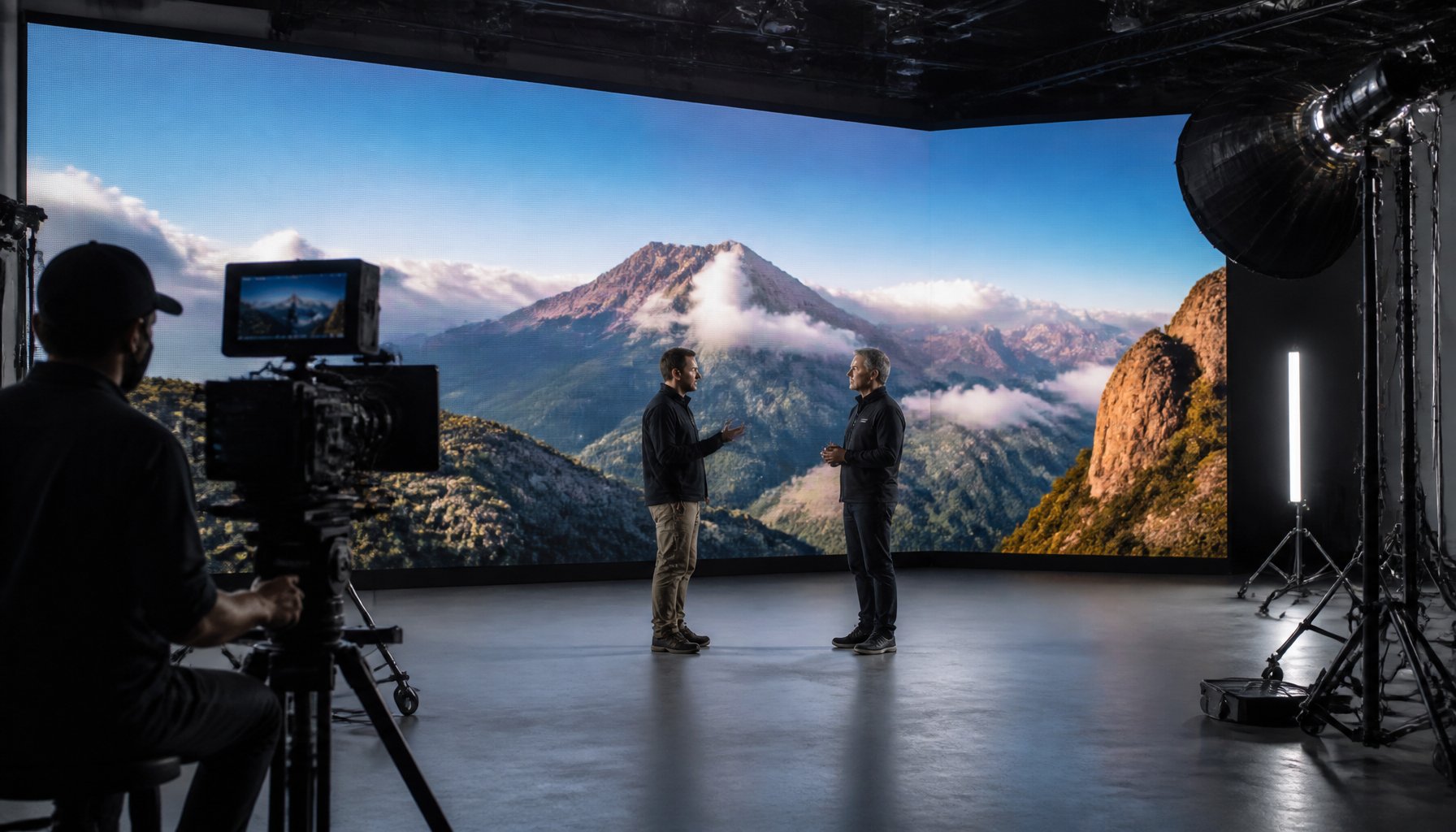
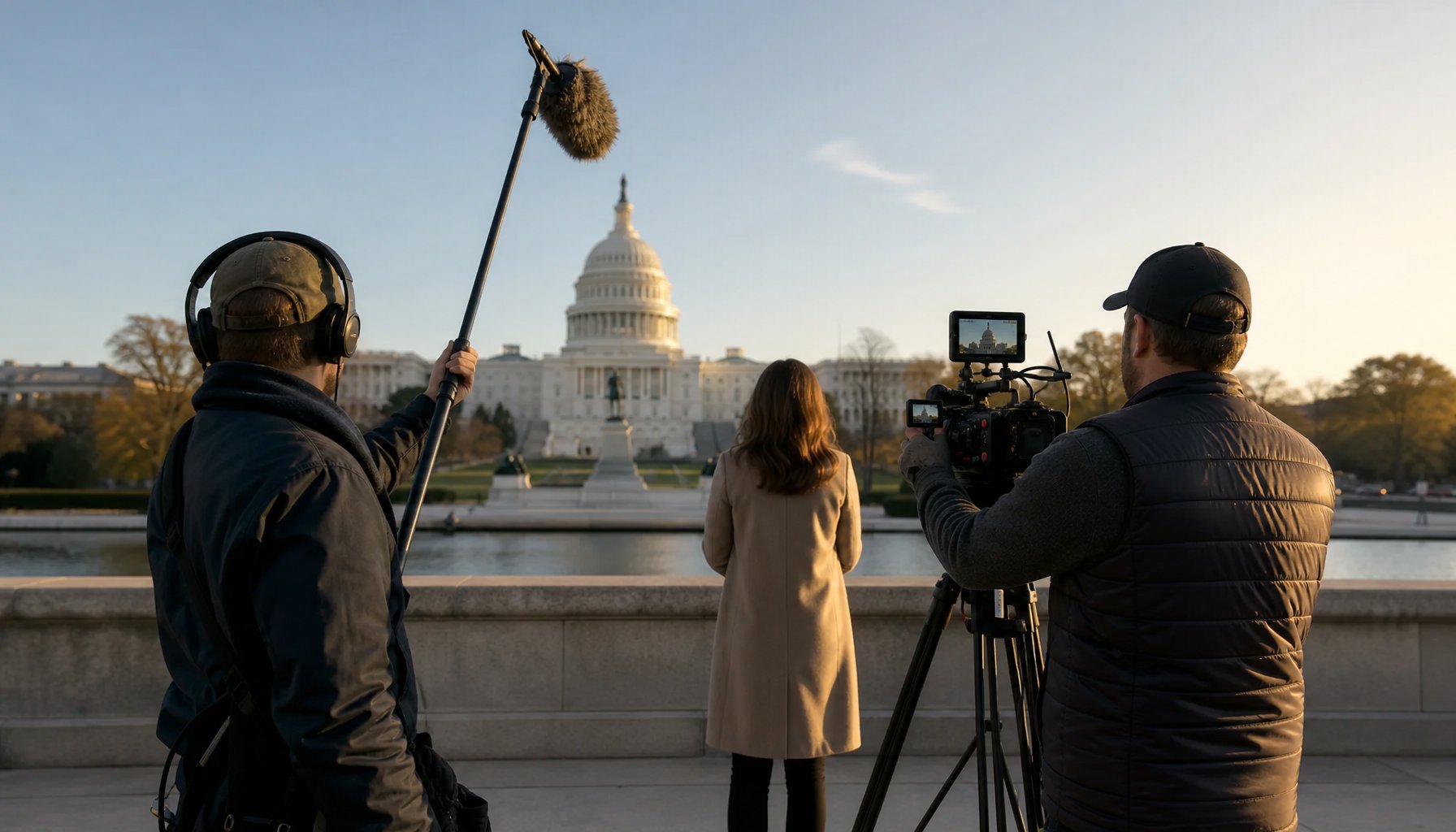
With an LED wall virtual production stage, every location exists digitally. A corporate headquarters lobby in Manhattan, a hospital corridor in Baltimore, a government building atrium in DC—these environments load onto the wall in minutes. Your crew stays in one studio. Your talent stays in one city. The savings on travel alone can recoup 20 to 40 percent of a traditional multi-location shoot budget.
Fewer Shoot Days, Lower Labor Costs
Because scene changes happen digitally rather than physically, virtual production shoots routinely accomplish in one day what would take three to five days on location. Fewer shoot days mean fewer billable crew hours, fewer equipment rental days, and less overtime. For corporate teams operating on fiscal-year budgets with hard caps, this compression is a strategic advantage—not just a convenience.
Reduced Post-Production Spend
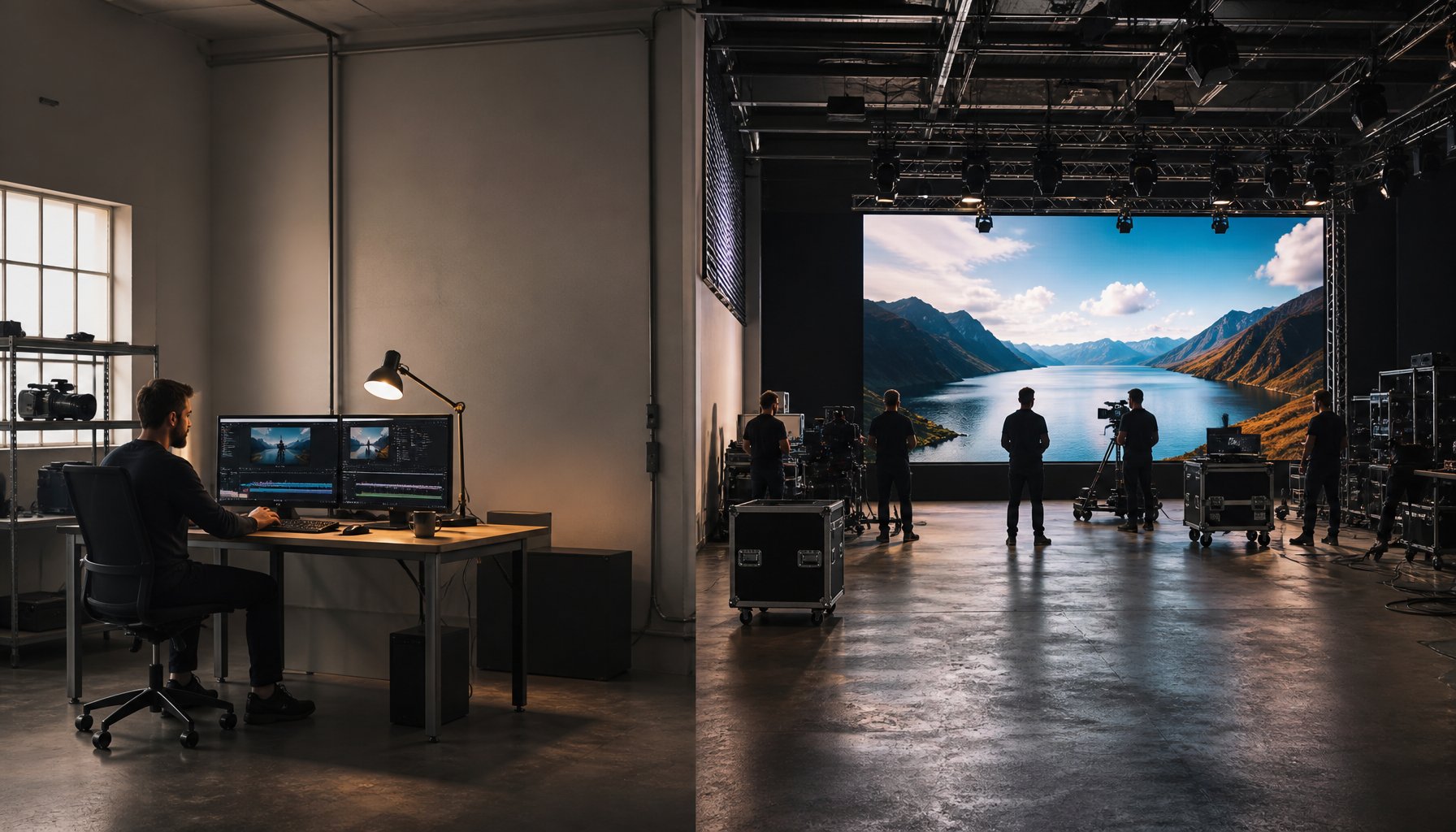
One often-overlooked benefit is what happens after the shoot. Because LED wall environments are captured in-camera—meaning the final background appears on screen during filming—there is far less compositing, rotoscoping, and color-correction work required in post. The footage you see on set is close to the footage you deliver. Post-production timelines can shrink by 30 to 50 percent, which translates directly to lower editing costs and faster delivery.
Accelerating Timelines Without Cutting Corners
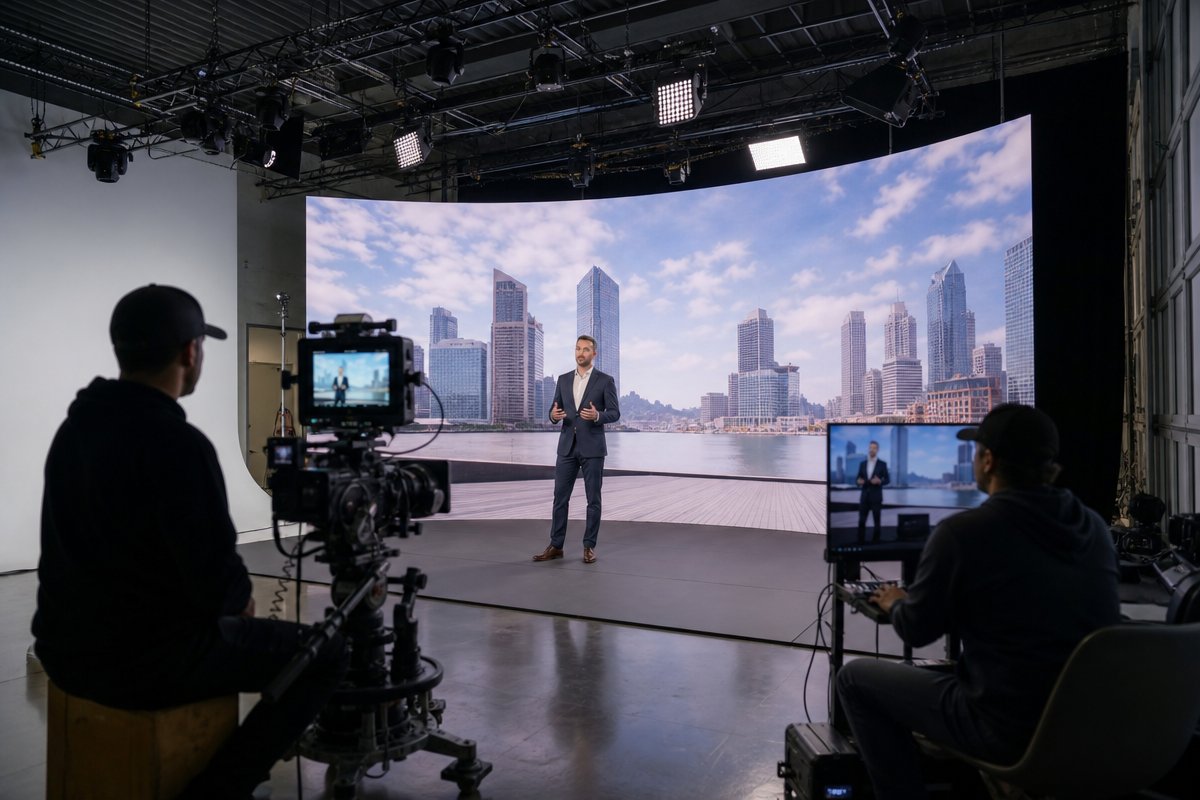
Speed matters in corporate communications. Product launches, regulatory announcements, quarterly earnings messages, internal change-management campaigns—these projects operate on deadlines that do not flex. Virtual production is purpose-built for speed, and here is why.
Pre-Production Becomes More Efficient
In a traditional shoot, pre-production involves scouting locations, negotiating permits, coordinating logistics across multiple sites, and building contingency plans for weather or access issues. In virtual production, pre-production focuses on designing and testing digital environments in Unreal Engine or similar platforms. This work can happen in parallel with script development and talent scheduling, collapsing the overall timeline.
Real-Time Decision Making on Set
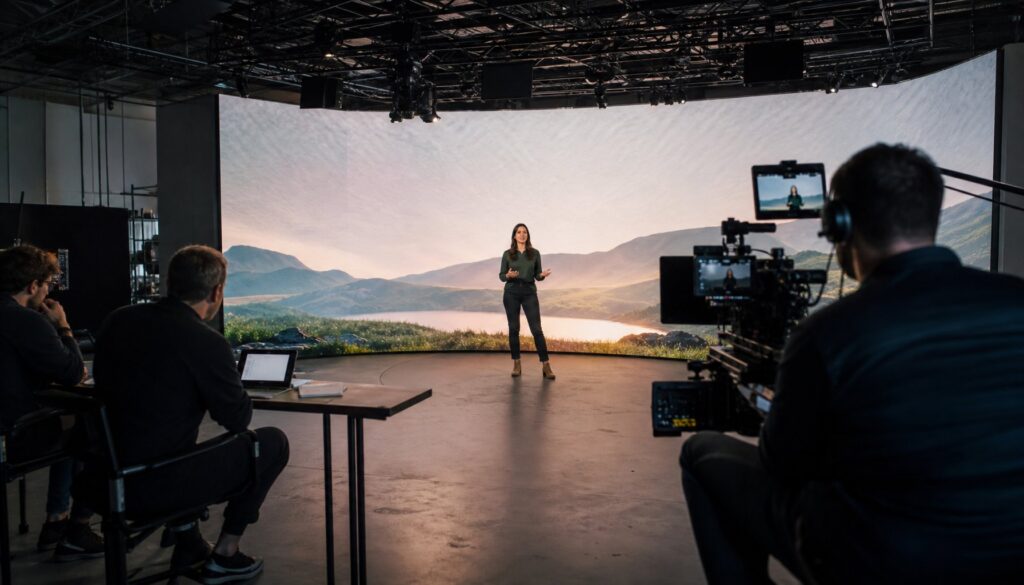
One of the most powerful advantages for corporate stakeholders is the ability to see the final image live during filming. There is no guessing what the composite will look like. The client, the director, and the brand team can stand on set, review the frame, and approve in real time. This eliminates costly revision cycles that plague traditional green-screen workflows, where the true background is not visible until weeks later in post-production.
Same-Day Environment Swaps
Need to film a CEO message against a sleek boardroom backdrop, then immediately pivot to a customer-testimonial setup in a modern retail environment, then close with a montage featuring international cityscapes? On an LED volume stage, these transitions happen in minutes. No trucks. No travel. No call sheets for separate days. This kind of agility is what makes virtual production especially valuable for corporate video programs that require multiple deliverables from a single production investment.
Elevating Production Value for Brand-Conscious Organizations
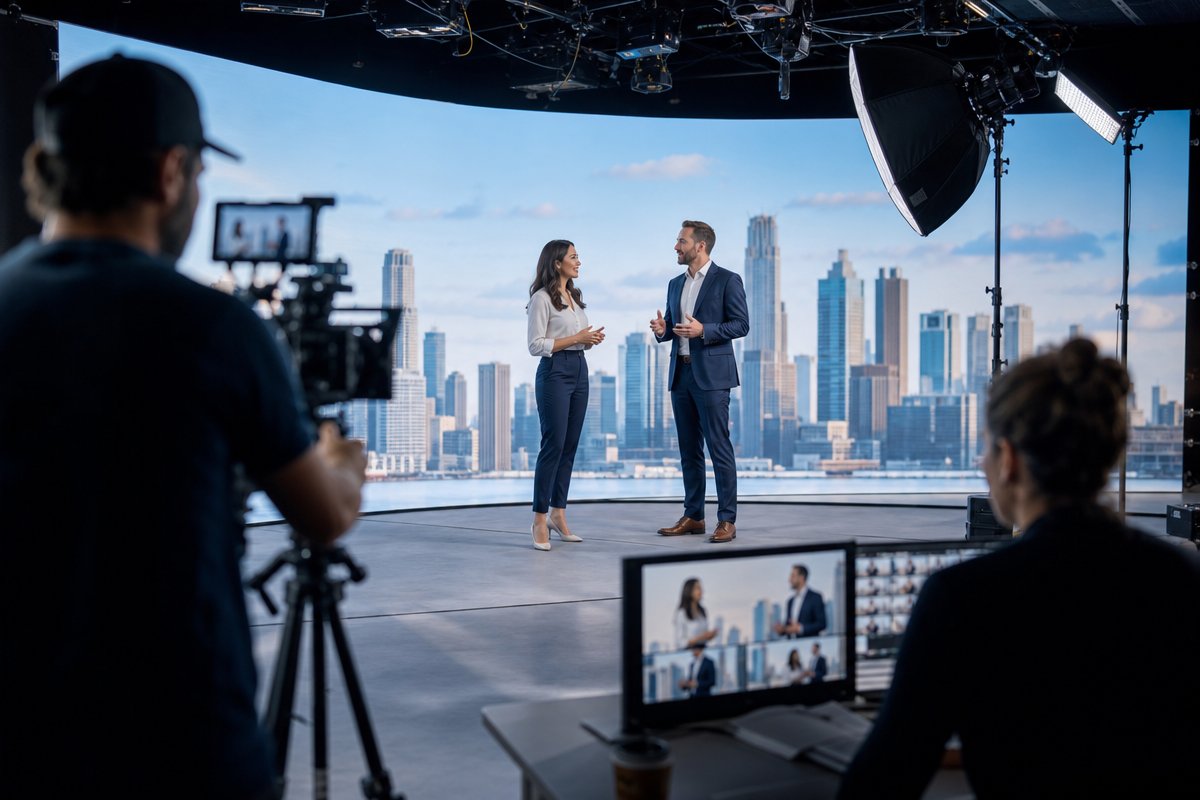
Corporate video is no longer competing only with other corporate video. Your audience compares your content to everything they watch—streaming shows, YouTube creators, social media ads. Virtual production closes the gap between corporate budgets and cinematic quality.
Cinematic Lighting and Reflections
LED walls do not just display a background image. They emit light that wraps naturally around talent, products, and set pieces. This creates realistic reflections on glass, metal, and skin that are nearly impossible to replicate with green screen. For corporate brands that feature physical products, executive spokespeople, or branded environments, this level of visual fidelity signals quality and credibility.
Brand Control at the Pixel Level
Every element on the LED wall is controllable. Want to ensure your brand colors appear accurately in the background skyline? Done. Need to swap a competitor’s logo out of a stock environment? Instant. Want to shift from daytime to golden hour without waiting six hours? A few keystrokes. This level of control is invaluable for corporate teams that operate under strict brand guidelines and cannot afford visual inconsistencies.
Consistency Across Multi-Video Campaigns
When you produce a series of videos—onboarding modules, product tutorials, leadership messages—visual consistency matters. Virtual production lets you lock in a look and replicate it perfectly across every episode. The lighting, the background, the color palette remain identical regardless of when each segment is filmed. This is nearly impossible to achieve when shooting on location across different days, seasons, or cities.
Strategic Scenarios Where Virtual Production Delivers the Highest ROI
Not every corporate video project needs virtual production. But for certain scenarios, it delivers outsized value. Here are the use cases where the business case is strongest.
Multi-Location Storytelling on a Single Budget
If your script calls for scenes in multiple cities, countries, or environments, virtual production eliminates the logistics and expense of traveling to each one. A financial services firm in DC can film scenes set in London, Hong Kong, and São Paulo without leaving the studio.
Recurring Content Programs
Organizations that produce monthly or quarterly video content—town halls, thought leadership series, training updates—benefit enormously from virtual production. The stage becomes a permanent, flexible set that adapts to each episode’s needs without rebuilding physical sets or booking new locations.
Sensitive or Restricted Environments
Government agencies, healthcare organizations, and defense contractors often need video content set in environments that are difficult or impossible to film in due to security, compliance, or patient-privacy concerns. Virtual production recreates these environments digitally, maintaining visual authenticity without exposing sensitive facilities to camera crews.
Time-Sensitive Announcements
When a corporate announcement must go out within days—a crisis response, a product recall update, a leadership transition message—virtual production’s compressed timeline is a strategic asset. You can concept, build the environment, film, and deliver polished content in a window that would be impossible with traditional location production.
What Corporate Video Teams Should Know Before Going Virtual
Virtual production is powerful, but it works best when teams approach it with the right expectations and preparation.
- Start with a creative brief, not a technology wish list. Define your story and visual goals first. The technology serves the narrative, not the other way around.
- Choose a studio with corporate experience. Not all virtual production facilities understand the needs of corporate clients—brand compliance, executive comfort, approval workflows, and deliverable formats. Work with a partner that speaks your language.
- Plan your digital environments early. The earlier you begin designing LED wall content, the more time your team has to review, revise, and approve before the shoot day.
- Budget for a technical director. LED wall shoots require a real-time engine operator who manages the digital environments during filming. This role is essential and should be factored into your production plan.
- Think in series, not singles. The ROI of virtual production increases significantly when you plan multiple videos or a recurring content program around a single stage setup.
Frequently Asked Questions About Virtual Production for Corporate Video
Is virtual production only for large enterprise budgets?
No. While virtual production was initially associated with Hollywood-scale budgets, the technology has become far more accessible. Mid-sized corporations, nonprofits, and government agencies routinely use LED wall studios for corporate video projects. The cost savings on travel, locations, and post-production often make virtual production less expensive than traditional multi-location shoots. Studios like TriVision Studios offer packages scaled to corporate budgets.
How does virtual production affect the quality of the final video?
It elevates it. Because backgrounds are captured in-camera with accurate lighting and reflections, virtual production footage often looks more polished than green-screen composites. Corporate videos benefit from cinematic depth of field, natural light interaction, and pixel-level brand control that traditional methods struggle to match.
Can we use virtual production for a single short video, or is it only worth it for large projects?
You can absolutely use it for a single video, especially if that video would otherwise require travel to multiple locations or access to restricted environments. However, the return on investment is highest when you plan multiple deliverables—a series of videos, a campaign, or a recurring content program—around a single virtual production session.
What types of corporate videos work best with virtual production?
Executive messaging, product launches, training and onboarding series, brand storytelling, recruitment videos, and thought leadership content all perform exceptionally well. Any project that requires controlled environments, multiple visual settings, or a polished cinematic look is a strong candidate.
How long does a typical virtual production shoot take compared to traditional filming?
Most corporate virtual production projects that would require three to five traditional shoot days can be completed in one to two days on an LED volume stage. The time savings come from instant environment changes, real-time client approval, and reduced setup and teardown between scenes.
Do we need to provide our own digital environments, or does the studio create them?
A full-service virtual production partner handles environment design as part of the production process. You provide creative direction and brand assets; the studio’s technical team builds, tests, and optimizes the digital environments for the LED wall. This is a collaborative process that typically begins during pre-production.
Make the Business Case for Virtual Production
The virtual production benefits for corporate video are not theoretical—they are measurable. Lower costs, faster timelines, higher production value, and greater creative control add up to a compelling business case for any corporate video team operating under real-world budget and deadline pressures.
If your organization is producing video content in the Washington DC, Richmond, Baltimore, or New York City area, TriVision Studios offers a full-service virtual production experience built specifically for corporate, government, and nonprofit clients. From environment design and LED wall filming to post-production and final delivery, TriVision’s team handles every stage of the process so your internal team can focus on the message, not the logistics.
Ready to see what virtual production can do for your next corporate video project? Contact TriVision Studios to schedule a consultation and get a customized production plan tailored to your goals, timeline, and budget.