You have a video project on the horizon—maybe a corporate brand film, a training series, or a commercial that needs to make a real impact. Now comes the decision that trips up countless organizations: should you hire a video production company vs freelancer? It is one of the most common questions we hear from clients across Washington DC, Northern Virginia, Baltimore, and Richmond. And the honest answer is that both options have genuine merit depending on your goals, timeline, and budget.
According to a 2026 Wyzowl survey, 91% of businesses now use video as a marketing tool, and the demand for professional video content has never been higher. That surge means more freelancers are entering the market and more production companies are scaling their capabilities. The real challenge is not finding someone to shoot your video—it is finding the right fit for the specific project in front of you.
This guide breaks down the key differences, advantages, and trade-offs so you can make an informed decision before you sign a contract or send a deposit.
Understanding the Core Difference: Video Production Company vs Freelancer
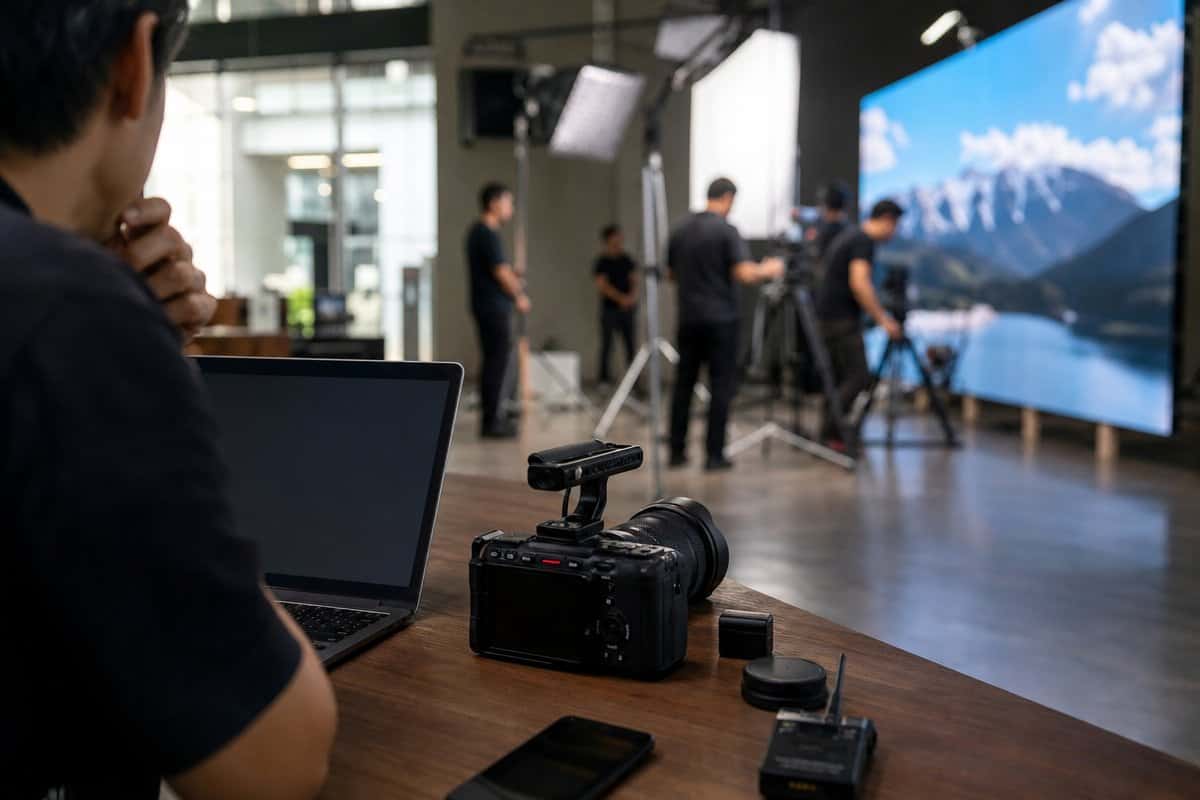
Before weighing pros and cons, let us define what each option actually looks like in practice.
What a Freelance Videographer Brings to the Table
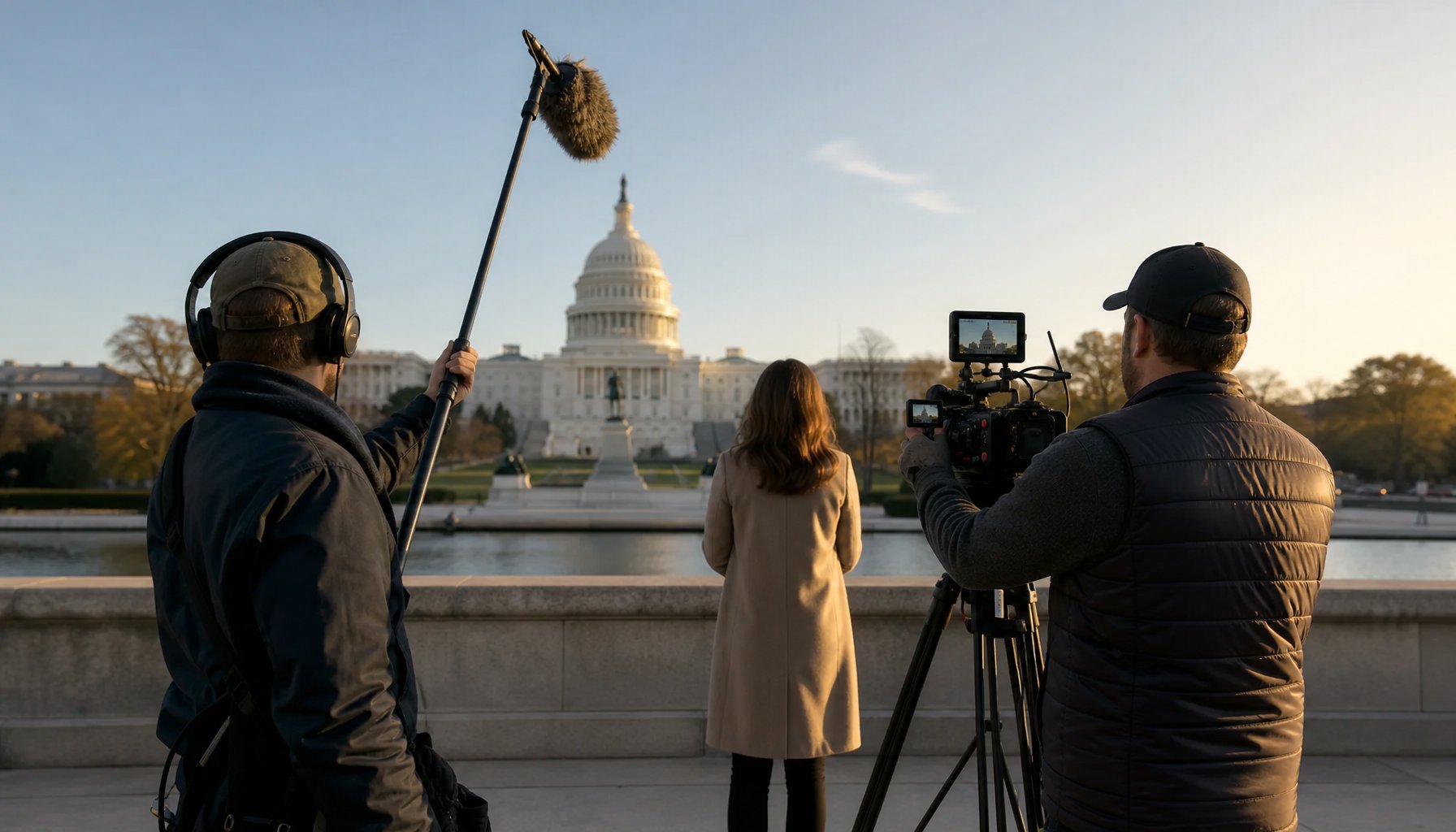
A freelancer is typically a single professional—sometimes with one or two subcontractors—who handles multiple roles on a shoot. They might operate the camera, set up lighting, capture audio, and handle basic editing. Many freelancers specialize in a particular niche, like event videography, social media content, or documentary-style interviews.
- Solo or micro-crew operation: Usually one to two people on set
- Owner-operator model: The person you hire is the person doing the work
- Flexible scheduling: Often available on shorter notice
- Lower overhead: No studio rent, large staff, or enterprise-level equipment inventory
What a Full-Service Production Company Offers
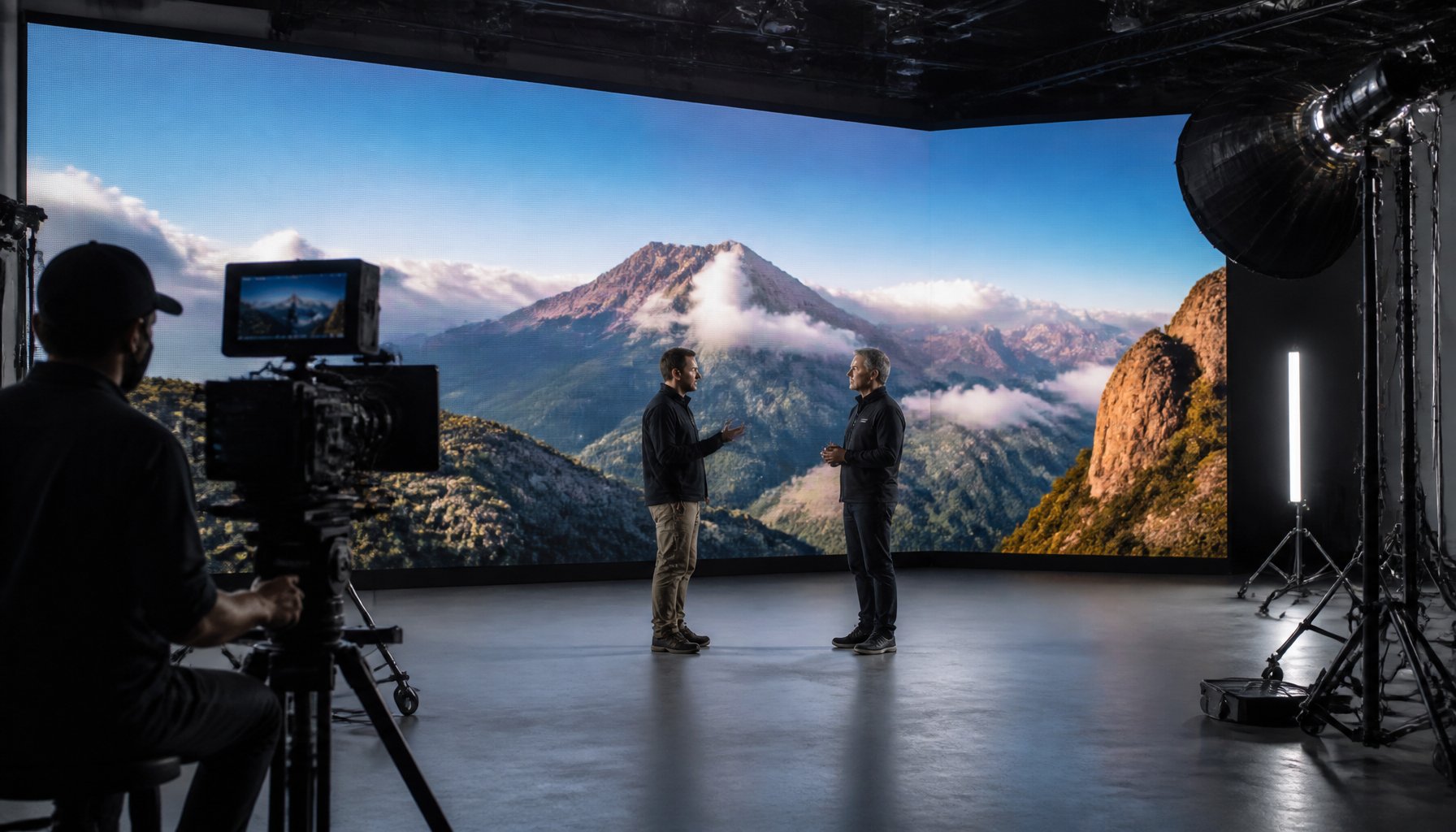
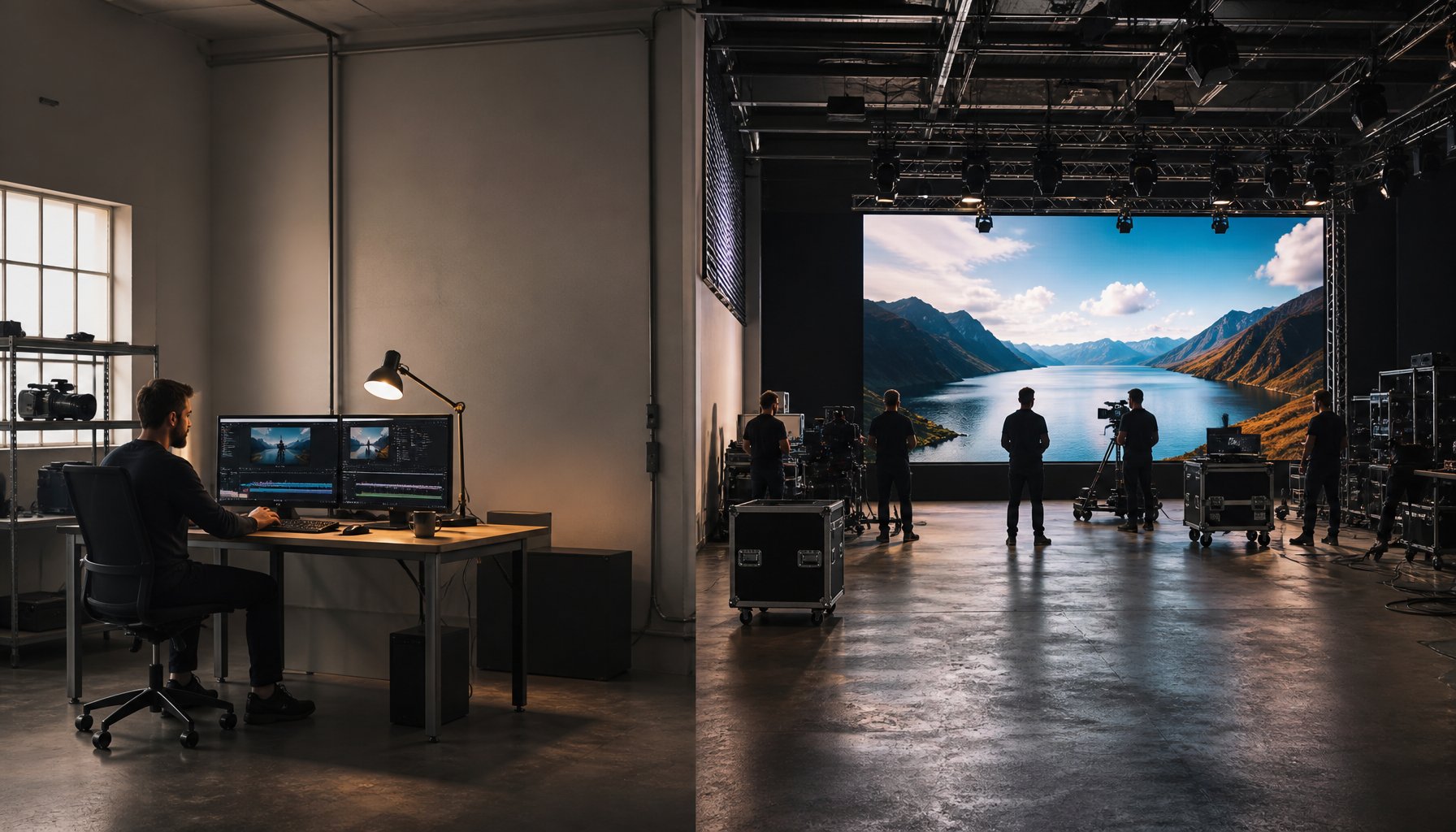
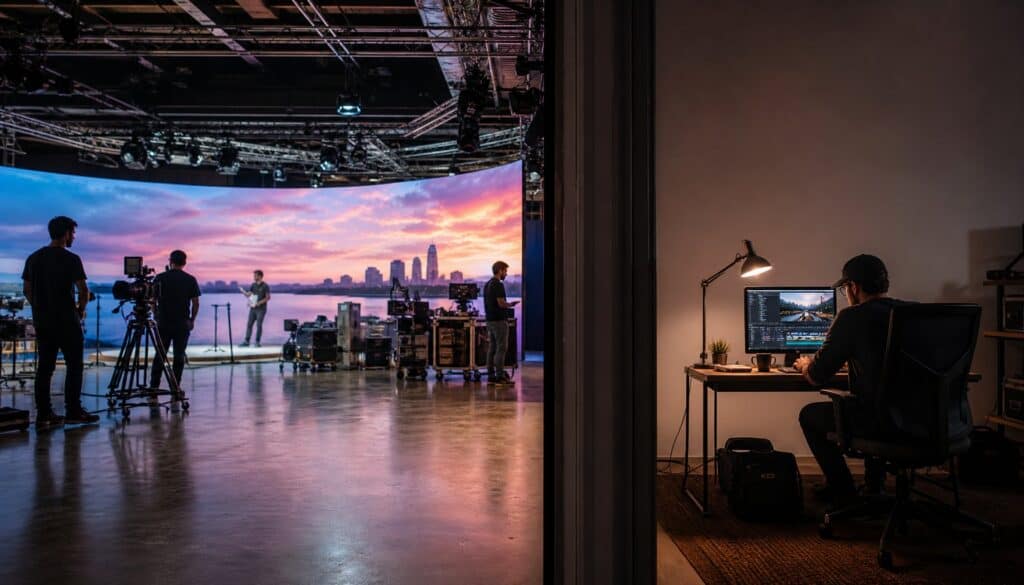
A video production company is a team-based operation with dedicated specialists for every phase of the production process—strategy, pre-production, filming, post-production, and distribution. Companies like TriVision Studios maintain in-house studios, advanced equipment (including LED wall virtual production stages), and creative teams that include directors, producers, cinematographers, editors, motion graphics artists, and sound designers.
- Multi-department capabilities: Strategy, scripting, shooting, editing, animation, color grading, and sound mixing under one roof
- Scalable crew sizes: From a lean two-person interview setup to a 15-person commercial production
- Professional project management: Dedicated producers who manage timelines, budgets, and client communication
- Studio access: In-house facilities for controlled, repeatable shooting environments
When Hiring a Freelancer Makes Sense
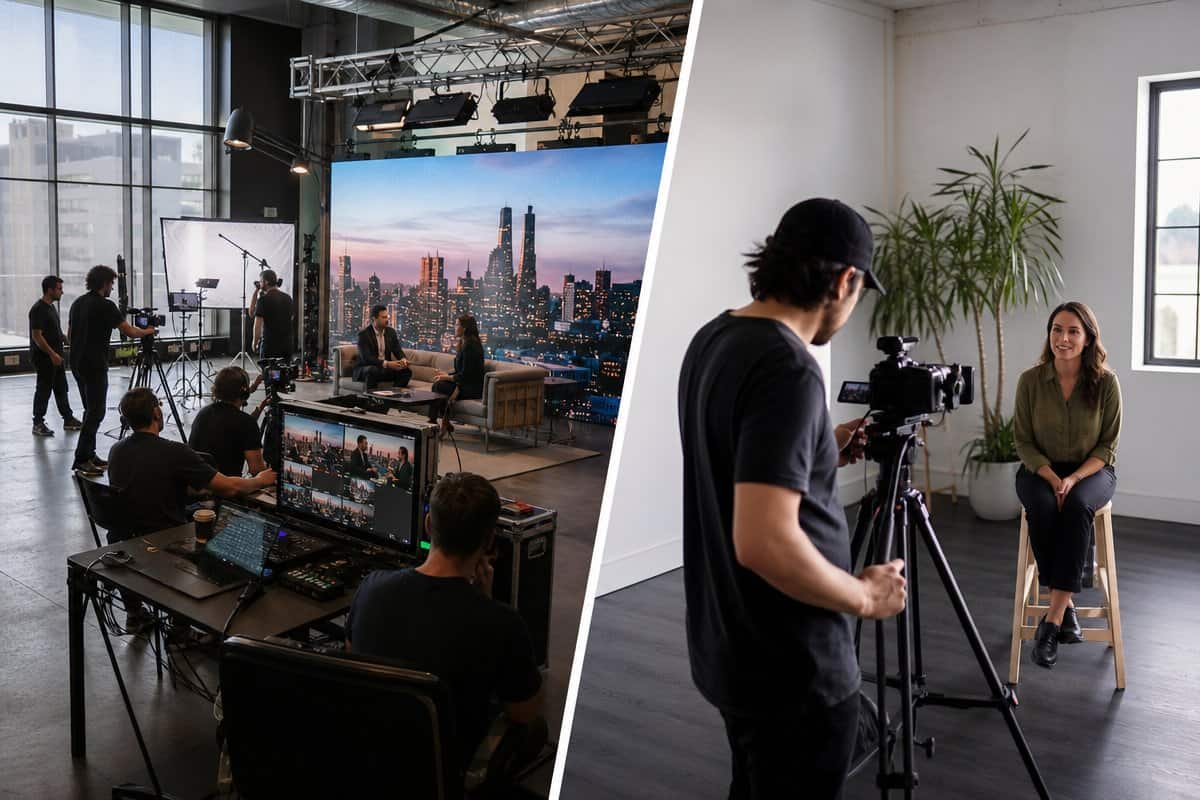
Freelancers are not a lesser option—they are a different option. For certain projects, a skilled freelancer is exactly the right call.
Small-Scale or Simple Projects
If you need a single talking-head interview, a short social media clip, or behind-the-scenes event coverage, a freelancer can deliver quality results efficiently. These projects do not require elaborate pre-production planning, multi-camera setups, or complex post-production pipelines.
Tight Budgets with Flexible Expectations
Startups, small businesses, and organizations testing the waters with video for the first time may not have the budget for a full production team. A freelancer can help you get usable content at a lower price point. Just be realistic about what that budget will yield in terms of production value, revisions, and turnaround time.
Ongoing Content Creation
Some organizations hire a freelancer on retainer for consistent, lightweight content—weekly social posts, internal updates, or simple product demos. When the creative direction is already established and the deliverables are templated, a single skilled operator can maintain a steady content cadence.
Potential Limitations to Consider
- Single point of failure: If your freelancer gets sick, has a gear malfunction, or faces a scheduling conflict, there is no backup crew
- Limited specialization: One person cannot be an expert cinematographer, audio engineer, colorist, and motion graphics artist simultaneously
- Scalability constraints: Complex projects with multiple locations, talent, and deliverables can overwhelm a solo operator
- Inconsistent quality control: Without a producer or creative director reviewing work, the final product may not match your brand standards
When a Video Production Company Is the Better Choice
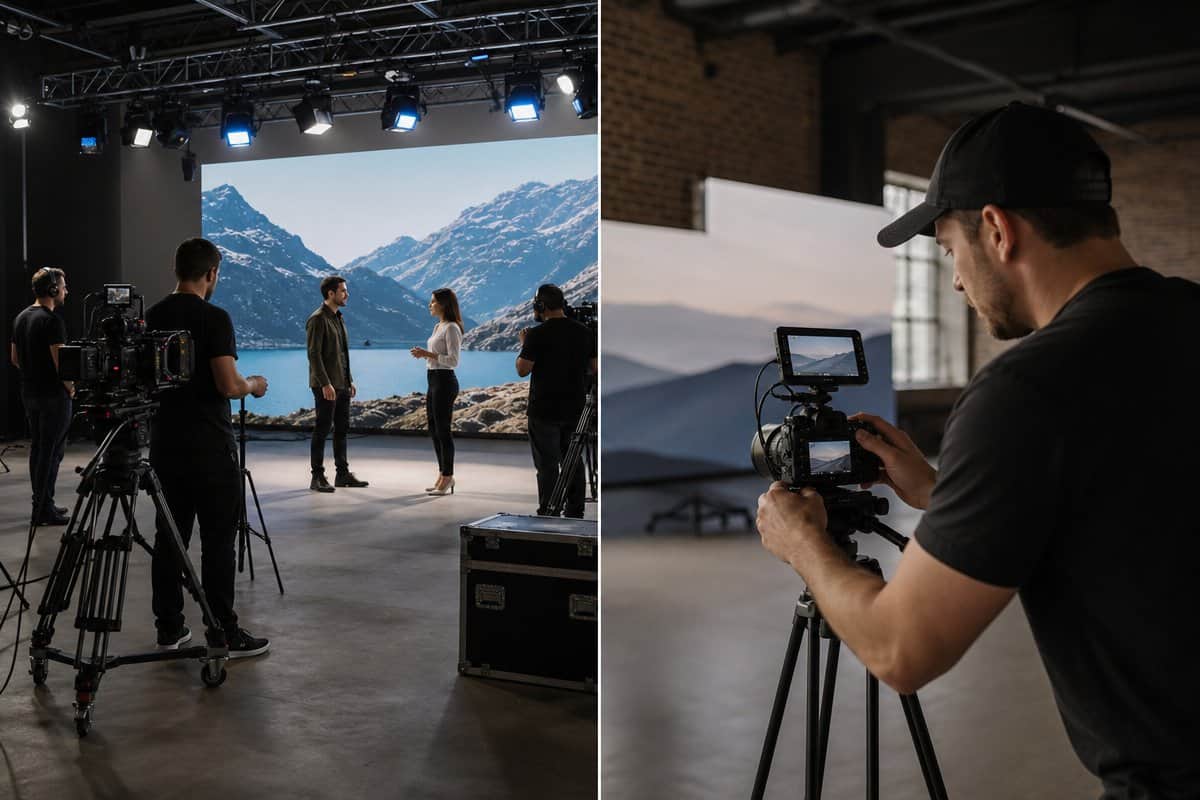
For projects where the stakes are high, the scope is complex, or the content needs to represent your brand at the highest level, a production company provides a level of infrastructure and expertise that a single freelancer simply cannot replicate.
High-Stakes Brand and Marketing Videos
When your video will be seen by thousands—or millions—of people, production value matters. Commercials, brand films, fundraising campaigns, and recruitment videos need cinematic quality, polished scripting, professional talent direction, and seamless post-production. A production company brings a team of specialists who each elevate their piece of the puzzle.
Government and Corporate Compliance Projects
Government agencies and large corporations often have strict compliance requirements around accessibility (closed captions, audio descriptions), branding consistency, and security clearances. A production company experienced in this space—like TriVision Studios, which regularly serves federal agencies and large nonprofits in the DC area—understands these requirements from day one and builds them into the production workflow.
Multi-Deliverable Projects
Need a full-length documentary and a 30-second social cut and a series of animated explainers from the same source material? A production company has the editing, animation, and motion graphics teams to create multiple deliverables from a single shoot day, maximizing your return on investment.
Projects Requiring Studio or Virtual Production
If your project calls for a controlled studio environment—or cutting-edge virtual production with LED wall technology—you need a company with the facilities, technical knowledge, and crew to execute. This is not something a freelancer with a DSLR and a gimbal can deliver, no matter how talented they are.
Advantages at a Glance
- Redundancy and reliability: Equipment backups, crew backups, and institutional knowledge that does not walk out the door with one person
- Creative depth: Multiple creative minds collaborating on concept, script, and visual approach
- End-to-end project management: A dedicated producer handling logistics so you can focus on your business
- Post-production excellence: Color grading, sound design, motion graphics, and animation done by specialists
- Legal and contractual protections: Formal contracts, insurance, usage rights, and deliverable specifications
The Real Factors That Should Drive Your Decision
Forget the binary debate. The right choice depends on your specific situation. Here are the factors that actually matter.
1. Project Scope and Complexity
A single-camera interview at your office? Freelancer territory. A multi-location commercial with scripted scenes, professional actors, and a 60-second broadcast cut plus social edits? That is production company territory.
2. Brand Reputation Risk
Ask yourself: what happens if this video falls flat? If a mediocre result would embarrass your organization, damage your brand, or waste a significant budget, invest in the team that can guarantee the outcome. Production companies carry insurance, have quality control processes, and stake their reputation on every project.
3. Timeline and Turnaround
Freelancers can sometimes move faster for simple projects because there is less coordination overhead. But for complex projects with tight deadlines, a production company can assign multiple editors, animators, and producers to work in parallel—something a single freelancer physically cannot do.
4. Budget (But Not Just the Dollar Amount)
Yes, freelancers generally charge less per day. But consider the total cost of ownership. If a freelancer delivers footage that needs to be re-edited by someone else, or if a shoot has to be redone because of audio issues, the savings evaporate. A production company’s higher day rate often includes project management, revisions, and quality assurance that prevent costly do-overs.
5. Long-Term Relationship Potential
If you need a one-off video every couple of years, either option works. But if video is becoming a strategic pillar for your organization—and in 2026, it should be—a production company can serve as a long-term creative partner who understands your brand, your audience, and your goals over time.
A Hybrid Approach: The Best of Both Worlds
Here is something most comparison articles will not tell you: many organizations use both. A production company handles the flagship projects—brand films, commercials, training series, event livestreams—while a freelancer covers the day-to-day social content and quick-turnaround internal videos.
This hybrid model works particularly well for organizations in Washington DC, Northern Virginia, Baltimore, and Richmond where there is a robust talent pool of freelancers and established production companies like TriVision Studios that can anchor the high-impact work.
The key is being intentional. Assign each project to the resource that matches its scope, stakes, and complexity. Do not ask a freelancer to do a production company’s job, and do not pay production company rates for a project that genuinely only needs one person.
Frequently Asked Questions
Is a freelance videographer always cheaper than a video production company?
Not necessarily. A freelancer’s day rate is typically lower, but the total project cost depends on scope. If a project requires multiple shoot days, extensive editing, motion graphics, and revisions, costs can add up quickly—sometimes exceeding what a production company would charge for the same deliverables with better quality control. Always compare quotes based on the full scope of work, not just the daily rate.
Can a freelancer deliver the same quality as a production company?
For simple projects—yes, absolutely. A talented freelancer with professional gear can produce excellent interview content, event coverage, and social media videos. However, for projects requiring cinematic production value, multi-camera setups, studio environments, advanced post-production, or animation, a production company’s team of specialists will deliver a noticeably higher-quality result.
How do I know if my project is too complex for a freelancer?
Ask yourself these questions: Does the project involve scripted content with professional talent? Will it require more than two camera angles? Do I need motion graphics, animation, or advanced color grading? Is the video representing my brand to a large external audience? Will it need to meet compliance or accessibility standards? If you answered yes to two or more, you likely need a production company.
What should I look for when vetting either option?
For both freelancers and production companies, review their portfolio for work similar to your project. Ask for references from past clients in your industry. Confirm they carry liability insurance. For production companies, ask about their project management process, revision policy, and who will be your point of contact. For freelancers, ask about backup plans for equipment failure or scheduling conflicts.
Do production companies work with government agencies and nonprofits?
Yes—and this is an area where choosing a production company with specific experience matters significantly. Government projects often require security clearances, Section 508 accessibility compliance, and adherence to strict branding guidelines. Nonprofits need compelling storytelling on tight budgets. TriVision Studios, for example, has deep experience serving both federal agencies and nonprofit organizations across the DC metro area.
Can I start with a freelancer and switch to a production company later?
You can, but be aware of potential challenges. Brand consistency can suffer if the visual style, tone, and quality shift dramatically between your earlier freelancer-produced content and your new production company work. If you are planning to scale your video efforts, starting with a production company—even on a smaller initial project—can establish a visual standard and creative relationship that grows with you.
Making the Right Choice for Your Next Project
The video production company vs freelancer debate does not have a universal answer. It has your answer—and that answer depends on the project in front of you right now. A talented freelancer is a smart choice for simple, budget-conscious projects. A full-service production company is the right investment when the stakes are high, the scope is complex, and the content needs to perform at the highest level.
If you are in Washington DC, Northern Virginia, Baltimore, or Richmond and you are weighing your options for an upcoming video project, TriVision Studios is here to help. Whether you need a full-service production team for a major campaign or guidance on the right approach for your budget, our team brings the experience, equipment, and creative expertise to deliver results. Reach out to start a conversation about your next project.