You have a video project on the horizon, a budget approved, and stakeholders asking the same question: how long is this actually going to take? Understanding the video production timeline—and how long it takes from kickoff to final delivery—is one of the most critical planning steps organizations overlook. According to a 2026 Wyzowl survey, 91% of businesses now use video as a marketing tool, yet nearly half report that unclear timelines are a leading source of project friction. Whether you need a quick social media spot or a multi-part documentary series, knowing what to expect at each phase helps you set realistic deadlines, align internal teams, and get a better end product.
Below, we break down realistic production schedules for different video types, the phases that determine your timeline, and the factors that can speed things up or slow them down.
The Three Core Phases of Every Video Production Timeline
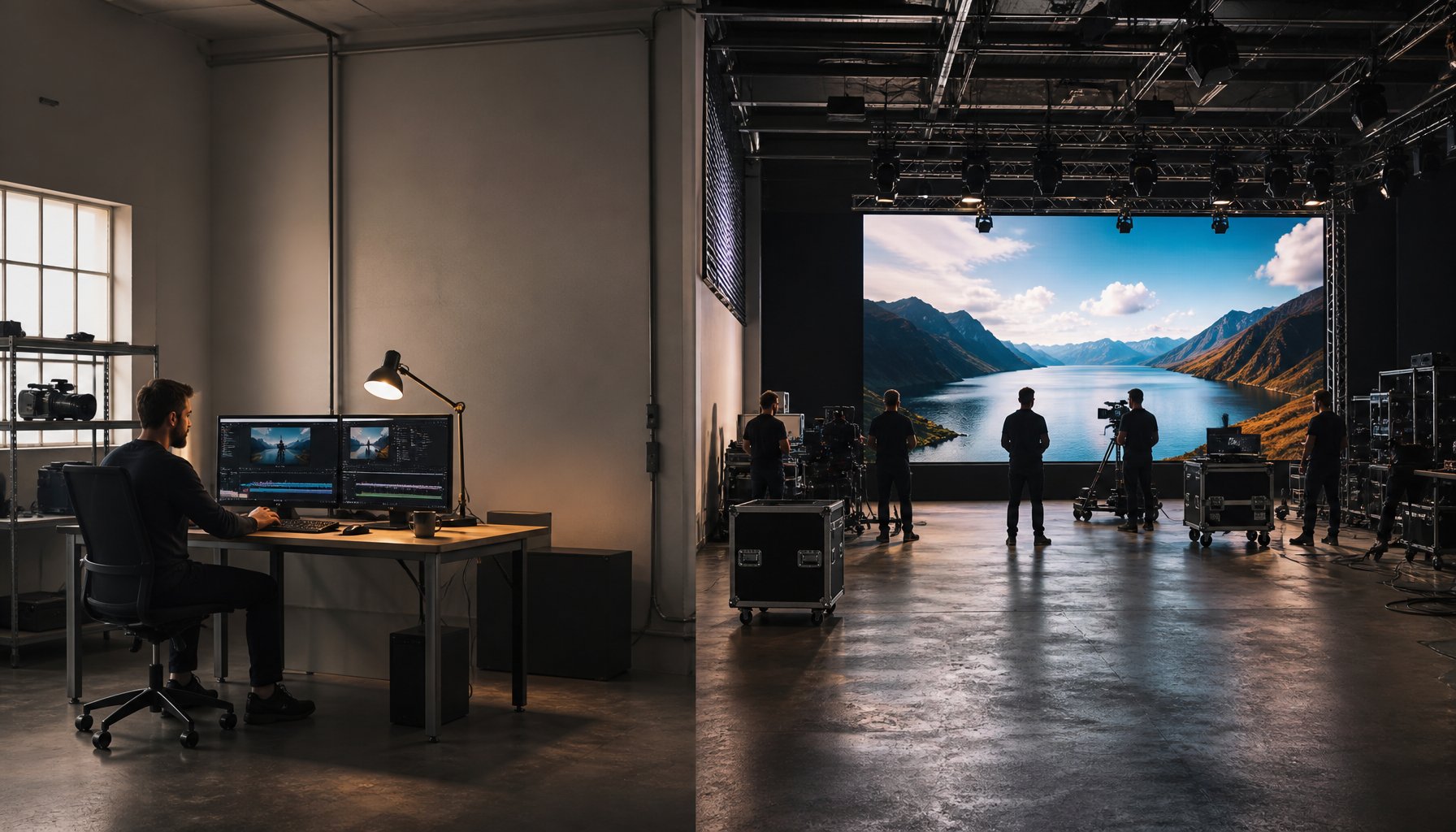
No matter the scope, every video project moves through three fundamental stages: pre-production, production, and post-production. The amount of time spent in each phase varies dramatically depending on the type of video, the number of stakeholders, and the complexity of the creative vision. Here is what each phase involves and why it matters for your schedule.
Pre-Production: Planning and Strategy
Pre-production is the foundation. It includes everything that happens before the camera rolls:
- Discovery and creative brief development — aligning on goals, audience, messaging, and distribution strategy
- Scriptwriting and storyboarding — drafting, reviewing, and finalizing the narrative
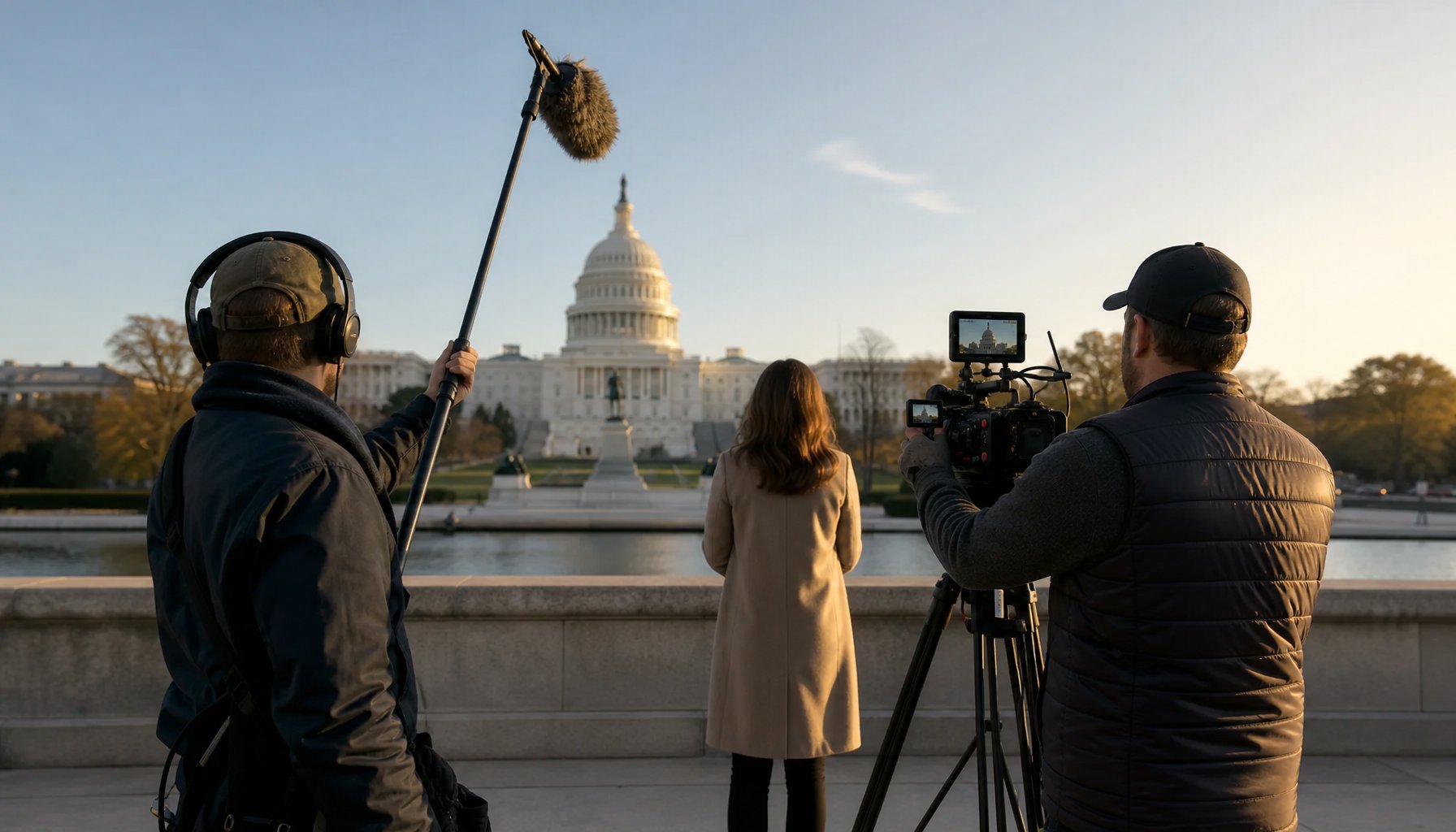
- Location scouting and logistics — securing venues, permits, and travel arrangements in cities like Washington DC, Baltimore, Richmond, or NYC
- Talent casting and scheduling — booking on-screen talent, interviewees, or voice-over artists
- Technical planning — determining equipment needs, lighting setups, and crew assignments
For most projects, pre-production takes anywhere from one to six weeks. The biggest variable? Internal review cycles. Organizations with multiple approval layers should budget extra time here.
Production: The Shoot
Production is the actual filming. Depending on complexity, this could be a single half-day session in a controlled studio environment or multiple shoot days across various locations. Key activities include:
- Setting up lighting, audio, and camera equipment
- Directing on-camera talent and conducting interviews
- Capturing B-roll footage, product shots, or event coverage
- Managing on-set logistics, wardrobe, and continuity
Shoot days typically range from one to five days for most corporate and marketing projects, though documentaries and commercial campaigns can require significantly more.
Post-Production: Editing and Delivery
Post-production is where raw footage becomes a polished final product. This phase includes:
- Rough cut assembly — building the initial edit structure
- Color grading and audio mixing — refining the visual and sonic quality
- Motion graphics and animation — adding titles, lower thirds, branded elements, or animated sequences
- Review rounds — incorporating client feedback across one to three revision cycles
- Final export and delivery — outputting files optimized for web, broadcast, social, or internal use
Post-production usually takes two to eight weeks, depending on the edit complexity and how quickly feedback comes back from your team.
Realistic Timelines by Video Type
One of the most common misconceptions is that all videos take the same amount of time. A 60-second social media ad and a 30-minute training series operate on entirely different schedules. Here is a realistic breakdown:
Quick-Turn Social or Internal Videos: 2–3 Weeks
These are short-form videos—typically under two minutes—designed for social media, internal announcements, or event teasers. The scope is intentionally lean:
- Pre-production: 3–5 days (brief, lightweight scripting, minimal logistics)
- Production: Half-day to one full shoot day
- Post-production: 5–7 days (simple edit, one to two review rounds)
Quick-turn timelines work best when the creative direction is clear from the start and approval chains are short. Organizations in fast-moving environments—tech startups, advocacy groups responding to policy news, or brands capitalizing on timely moments—often rely on this cadence.
Marketing and Corporate Videos: 4–6 Weeks
This is the sweet spot for most corporate and marketing video production projects. Think brand stories, product launch videos, recruitment films, or executive thought leadership pieces.
- Pre-production: 1–2 weeks (strategy session, script drafts, location scouting, talent coordination)
- Production: 1–2 shoot days
- Post-production: 2–3 weeks (polished edit, motion graphics, music licensing, two to three review rounds)
This timeline assumes a reasonably streamlined approval process. If your organization requires legal review, compliance checks, or executive sign-off at multiple stages, add an extra one to two weeks.
Commercials and PSAs: 5–8 Weeks
Commercials and public service announcements demand higher production value: cinematic lighting, professional talent, precise scripting, and often broadcast-standard deliverables. The timeline reflects that polish:
- Pre-production: 2–3 weeks (concept development, storyboarding, casting, location permits)
- Production: 1–3 shoot days (often with larger crews and more complex setups)
- Post-production: 2–3 weeks (color grading, sound design, VFX, broadcast spec delivery)
For organizations producing TV spots or digital ad campaigns in competitive markets like the DC metro area, this phase-by-phase discipline ensures the final product meets the quality bar audiences and networks expect.
Training and Educational Videos: 4–8 Weeks
Training videos can range from straightforward talking-head presentations to complex multi-module series with animations, screen recordings, and scenario-based learning. The timeline depends heavily on volume:
- Pre-production: 1–3 weeks (content outline, subject matter expert interviews, script approval)
- Production: 1–3 shoot days (often batched across multiple modules)
- Post-production: 2–4 weeks (editing multiple deliverables, adding graphics, accessibility features like captions)
Government agencies, healthcare organizations, and educational institutions frequently work on training video series where the content must be accurate and compliant. Building in extra review time for subject matter experts is essential.
Documentary Projects: 8–14 Weeks (or More)
Documentaries are the most variable format. A short five-minute mini-doc might take two months, while a feature-length or multi-episode series can stretch across six months or longer. A realistic range for a mid-length documentary:
- Pre-production: 2–4 weeks (research, interview scheduling, travel logistics, creative treatment)
- Production: 1–3 weeks of shooting (often spread over weeks or months to capture unfolding events)
- Post-production: 4–6 weeks (narrative assembly, archival footage licensing, scoring, multiple review rounds)
Documentary timelines are especially sensitive to external factors—interviewee availability, access to locations, and the evolving nature of the story itself. Flexibility and trust between the production team and the client are non-negotiable.
Factors That Accelerate or Delay Your Timeline
Even within the ranges above, several variables can push your project forward or pull it back. Understanding these factors gives you more control over your schedule.
Factors That Speed Things Up
- A clear creative brief from day one — The more specific your goals, audience, and messaging, the less time spent in discovery.
- Consolidated feedback — Designating a single point of contact for approvals eliminates conflicting revision requests and reduces round-trip time.
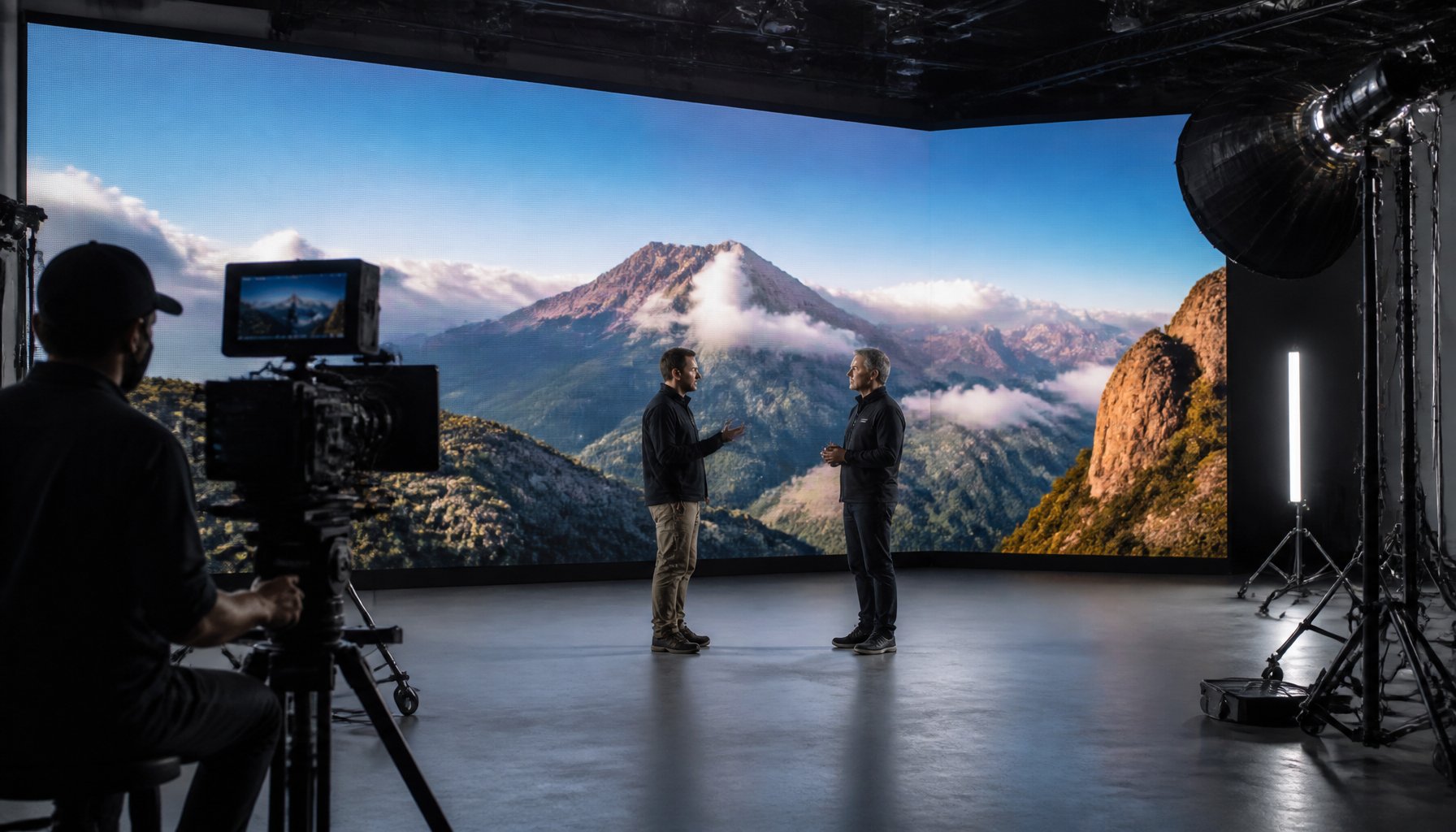
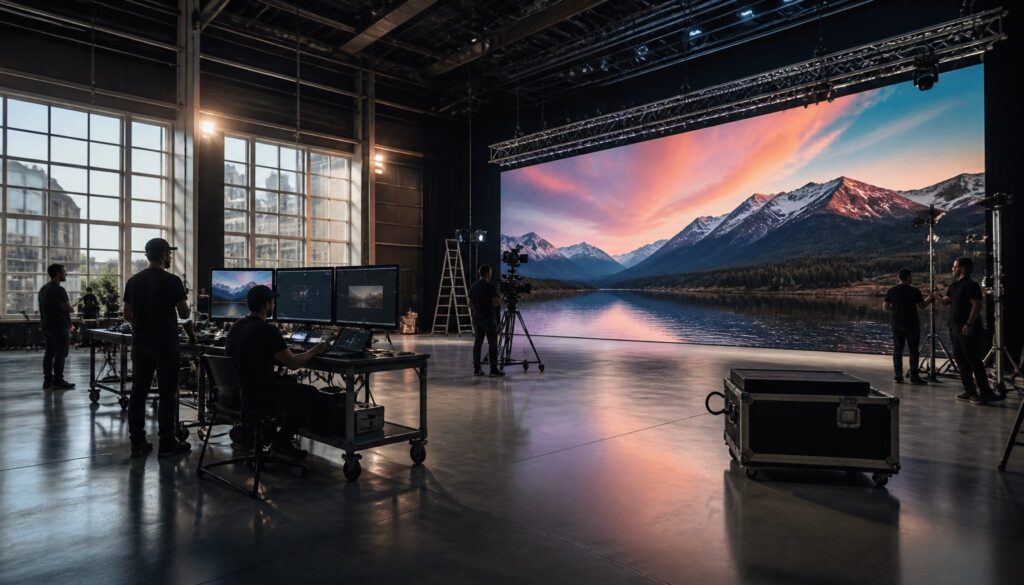
- Studio-based production — Shooting in a professional studio eliminates weather delays, location permit headaches, and travel logistics. Studios with LED wall technology can even simulate locations without leaving the building.
- Existing assets — Having brand guidelines, logos, approved music, or archival footage ready to go saves days in post-production.
- An experienced production partner — Teams that have produced hundreds of projects bring established workflows, vetted crews, and efficient processes that shave time at every phase.
Factors That Cause Delays
- Multiple approval layers — Every additional stakeholder in the review chain can add days or weeks. Government and enterprise clients should plan for this explicitly.
- Scope creep — Adding interview subjects, new scenes, or extra deliverables mid-project is the most common reason timelines slip.
- Talent and location availability — Coordinating executive calendars, securing permits in major cities, or booking specialized venues requires lead time.
- Complex motion graphics or animation — Animated sequences are time-intensive. A 30-second custom animation can take one to two weeks on its own.
- Unclear messaging — If the core message is not locked before scripting begins, expect multiple rewrites and costly delays downstream.
How to Set Your Project Up for an Efficient Timeline
After producing hundreds of videos for corporations, government agencies, nonprofits, and brands across DC, Baltimore, Richmond, and New York, one pattern is crystal clear: the projects that finish on time are the ones that start with strong preparation. Here are practical steps to keep your timeline on track:
- Define success before kickoff. What does this video need to accomplish? Who is the audience? Where will it be distributed? Answer these questions before engaging a production company.
- Assign a single decision-maker. Appoint one person with the authority to approve scripts, rough cuts, and final edits. This alone can cut weeks off your timeline.
- Share existing materials early. Brand guides, previous videos, relevant data, and key talking points should be provided during the discovery phase—not after the script is written.
- Build review time into your schedule. Do not assume instant turnarounds on internal feedback. Give your team two to three business days per review round and plan accordingly.
- Communicate deadlines and dependencies. If the video must launch before a conference, fiscal year end, or campaign window, share that date immediately so the production schedule can be reverse-engineered from the deadline.
Frequently Asked Questions
How long does a typical corporate video take from start to finish?
Most corporate videos take between four and six weeks from initial kickoff to final delivery. This includes one to two weeks of pre-production (scripting, planning, logistics), one to two shoot days, and two to three weeks of post-production. Projects with simpler scope can be completed faster, while those requiring multiple locations, extensive motion graphics, or complex approval workflows may take longer.
Can a video be produced in less than two weeks?
Yes, but it requires a very focused scope. Quick-turn projects—such as social media clips, event recaps, or internal announcements—can be completed in as little as 10 to 14 days if the creative direction is clear, footage is captured efficiently, and the client provides rapid feedback. Rush timelines typically work best with an experienced production team that has established workflows.
What is the longest phase of video production?
For most projects, post-production is the longest phase. Editing, color grading, sound mixing, motion graphics, and client review rounds all take time. However, the phase that causes the most delays is often pre-production—specifically, the back-and-forth of script approvals and stakeholder alignment. Locking in the creative direction early is the single best way to keep the overall timeline on track.
How does the video type affect the production timeline?
Video type is the biggest determinant of timeline. A 60-second social ad can be produced in two to three weeks. A polished marketing video typically takes four to six weeks. Commercials and PSAs often require five to eight weeks due to higher production value. Documentaries are the most time-intensive, ranging from eight weeks to several months depending on the depth of storytelling and number of interview subjects involved.
Does using a studio reduce the production timeline?
It can, significantly. Studio-based production eliminates weather delays, permit requirements, and travel logistics. A controlled environment also means faster lighting and audio setup, which translates to more efficient shoot days. Studios equipped with virtual production technology—such as LED volume stages—can simulate multiple environments in a single session, which is especially valuable for projects that would otherwise require multi-location shoots.
How can I avoid delays on my video project?
The most effective strategies are: providing a clear brief at the start, consolidating feedback through a single point of contact, respecting agreed-upon review windows, avoiding scope changes mid-project, and working with a production company that has deep experience managing complex timelines. Proactive communication between your team and the production partner is the common thread in every project that delivers on schedule.
Plan Your Next Video Project with Confidence
Understanding the video production timeline—and how long it takes for your specific type of project—puts you in control of deadlines, budgets, and stakeholder expectations. Whether you are planning a two-week social spot or a three-month documentary, the key is preparation, clear communication, and the right production partner.
TriVision Studios has been producing high-impact video content for leading brands, government agencies, nonprofits, and organizations across Washington DC, Northern Virginia, Maryland, Baltimore, Richmond, and New York City. Our team brings the experience and structure to keep your project on schedule without sacrificing quality. Reach out to our team to discuss your next project and get a realistic timeline tailored to your goals.